

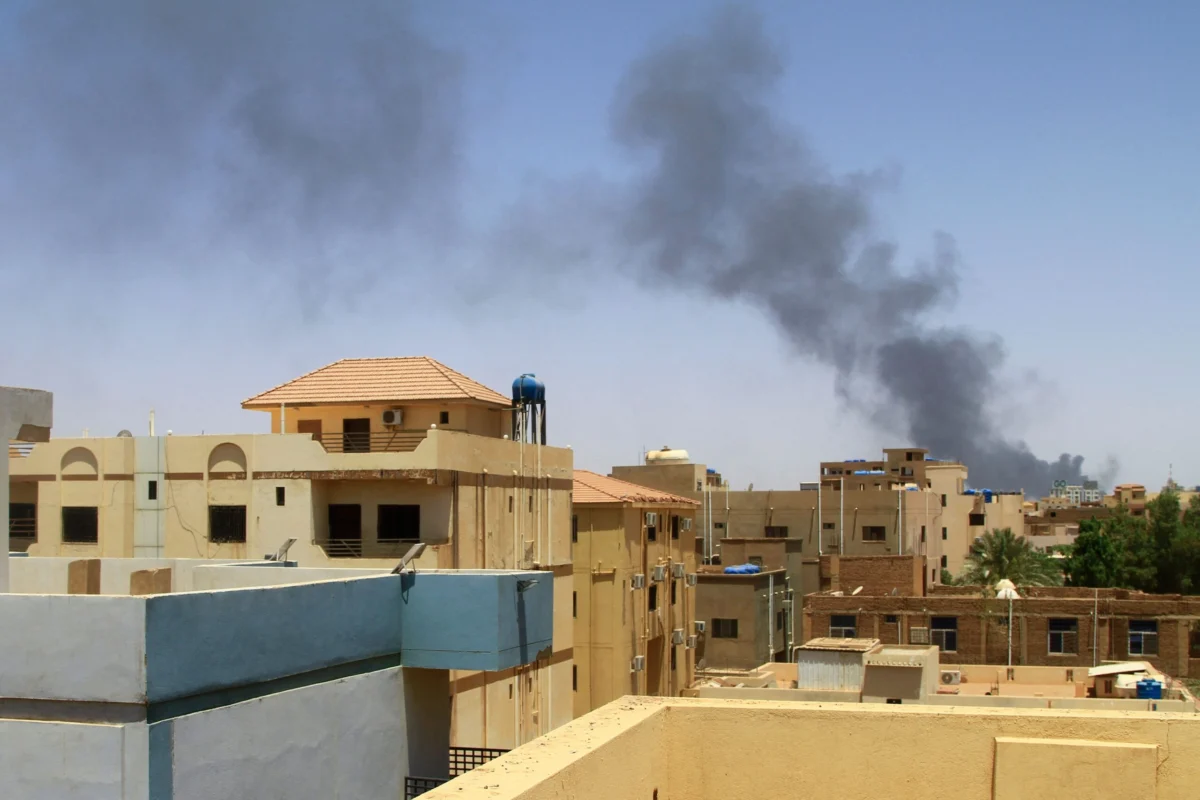
The streets of Khartoum and its sister cities remained a theater of violence on Friday morning as a proposed 72-hour humanitarian truce, intended to mark the Muslim holiday of Eid al-Fitr, was met with renewed gunfire and heavy artillery. While the paramilitary Rapid Support Forces (RSF) announced their commitment to a ceasefire starting at 6:00 a.m. local time, residents in the capital and neighboring Bahri reported that Sudanese Armed Forces (SAF) troops were deploying on foot, signaling a continuation of the deadly power struggle that has gripped the nation for nearly a week. The failure of the armistice to take immediate effect underscores the profound disconnect between diplomatic overtures and the tactical realities on the ground, leaving millions of civilians trapped in a crossfire that has already claimed hundreds of lives.
The Breakdown of the Eid Truce
The RSF’s announcement of a three-day ceasefire was framed as a humanitarian gesture to allow Sudanese citizens to celebrate the conclusion of the holy month of Ramadan and to facilitate the evacuation of the wounded. In a statement released early Friday, the paramilitary group claimed the truce would "open humanitarian corridors to evacuate citizens and give them the opportunity to greet their families." However, the Sudanese Army, led by General Abdel Fattah al-Burhan, did not formally reciprocate the offer in its immediate aftermath. In a pre-recorded address posted to the army’s official social media channels, General Burhan focused on national unity and the resilience of the military, notably omitting any mention of a cessation of hostilities.
Eyewitnesses in Khartoum described a harrowing scene as the time for morning Eid prayers arrived. Instead of the traditional festive atmosphere, the city was rocked by the thud of shelling and the persistent rattle of automatic weapons. In Bahri, located across the Blue Nile, the military reportedly deployed significant reinforcements. Residents there noted that the sounds of combat intensified shortly after the truce was supposed to begin, as both factions engaged in fierce gun battles for control of strategic infrastructure.
A Nation at War: The Roots of the Power Struggle
The current conflict is the violent culmination of a long-simmering rivalry between the two most powerful men in Sudan: General Abdel Fattah al-Burhan, the head of the SAF and the country’s de facto leader, and General Mohamed Hamdan Dagalo, better known as Hemedti, who commands the RSF. The two generals were once uneasy allies, having collaborated in the 2019 ousting of long-time autocrat Omar al-Bashir and the subsequent 2021 military coup that derailed Sudan’s fragile transition to civilian rule.
The immediate trigger for the hostilities, which erupted on April 15, 2023, was a disagreement over the implementation of an internationally backed transition plan. Central to this dispute was the timeline for integrating the RSF—a powerful paramilitary force with its origins in the Janjaweed militias of Darfur—into the regular Sudanese Army. While the SAF pushed for a swift two-year integration process, Hemedti advocated for a ten-year timeline, fearing that a rapid merger would strip him of his political and economic influence. This administrative disagreement rapidly devolved into an all-out war for total control of the state, with both leaders now branding the other as a criminal and a traitor.
Chronology of the Escalation (April 15 – April 21)
The descent into civil war has been swift and devastating. The following timeline outlines the key developments leading to the current crisis:
- April 15: Heavy fighting breaks out in Khartoum and other major cities. The RSF claims control of the Presidential Palace and Khartoum International Airport, though the SAF disputes these claims.
- April 16-17: Urban warfare intensifies. The SAF begins using its air superiority to conduct strikes on RSF positions within residential neighborhoods. International organizations, including the World Food Programme (WFP), suspend operations after staff members are killed.
- April 18: A 24-hour ceasefire brokered by international mediators fails within minutes. Hospitals in Khartoum report they are running out of essential supplies and blood.
- April 20: U.N. Secretary-General Antonio Guterres calls for an immediate three-day truce for Eid al-Fitr. Thousands of civilians begin a mass exodus from the capital, fleeing on foot or in overcrowded vehicles.
- April 21: The RSF declares a 72-hour truce, but fighting continues. The SAF deploys ground troops in Khartoum, signaling a shift toward house-to-house combat.
The Humanitarian Catastrophe and Data on the Ground
The human cost of the conflict has been staggering. According to figures released by the World Health Organization (WHO) and the Sudanese Doctors’ Syndicate, at least 350 people have been killed, though the actual death toll is believed to be significantly higher due to the inability of medical teams to reach many conflict zones. In the city of El-Obeid, west of Khartoum, at least 26 people were confirmed dead on Thursday alone following widespread looting and clashes.
The infrastructure of Khartoum, a city of over five million people, is on the brink of collapse. Residents report prolonged outages of electricity and water, and the price of basic commodities has skyrocketed. The healthcare sector is particularly hard-hit; the Sudanese Doctors’ Syndicate stated that nearly 70% of hospitals in conflict-affected areas are out of service, either due to direct shelling or a lack of fuel and medical staff.
The displacement crisis is also expanding beyond Sudan’s borders. The U.N. Refugee Agency (UNHCR) and the WFP estimate that between 10,000 and 20,000 Sudanese have crossed into neighboring Chad to escape the violence in Darfur. This influx is placing immense pressure on a region already struggling with food insecurity and its own internal instabilities.
International Reactions and Diplomatic Stagnation
The international community has reacted with a mixture of alarm and frantic diplomacy. U.N. Secretary-General Antonio Guterres, following a virtual meeting with the heads of the African Union and the Arab League, emphasized that the "cessation of hostilities is an immediate priority." The United States, the European Union, and regional powers like Saudi Arabia have all called for a ceasefire, yet their leverage over the warring generals appears limited.
General Burhan, speaking to Al Jazeera, maintained a hardline stance, suggesting that he saw "no other option but the military solution." He accused the RSF of using civilians as human shields and preventing free movement. Conversely, Hemedti told the same network that he was willing to implement a humanitarian truce but refused to negotiate with Burhan, whom he referred to as a "criminal." This personal animosity between the two leaders suggests that a political settlement remains a distant prospect.
Geopolitical Implications and Regional Risks
Sudan’s strategic location makes the conflict a matter of grave concern for regional and global powers. Bordering seven countries and sitting at the crossroads of the Sahel, the Horn of Africa, and the Red Sea, a protracted civil war in Sudan could destabilize the entire region.
- Egypt and Ethiopia: Egypt, which views the SAF as a key ally and a bulwark against instability, is deeply concerned about the security of its southern border and the management of the Nile waters. Ethiopia, already dealing with its own internal conflicts, fears a spillover of violence.
- The Wagner Group and Russia: There are long-standing reports of links between Hemedti’s RSF and the Russian mercenary group Wagner, particularly concerning gold mining interests in Sudan. A victory for the RSF could expand Russian influence in Africa, a prospect the United States is keen to prevent.
- The Red Sea Corridor: The conflict threatens the security of vital shipping lanes in the Red Sea. Both the U.S. and Russia have expressed interest in establishing naval bases in Sudan, making the country a focal point for geopolitical competition.
Analysis: A Thwarted Transition and an Uncertain Future
The current war is not merely a clash of personalities; it is a battle for the soul of the Sudanese state. For decades under Omar al-Bashir, Sudan was governed by a complex web of military, paramilitary, and Islamist interests. The 2019 revolution offered a brief glimpse of a democratic future, led by a vibrant youth movement and professional associations. However, the military’s refusal to cede power has systematically dismantled those hopes.
The failure of the Eid truce is a grim indicator of the challenges ahead. As the SAF and RSF continue to prioritize a decisive military victory over civilian safety, the risk of the conflict evolving into a multi-sided civil war grows. Without a significant and unified intervention from regional powers—particularly those with financial and military leverage over the generals—Sudan faces the prospect of state failure.
As the smoke continues to billow over Khartoum, the primary victims remain the Sudanese people. For many, this Eid al-Fitr will not be remembered for its prayers or celebrations, but as the moment their country descended into an avoidable and catastrophic darkness. The next 72 hours will be a critical test: if the truce cannot hold during the holiest days of the Islamic calendar, the path to peace may be lost for a generation.
