

The United Kingdom’s renewable energy landscape is undergoing a structural transformation as the government unveils its ambitious £1-billion Local Power Plan, a strategic initiative designed to facilitate the development of 1,000 community-led energy projects by 2030. This policy pivot represents a significant infusion of capital into a sector that has long advocated for the decentralization of the national grid and the democratization of energy ownership. At the heart of this strategy lies a burgeoning partnership between public sector funding and the crowdfunding industry, a sector that is being called upon to leverage its expertise in mobilizing retail investment to meet the nation’s Net Zero targets.
The Local Power Plan is being spearheaded by Great British Energy (GBE), the newly established state-owned energy company. By providing a mix of grants and low-interest loans, the government aims to catalyze projects that might otherwise struggle to secure traditional commercial financing. For the UK’s crowdfunding platforms—many of which have spent the last decade building the infrastructure for "people-powered" finance—the plan is viewed as a vital validation of their model. Industry leaders believe the framework will not only provide the necessary "seed" capital for local initiatives but also unlock a massive pipeline of investable projects for everyday citizens.
The Strategic Role of Great British Energy and Public-Private Synergy
The implementation of the Local Power Plan marks a departure from the centralized energy models of the past. Great British Energy’s mandate is to work alongside local authorities, energy cooperatives, and community groups to identify and develop renewable assets such as onshore wind farms, solar arrays, and battery storage facilities. However, the £1-billion government commitment is not intended to be the sole source of funding. Instead, it is designed to act as "catalytic capital"—a financial foundation that reduces the risk profile of projects, thereby making them more attractive to private and retail investors.
Lisa Ashford, co-CEO of Ethex, a leading ethical crowdfunding platform in the UK, notes that the government’s support is a significant opportunity for the sector. According to Ashford, the policy framework should help unlock a larger pipeline of investable local power projects, creating more opportunities for communities to directly invest in renewable energy in their own areas. Ethex has already pledged to collaborate with Great British Energy to bridge the gap between institutional capital and individual retail investors. The objective is to create a "hybrid" funding model where public money de-risks the early stages of a project, allowing the "crowd" to provide the long-term capital needed for operation.
This synergy is crucial because, while public funding can initiate a project, the scale of the energy transition requires trillions in investment. By involving the public through crowdfunding, the government achieves two goals: it secures the necessary capital and it builds local "buy-in," reducing the NIMBYism (Not In My Back Yard) that frequently stalls renewable energy developments.
Understanding the Mechanics of Investment Crowdfunding
To understand the impact of the Local Power Plan, it is essential to distinguish between the different types of crowdfunding. While many are familiar with "reward-based" crowdfunding (like Kickstarter) or "donation-based" models, the Local Power Plan focuses on "investment-type" crowdfunding. In this model, individuals provide capital with the expectation of a financial return, typically in the form of interest payments, dividends, or capital appreciation.
In the context of community energy, this often takes the form of community bonds or shares in a Community Benefit Society (BenCom). These investments are often "locked up" for a period of five to twenty years, reflecting the long-term nature of energy infrastructure. For the investor, the appeal lies in the "dual return": a competitive financial yield and the social/environmental satisfaction of knowing their money is powering their local school, hospital, or neighborhood.
The democratization of these capital markets is a relatively recent phenomenon in the UK. Historically, high-yield infrastructure investments were the exclusive domain of institutional investors and high-net-worth individuals. The Financial Conduct Authority (FCA) began modernizing the regulatory framework in 2014, allowing platforms to market these opportunities to the general public under strict consumer protection guidelines. This regulatory shift paved the way for the current integration of crowdfunding into national energy policy.
Market Volatility and the Shift to Ethical Finance
The crowdfunding industry has experienced a period of extreme volatility over the last four years. In 2021, fueled by pandemic-era lockdowns and low interest rates, the UK equity crowdfunding market reached a fever pitch. Investors, often flush with savings and influenced by the "meme stock" phenomenon, poured £773 million into 569 equity deals. However, as the global economy shifted toward a high-interest-rate environment, that enthusiasm waned.
By 2024, the value of equity crowdfunding deals in the UK had plummeted to £324 million (approximately US$414 million), with the number of deals nearly halving to 297. This slump was driven by several factors: the rising cost of borrowing, geopolitical instability, and a "flight to quality" as investors moved away from high-risk tech startups toward more stable assets.
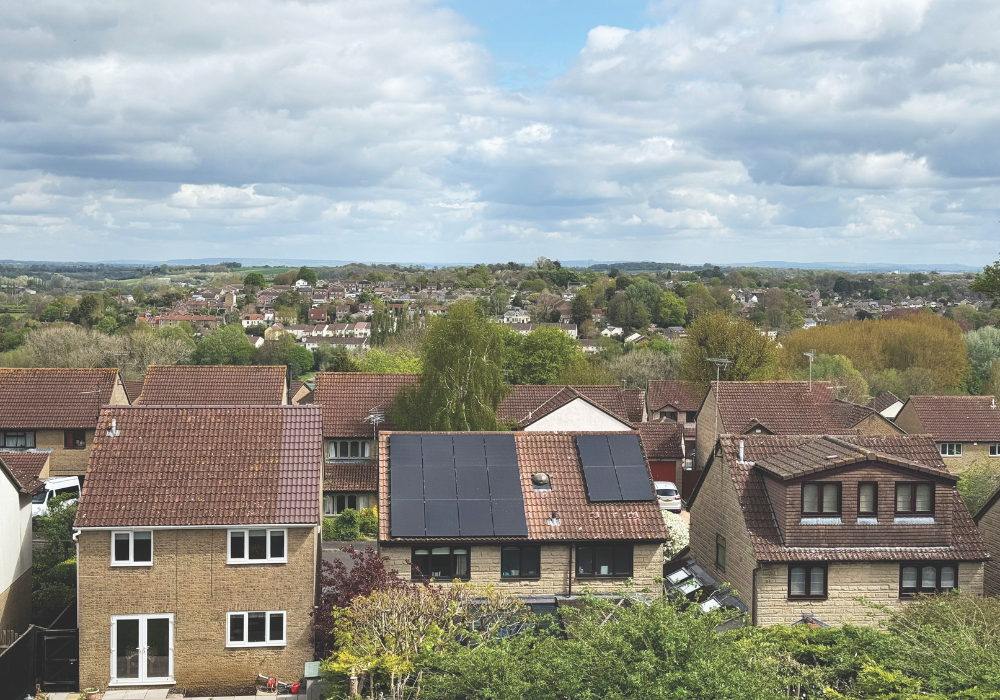
In contrast to the struggling tech-equity segment, "green" and ethical crowdfunding has shown remarkable resilience. While traditional equity crowdfunding focuses on high-growth, high-risk startups, ethical platforms like Ethex, Abundance, and Triodos UK focus on asset-backed projects. Renewable energy projects, in particular, offer a level of predictability that tech startups cannot match. They generate electricity that is sold back to the grid or to local consumers via Power Purchase Agreements (PPAs), creating a steady income stream that can be used to pay bondholders. This stability has allowed green crowdfunding to maintain its momentum even as the broader venture capital market cooled.
The Hybrid Model: A New Standard for Climate Tech
The evolution of the UK market is increasingly leaning toward a "hybrid model" of financing. This approach combines retail "crowd" investors with institutional venture capital and government support. A prominent example of this trend is Sunswap, a British climate-tech company specializing in solar-powered refrigeration units for heavy goods vehicles.
In 2024, Sunswap successfully raised £17.3 million (US$21.8 million) through a combination of institutional backing from Shell Ventures and retail investment hosted on the Republic crowdfunding platform. This model provides a blueprint for the Local Power Plan. By involving institutional giants like Shell alongside local retail investors, projects gain both the financial muscle of a corporation and the social license of the public.
Antoine Beine, co-founder of the climate-tech crowdfunding network Keenest, argues that this democratic dimension is becoming the norm. He suggests that involving the public in the private sector’s energy transition embeds transparency and public scrutiny into issues like energy sovereignty and ethical practices. When local citizens own a piece of the energy infrastructure, the "black box" of corporate energy production is opened, leading to greater accountability.
Chronology of the UK’s Green Investment Evolution
The path to the £1-billion Local Power Plan has been defined by several key milestones over the past decade:
- 2014: The FCA introduces new rules for investment-based crowdfunding, opening the door for retail investors to participate in private equity and debt markets.
- 2015–2019: Early community energy projects begin to gain traction, primarily through small-scale solar co-ops, though they often struggle with complex planning laws and limited funding.
- 2021: The "Crowdfunding Boom." A record £773 million is raised in equity crowdfunding, though much of it flows into speculative tech rather than infrastructure.
- 2022–2023: Rising interest rates and the energy crisis highlight the need for domestic energy security. The concept of "Great British Energy" begins to take shape in political discourse.
- 2024: The UK crowdfunding market stabilizes at US$1.06 billion across all sectors (loans, bonds, equity, and donations). The government formally announces the £1-billion Local Power Plan.
- 2025–2030 (Projected): The rollout of 1,000 community projects. Climate tech in the UK is expected to grow at an annual rate of 21%, driven by the transition to electricity-based systems.
Broader Implications for Global Energy Transition
The UK’s experiment with the Local Power Plan is being watched closely on the international stage. According to a 2024 report by RMI (formerly the Rocky Mountain Institute), the global energy system requires an estimated US$2 trillion in annual investment to successfully shift from fossil fuels to electricity. Traditional banking and government budgets alone cannot bridge this "financing gap."
The success of the UK model could provide a scalable template for other nations. By leveraging crowdfunding, governments can tap into the trillions of dollars held in household savings, redirecting them from passive bank accounts into active climate solutions. Furthermore, the Local Power Plan addresses the "social" aspect of the ESG (Environmental, Social, and Governance) criteria. It ensures that the financial benefits of the energy transition—such as lower energy bills and investment returns—stay within the local community rather than being siphoned off by multinational utilities.
However, challenges remain. The long "lock-up" periods of these investments mean that retail capital is illiquid, which may deter some younger or lower-income investors. Additionally, the success of the 1,000-project goal depends heavily on streamlining the UK’s notoriously difficult planning system.
Conclusion: A Jolt of Democracy for Capital Markets
The £1-billion Local Power Plan represents more than just a financial commitment; it is a signal of a shift in the philosophy of governance and finance. By integrating the crowdfunding sector into national strategy, the UK government is acknowledging that the energy transition is not just a technical challenge, but a social one.
As Great British Energy begins the arduous task of deploying capital into 1,000 diverse projects across the country, the crowdfunding industry stands ready to act as the conduit between the state and the citizen. If successful, this "people-powered" approach will do more than just lower carbon emissions; it will deliver a much-needed jolt of popular democracy into the heart of the United Kingdom’s capital markets, ensuring that the green revolution is owned by the many, not the few.
