

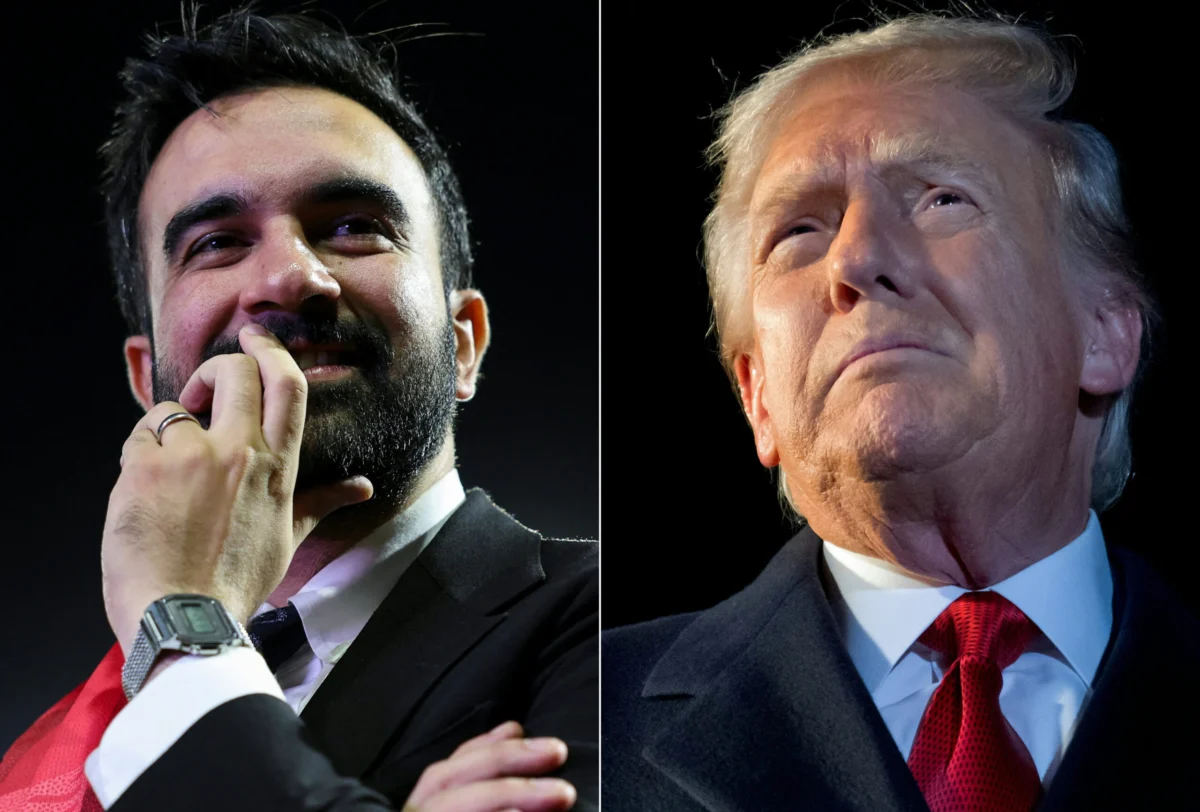
President Donald Trump, a native New Yorker who relocated his primary residence to Florida in 2019, has forcefully condemned New York City’s newly enacted pied-à-terre tax, declaring on Tuesday that he is actively exploring the federal government’s legal authority to "avert this disaster, before it is too late." The controversial levy, championed by Democratic Socialist Mayor Zohran Mamdani and passed by the New York State legislature in late May, targets non-primary residences owned by wealthy individuals and has ignited a fierce debate over urban taxation, wealth redistribution, and the potential for capital flight from the nation’s financial capital. Trump, utilizing his Truth Social platform, asserted that such a tax "doesn’t work in America, and must be stopped, NOW!" His intervention marks a significant escalation in the ongoing legal and political battle surrounding the new fiscal policy, coming just one day after a Staten Island judge issued a temporary injunction blocking its implementation. However, the city swiftly moved to file an appeal, effectively placing the judge’s order on hold and ensuring the contentious policy remains in a state of legal flux.
The Genesis of a Controversial Tax: Mayor Mamdani’s Vision
The pied-à-terre tax has been a cornerstone of Mayor Zohran Mamdani’s progressive agenda since his election. A prominent voice within the democratic socialist movement, Mamdani campaigned on a platform promising to address New York City’s profound inequalities by ensuring the city’s wealthiest residents contribute a larger share to public services. The concept of a pied-à-terre tax, targeting luxury secondary homes, emerged as a direct response to rising concerns about housing affordability, underfunded public schools, and the overall quality of city infrastructure.
Mamdani officially unveiled the policy on Tax Day, presenting it as a vital revenue stream that would inject approximately $500 million into the city’s coffers. This revenue, he argued, was crucial for funding critical initiatives aimed at creating "safer streets, stronger schools," and ultimately a "city that New Yorkers deserve." The proposed tax specifically targets second properties valued at $1 million or more, with a progressive rate structure meaning more valuable residences would face higher levies. The New York State legislature, in a move that underscored growing progressive influence, ultimately passed the bill in late May, granting New York City the authority to implement the tax. This legislative victory was seen as a significant win for Mamdani and Governor Kathy Hochul, who also backed the measure, in their efforts to address the city’s fiscal challenges and social equity goals.
However, even before its legal challenges, the revenue projections for the tax faced scrutiny. NYC Comptroller Mark Levine, weeks after Mamdani’s initial announcement, released a comprehensive estimation suggesting that the actual revenue generated could fall significantly short of the mayor’s projections, landing somewhere between $340 million and $380 million. This discrepancy immediately fueled arguments from critics who questioned the tax’s efficacy and potential economic side effects.
Legal Challenge and Judicial Intervention
The passage of the pied-à-terre tax quickly paved the way for legal challenges. Last week, three anonymous New York City residents filed a lawsuit in New York Supreme Court, taking aim at the city’s methodology for implementing the new policy. The lawsuit specifically challenged the city’s distribution of a list containing names, addresses, and property values of hundreds of thousands of NYC homeowners. Furthermore, it targeted the written notices mailed by the city to approximately 17,000 individuals on that list, informing them of their potential liability under the new tax.
The plaintiffs’ core argument centered on the assertion that the city’s actions "arbitrarily and capriciously foisted onto New York City residents the burden of proving they are not subject" to the tax. They contended that the onus should be on the city to first determine which properties are indeed secondary residences and therefore subject to the tax, rather than requiring homeowners to proactively demonstrate their exemption. This procedural challenge highlights broader concerns about due process and the administrative burden placed on property owners.
On Monday, Judge Wayne Ozzi of Staten Island temporarily sided with the plaintiffs, issuing an order that blocked the city from "taking any further action" in connection with the controversial list or the mailed notices. This temporary injunction immediately complicated the city’s plans for the tax’s rollout. However, the legal maneuver was short-lived in its immediate effect. Hours after Judge Ozzi’s ruling, an attorney representing Mayor Mamdani’s office filed a motion indicating the city’s intent to appeal the ruling. Crucially, in New York State legal procedure, filing such a motion triggers an "automatic stay" of all proceedings to enforce the original order, effectively nullifying the immediate impact of Judge Ozzi’s injunction and allowing the city to continue its preparatory work for the tax while the appeal process unfolds.
Trump’s Outspoken Opposition and Federal Intervention Threat
Donald Trump’s Tuesday morning broadside against the pied-à-terre tax represents a significant political intervention into a local New York City matter. His assertion that he would explore whether the federal government has "any legal right to avert this disaster" adds a new layer of complexity to the debate, hinting at a potential constitutional showdown between federal and municipal authority over taxation. While the specific legal avenues for federal intervention in state or local tax policy are generally limited and complex, Trump’s history suggests a willingness to push the boundaries of executive power and utilize his platform to influence policy. His statement, delivered with characteristic fervor, framed the tax as a "dangerous political ‘experiment’ in New York [that] will destroy what was once a great City and State."
Trump’s personal connection to New York City adds a layer of irony and personal grievance to his critique. A lifelong resident of Manhattan, where he famously resided in a penthouse in Trump Tower, he officially changed his primary residence to his Mar-a-Lago golf club in Florida in 2019, citing New York’s high taxes and political climate. This personal experience likely fuels his strong opposition, although it remains unclear whether he or his immediate family would personally be subject to the new NYC tax given his relocation. His claim that it’s "hard for him as president ‘to sit back and watch it happen, especially to a place I once loved’" underscores his emotional connection, even as his political actions often stand in stark contrast to the city’s increasingly progressive leanings.

Mayor Mamdani’s Defense and Broader Political Context
Mayor Mamdani’s office has remained steadfast in its defense of the pied-à-terre tax. While declining to directly comment on Trump’s threat of federal intervention, the mayor’s office referred CNBC to Mamdani’s previous statements. At a Monday press conference, held amidst the unfolding legal drama, Mamdani expressed unwavering confidence, stating, "We look forward to vigorously defend our city’s position in court." He reiterated his belief in the tax’s dual merits: its legal soundness and its vital importance as a revenue generator for public services. "That is a confidence coming from both the legality of the City’s actions as well as the importance of a surcharge on secondary homes worth more than $5 million," Mamdani affirmed.
The mayor’s stance aligns with a broader national trend among progressive leaders advocating for wealth taxes and increased contributions from high-net-worth individuals to address societal inequalities and fund public infrastructure. For Mamdani, the pied-à-terre tax is not merely a revenue-generating tool but a symbolic declaration of New York City’s commitment to social equity and economic justice.
Industry Reaction and the "Millionaire Migration" Debate
The introduction of the pied-à-terre tax has sent ripples through New York City’s influential real estate and financial sectors, reigniting the long-standing debate about "millionaire migration" and the impact of high taxes on the wealthy. Critics, including Donald Trump, argue that such levies will prompt high-income earners and their businesses to flee to more tax-friendly regions, ultimately diminishing the city’s tax base and economic vitality.
One of the most vocal opponents has been Citadel CEO Ken Griffin, a prominent billionaire investor. Griffin publicly threatened to relocate his business operations to Miami following Mamdani’s announcement of the pied-à-terre tax. The mayor had even featured Griffin’s ultraluxury Manhattan penthouse in a video promoting the tax, seemingly to highlight the kind of wealth being targeted. Griffin’s concerns extended to potential reconsideration of a pricey redevelopment project for a Park Avenue building, a significant investment in the city’s commercial real estate landscape. However, Vornado CEO Steven Roth later provided a counter-narrative, stating in an earnings call that Griffin was "not abandoning" his plans for the NYC building, suggesting that the threats of immediate departure might be more rhetorical than definitive.
The "millionaire migration" theory is a complex and often debated topic among economists and policy makers. Some studies, such as those from the Citizens Budget Commission of New York, have indicated a decline in New York’s share of millionaires in recent years, linking it to high tax rates. These studies often point to the exodus of high-net-worth individuals to states like Florida, which boasts no state income tax, as evidence of tax-induced migration.
Conversely, other research, including analyses from the Tax Policy Center, disputes the idea that the rich flee high state taxes en masse. These studies often find that while some high-income earners do relocate, the overall impact on a state’s tax base is often negligible, or that other factors such as lifestyle, family, and business opportunities play a more significant role in relocation decisions than tax rates alone. They argue that the allure of New York City — its cultural institutions, job markets, and global connectivity — often outweighs tax considerations for many wealthy individuals. The economic implications of the pied-à-terre tax, therefore, remain a subject of intense academic and political scrutiny, with proponents arguing the revenue benefits outweigh any potential losses from a limited exodus, while critics warn of a cascading effect on the luxury real estate market and broader economy.
Broader Implications and Future Outlook
The legal and political saga surrounding New York City’s pied-à-terre tax is far from over. Donald Trump’s threat of federal intervention, while potentially difficult to execute legally, injects a volatile national political dimension into what was previously a local and state issue. This could rally opposition to the tax on a larger scale and potentially embolden legal challenges.
The immediate future of the tax rests heavily on the outcome of the city’s appeal against Judge Ozzi’s temporary injunction. If the city’s appeal is successful, it would clear a significant hurdle for the tax’s implementation. However, the initial lawsuit challenging the city’s distribution of property owner data and notices will continue, and other legal challenges based on different grounds (e.g., constitutionality, fairness, or economic impact) could still emerge.
Beyond the courtroom, the tax represents a critical test for Mayor Mamdani’s progressive governance model. Its success or failure will be closely watched by other major U.S. cities grappling with similar issues of wealth inequality, housing affordability, and budget constraints. If the tax generates substantial revenue without triggering a significant flight of capital, it could serve as a blueprint for progressive tax policies elsewhere. Conversely, if it leads to prolonged legal battles, administrative headaches, or a measurable negative economic impact, it could be cited as a cautionary tale.
The pied-à-terre tax is more than just a fiscal policy; it is a battleground reflecting fundamental ideological differences about the role of government, wealth distribution, and the economic future of global cities. As New York City navigates this complex terrain, the eyes of the nation, and indeed the world, will be watching closely to see how this experiment in progressive taxation ultimately unfolds.
