

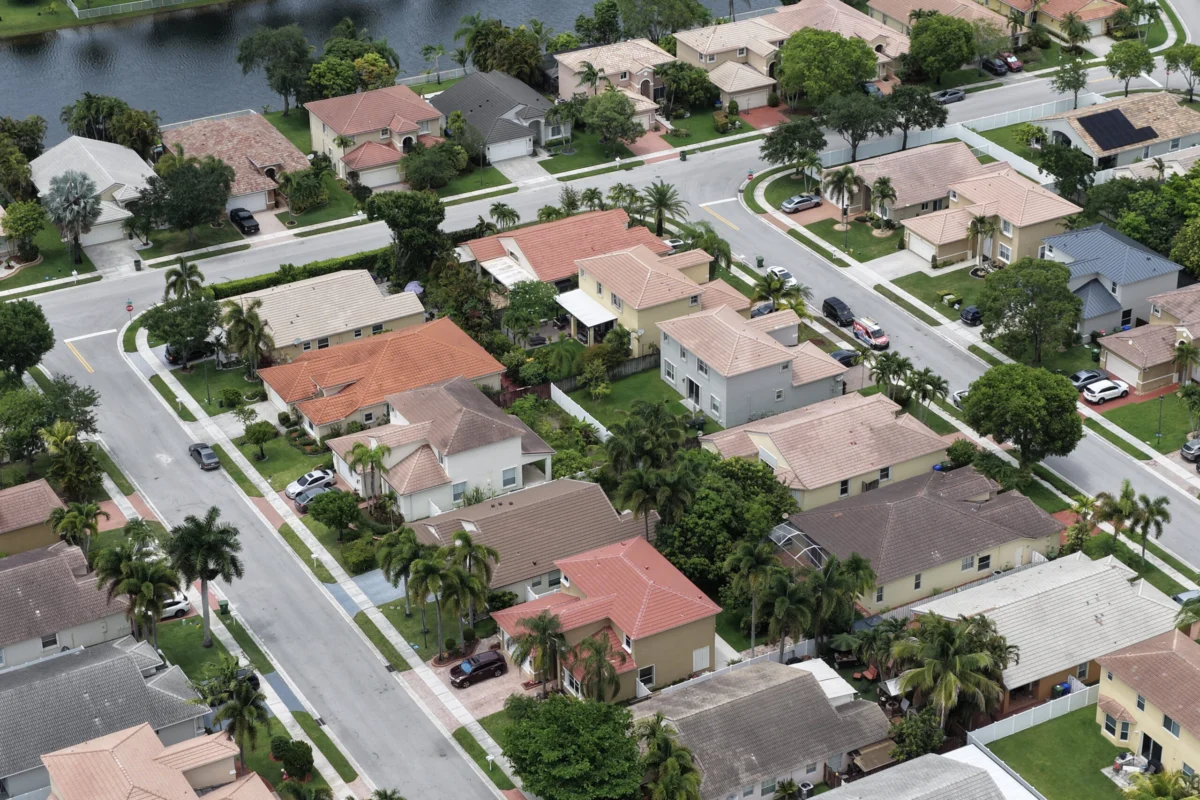
The nation’s mortgage market exhibited minimal movement last week, presenting little immediate incentive for prospective homebuyers or current homeowners considering refinancing their existing loans. According to the latest data released by the Mortgage Bankers Association (MBA), total mortgage application volume saw a negligible decline of 0.4% on a seasonally adjusted basis from the preceding week, underscoring a period of sustained inertia in housing finance. This stagnation is largely attributed to the sustained elevated levels of interest rates, which continue to temper demand across various segments of the real estate market.
Detailed Breakdown of Application Volume and Rate Stability
The MBA’s weekly survey, a critical barometer for the health of the U.S. housing market, revealed that the average contract interest rate for a 30-year fixed-rate mortgage with conforming loan balances, capped at $832,750, held steady at 6.77%. This marks a period of unusual stability in a market that has seen significant volatility over the past two years. While the rate itself remained unchanged, the points associated with these loans, including the origination fee for a 20% down payment, saw a marginal decrease from 0.67 to 0.65. This slight reduction in points, however, appears to have done little to stimulate a broader surge in activity. The consistent rate, while offering a measure of predictability, also means that the prevailing high cost of borrowing continues to be a significant barrier for many.
Joel Kan, Vice President and Deputy Chief Economist at the MBA, noted in a recent release, "Mortgage rates and applications changed little last week, with just a slight increase in refinances for conventional and VA loans, while FHA refinances were lower." This observation highlights a nuanced picture within the refinancing segment, suggesting that certain loan types might be marginally more attractive for refinancing, possibly due to specific program benefits or borrower profiles. However, the overall trend remains subdued, signaling a broader reluctance among homeowners to engage with lenders at current rate levels.
The Refinance Market: A Shrinking Pool of Opportunity
Applications to refinance a home loan registered a modest 2% increase for the week. Despite this slight uptick, the volume remains significantly depressed when viewed in a year-over-year context, standing 18% lower than the same week one year ago. This substantial annual decline is directly attributable to the stark difference in interest rates. A year prior, rates were marginally lower, creating a more favorable environment for homeowners to secure better terms or extract equity. The current rate environment means that only a select subset of borrowers—those who secured their initial mortgages at even higher rates or those with very specific financial needs—are finding refinancing to be a viable option.
Kan further elaborated on this trend, stating, "Borrowers with larger loan sizes remain less likely to refinance with rates at these higher levels. The average loan size on refinances continues to shrink, dipping to $282,200 last week, the lowest level since June 2025." This shrinking average loan size on refinances is a telling indicator. It suggests that the primary demographic engaging in refinancing activity might be those with smaller loan balances or those who are "cashing out" a more modest amount of equity, perhaps to consolidate high-interest debt or fund essential home improvements, rather than undertaking substantial restructuring of larger mortgage commitments. The larger the loan, the greater the impact of higher interest rates on monthly payments, making the incentive to refinance at current levels almost nonexistent for many.
The Purchase Market: Affordability Crisis Deepens
The stagnation was even more pronounced in the purchase market, where applications for a mortgage to buy a home fell by 2% for the week. On an annual basis, purchase applications were 3% lower than the same week one year ago. This persistent decline underscores the deepening affordability crisis that has become a defining characteristic of the contemporary housing market. While mortgage rates did not shift significantly last week, their consistent presence at the higher end of recent ranges is a critical factor deterring potential buyers.
"In addition to the economic uncertainty, affordability difficulties have reemerged as a reason for homebuyers to delay purchase decisions given the impact of higher mortgage rates on monthly mortgage payments," Kan added. This statement encapsulates the core challenge facing the market. Even if home prices were to stabilize or even see minor corrections, the elevated cost of borrowing means that monthly mortgage payments remain prohibitively high for a substantial portion of the population, particularly first-time buyers.
The Federal Reserve’s Shadow: Inflation and Monetary Policy
To understand the current mortgage rate environment, one must look to the actions and pronouncements of the U.S. Federal Reserve. The past two years have been dominated by the Fed’s aggressive campaign to combat persistent inflation, which surged following the economic disruptions of the pandemic and subsequent fiscal stimulus. Beginning in early 2022, the Federal Open Market Committee (FOMC) initiated a series of rapid interest rate hikes, moving the federal funds rate from near-zero levels to a target range that, by mid-2026, has settled at a significantly higher plateau.
These benchmark rate increases directly influence the cost of borrowing across the economy, including variable-rate loans and, indirectly, fixed-rate mortgages. While the federal funds rate is an overnight lending rate between banks, it sets the foundation for other interest rates. Mortgage rates, which are primarily influenced by the bond market (specifically the 10-year Treasury yield), tend to track the Fed’s policy trajectory, often with some lag and independent fluctuations based on market sentiment and economic data. The Fed’s commitment to bringing inflation down to its 2% target, even if it means maintaining a "higher for longer" stance on interest rates, continues to cast a long shadow over the housing market. By June 2026, while headline inflation figures may have cooled from their peak, underlying core inflation (excluding volatile food and energy prices) often remains stickier, prompting the Fed to exercise caution in considering any rate cuts.
Chronology of Rate Movements: A Volatile Journey
The journey to the current 6.77% average 30-year fixed mortgage rate has been a turbulent one. Following the historically low rates seen during the initial phase of the COVID-19 pandemic, which saw averages dip below 3%, the market began to shift dramatically in late 2021 and throughout 2022. As inflation accelerated, the Fed’s rate hikes commenced, leading to a precipitous rise in mortgage rates. By late 2022, rates had surged past 7%, a level not seen in over two decades, shocking many prospective buyers who had grown accustomed to the ultra-low rates.
Throughout 2023, rates continued their upward trajectory, at times breaching 8% for the 30-year fixed mortgage, creating significant affordability challenges and leading to a sharp decline in both purchase and refinance activity. The latter part of 2023 and early 2024 saw some moderation, with rates fluctuating within the 6.5% to 7.5% range, offering brief windows of slightly improved affordability. However, strong economic data, including robust job growth and resilient consumer spending, coupled with persistent inflation signals, often pushed rates back towards the higher end of this range. By June 2025, the average rate had settled into the upper 6s, mirroring the current sentiment. The period leading up to June 2026 has been characterized by this relative stability at elevated levels, frustrating hopes for a significant downward correction.
Voices from the Field: Buyer and Seller Perspectives
The stagnation in the mortgage market has tangible impacts on various stakeholders. For prospective homebuyers, particularly first-time buyers, the current environment is one of profound frustration. "It feels like we’re constantly chasing a moving target," lamented Sarah Chen, a 32-year-old software engineer in Austin, Texas, who has been trying to purchase her first home for over a year. "Every time we save up a bit more for a down payment, either home prices tick up, or the mortgage rates make the monthly payment unaffordable again. We’re effectively priced out, even with a good income." This sentiment is echoed across many urban and suburban markets where strong demand meets limited inventory and high borrowing costs.
Real estate agents are also feeling the pinch. "Showings are down, and open houses are much quieter than they used to be," commented Michael Rodriguez, a veteran real estate agent in Miami, Florida. "Buyers are simply more cautious. They’re taking longer to make decisions, if they make them at all. Many are choosing to stay in their current rentals or homes, waiting for a more favorable market, which further constrains supply in some areas." Rodriguez added that sellers, too, are adjusting their expectations, as the bidding wars and rapid sales of a few years ago are now largely a distant memory. Some sellers are holding off, unwilling to list their homes if they also face higher rates on their next purchase.
Broader Economic Implications: Housing as a Barometer
The health of the housing market is a significant indicator of broader economic conditions, and its current stagnation has ripple effects. A slowdown in home sales impacts various related industries, including construction, home furnishing, appliances, and landscaping services. Reduced new construction starts, influenced by higher borrowing costs for developers and weaker buyer demand, can lead to job losses in the construction sector and a further exacerbation of the housing supply shortage in the long run.
Moreover, the high cost of housing consumes a larger portion of household budgets, potentially reducing discretionary spending on other goods and services, which could temper overall economic growth. Consumer confidence, a key driver of economic activity, can also be negatively affected by the perception of an unattainable housing market. While the U.S. economy has shown remarkable resilience in the face of higher interest rates, particularly in the labor market, a prolonged housing downturn could present a significant headwind to future growth. Policymakers and economists closely monitor housing data as a leading indicator for potential shifts in consumer behavior and broader economic trends.
Outlook and Expert Projections: Navigating the Future Market
Looking ahead, the trajectory of mortgage rates will largely depend on the Federal Reserve’s ongoing battle against inflation and the overall health of the U.S. economy. While mortgage rates did turn slightly higher again to start the current week, according to a separate survey from Mortgage News Daily, this minor uptick reinforces the prevailing narrative of volatility within a generally high-rate environment.
Most economists project that significant, sustained drops in mortgage rates are unlikely in the immediate future, barring an unexpected economic downturn or a clear and consistent deceleration of inflation towards the Fed’s 2% target. Analysts at major financial institutions suggest that rates will likely remain in the upper 6% to low 7% range for the remainder of 2026, with potential for slight moderation if economic data consistently points to cooling inflationary pressures. However, any signs of renewed inflation or robust economic growth could prompt the Fed to maintain its restrictive stance or even consider further tightening, which would inevitably push mortgage rates higher.
For buyers, this means continued patience and strategic financial planning are paramount. Adjustable-rate mortgages (ARMs) might offer lower initial rates but come with the risk of future payment increases. For sellers, pricing strategies will need to remain competitive, and an understanding of the local market dynamics will be crucial. The era of rapid appreciation and easy sales has given way to a more measured, challenging market where affordability remains the dominant constraint. The coming months will be critical in determining whether the housing market can find a new equilibrium, or if the current stagnation will persist, further reshaping the landscape of homeownership in America.
