

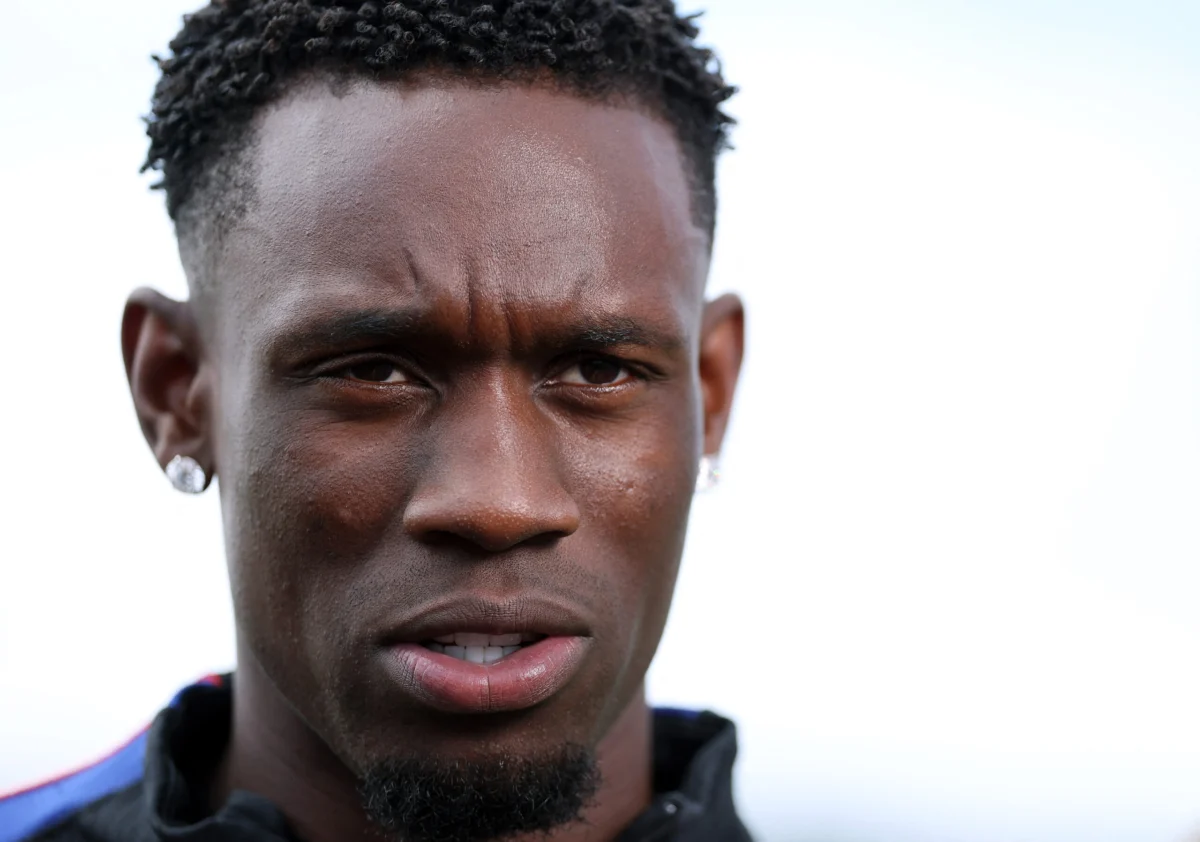
In a stunning and widely discussed development, FIFA’s Disciplinary Committee has reversed the one-match suspension initially imposed on United States striker Folarin Balogun, thereby clearing him to participate in the co-host nation’s highly anticipated World Cup last-16 encounter against Belgium. The decision, announced on Sunday, provides a significant boost to the American squad, ensuring the availability of their leading goal scorer for what is arguably their most critical match of the tournament thus far. The unexpected reprieve has ignited conversations across the football world regarding the application of disciplinary rules in high-stakes competitions and the discretionary powers vested in football’s governing body.
A Dramatic Reversal for the Co-Host Nation
The initial suspension stemmed from an incident during the United States’ Round of 32 victory against Bosnia and Herzegovina, a match the Americans won 2-0. In the second half, Balogun received a straight red card after a challenge on Bosnia and Herzegovina’s midfielder Tarik Muharemovic. The 25-year-old forward was adjudged to have stepped on Muharemovic’s right ankle during a contested play. The immediate consequence of the red card, under standard FIFA regulations, was an automatic one-match ban, which would have rendered him ineligible for the upcoming knockout fixture. This news had initially sent ripples of concern through the US camp and among its fervent fanbase, given Balogun’s instrumental role in their journey through the group stages and into the knockout rounds. His absence against a formidable opponent like Belgium would have significantly altered the tactical landscape for US head coach Gregg Berhalter.
However, FIFA’s subsequent announcement fundamentally changed the narrative. The global football body confirmed that "the implementation of the match suspension is suspended for a probationary period of one year," citing Article 27 of the FIFA Disciplinary Code. This rarely invoked clause allows for the full or partial suspension of a disciplinary sanction, contingent on the player not committing a similar infringement within a specified probationary period. The decision means Balogun can feature in Monday’s pivotal clash against the ‘Red Devils’ in Seattle, a fixture that holds immense significance for the co-host nation’s aspirations in the tournament.
The Incident That Led to the Ban
The specific moment of controversy occurred approximately 65 minutes into the Round of 32 match against Bosnia and Herzegovina. The United States was leading 1-0 at the time, and Balogun, known for his relentless pressing and attacking prowess, was involved in a midfield challenge. As he attempted to win the ball, his foot made contact with Muharemovic’s ankle. The referee, after consulting with the Video Assistant Referee (VAR), ultimately decided that the challenge warranted a straight red card for serious foul play. Replays showed Balogun’s foot coming down heavily on the opponent’s ankle, a contact that, while perhaps not overtly malicious, was deemed dangerous by the match officials.
At the time, the decision was met with immediate debate among pundits and fans. Many argued that while the contact was clear, the intent might not have been malicious enough to warrant a direct dismissal, suggesting a yellow card might have been a more appropriate punishment. Balogun himself echoed this sentiment in a press conference prior to FIFA’s reversal. "There’s nowhere else to put your leg. It’s going to be unavoidable," Balogun stated, reflecting on the incident. "So, I’ve seen many different opinions and takes. But, for me personally, I think a yellow card would have been fair. It’s something that’s happened, so we have to move forward and I have to accept it." His initial resignation underscored the prevailing understanding of FIFA’s disciplinary protocols, making the subsequent suspension of his ban all the more surprising.
FIFA’s Disciplinary Code: Article 27 and the Probationary Period
The core of FIFA’s decision rests on Article 27 of its Disciplinary Code, which grants the judicial bodies considerable discretion in mitigating sanctions. The article states, "The judicial bodies may fully or partially suspend the implementation of a disciplinary sanction if the circumstances so warrant." Key factors typically considered include the nature and gravity of the offence, the player’s disciplinary record, and any mitigating circumstances surrounding the incident. In Balogun’s case, while the challenge was deemed serious enough for a red card, FIFA’s Disciplinary Committee likely weighed several elements: the lack of a prior disciplinary record for serious foul play, the specific dynamics of the challenge (e.g., whether it was perceived as purely accidental versus reckless or intentional), and perhaps the potential impact of removing a prominent player from a co-host nation’s team at a crucial stage of the World Cup.
The "probationary period of one year" is a critical component of this decision. FIFA’s statement elaborated: "If Folarin Balogun commits another infringement of a similar nature and gravity during the probationary period, the suspension shall be revoked and the sanction enforced without prejudice to any additional sanction imposed for the new infringement." This means Balogun is effectively walking a tightrope for the next 12 months in any FIFA-sanctioned competition. Any similar red card or serious disciplinary infraction could not only trigger a new punishment but also reactivate the suspended one-match ban, making the stakes for future conduct exceptionally high. While such suspensions of bans are not unheard of in football, they are relatively rare at the pinnacle of international tournaments, especially for direct red cards in knockout matches. This particular application has led to discussions about potential precedents and the consistency of FIFA’s disciplinary actions, particularly when a co-host nation is involved.
A Player’s Plea and His Tournament Impact
Folarin Balogun’s significance to the United States Men’s National Team (USMNT) cannot be overstated. Since committing his international future to the USA, the striker has rapidly become a focal point of their attack. His dynamic play, blistering pace, clinical finishing, and intelligent movement have provided the USMNT with a genuine threat up front, something they have historically yearned for. In the current World Cup, Balogun has been nothing short of instrumental, bagging three goals in his four appearances and earning the prestigious Player of the Match award twice. His contributions have been vital in the US navigating a challenging group stage and securing their spot in the Round of 16.
His goal-scoring prowess has drawn comparisons to some of the USA’s most celebrated footballing figures. With three goals to his name, he stands just one goal shy of matching Bert Patenaude’s record for the most goals scored by a US men’s player in a single World Cup, a feat Patenaude achieved in the inaugural tournament in 1930. The prospect of Balogun breaking this long-standing record adds another layer of excitement to his participation. While Michelle Akers holds the overall USA World Cup scoring record with an astounding 10 goals in the 1991 FIFA Women’s World Cup, Balogun’s current trajectory positions him as a significant figure in the men’s game. His ability to link up with fellow attackers like Christian Pulisic, Timothy Weah, and Gio Reyna has created a fluid and dangerous attacking unit that has impressed many observers throughout the tournament. His presence against Belgium will undoubtedly allow Berhalter to maintain his preferred attacking setup and tactical approach.
Widespread Reactions: From White House to US Soccer

The news of Balogun’s reinstatement quickly reverberated beyond the confines of football stadiums. Among the most prominent reactions was a social media post from former US President Donald Trump, who took to his Truth Social platform to express his approval. "Thank you to FIFA for doing what was right, and reversing a great injustice!" Trump wrote. This statement highlights the intersection of sports and national pride, especially in a World Cup where a co-host nation’s success can become a point of broader national interest and political commentary. While not directly involved in the decision-making, the former President’s public commendation underscores the significant emotional investment many Americans have in their national team’s performance.
Unsurprisingly, US Soccer, the governing body for football in the United States, swiftly welcomed FIFA’s decision. In an official statement, they conveyed their satisfaction: "We accept the decision of the Disciplinary Committee and are pleased that Folarin Balogun is eligible to compete tomorrow." This reaction reflects the immense relief and strategic advantage gained by having their star striker available. Losing a player of Balogun’s calibre for a knockout fixture would have forced a significant tactical reshuffle and potentially dampened team morale.
On the other side, the Belgium team maintained a professional silence following the announcement. While the Belgian camp offered no immediate public comment, their coaching staff, led by Domenico Tedesco, would undoubtedly have been compelled to prepare for both scenarios: facing a US team with Balogun and one without him. Professional football teams are accustomed to such late changes, and their focus would have immediately shifted to refining their defensive strategies to counter Balogun’s specific threats. The lack of a public statement from Belgium is standard practice, indicating a focus on their own preparations rather than commenting on an opponent’s disciplinary matters. However, the unexpected inclusion of a player of Balogun’s quality undeniably adds a new dimension to their match analysis and game planning.
Football analysts and pundits across various media platforms have also weighed in. Many have applauded FIFA for exercising discretion in a way that prioritizes the spirit of the game and the presence of top talent in crucial matches, especially given the perceived severity of the initial foul. Others have raised questions about consistency, wondering if similar leniency would be applied to players from non-host nations or in less high-profile incidents. This debate underscores the inherent tension between strict adherence to rules and the desire to ensure the most compelling football product.
Implications for Team USA’s World Cup Journey
Folarin Balogun’s availability is a monumental boost for the United States’ World Cup campaign. His presence significantly enhances their chances against a highly-rated Belgian side, often referred to as the ‘Red Devils’ due to their formidable squad depth and talent. Belgium boasts a roster of world-class players, and facing them without their primary goal threat would have been a daunting task for the USMNT. With Balogun leading the line, the US retains its cutting edge, its ability to stretch defenses, and its potency in front of goal.
Tactically, Berhalter can now deploy his preferred offensive strategies, which heavily rely on Balogun’s movement and finishing. His ability to hold up play, run in behind defenders, and convert chances is crucial for the American attack. Without him, the team would have had to rely on alternative options, potentially altering their attacking rhythm and requiring other players to step into unfamiliar roles under immense pressure. The psychological impact on the team is also significant; knowing their star striker is available will undoubtedly lift team morale and instill greater confidence as they approach this do-or-die fixture.
Furthermore, Balogun’s potential to break Bert Patenaude’s long-standing men’s World Cup scoring record adds an extra layer of motivation and excitement. Surpassing such a historic milestone on home soil (as a co-host) would be a defining moment for American soccer and further cement Balogun’s status as a national team hero. It would also generate significant media attention and contribute to the growing narrative of the USMNT’s emergence on the global stage.
Historical Context and Record-Breaking Potential
The history of the FIFA World Cup is replete with tales of individual brilliance and collective triumphs, and the USA has its own rich, albeit sometimes overlooked, narrative within this tapestry. Bert Patenaude’s four goals at the inaugural 1930 World Cup in Uruguay stood as a singular achievement for the US men’s team for decades. Patenaude, a forward for the Fall River Marksmen, made history by scoring the first-ever hat-trick in a World Cup match against Paraguay. His record has remained a benchmark for US male players in the tournament, underscoring the rarity of consistent goal-scoring at this elite level for the nation.
On the women’s side, the USA boasts an even more illustrious history, exemplified by Michelle Akers’ phenomenal performance in the 1991 FIFA Women’s World Cup. Akers scored an incredible 10 goals in that tournament, leading the US to its first-ever Women’s World Cup title. Her record stands as a testament to her unparalleled skill and the dominance of the US Women’s National Team (USWNT) in the early years of the competition. While Balogun’s current three goals are a long way from Akers’ ten, his pursuit of Patenaude’s record is a significant milestone that connects the current generation of US male footballers to their storied past. It highlights the ambition and progress of the USMNT as they strive to make a deeper impact in the global spectacle.
Broader Ramifications for Tournament Discipline
FIFA’s decision to suspend Balogun’s ban will undoubtedly be scrutinized for its broader implications on tournament discipline. While Article 27 provides the legal framework for such a move, its application in a high-profile World Cup knockout match, particularly involving a co-host nation, invites questions about consistency and potential favoritism. Critics might argue that such leniency could be perceived as preferential treatment, especially if similar incidents involving players from less prominent nations or those not hosting the tournament have resulted in full bans.
Conversely, proponents of the decision could argue that it upholds the spirit of fair play by acknowledging mitigating circumstances and ensuring that key players, whose actions may not have been maliciously intended, are not unfairly removed from the competition. The probationary period stipulation also serves as a deterrent, ensuring the player remains accountable for their conduct moving forward. This flexible approach, while potentially controversial, allows FIFA’s judicial bodies to adapt to the nuances of individual cases rather than rigidly applying rules without considering context.
Ultimately, the decision ensures that one of the tournament’s standout performers for a host nation remains on the pitch for a crucial fixture, adding to the spectacle and competitive integrity of the World Cup. As the United States prepares to face Belgium, all eyes will be on Folarin Balogun, not only for his ability to find the back of the net but also as a symbol of FIFA’s evolving approach to disciplinary matters in the world’s most watched sporting event.
