

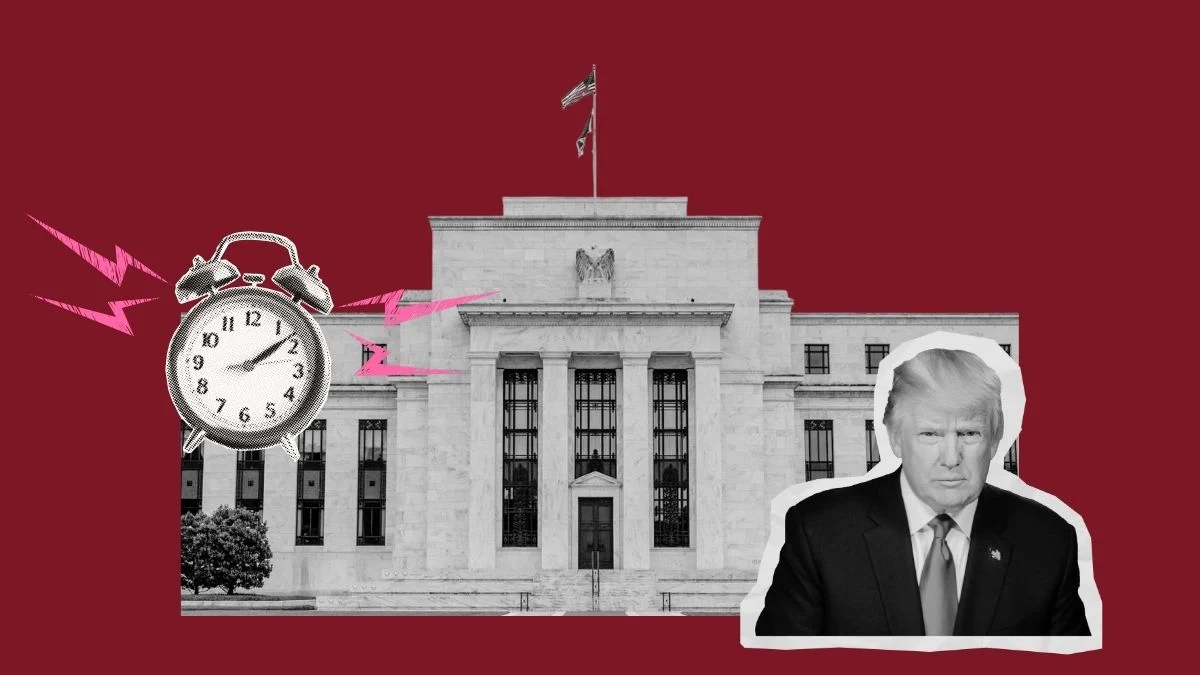
The White House has officially launched a formal procedure to remove Federal Reserve Governor Lisa Cook from her position, intensifying a high-stakes legal and political battle over the independence of the nation’s central bank. This week, the administration dispatched a formal letter to Governor Cook, signed by Deputy Chief of Staff Dan Scavino, notifying her that President Donald Trump is "considering" her removal from the Board of Governors. The correspondence grants Cook a three-week window to provide a formal response to allegations of "gross negligence" involving mortgage fraud, marking a significant escalation in the president’s long-standing effort to purge the Federal Reserve of officials he deems untrustworthy or politically adversarial.
The move follows a pivotal Supreme Court ruling in late June that established a procedural framework for the removal of Federal Reserve officials. In a narrow 5-4 decision, the Court’s majority, led by Chief Justice John Roberts, determined that while the president possesses the authority to remove a governor "for cause," such an action requires due process, including formal notice and a meaningful opportunity for the official to contest the charges. By issuing this letter and setting a twenty-one-day deadline, the White House is seeking to satisfy the judicial requirements necessary to survive a likely legal challenge, effectively testing the "for-cause" standard that has shielded the Federal Reserve from executive interference for over a century.
The Allegations of Mortgage Fraud and Gross Negligence
The impetus for the removal process centers on claims that Governor Cook engaged in deceptive practices to secure favorable mortgage terms prior to her appointment to the Federal Reserve. These allegations were brought to the forefront by Bill Pulte, the Director of the Federal Housing Finance Agency (FHFA), who reportedly referred the matter to the Department of Justice (DOJ) and the White House. According to the administration’s letter, Cook is accused of falsifying bank documents and misrepresenting financial data to lenders.
While the Department of Justice launched a preliminary probe into these claims last year, no criminal charges have been filed to date. However, the White House argues that the threshold for removal from the Federal Reserve—defined as "efficiency, neglect of duty, or malfeasance in office"—does not strictly require a criminal conviction. The letter from Scavino argues that "gross negligence" in personal financial dealings undermines the public’s trust and renders a governor unfit to oversee the complexities of the U.S. monetary system. The administration contends that a member of the Board of Governors must be beyond reproach, as their decisions directly influence global markets, inflation rates, and the economic stability of millions of American households.
Legal Precedents and the Supreme Court’s Role
The current confrontation is the latest chapter in a broader constitutional debate regarding the "unitary executive theory," which posits that the president should have absolute authority over executive branch agencies. Historically, the Federal Reserve has been viewed as a "quasi-legislative" and "quasi-judicial" body, intentionally insulated from political whims by the Federal Reserve Act of 1913. Governors are appointed to staggered 14-year terms to ensure they can make unpopular but necessary economic decisions, such as raising interest rates to combat inflation, without fear of immediate termination by the president.
The Supreme Court’s June ruling was a nuanced victory for both sides. While it rejected President Trump’s attempt to summarily fire Cook via social media or executive fiat, it affirmed that the presidency does have the power to remove a governor if "cause" can be proven. Chief Justice Roberts emphasized that the Federal Reserve’s structural independence is a design of Congress, but it is not an absolute shield against accountability for personal misconduct. This "notice and opportunity" requirement is what the White House is now attempting to fulfill. If the administration proceeds with the removal after Cook’s response, the case is almost certain to return to the federal courts, where judges will have to define, for the first time in the modern era, what specific behaviors constitute "cause" for the removal of a central banker.
Chronology of the Conflict
The friction between the White House and Governor Cook dates back to her initial nomination. Her path to the Federal Reserve was one of the most contentious in the institution’s history, reflecting the deep partisan divide over the direction of monetary policy.
- May 2022: Lisa Cook is confirmed by the U.S. Senate in a historic 50-50 vote. Vice President Kamala Harris traveled to the Capitol to cast the tie-breaking vote, making Cook the first Black woman to serve on the Federal Reserve Board of Governors.
- Early 2023: Allegations regarding mortgage discrepancies begin to circulate in political circles, reportedly originating from data reviewed by the FHFA under Bill Pulte’s leadership.
- Late 2023: The Department of Justice opens an investigation into the mortgage fraud claims. President Trump begins publicly criticizing Cook, labeling her a "political operative" and calling for her resignation.
- June 2024: The Supreme Court issues its 5-4 ruling in a case brought by Cook’s legal team to block an immediate firing. The Court rules that the president must provide a formal process before removal.
- Current Week: The White House issues the formal letter signed by Dan Scavino, initiating the three-week countdown for Cook’s defense.
Official Responses and Defense Strategy
Governor Cook and her legal counsel have remained steadfast in their denial of any wrongdoing. Her lead attorney, Abbe Lowell, a prominent litigator known for handling high-profile political cases, characterized the administration’s latest move as a "pretextual assault" on the independence of the Fed.
"No matter what President Trump tries to do next, this much is clear under the facts and Supreme Court precedent—there is no valid cause for removing Governor Cook," Lowell stated. He further argued that the mortgage allegations are "baseless" and have been "manufactured" to provide a legal veneer for what is essentially a political disagreement over interest rates.
Cook herself has been vocal about the implications of this move for the Federal Reserve’s mandate. In statements following the Supreme Court’s decision, she framed the attacks as an attempt to intimidate the Board of Governors. "This was never about mortgage documents signed years before I became a Federal Reserve governor," Cook remarked. "It was an attempt to remove me because I refused to bow to political pressure and continued to set interest rates based only on what would best serve the American people."
Within the Federal Reserve, the mood is reportedly one of concern. While Chairman Jerome Powell has not commented directly on the specifics of the Cook case, he has frequently defended the necessity of the Fed’s "operational independence." Supporters of Cook within the Senate have also signaled that they will scrutinize any evidence the White House produces, warning that a "for-cause" removal based on unsubstantiated claims would set a dangerous precedent for future administrations of either party.
Economic Implications and Market Stability
The attempt to remove a sitting Federal Reserve governor is not merely a personnel matter; it has profound implications for the U.S. economy. The Federal Reserve operates on a "dual mandate" to promote maximum employment and stable prices. To achieve this, the Federal Open Market Committee (FOMC) must make decisions based on complex data sets rather than election cycles.
Economists warn that if the executive branch successfully removes a governor over policy-related tensions—even if masked as "cause"—it could lead to a "politicization premium" in financial markets. Investors generally prefer a predictable central bank; if the Fed is seen as an extension of the White House, market confidence in the U.S. dollar and Treasury bonds could be shaken. Higher volatility in the bond market often translates to higher borrowing costs for consumers, affecting everything from auto loans to corporate debt.
Furthermore, the timing of this move is critical. The Federal Reserve is currently navigating a delicate "soft landing," attempting to bring inflation down to its 2% target without triggering a recession. A vacancy on the board or a protracted legal battle involving a sitting governor could distract the FOMC and introduce uncertainty into its deliberations.
Analysis of the "For-Cause" Standard
The central legal question remains: what qualifies as "cause"? In previous cases involving other independent agencies, such as the Federal Trade Commission (FTC), the courts have held that a president cannot fire a commissioner simply because they disagree on policy. However, "malfeasance" and "neglect of duty" are broad terms.
If the White House can produce documented evidence of mortgage fraud—even if it occurred prior to Cook’s tenure—they will argue that her continued presence on the board creates a "reputational risk" that hinders the "efficiency" of the Fed. Conversely, Cook’s team will argue that "cause" must relate to her performance in office. They will likely contend that personal financial history, if vetted during the Senate confirmation process (as Cook’s was), cannot be retroactively used as a weapon for removal.
Future Outlook
As the three-week deadline approaches, the legal community and financial markets are bracing for the next phase of this confrontation. Should Governor Cook provide a robust defense that the White House finds insufficient, a formal removal order will likely follow. This would immediately trigger a request for an injunction in federal court to stay the removal until a full trial can be held.
The outcome of this battle will define the limits of presidential power over the "fourth branch" of government. If President Trump succeeds, it may signal a new era where the Federal Reserve is more closely aligned with the executive branch’s political agenda. If Governor Cook prevails in court, it will reinforce the statutory walls that protect the central bank, ensuring that its governors remain insulated from the shifting winds of the White House. For now, the eyes of the financial world remain fixed on the three-week window, waiting to see if the administration can turn allegations into a legally sustainable dismissal.
