

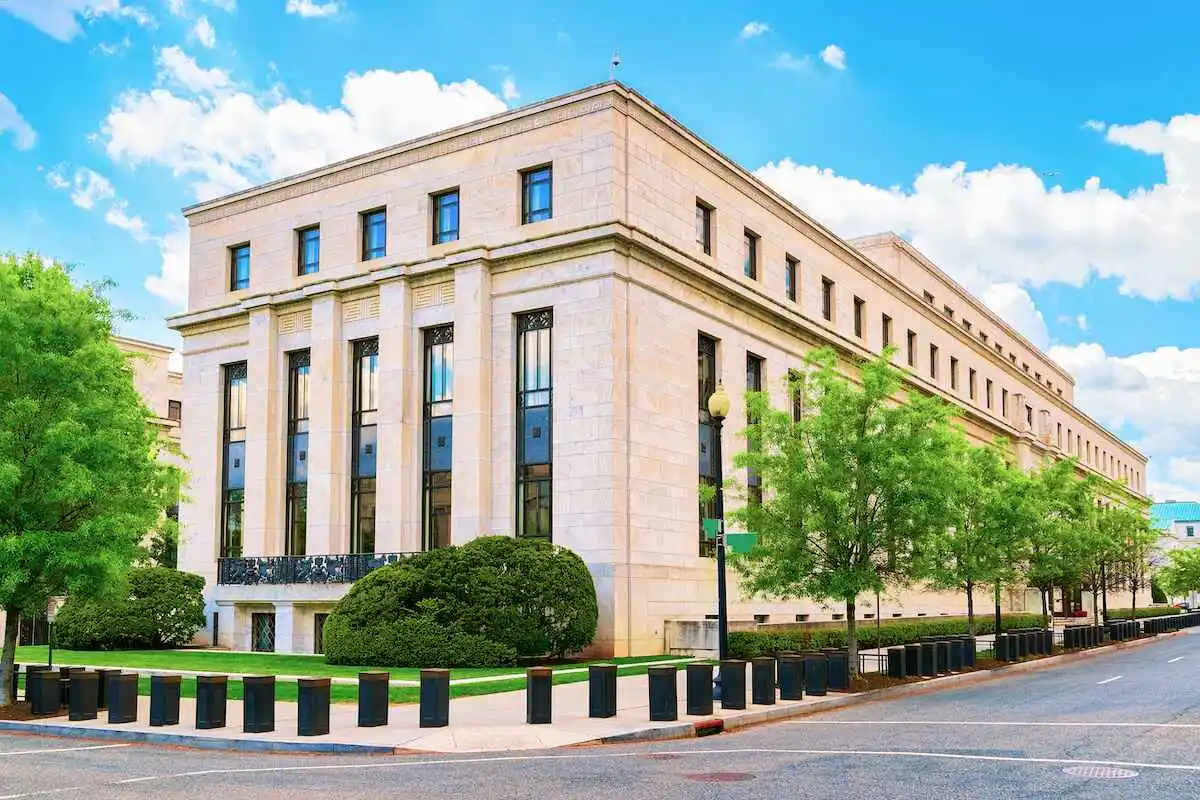
The Federal Reserve’s hawkish faction, which has long advocated for a sustained period of high interest rates to combat persistent inflation, finds itself in an increasingly precarious position following a series of disappointing economic data releases. In the weeks leading up to the July Federal Open Market Committee (FOMC) meeting, prominent voices within the central bank, including Governor Christopher Waller, had signaled that a "hot" Consumer Price Index (CPI) report for July could necessitate further monetary tightening. However, the subsequent reality of the economic landscape has diverged sharply from those projections. Instead of overheating, the most recent data points toward a cooling economy, characterized by missing inflation targets and a labor market that is beginning to show visible signs of exhaustion.
The latest employment figures from the Bureau of Labor Statistics (BLS) have provided the most significant blow to the hawkish narrative. According to the July report, nonfarm payroll employment saw a surprising decline of 23,000, falling well short of consensus expectations. Perhaps more concerning for the Fed’s policy trajectory was the revelation of substantial negative revisions to previous months, totaling 103,000 jobs. These revisions suggest that the labor market’s strength earlier in the year may have been overstated, casting doubt on the "resilience" that has been a cornerstone of the Fed’s justification for keeping rates at a 22-year high.
Dissecting the July Labor Market Volatility
The July jobs report was characterized by several statistical anomalies and sector-specific downturns that have complicated the immediate interpretation of the data. The headline unemployment rate ticked up slightly to 4.1%, a figure that, while historically low, represents a notable climb from the cycle lows of 3.4% seen just a year ago. The BLS reported that the decline in employment was primarily driven by losses in local government education and the retail trade sector. Conversely, the healthcare industry remained a primary engine of growth, continuing its long-term trend of expansion.
Analysts have pointed to specific "quirks" that may have influenced these numbers. The drop in local government education employment is often subject to seasonal adjustment challenges during the summer months when school contracts expire and renew. Furthermore, some market observers have suggested that temporary disruptions, such as the conclusion of major international sporting events or administrative shifts within federal agencies, may have played a minor role in the volatility. However, the persistent nature of negative revisions suggests a broader trend of cooling rather than a series of one-off events. The labor market appears to be transitioning from a period of rapid post-pandemic recovery to a "low-hire, low-fire" environment, where job openings are decreasing and the pace of hiring is slowing to a crawl.
The Fed’s Dual Mandate and the Wage Growth Metric
The Federal Reserve operates under a dual mandate: achieving maximum employment and maintaining price stability. For much of 2023 and the beginning of 2024, the focus remained almost exclusively on price stability as inflation soared far above the 2% target. However, with the July data showing wage growth falling to a cycle low of 3.2%, the "maximum employment" side of the mandate is returning to the forefront of policy discussions.
The decline in wage growth is a critical metric for the Fed. Central bank economists have long maintained a model suggesting that for inflation to stabilize at the 2% target, wage growth should ideally hover around 3%, assuming productivity growth remains at approximately 1%. At 3.2%, wage growth is now within striking distance of the Fed’s comfort zone. While this serves as a victory for the central bank’s efforts to suppress inflationary pressures, it also signals a reduction in consumer purchasing power, which could further dampen economic activity in the coming quarters.
The current 3.2% wage growth figure is a stark contrast to the 5.9% peaks seen during the height of the labor shortage. This deceleration indicates that the "wage-price spiral" once feared by many hawks has failed to materialize or has been effectively neutralized. However, the awkwardness for the Fed lies in the timing; having insisted that the labor market was too strong to justify rate cuts, they are now faced with evidence that the labor market may be weakening faster than anticipated.
Inflation Misses and the Shift in Monetary Sentiment
Prior to the jobs report, both the Consumer Price Index (CPI) and the Producer Price Index (PPI) for July came in significantly lower than expected. These "misses" on the downside have effectively stripped the hawks of their primary argument for a September rate hike. If inflation is cooling and the labor market is softening, the traditional justification for restrictive monetary policy begins to dissolve.
The Federal Reserve’s current benchmark interest rate sits in the 5.25% to 5.50% range. Throughout the summer, Fed officials have debated whether the "neutral rate"—the rate at which the economy neither expands nor contracts—has risen. Hawks have argued that the economy could handle higher rates because of structural changes in the labor market. Yet, the recent data suggests that the "break-even" point for job growth may be much lower than previously thought. Some internal estimates suggest the Fed only needs to see approximately 33,000 jobs created per month to maintain a stable economy. With the July report showing a net loss, the margin for error has evaporated.
Housing Market Vulnerabilities and Bond Yields
The implications of the cooling labor market are particularly acute in the residential sector. The long end of the bond market has remained volatile, with the 10-year Treasury yield influencing mortgage rates. Despite the weak jobs report, mortgage rates have remained elevated, putting further pressure on a housing market already constrained by low inventory and high prices.
The residential labor market is often a leading indicator of broader economic health. As construction projects slow and real estate transactions decline due to high financing costs, the ripple effects are felt throughout the economy. If the Fed maintains its hawkish stance through September despite the weakening data, there is a growing risk that the "soft landing" they have sought could turn into a harder contraction. The "lifting" typically done by the bond market—where yields fall in anticipation of rate cuts—may be hindered if the Fed’s rhetoric remains disconnected from the deteriorating economic data.
Chronology of Recent Economic Indicators
To understand the current "awkwardness" of the Fed’s position, one must look at the timeline of events leading up to the current impasse:
- Late June/Early July: Fed Governor Christopher Waller and other officials suggest that a July rate hike remains a possibility if inflation data does not show significant improvement.
- Mid-July: The July CPI report is released, showing a significant "miss" as inflation cools more rapidly than forecasted.
- Late July: The PPI report follows suit, confirming that price pressures at the wholesale level are also receding.
- Early August: The BLS releases the July employment situation report, revealing a loss of 23,000 jobs and a cumulative 103,000 in negative revisions for previous months.
- Present: Market participants and Fed watchers recalibrate expectations for the September meeting, with the probability of a rate hike plummeting and calls for a rate cut beginning to intensify.
The Path to September: Anticipating the Next Move
The Federal Reserve now faces a high-stakes period of observation before its next scheduled meeting in September. There is one more CPI report due before that meeting, which will likely serve as the final arbiter for the committee’s decision. If that report confirms that inflation is continuing its downward trajectory toward 2%, the pressure on the Fed to begin easing policy will be immense.
The divide between the "hawks" and the "doves" on the committee is expected to widen. Doves will likely argue that the long end of the bond market has already done the Fed’s work and that further delay in cutting rates could unnecessarily damage the labor market. They will point to the negative revisions and the 3.2% wage growth as proof that the mission of cooling the economy has been accomplished.
Hawks, on the other hand, may remain cautious, pointing to the 4.1% unemployment rate as still being low by historical standards. They may argue that the "quirks" in the July report—such as the education and retail fluctuations—justify waiting for more data. However, this position is becoming increasingly difficult to maintain as the data points consistently in one direction: a slowdown.
Conclusion and Broader Implications
The recent string of economic data has created a challenging environment for the Federal Reserve. The transition from a "hot" economy to one showing signs of contraction has happened with a speed that has caught many policymakers off guard. The July jobs report, characterized by negative growth and significant revisions, serves as a stark reminder that the lag effect of monetary policy is real and potent.
As the Fed moves toward its September meeting, the narrative of "higher for longer" is being tested by the reality of a cooling labor market and retreating inflation. The awkwardness currently felt by the Fed hawks is a byproduct of a policy stance that may have stayed restrictive for a moment too long. Whether the central bank can navigate this transition without triggering a deeper recession remains the primary question for global markets. For now, the focus shifts to the next inflation print, which will determine if the Fed finally pivots or continues to lean on a labor market that is clearly losing its steam.
