

United States President Donald Trump has announced a strategic suspension of a planned military strike against the Islamic Republic of Iran, citing direct requests from high-level Gulf Arab leaders and the receipt of a fresh diplomatic overture from Tehran. The decision, revealed in a series of communications on Monday, marks a critical pivot in a six-week-old conflict that has pushed the Middle East to the brink of a regional catastrophe. The pause comes as the United States evaluates a revised 14-point peace proposal transmitted by Iranian officials through Pakistani mediators, offering a narrow window for a negotiated settlement to prevent further escalation.
President Trump indicated on Monday that there is now a “very good chance” for a comprehensive agreement that would address Washington’s primary objective: ensuring Iran does not obtain a nuclear weapon. This cautious optimism follows a period of intense bellicosity, during which the White House had signaled that a significant military operation was imminent. The President confirmed he had issued orders to Secretary of Defense Pete Hegseth and Chairman of the Joint Chiefs of Staff General Dan Caine to stand down from a large-scale assault originally scheduled for Tuesday. However, the suspension remains conditional, with the U.S. military reportedly maintaining a state of high readiness should the diplomatic track collapse.
The Diplomatic Intervention of Gulf Allies
The decision to halt the strike was heavily influenced by a coordinated diplomatic effort from Saudi Arabia, the United Arab Emirates (UAE), and Qatar. These nations, which find themselves on the front lines of any potential regional conflagration, reportedly urged the Trump administration to exhaust all diplomatic avenues before initiating a full-scale kinetic campaign.
The urgency of these requests was underscored by a series of security breaches in the region. On Monday, Saudi Arabian defense forces intercepted three drones targeting various sites within the Kingdom. This followed a sophisticated drone strike on Sunday that targeted the Barakah Nuclear Energy Plant in the UAE. While the plant, a cornerstone of the Emirates’ clean energy strategy, survived the attack without catastrophic damage, the incident highlighted the vulnerability of critical infrastructure in the Gulf. Gulf leaders expressed concern that a direct U.S. attack on Iran would trigger a massive retaliatory wave from Tehran and its regional proxies, potentially devastating the global energy market and local economies.
The 14-Point Peace Proposal and the Role of Pakistan
Central to the current pause is a new 14-point peace plan submitted by Tehran. Iranian Ministry of Foreign Affairs spokesman Esmaeil Baghaei confirmed on Monday that the document was delivered to Washington via Pakistan, which has served as a vital intermediary throughout the conflict. While the full text of the proposal has not been made public, Iranian state media and officials have outlined several core demands that Tehran views as non-negotiable.
The proposal includes:
- Release of Frozen Assets: Tehran is demanding the immediate unfreezing of billions of dollars in Iranian funds currently held in foreign banks due to U.S. sanctions.
- Lifting of Sanctions: A comprehensive rollback of the "Maximum Pressure" style sanctions that have crippled the Iranian economy.
- Compensation for Damages: Iran is seeking financial reparations for infrastructure damage sustained during U.S. and Israeli military operations over the past six weeks.
- End of Naval Blockades: A demand for the United States to lift its naval blockade of Iranian ports, which has severely restricted the flow of humanitarian goods and commercial exports.
- Regional Ceasefire: A requirement that military operations cease on all fronts, including the ongoing conflict in Southern Lebanon, where Israeli forces have been engaged in a ground invasion against Hezbollah.
Washington’s response to these points remains guarded. The U.S. has countered with its own stringent requirements, primarily focusing on the total dismantling of Iran’s nuclear enrichment capabilities and the restoration of unrestricted maritime traffic through the Strait of Hormuz.
Chronology of the 2026 Conflict
The current crisis is the culmination of months of deteriorating relations and localized skirmishes that evolved into a broader military engagement in early 2026.
- Early March 2026: Tensions escalate as Iran implements new restrictions on shipping in the Strait of Hormuz, demanding "transit fees" from commercial vessels.
- March 15, 2026: Full-scale hostilities break out following a series of maritime incidents and cross-border strikes. The U.S. launches "Operation Sentinel’s Fury" to degrade Iranian coastal defenses.
- April 8, 2026: A temporary ceasefire is brokered by international mediators. While large-scale aerial bombardments subside, shadow warfare and proxy attacks continue.
- April 24, 2026: The U.S. announces a total naval blockade of Iranian ports in response to continued interference with global shipping.
- May 11, 2026: President Trump rejects a previous Iranian peace proposal, labeling it "unacceptable" and stating the ceasefire is "on life support."
- May 18, 2026: A drone strike hits the Barakah Nuclear Plant in the UAE. Iran submits a revised 14-point plan through Pakistan.
- May 19, 2026: President Trump announces the pause of the Tuesday attack, citing requests from Gulf allies and the new proposal.
The Nuclear Standoff: Enrichment and Uranium Stockpiles
The most significant obstacle to a durable peace remains Iran’s nuclear program. According to intelligence reports and data from the International Atomic Energy Agency (IAEA), Iran currently possesses approximately 440kg (970lb) of uranium enriched to 60 percent purity. This level of enrichment is a short technical step away from the 90 percent "weapons-grade" threshold required for a nuclear warhead.

The Trump administration has demanded that Iran surrender its entire stockpile of enriched material to the United States. Tehran has categorically rejected this, viewing the stockpile as its primary piece of leverage. During the recent BRICS foreign ministers’ meeting in New Delhi, Iranian Foreign Minister Abbas Araghchi admitted that negotiations regarding the "enriched material" had reached a deadlock.
A potential compromise has emerged involving Russia. Moscow has offered to take custody of the Iranian uranium, storing it on Russian soil to ensure it is not used for weapons development while allowing Iran to retain legal ownership. While Araghchi indicated that Tehran might consider this "at an appropriate time," the U.S. remains skeptical, preferring a total moratorium on all enrichment activities for a period of 20 years—a return to a framework even stricter than the 2015 Joint Comprehensive Plan of Action (JCPOA).
Economic Implications and the Strait of Hormuz
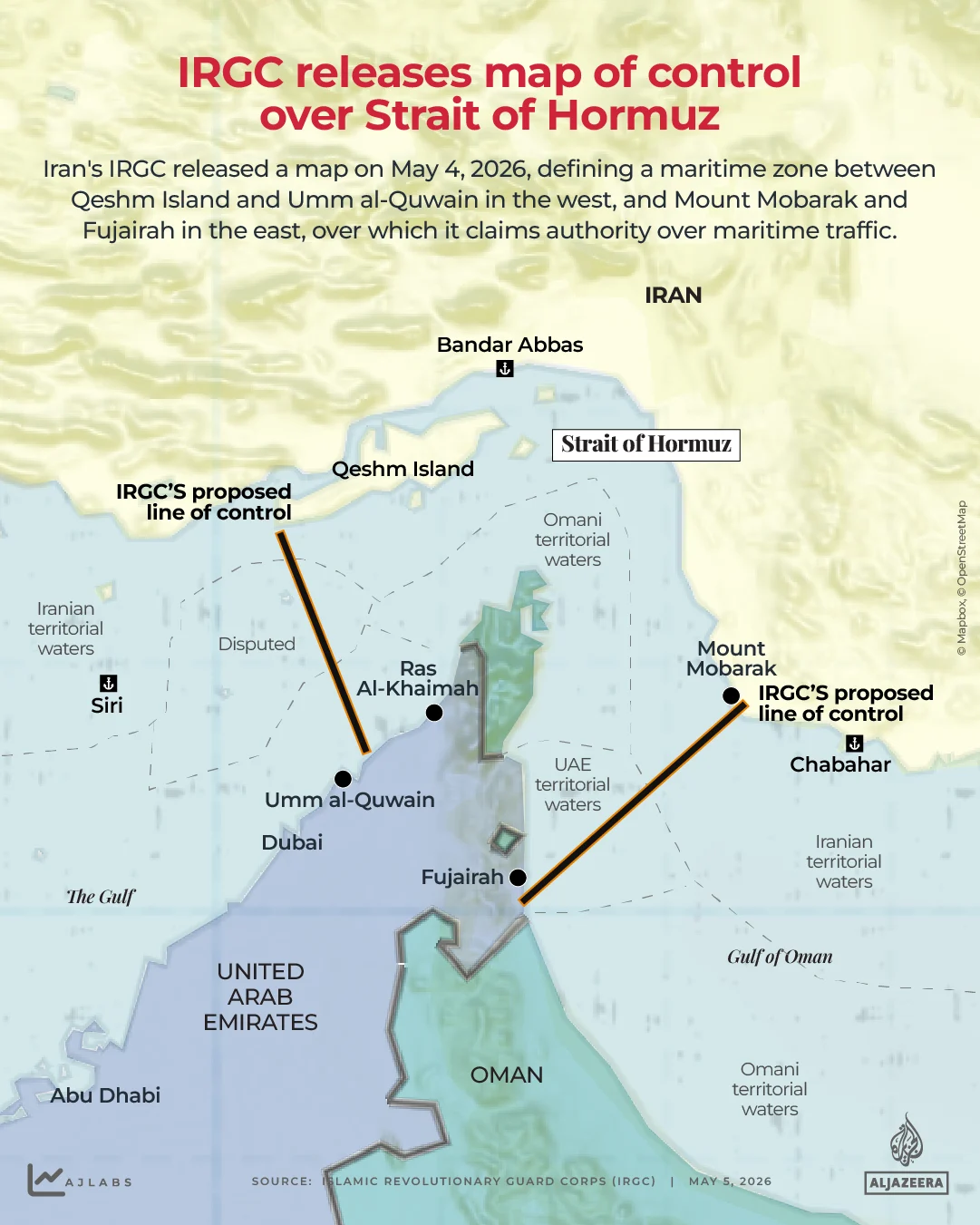
The conflict has sent shockwaves through global markets, primarily due to the instability surrounding the Strait of Hormuz. This narrow waterway is the world’s most important oil transit chokepoint, through which 20 percent of the world’s total petroleum and liquefied natural gas (LNG) consumption passes.
The Iranian Revolutionary Guard Corps (IRGC) has maintained a "negotiated transit" policy, where only vessels from "friendly" nations or those willing to pay tolls are granted safe passage. The U.S. naval blockade of Iran was intended to counter this by choking off Tehran’s own revenue, but the result has been a significant increase in global energy prices and insurance premiums for maritime shipping.
Financial analysts warn that a full-scale assault on Iran could lead to the total closure of the Strait, potentially driving crude oil prices above $150 per barrel and triggering a global recession. This economic reality is a driving force behind the Gulf allies’ insistence on a diplomatic solution, as their economies are uniquely dependent on the uninterrupted flow of hydrocarbons through the Gulf.
Analysis of Regional Implications
The "pause" announced by President Trump reflects a complex calculation of military risk and diplomatic opportunity. By involving Gulf leaders in the decision-making process, the White House is attempting to maintain a unified front while shifting some of the burden of de-escalation onto regional partners.
However, the threat of renewed violence remains high. The "Axis of Resistance"—comprising Hezbollah in Lebanon, the Houthis in Yemen, and various paramilitary groups in Iraq and Syria—remains active. If these groups continue to launch drone and missile attacks against U.S. allies, the domestic political pressure on President Trump to resume the offensive will likely become insurmountable.
The role of Pakistan and Russia as intermediaries also highlights a shift in the geopolitical landscape, where traditional Western diplomacy is being supplemented or replaced by regional powers with direct interests in the conflict’s outcome. The success of the 14-point plan depends on whether Washington is willing to offer significant sanctions relief in exchange for verifiable nuclear concessions—a trade-off that has eluded negotiators for decades.
As of Tuesday morning, the scheduled strikes have been suspended, and the world’s attention turns to the "serious negotiations" mentioned by the President. For now, the "clock" that Trump referenced continues to tick, but the immediate threat of a catastrophic regional war has, for a few days at least, been averted. The coming week will determine if the 14-point proposal is a genuine blueprint for peace or merely a tactical maneuver to buy time in a conflict that continues to threaten global stability.
