

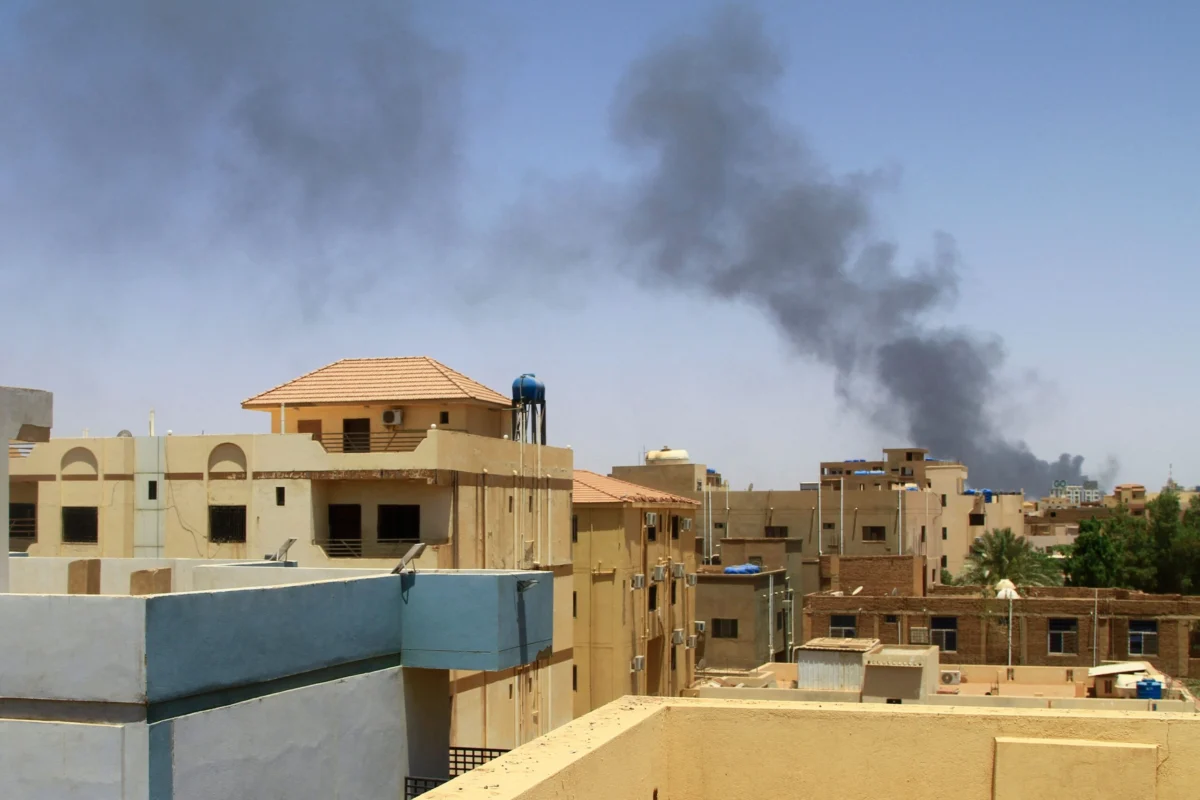
The Sudanese paramilitary Rapid Support Forces (RSF) announced a unilateral 72-hour ceasefire beginning at 6:00 a.m. local time on Friday, April 21, 2023, intended to coincide with the Muslim holiday of Eid al-Fitr; however, the declaration failed to silence the heavy artillery and gunfire that have devastated the capital city of Khartoum for nearly a week. Despite the RSF’s stated intention to allow for humanitarian corridors and the reunification of families during the sacred holiday, residents in Khartoum and its twin city, Bahri, reported that the Sudanese Armed Forces (SAF) continued to deploy infantry and engage in aerial bombardments. The discrepancy between the diplomatic overtures of the paramilitary group and the tactical reality on the ground underscores the volatility of a power struggle that has already claimed hundreds of lives and pushed the nation to the brink of a full-scale civil war.
The RSF statement, released early Friday morning, framed the truce as a gesture of religious observance and humanitarian concern. "The truce coincides with the blessed Eid al-Fitr… to open humanitarian corridors to evacuate citizens and give them the opportunity to greet their families," the group declared. Nevertheless, General Abdel Fattah al-Burhan, the head of the Sudanese army and the country’s de facto ruler, did not explicitly acknowledge or reciprocate the ceasefire in a pre-recorded video address posted to the army’s official social media channels. Instead, Burhan focused his message on the resilience of the military, leaving the prospect of a functional armistice in doubt as the sound of explosions echoed through the capital during the traditional morning Eid prayers.
A Chronology of the Outbreak and Escalation
The current hostilities erupted on Saturday, April 15, 2023, following weeks of heightening tensions between General Burhan and his former deputy, General Mohamed Hamdan Dagalo, better known as Hemedti, who leads the RSF. The conflict traces its immediate roots to a disagreement over the timeline and command structure for integrating the RSF into the regular Sudanese military—a key requirement of an internationally backed framework agreement intended to transition the country back to civilian rule.
On the morning of April 15, the first reports of gunfire emerged from the Soba military base and the Khartoum international airport. Within hours, the conflict spread to the presidential palace and the state television headquarters. Both sides utilized heavy weaponry in densely populated urban areas, a departure from Sudan’s historical conflicts which were largely confined to peripheral regions like Darfur or the southern borderlands. By the third day of fighting, the Sudanese Air Force began conducting strikes within the capital, targeting RSF positions embedded in residential neighborhoods.
By Thursday, April 20, the eve of the proposed Eid truce, the violence had reached a fever pitch. Thousands of civilians began a desperate exodus from Khartoum, moving toward safer states like Al-Jazirah or attempting the perilous journey toward the Egyptian border. Simultaneously, the western region of Darfur saw a resurgence of ethnicized violence, with the city of El-Obeid reporting at least 26 deaths in a single day of clashes and widespread looting. The RSF’s announcement of a Friday truce was seen by many international observers as a potential de-escalation point, yet the continued deployment of army troops on foot through Khartoum’s streets suggests a shift toward high-intensity urban clearing operations rather than a cessation of hostilities.
The Humanitarian Toll and Supporting Data
The human cost of the six-day conflict has been catastrophic. According to the World Health Organization (WHO) and the Sudanese Doctors’ Union, the death toll has surpassed 350, with over 3,000 individuals wounded. These figures are widely considered to be undercounts, as many bodies remain in the streets of Khartoum, inaccessible due to ongoing sniper fire and shelling. The medical infrastructure in the capital is nearing total collapse; the Doctors’ Union reported that approximately 70% of hospitals in conflict zones are out of service, either due to direct damage, lack of supplies, or the inability of medical staff to reach the facilities safely.
Beyond the immediate casualties, the conflict has triggered a massive displacement crisis. The United Nations Refugee Agency (UNHCR) and the World Food Programme (WFP) estimate that between 10,000 and 20,000 people have fled into neighboring Chad. This influx is particularly concerning given that Chad already hosts over 400,000 Sudanese refugees from previous conflicts. Inside Sudan, the suspension of WFP operations—following the tragic deaths of three staff members in North Darfur—has left millions without food aid. Prior to this outbreak, nearly 15 million people, or one-third of Sudan’s population, were already experiencing acute food insecurity.
Basic utilities have also been weaponized or destroyed. Large swaths of Khartoum have been without electricity or running water for several days, as engineers are unable to reach pumping stations or power grids to perform repairs. The resulting lack of clean water, combined with the rising temperatures and the presence of uncollected remains, has raised significant concerns regarding the potential for cholera and other waterborne disease outbreaks.
Divergent Narratives and Official Responses
The rhetoric from the two warring generals remains uncompromising, with both leaders framing the conflict as an existential struggle for the state. General Burhan, speaking to international media, characterized the RSF’s actions as a "power grab" and a rebellion against the legitimate state apparatus. He stated that he saw "no other option but the military solution" and refused to sit down for negotiations with Hemedti, whom he labeled a criminal. Burhan’s condition for a truce remains the total withdrawal of RSF forces from urban centers and their relocation to designated barracks outside the capital.
Conversely, Hemedti has positioned the RSF as the defenders of the democratic transition, accusing Burhan of being a front for the "remnants" of the former Islamist regime of Omar al-Bashir. In his communications, Hemedti claimed the RSF was forced into "self-defense" to repel a coup attempt by the army leadership. Despite his call for a humanitarian truce, Hemedti’s language remained bellicose, referring to Burhan as a "criminal" who must be brought to justice.
The international community has reacted with a mixture of condemnation and urgent diplomacy. United Nations Secretary-General Antonio Guterres, following a virtual summit with the African Union and the Arab League, emphasized that a cessation of hostilities is an "immediate priority." The United States, the United Kingdom, and the European Union have all endorsed the ceasefire proposal, with U.S. Secretary of State Antony Blinken engaging in direct phone diplomacy with both generals. However, the lack of a unified enforcement mechanism or a clear "red line" from regional powers like Egypt (which supports the army) and the UAE (which has historical ties to the RSF) has limited the efficacy of these diplomatic pressures.
Background: The Roots of the Power Struggle
To understand the current carnage, one must look back to the 2019 revolution that ousted long-time autocrat Omar al-Bashir. The RSF, originally formed from the Janjaweed militias that gained notoriety during the Darfur genocide in the early 2000s, was institutionalized by Bashir as a praetorian guard to protect his regime from military coups. However, in 2019, Hemedti and Burhan joined forces to remove Bashir following months of mass protests.
While the two generals initially cooperated in a fragile power-sharing agreement with civilian leaders, they eventually staged a joint military coup in October 2021, dissolving the civilian government and derailing the democratic transition. For the past two years, they have ruled Sudan as a military junta, but the alliance of convenience began to fracture as the deadline for a transition back to civilian rule approached. The primary sticking point became the "Security and Military Reform" (SMR) process. The army insisted on a two-year timeline for the RSF’s total integration, while the RSF demanded a ten-year window and a command structure that would allow Hemedti to report directly to a civilian head of state rather than the army chief. This technical dispute over command and control provided the spark for the current conflagration.
Broader Geopolitical and Regional Implications
The conflict in Sudan is not merely an internal affair; it has the potential to destabilize the entire Horn of Africa and the Sahel region. Sudan shares borders with seven countries—Egypt, Libya, Chad, the Central African Republic, South Sudan, Ethiopia, and Eritrea—many of which are already grappling with their own internal instabilities. A prolonged civil war in Sudan could lead to massive cross-border arms flows and the movement of extremist groups.
Furthermore, Sudan is a theater for competition between global powers. Russia has sought to establish a naval base at Port Sudan on the Red Sea and has maintained ties with the RSF through the Wagner Group, which has been involved in Sudan’s gold mining sector. Meanwhile, the United States and its Western allies view Sudan as a critical partner in counter-terrorism and have invested heavily in the now-stalled democratic transition. The involvement of regional actors like Egypt, which views a stable Sudanese army as vital to its national security and its interests in the Nile water dispute with Ethiopia, further complicates the path to peace.
Analysis of Future Outlook
As the Eid al-Fitr holiday begins under the shadow of war, the prospect for a lasting peace remains dim. The failure of the 72-hour truce to hold in its first few hours suggests that both the SAF and the RSF believe a decisive military victory is still possible. However, urban warfare is notoriously difficult to conclude quickly. If the army continues to use its superior air power and heavy artillery in Khartoum, the civilian death toll will continue to rise exponentially. If the RSF, which is highly mobile and experienced in guerrilla tactics, manages to hold its ground, Sudan faces a protracted war of attrition.
The most likely scenario in the short term is a continuation of "stop-start" fighting, where temporary pauses are used by both sides to resupply and reposition rather than to negotiate in good faith. Without a significant shift in the incentive structures for Burhan and Hemedti—likely requiring coordinated economic and political sanctions from regional and global powers—the "military solution" sought by the generals will continue to come at the expense of the Sudanese people’s aspirations for peace and democracy. The dream of a civilian-led Sudan, which seemed so close in 2019, is now being systematically dismantled in the streets of Khartoum.
