

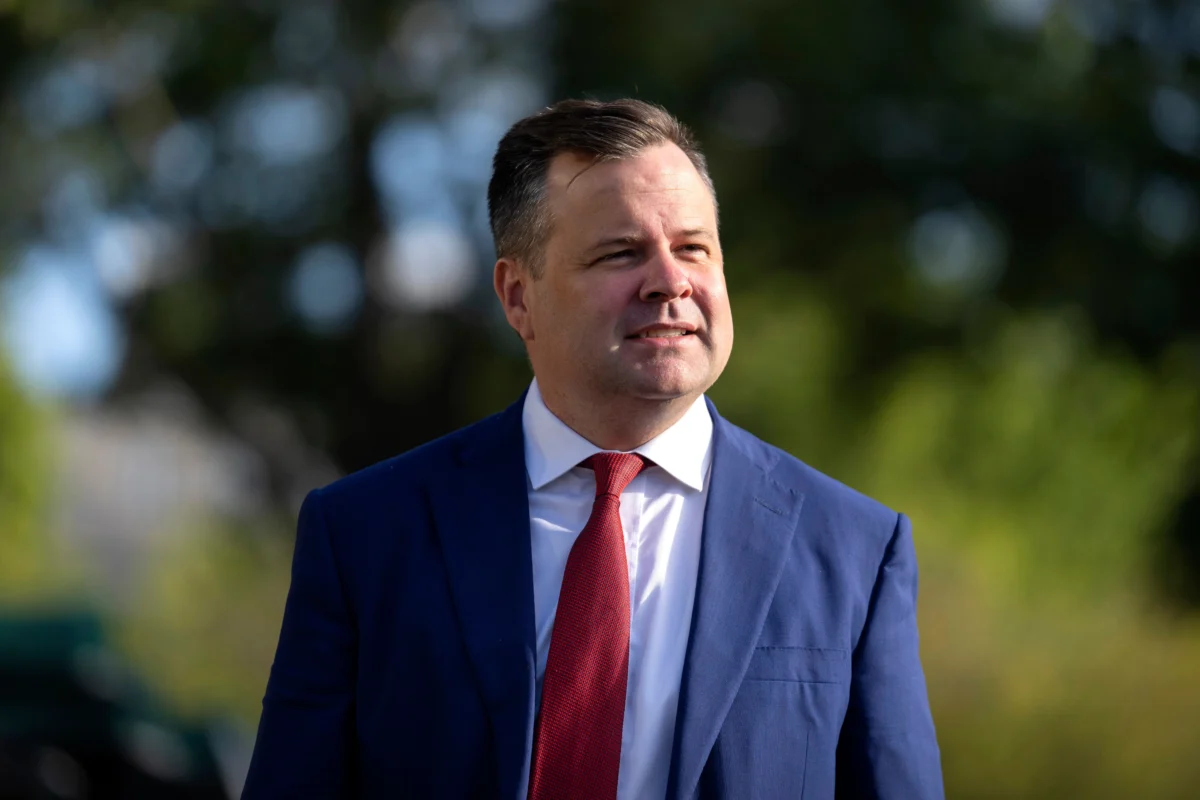
President Donald Trump on Tuesday announced the appointment of Bill Pulte, the current head of the Federal Housing Finance Agency (FHFA), to serve as the acting Director of National Intelligence (DNI), succeeding outgoing DNI Tulsi Gabbard. The decision immediately ignited a firestorm of controversy across Capitol Hill, drawing bipartisan condemnation due to Pulte’s complete lack of known prior intelligence experience and his established reputation as a partisan operative. Adding to the complexity and criticism, Pulte is slated to hold both the demanding DNI position and his existing roles as FHFA director and chairman of mortgage giants Fannie Mae and Freddie Mac concurrently.
The Pivotal Role of the Director of National Intelligence
The Office of the Director of National Intelligence (ODNI) was established in 2004 by the Intelligence Reform and Terrorism Prevention Act, a legislative response to the intelligence failures that preceded the September 11, 2001, terrorist attacks. The DNI serves as the principal intelligence advisor to the President, overseeing and integrating the efforts of the 17 disparate agencies that comprise the U.S. Intelligence Community (IC). These agencies include formidable entities such as the Central Intelligence Agency (CIA), the National Security Agency (NSA), the Defense Intelligence Agency (DIA), and intelligence components within various departments like the FBI, State, Treasury, Energy, and Homeland Security.
The DNI’s mandate is critical for national security, encompassing the coordination of intelligence collection and analysis, managing the IC’s multi-billion dollar budget, and ensuring the timely and objective delivery of intelligence assessments to the President and policymakers. The role demands an individual with extensive national security experience, deep understanding of complex geopolitical landscapes, and an unwavering commitment to non-partisanship, ensuring that intelligence is never politicized or tailored to fit a particular political narrative. The statute specifically requires that the DNI "have extensive national security experience."
Bill Pulte’s Controversial Tenure at the FHFA
Prior to this unexpected appointment, Bill Pulte presided over the Federal Housing Finance Agency (FHFA), an independent federal agency that regulates Fannie Mae and Freddie Mac, the government-sponsored enterprises (GSEs) that are central to the U.S. housing finance system. While the FHFA’s mission is crucial for the stability and integrity of the nation’s mortgage markets, Pulte’s tenure has been marked by significant controversy and allegations of political weaponization of the agency.
Pulte gained notoriety for initiating criminal referrals against perceived political adversaries of President Trump, actions highly unusual for a housing regulator. Last year, he filed a criminal referral against Federal Reserve Governor Lisa Cook, alleging mortgage fraud based on Cook reportedly claiming two different properties as her primary residence simultaneously. This move came amidst ongoing public criticism by President Trump of the Federal Reserve’s monetary policy, particularly its interest rate decisions, which he frequently argued were detrimental to the economy. Following Pulte’s referral, Trump attempted to fire Cook, leading to a lawsuit by Cook that is currently pending before the Supreme Court, challenging the President’s authority to remove her.
In a similar vein, Pulte also submitted a criminal referral against New York Attorney General Letitia James. The allegations centered on falsifying bank documents and property records in connection with a home mortgage she obtained in 2020. James, who had been a prominent legal antagonist to President Trump in New York, was charged with bank fraud and making false statements to a financial institution in October. However, the case was dismissed in November by a federal judge who ruled that the interim U.S. attorney who brought the indictment, former Trump lawyer Lindsey Halligan, was invalidly appointed. These actions led to a congressional watchdog investigation into Pulte’s handling of sensitive financial information and his use of agency authority for what many perceived as political vendettas.
President Trump, in his Truth Social post announcing Pulte’s DNI appointment, defended the choice by stating that Pulte "has deep experience managing the most sensitive matters in America, the safety and soundness of the Markets, and over 10 Trillion Dollars at Fannie Mae/Freddie Mac, a substantial increase from where it was just 12 months ago." This justification, however, conspicuously sidesteps the statutory requirement for national security experience, instead focusing on financial management, a skillset entirely distinct from the demands of intelligence oversight.
A Chronology of DNI Transitions and Appointments
The pathway to Pulte’s appointment began on May 22, when Tulsi Gabbard informed President Trump of her decision to step down as DNI. Gabbard cited a deeply personal reason for her departure, explaining that she needed to support her husband following his diagnosis with an "extremely rare form of bone cancer." Her resignation was slated to become effective on June 30.
Initially, the White House had indicated that Aaron Lukas, the Principal Deputy Director of National Intelligence, would assume the role of acting DNI upon Gabbard’s departure. This would have been a standard transition, placing a career intelligence professional with extensive experience in an interim leadership position. Lukas, by virtue of his principal deputy role, possesses the requisite background and institutional knowledge to guide the IC.
However, the President’s announcement via Truth Social on Tuesday dramatically altered this expected succession plan, introducing Bill Pulte, an individual with no apparent intelligence background, into the critical national security role. The White House did not immediately respond to requests for clarification on when Pulte’s tenure would begin or whether Lukas would remain in his current role, adding to the confusion and concern surrounding the sudden shift.
Widespread Condemnation: Bipartisan Alarm Bells Ring on Capitol Hill
The appointment of Bill Pulte as acting DNI was met with immediate and forceful criticism from both sides of the political aisle, signaling deep concern over the integrity and independence of the U.S. intelligence community.
Senate Majority Leader John Thune (R-S.D.), a ranking Republican, expressed palpable unease. "We don’t need a weaponized DNI, we need professionals there," Thune told reporters on Capitol Hill, reflecting a sentiment that crossed partisan lines. His statement directly addressed the fear that Pulte, known for his aggressive partisan actions at FHFA, would bring that approach to an office that demands strict impartiality. Thune further indicated that he was "seeking more information from the Trump administration about the current state of their thinking about that position," underscoring the lack of transparency and consultation surrounding the decision.
Senate Minority Leader Chuck Schumer (D-N.Y.) was equally scathing in an X post, labeling Pulte "a partisan thug with no experience in intelligence." Schumer warned, "He is another unqualified Trump appointee that will make our country less safe. And you won’t hear a word from the Republicans who claim to care about national security," although Thune’s remarks quickly demonstrated that concern was not exclusively partisan.

Senator Mark Warner (D-Va.), Vice Chairman of the Senate Intelligence Committee, issued a strong statement highlighting the implications of the choice. "Mr. Pulte’s appointment speaks volumes about what this president expects from the nation’s top intelligence official," Warner stated. "The concern is not only that Mr. Pulte lacks the ‘extensive national security experience’ required by statute for the job. It is that he appears to have been selected precisely because the White House believes he will provide the narrative it wants, not the intelligence we need." This observation cut to the heart of fears regarding the politicization of intelligence.
Senator Elizabeth Warren (D-Mass.), ranking member of the Senate Banking, Housing, and Urban Affairs Committee, echoed these concerns, referencing Pulte’s controversial past. She noted that Pulte had "spent his time at the FHFA abusing his authority to attack the President’s perceived political enemies, prompting the congressional watchdog to investigate his handling of sensitive financial information." Warren concluded with a rhetorical flourish, "Today, President Trump is rewarding his lackey — who has no national security experience — with a perch atop our nation’s intelligence community. What could go wrong?"
In defense of the appointment, White House spokesman Davis Ingle offered a general statement: "The President chooses the best and most talented people to serve in his Cabinet. That is why this Administration has achieved record successes for the American people. Bill Pulte is a great selection and he will do a great job on behalf of the American people." This statement, however, failed to address the specific concerns regarding Pulte’s lack of intelligence experience or the potential for politicization.
Implications for the Intelligence Community: Fears of Politicization
The appointment of Bill Pulte as acting DNI carries profound implications for the U.S. Intelligence Community and national security. The paramount concern is the potential for the politicization of intelligence, a risk that threatens to undermine the objectivity and credibility of the IC, which is crucial for effective policymaking and national defense.
The DNI’s role is to synthesize and present unbiased intelligence assessments, even when those assessments conflict with an administration’s preferred narrative. A DNI perceived as a political operative, rather than an impartial professional, could foster an environment where intelligence analysis is pressured to align with political objectives, or where dissenting views are suppressed. This could lead to flawed policy decisions based on incomplete or manipulated information, with potentially catastrophic consequences for U.S. interests abroad and at home. Historical examples, such as intelligence failures preceding the Iraq War, serve as stark reminders of the dangers of politicized intelligence.
Moreover, the statutory requirement for the DNI to possess "extensive national security experience" is not merely a formality; it reflects the immense complexity and sensitivity of the role. The DNI must be able to navigate intricate global threats, understand the nuances of intelligence collection methods, and command the respect of seasoned intelligence professionals across 17 agencies. Pulte’s background in housing finance, while significant in its own domain, offers no apparent preparation for these responsibilities. This lack of relevant expertise could compromise the DNI’s ability to effectively lead the IC, oversee critical operations, and advise the President on complex national security matters.
The Precedent of "Acting" Appointments and Bypassing Scrutiny
The use of "acting" appointments has become a recurring point of contention in recent administrations, particularly when applied to highly sensitive roles that typically require Senate confirmation. By appointing an "acting" DNI, the administration can bypass the rigorous Senate confirmation process, which would involve extensive vetting of Pulte’s qualifications, experience, and past conduct by the Senate Intelligence Committee. This process serves as a critical check and balance, ensuring that individuals appointed to such vital positions meet the necessary standards and possess the public trust.
Critics argue that frequent reliance on acting officials undermines congressional oversight and allows administrations to install individuals who might not otherwise pass Senate scrutiny. This circumvention is particularly problematic for the DNI role, given its centrality to national security and the statutory experience requirements. The precedent set by such appointments can erode the institutional integrity of key government offices and diminish the role of Congress in the appointment process.
Dual Responsibilities and Potential Conflicts of Interest
An unprecedented aspect of Pulte’s appointment is President Trump’s directive that he will continue to serve as FHFA director and chairman of Fannie Mae and Freddie Mac concurrently with his DNI duties. Both the DNI and FHFA director positions are full-time, demanding roles that require immense focus and dedication.
The DNI oversees an intelligence budget estimated to be over $80 billion annually and coordinates the activities of thousands of intelligence professionals working on global threats. The FHFA director, meanwhile, is responsible for regulating entities that underpin trillions of dollars in the U.S. mortgage market. The idea that one individual could effectively manage both roles simultaneously raises serious questions about workload, capacity, and potential conflicts of interest.
The possibility of conflicts of interest is also a significant concern. While the immediate areas of responsibility for housing finance and national intelligence appear distinct, the sheer breadth of the DNI’s purview means that intelligence matters could intersect with economic stability, market conditions, and even the geopolitical factors affecting housing markets. Maintaining impartiality and avoiding even the appearance of impropriety would be an immense challenge.
Broader Impact on U.S. National Security and International Standing
Beyond the immediate concerns about politicization and expertise, Pulte’s appointment could have broader ramifications for U.S. national security and its standing on the global stage. A DNI lacking credibility or perceived as a partisan actor could damage relationships with international intelligence partners, who rely on the professionalism and objectivity of U.S. intelligence. Trust and information sharing, which are vital for countering transnational threats, could be jeopardized.
Furthermore, the message sent by such an appointment to the vast ranks of career intelligence professionals is concerning. These dedicated individuals, who often operate in anonymity to protect national interests, depend on strong, non-partisan leadership. An appointment viewed as purely political could demoralize the workforce, impact recruitment, and potentially lead to an exodus of experienced personnel, further weakening the IC’s capabilities.
In conclusion, President Trump’s decision to appoint Bill Pulte as acting Director of National Intelligence marks a highly unusual and deeply controversial move. The absence of intelligence experience, coupled with a track record of politically charged actions and the unprecedented dual role, has generated widespread bipartisan condemnation. The appointment raises fundamental questions about the integrity and independence of the U.S. intelligence community, with potential long-term implications for national security, congressional oversight, and the morale of the nation’s intelligence professionals. As Pulte prepares to assume this critical post, scrutiny from Congress, the public, and the intelligence community itself will undoubtedly intensify.
