

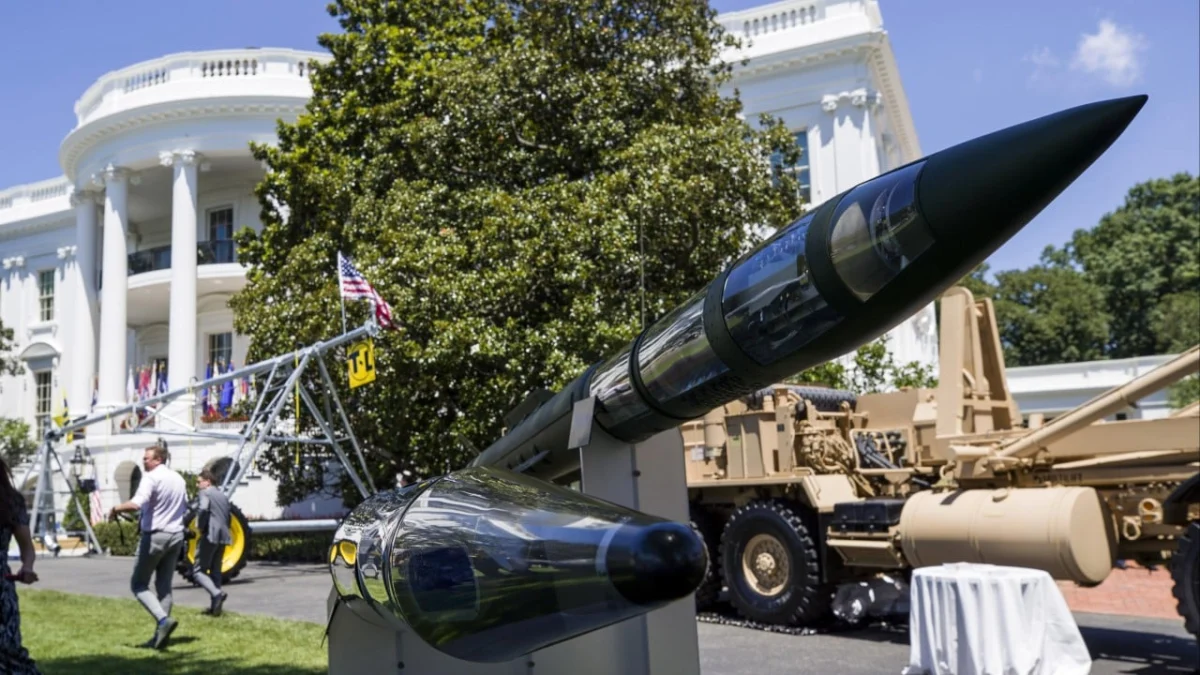
United States President Donald Trump has officially invoked the Defense Production Act (DPA) to accelerate the replenishment of the nation’s munitions stockpiles, citing critical shortages exacerbated by the ongoing 15-week conflict with Iran and broader global security obligations. In a formal memorandum dated June 11 and subsequently published in the Federal Register, the President directed Secretary of Defense Pete Hegseth to initiate "voluntary agreements and plans of action" with private industry leaders to rectify what the administration describes as "systemic constraints in the munitions industrial base."
The move marks a significant escalation in the administration’s efforts to transition the U.S. industrial base toward a more robust wartime footing. While the White House has framed the invocation as a necessary step to ensure national sovereignty and readiness, it comes amid a period of intense internal debate regarding the actual state of American military reserves and the sustainability of multi-front geopolitical engagements.
The Strategic Necessity of the Defense Production Act
The Defense Production Act, a Korean War-era statute, grants the executive branch extraordinary powers to prioritize government contracts and allocate resources to ensure the production of critical goods for national defense. By invoking this act, the Trump administration is signaling to the private sector—and specifically to major defense contractors such as Lockheed Martin Corp and RTX Corp (formerly Raytheon Technologies)—that the government requires a rapid increase in the output of precision-guided munitions, artillery shells, and tactical missiles.
According to the June 11 memo, the administration’s primary concern lies in the "munitions industrial base," which has struggled to keep pace with the high expenditure rates seen in recent months. The memorandum authorizes Secretary Hegseth to consult with industry experts to streamline manufacturing processes, bypass traditional procurement bottlenecks, and secure the raw materials necessary for high-capacity production.
While the specifics of the "voluntary agreements" mentioned in the order remain under development, analysts suggest they will likely involve government-subsidized expansions of production lines and guaranteed long-term purchase agreements to incentivize contractors to invest in new infrastructure.
Contextualizing the 15-Week Iran Conflict
The immediate catalyst for this executive action is the 15-week-old conflict with Iran, which has placed an unexpected strain on U.S. naval and air assets in the Middle East. The conflict, characterized by frequent missile exchanges and drone interceptions, has consumed a significant portion of the U.S. Navy’s interceptor missile inventory, including the SM-2, SM-3, and SM-6 variants.
The intensity of the hostilities has raised alarms within the Pentagon regarding "depth of magazine"—the total number of rounds available for a sustained high-intensity war. Military planners have noted that the rate of fire required to protect commercial shipping in the region and defend regional bases has outstripped the current annual production capacity of several key weapon systems.
Furthermore, the President’s announcement coincided with his setting of a firm date for the reopening of the Hormuz Strait, a vital maritime artery for global oil supplies that has been a focal point of the conflict. This move is seen as an attempt to stabilize global energy markets, even as Israel signaled it would not be bound by any peace deal negotiated between Washington and Tehran, adding another layer of volatility to the regional security landscape.
A Chronology of Declining Stockpiles
To understand the urgency of the June 11 memo, one must look at the timeline of U.S. munitions consumption over the past several years:
- Pre-2022: U.S. stockpiles were maintained at "steady-state" levels designed for counter-insurgency operations, with relatively low production rates for high-end conventional munitions.
- The Ukraine Factor: Following the outbreak of war in Ukraine, the U.S. transferred billions of dollars worth of equipment, including over 2 million 155mm artillery rounds, thousands of Javelin anti-tank missiles, and Stinger anti-aircraft systems.
- Late 2023 – Early 2024: Production lines began to scale up, but supply chain issues—specifically in microelectronics and solid rocket motors—prevented a return to optimal inventory levels.
- The Iran Conflict (15 weeks ago to present): The sudden demand for air defense interceptors and precision-strike missiles in the Middle East created a "double-draw" scenario, where stocks were being depleted for both the European and Middle Eastern theaters simultaneously.
- June 11: President Trump issues the DPA memorandum to force a structural shift in how the defense industry prioritizes government orders.
Industrial Constraints and Data on Munitions Production
The "systemic constraints" cited by the President refer to a decades-long consolidation of the defense industry that has left the U.S. with fewer domestic manufacturing facilities. For instance, in the 1990s, there were dozens of major aerospace and defense firms; today, a handful of "primes" control the majority of the market.
Supporting data highlights the scale of the challenge:
- Artillery: Before the recent conflicts, the U.S. produced roughly 14,000 155mm shells per month. While the goal is to reach 100,000 per month by late 2025, current production remains significantly below that target.
- Missiles: Lead times for advanced missiles like the Patriot PAC-3 or the Long Range Anti-Ship Missile (LRASM) can exceed two years due to the complexity of their guidance systems.
- Raw Materials: The U.S. remains heavily dependent on foreign sources for critical minerals like antimony, which is essential for armor-piercing ammunition and explosives, and various rare-earth elements used in high-tech sensors.
Lockheed Martin and RTX have both reported that while they are operating at near-maximum capacity, they are limited by the speed at which their sub-tier suppliers can deliver components like castings, forgings, and rocket motors.
Divergent Views: The Administration vs. The Pentagon
One of the more complex aspects of this development is the apparent disconnect between the White House’s emergency measures and the public rhetoric of the Department of Defense. Secretary Pete Hegseth, despite being tasked with implementing the DPA order, has recently downplayed the severity of the shortage.
Speaking to reporters last month, Hegseth stated that "the munitions issue has been foolishly and unhelpfully overstated" and insisted that "we have plenty of what we need" to defend American interests. Hegseth’s comments were interpreted by some as an attempt to project strength to adversaries like Iran and China, while others viewed it as a defensive reaction to criticisms that the administration’s "America First" policy was leaving the U.S. vulnerable.
However, the issuance of the June 11 memo suggests that behind closed doors, the assessment is much more dire. By invoking the DPA, the President has effectively overruled the narrative of "plenty," acknowledging that the industrial base is currently unable to meet the demands of a prolonged or multi-theater conflict.
Shifting Priorities: Ukraine and Allies
The Trump administration’s move to bolster the domestic industrial base is inextricably linked to its broader foreign policy shift. Administration officials have repeatedly emphasized the need to limit the flow of resources to allies and partners, most notably Ukraine, to prioritize the replenishment of U.S. domestic stocks.
The "America First" defense strategy posits that the U.S. cannot afford to be the "arsenal of democracy" if its own magazines are empty. This has led to a contentious debate in Congress, where some lawmakers argue that cutting off aid to Ukraine will embolden Russia, while others support the President’s view that domestic readiness must take precedence.
"We cannot defend the world if we cannot defend ourselves," a senior administration official stated on the condition of anonymity. "The 15-week conflict in Iran has shown us that our assumptions about how much ammunition we need were based on an era that no longer exists. We need a massive surge in domestic capacity, and that means focusing our resources at home."
Broader Impact and Global Implications
The invocation of the Defense Production Act has far-reaching implications for the global defense market and international security:
1. Market Reactions
Shares in major defense contractors saw a modest uptick following the announcement, as investors anticipate increased government spending and guaranteed contracts. However, there is also concern regarding the potential for government intervention in private supply chains, which could disrupt commercial aerospace production.
2. Deterrence Posture
By publicly acknowledging and addressing munitions shortages, the U.S. is attempting to restore the credibility of its conventional deterrence. Adversaries who may have viewed depleted stockpiles as a window of opportunity are now faced with a U.S. government committed to a rapid industrial ramp-up.
3. Diplomatic Friction
The decision to prioritize domestic stocks over aid to allies may strain relations with NATO members and Pacific partners. Countries that rely on the U.S. for their own security may feel compelled to accelerate their own domestic production or seek alternative security arrangements, potentially leading to a more fragmented global security architecture.
4. The Israel-Iran Dynamic
With Israel stating it is not bound by any U.S.-led peace deals in the region, the demand for munitions is unlikely to decrease in the near term. The U.S. may find itself in a position where it must choose between supplying Israel’s immediate needs and building its own long-term reserves, a dilemma that the DPA invocation is specifically designed to mitigate.
Conclusion: A New Era of Industrial Defense
The June 11 memorandum marks a turning point in American defense policy. By utilizing the Defense Production Act, President Trump is attempting to bridge the gap between the military’s operational needs and the private sector’s manufacturing capabilities. As the 15-week conflict with Iran continues to test the limits of American power, the success of this initiative will depend on how effectively Secretary Hegseth and the Pentagon can translate executive orders into tangible increases in factory output.
The move signals that the U.S. is moving away from the "just-in-time" logistics model that characterized the post-Cold War era and is returning to a "just-in-case" philosophy that prioritizes massive, ready-to-use stockpiles. Whether the American industrial base can rediscover its mid-20th-century vitality remains to be seen, but the invocation of the DPA makes one thing clear: the administration views the current state of U.S. munitions as a national security emergency that can no longer be managed through traditional means.
