

As the military conflict involving the United States, Israel, and the Islamic Republic of Iran enters its sixth month, the geopolitical landscape of the Middle East faces an unprecedented transformation. In Washington, the administration’s strategy appears rooted in the belief that sustained kinetic and economic pressure will eventually cause the political architecture in Tehran to fracture. Secretary of State Marco Rubio recently underscored this perspective, suggesting that high-ranking members of the Iranian government have initiated back-channel communications with U.S. officials. To the State Department, these overtures serve as empirical evidence of a widening rift between pragmatists seeking a diplomatic exit and hardline ideological forces determined to see the conflict through to its conclusion.
However, while internal divisions within the Iranian state are a historical reality, external observers may be miscalculating the immediate impact of the war on Tehran’s internal cohesion. Rather than triggering an immediate collapse, the external threat has, for the time being, compressed these disagreements into a unified front of national survival. The true test of the Iranian system’s stability will likely occur not during the height of the bombardment, but in the immediate aftermath of the fighting. As the smoke clears, a profound struggle is expected to emerge over the fundamental direction of Iran’s recovery. On one side, the sprawling security apparatus will argue that the nation survived only through its capacity for asymmetric retaliation and will demand resources to restore its shattered deterrence. On the other, the elected government is poised to prioritize the restoration of oil revenues, the rebuilding of civilian infrastructure, and the normalization of trade through diplomatic concessions.
At the center of this burgeoning storm is Mojtaba Khamenei, who has recently ascended to the position of Supreme Leader following the death of his father, Ali Khamenei. His primary challenge will be to synthesize these competing visions into a coherent post-war strategy that can be enforced across Iran’s disparate centers of power.
The Architecture of Power and the Succession Void
The political system of the Islamic Republic is uniquely designed to disperse decision-making across a complex web of elected and unelected bodies, while simultaneously concentrating ultimate authority in the hands of the Supreme Leader. For over three decades, Ali Khamenei served as the final arbiter, the "point of closure" for all national security debates. His role was not merely to lead, but to decide when an internal argument had reached its end. He held the constitutional power to approve all national security directives, appoint the top brass of the military, and resolve intractable disputes between the presidency, the parliament, and the judiciary.
The killing of Ali Khamenei during the current conflict has left the machinery of policy formation largely intact, but it has significantly weakened the mechanism by which competing institutional preferences are converted into a binding state position. While the swift appointment of Mojtaba Khamenei as his successor preserved the formal center of authority, it did not—and could not—automatically transfer the political weight and symbolic credibility his father had accumulated over forty years in public life.
Mojtaba Khamenei enters his tenure with a formidable advantage: long-standing, deep-seated ties to the senior leadership of the Islamic Revolutionary Guard Corps (IRGC). This provides him with a critical base of institutional support. However, these relationships do not necessarily equate to absolute command over the broader, multifaceted security and military system, which includes the regular army (Artesh), the Basij paramilitary forces, and various intelligence agencies that often compete for resources and influence.
A Chronology of Escalation and Domestic Unity
To understand the current impasse, it is necessary to examine the timeline of the conflict and how it has shaped the internal Iranian narrative.
- Phase 1: The Breakdown of Diplomacy. Following years of stalled nuclear negotiations and increasing maritime skirmishes, the transition to open conflict began with a series of tit-for-tat strikes on high-value military assets.
- Phase 2: The Assassination and Succession. The death of Ali Khamenei served as a catalyst for a state of emergency. The Assembly of Experts moved with unprecedented speed to confirm Mojtaba Khamenei, seeking to project an image of stability to both the domestic population and the international community.
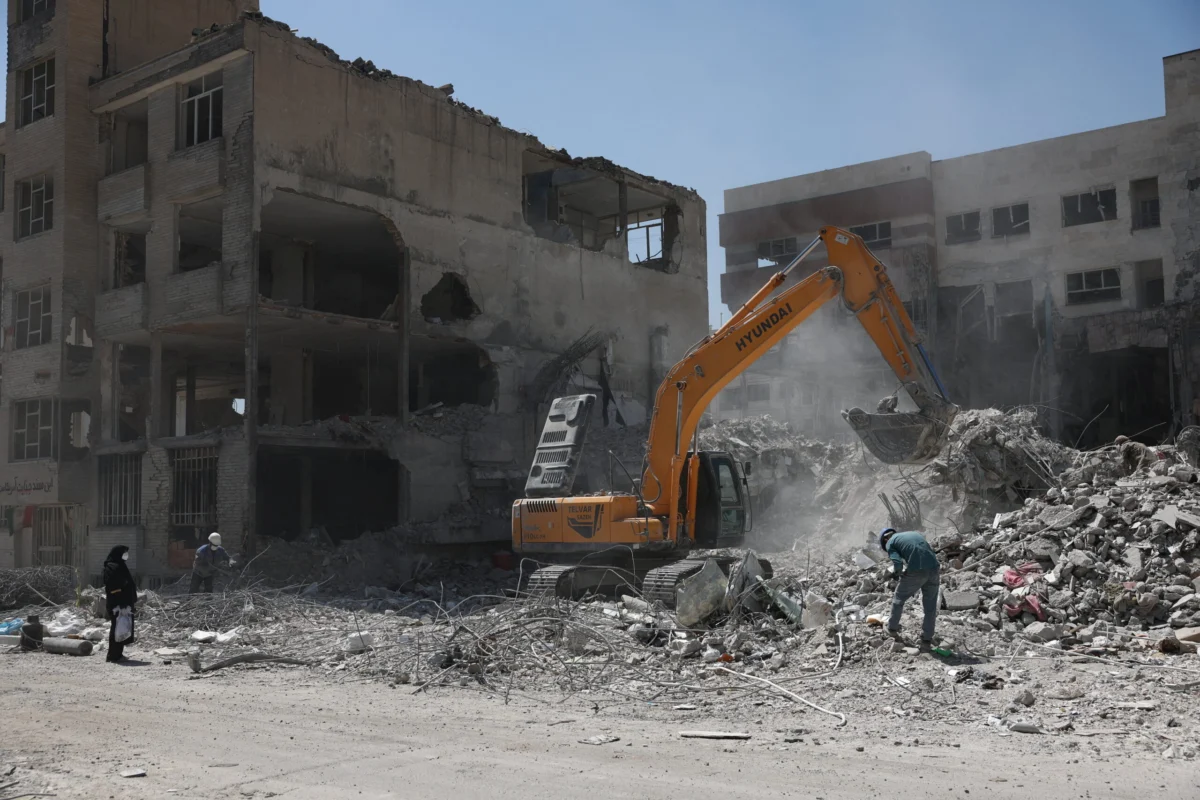
- Phase 3: Total Infrastructure War. The conflict moved into its current phase, characterized by the systematic targeting of Iran’s transport routes, energy grids, and bridges. This shift transitioned the war from a military-to-military engagement to a struggle for national survival.
In the short term, this escalation has provided a unifying narrative for the various factions in Tehran. From the reformist-leaning presidency of Masoud Pezeshkian to the hardline IRGC commanders, the consensus is that this is "Trump’s War"—a culmination of the 2018 withdrawal from the nuclear agreement and a policy of "maximum pressure" taken to its violent extreme. This shared language of resistance allows the security establishment to frame their actions as the defense of the motherland, while the civilian government can present the pursuit of a ceasefire as a patriotic necessity to save the economy from total collapse.
The Institutional Divide: Pezeshkian, Ghalibaf, and the IRGC
The internal friction in Tehran is best understood through the lens of three primary actors: the Presidency, the Parliament, and the IRGC.
President Masoud Pezeshkian manages the ministries responsible for the economy, healthcare, and diplomacy. His administration carries the heavy burden of maintaining basic services and managing a population suffering under the weight of war-induced inflation and infrastructure failure. However, Pezeshkian lacks direct command over the armed forces and does not have the final say on matters of war and peace. He operates within strict limits set by the Supreme National Security Council (SNSC), where security interests often override economic ones.
Parliament Speaker Mohammad Bagher Ghalibaf occupies a unique middle ground. A former IRGC commander with a pragmatic streak, Ghalibaf maintains deep ties to both the military establishment and civilian political networks. He has emerged as a crucial intermediary, capable of translating military "red lines" into legislative and diplomatic positions that the government can realistically implement. His influence is rooted in his ability to navigate the spaces between institutions that do not always share the same priorities.
The IRGC remains the most powerful institutional actor. Beyond its military capabilities, it controls a vast economic empire, including the construction giant Khatam al-Anbiya. For the IRGC, the post-war period is not just about peace; it is about who controls the reconstruction contracts and the strategic direction of the state.
Supporting Data: The Economic Toll of Conflict
While official statistics from Tehran are difficult to verify, international economic observers and satellite data provide a grim picture of the challenges facing the post-war government:
- Infrastructure Damage: Estimates suggest that over 40% of Iran’s major transport bridges and 30% of its power grid have sustained significant damage.
- Oil Exports: Despite sophisticated sanctions-evasion tactics, oil exports are reported to have dropped by 60% since the onset of full-scale hostilities, severely limiting the government’s hard currency reserves.
- Inflation and Currency: The Iranian Rial has seen a dramatic devaluation on the open market, with unofficial reports suggesting inflation for basic food items has surpassed 80% in urban centers.
- Reconstruction Costs: Preliminary assessments by regional economists suggest that Iran will require a minimum of $200 billion to $300 billion over the next decade to restore its pre-war industrial and civilian infrastructure.
The Battle for Reconstruction: Deterrence vs. Development
The most significant conflict will emerge once a ceasefire or a permanent lull in fighting is achieved. The struggle for reconstruction will be a struggle for the soul of the Iranian state.
President Pezeshkian’s team is expected to argue for an "economy-first" recovery. Their priority will be reopening trade routes, restoring oil production to pre-war levels, and seeking the removal of sanctions to attract foreign investment. They view economic stability as the ultimate guarantor of the regime’s survival against domestic unrest.
In contrast, the security establishment will likely advocate for a "deterrence-first" recovery. Their narrative will be that Iran survived because of its regional "Axis of Resistance" and its domestic military industries. Therefore, reconstruction should focus on hardening strategic sites, expanding missile and drone production, and reinforcing the IRGC’s grip on the economy to prevent "Western infiltration" through trade.
If the IRGC-linked organizations dominate the reconstruction process, the post-war state will likely become even more securitized. Contracts for rebuilding energy plants and telecommunications will be funneled to military-affiliated firms, further entrenching the "Resistance Economy" model. This would leave the civilian government accountable for the public’s declining living standards while having very little power to change the underlying economic structure.
Broader Impact and Implications for the Region
The outcome of this internal power struggle will have profound implications for the Middle East and global energy markets. A Tehran dominated by an unchallenged IRGC and a dependent Supreme Leader would likely double down on its regional proxy strategy, viewing it as the only successful defense against foreign intervention. This could lead to a permanent state of low-level conflict across the Levant and the Persian Gulf.
Conversely, if Mojtaba Khamenei chooses to empower the civilian government to lead the reconstruction, it could signal a pivot toward a more conventional state-to-state diplomatic approach. However, such a move would require Mojtaba to risk alienating the very security forces that secured his succession.
As it stands, Mojtaba Khamenei is borrowing authority from the language of wartime resistance. But when the guns fall silent, he will be forced to make the difficult choices his father once made: which bridges to build, whose pockets to fill, and what compromises are worth the price of peace. If the security institutions settle these questions before he can assert his own vision, the succession will have transferred the title of Supreme Leader without transferring the actual power to determine Iran’s future. The world now watches to see if the new leader in Tehran can move out from the shadow of his father and the shadow of the IRGC to chart a path toward a sustainable recovery.
