

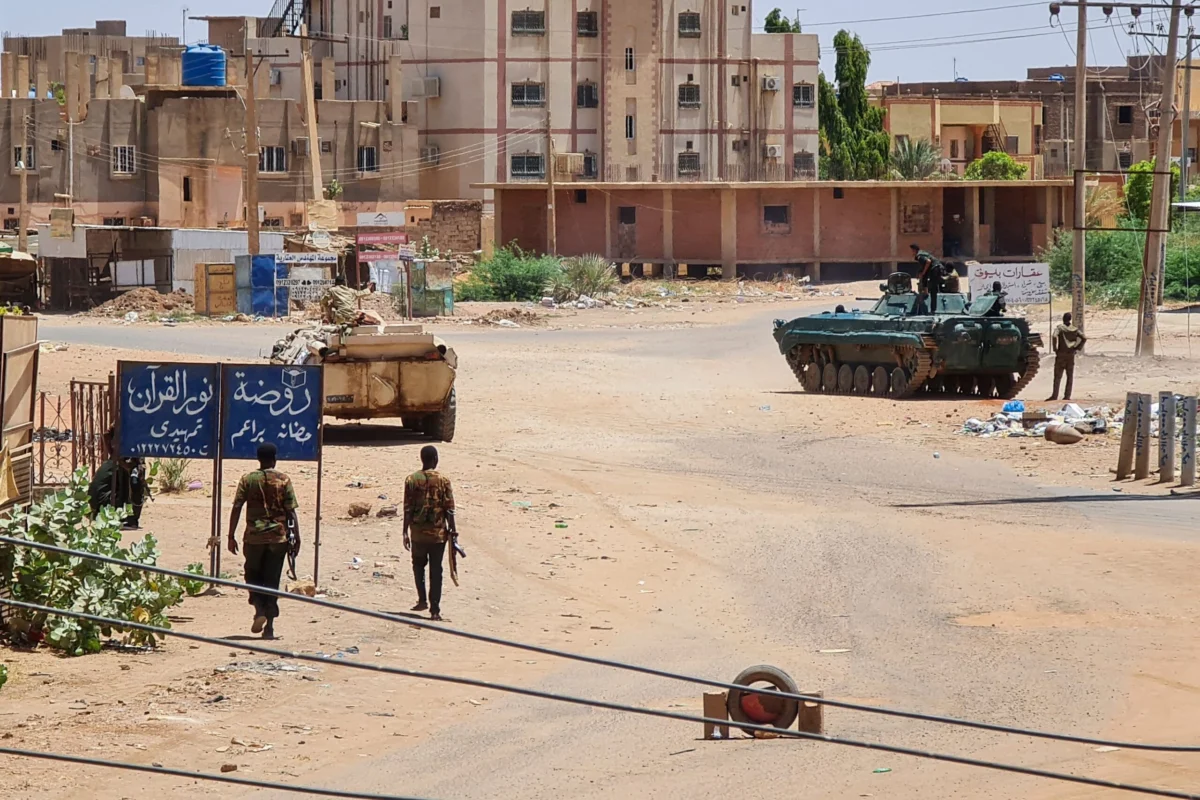
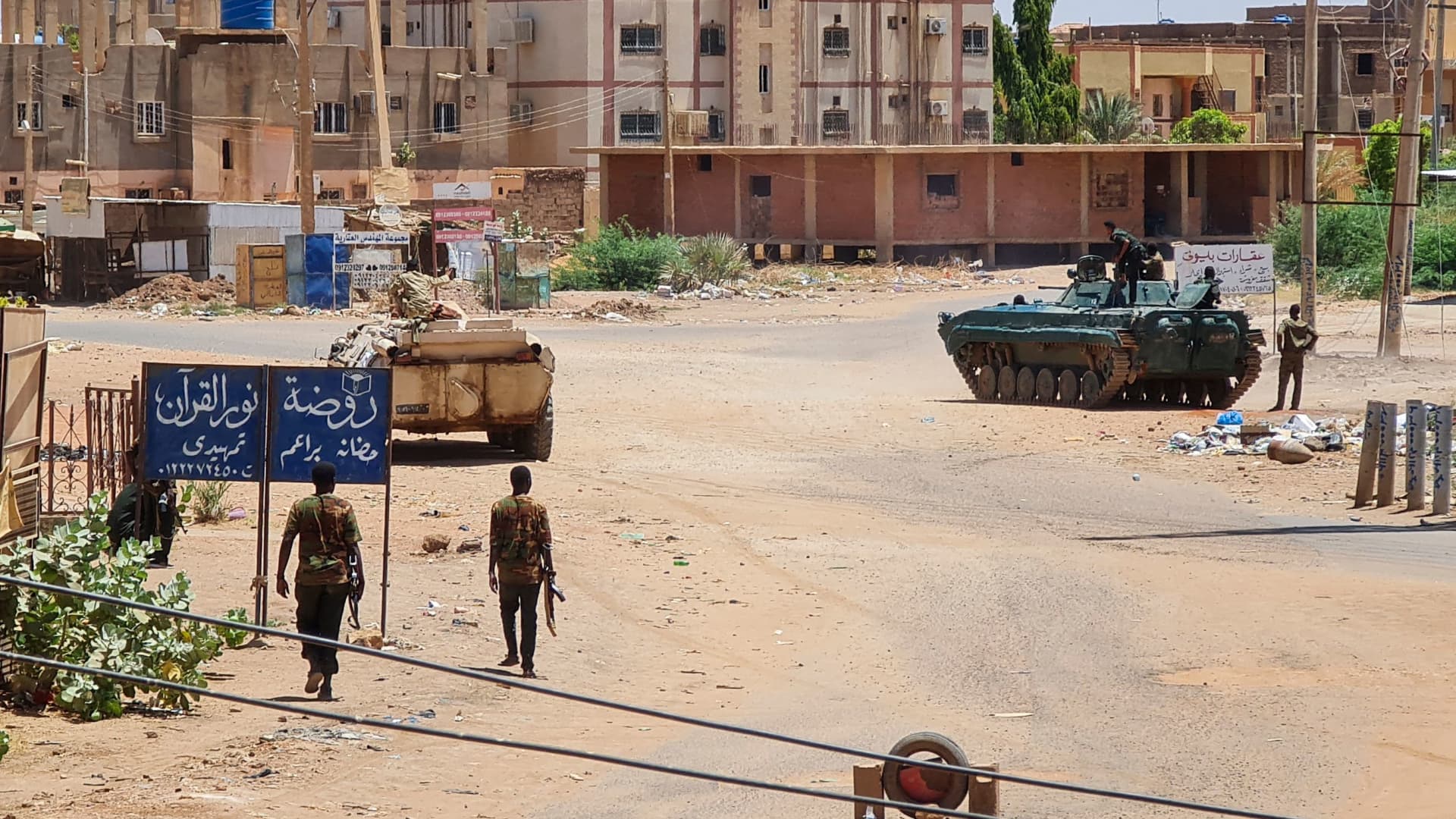
The transition from a fragile peace to a full-scale urban war has reached a somber one-month milestone in Sudan, as the power struggle between the Sudanese Armed Forces (SAF) and the paramilitary Rapid Support Forces (RSF) continues to tear the fabric of the nation apart. Despite a series of internationally brokered discussions in Jeddah, Saudi Arabia, the violence shows no signs of abating, leaving the capital city of Khartoum a skeletal remains of its former self and pushing the Darfur region toward another catastrophic ethnic conflict. What began on April 15, 2023, as a localized dispute over the integration of paramilitary forces into the national army has evolved into a multi-front war that threatens to destabilize the entire Horn of Africa.
The International Rescue Committee (IRC) and other humanitarian agencies have reported staggering figures that reflect the brutality of the past four weeks. Officially, the death toll has surpassed 600, with more than 5,000 injured, though medical professionals on the ground insist these numbers are vast undercounts due to the impossibility of recovering bodies from active combat zones. As the fighting enters its second month, the displacement crisis has reached a tipping point; nearly one million people have been uprooted, with roughly 700,000 internally displaced and over 200,000 seeking refuge in neighboring countries such as Chad, Egypt, and Ethiopia.
A Chronology of Escalation: From Transition to Total War
The roots of the current conflict are deeply embedded in the failed political transition that followed the 2019 ousting of long-time dictator Omar al-Bashir. For a brief period, a civilian-led government under Prime Minister Abdalla Hamdok attempted to steer the country toward democracy. However, this hope was extinguished in October 2021 when General Abdel Fattah al-Burhan, head of the SAF, and General Mohamed Hamdan Dagalo, known as Hemedti, leader of the RSF, orchestrated a joint military coup.
The uneasy alliance between the two generals began to fracture in early 2023. At the heart of the discord was a framework agreement for a return to civilian rule, which required the RSF to be integrated into the regular army. Disputes over the timeline of this integration—the SAF demanded a two-year window while the RSF pushed for ten—and the future chain of command became the catalyst for violence.
On April 15, the first shots were fired in Khartoum. Within hours, the city’s international airport was a battlefield, and the sovereign palace became a contested zone. By the end of the first week, the fighting had spread to the strategic cities of Bahri and Omdurman, effectively turning the capital’s metropolitan area into a permanent front line. By early May, the conflict had reignited old ethnic tensions in West Darfur, particularly in the city of El Geneina, where reports of mass killings and the burning of markets have drawn chilling parallels to the genocide of the early 2000s.
The Humanitarian Catastrophe and Infrastructure Collapse
The impact on Sudan’s 46 million inhabitants has been immediate and devastating. In Khartoum, residents have spent a month trapped in their homes, often without electricity or running water, as temperatures soar. The city’s healthcare system has effectively collapsed; the World Health Organization (WHO) estimates that nearly 70% of hospitals in conflict zones are out of service. Those that remain open are low on basic supplies, including oxygen, blood bags, and trauma kits, and are frequently subjected to shelling or occupation by armed actors.
Economic indicators suggest a total systemic failure. The price of essential goods, such as bread and fuel, has tripled or quadrupled in many regions. The banking system has largely ceased to function, leaving citizens unable to access savings or receive remittances from family members abroad. "The needs are immense, immediate and will be for a long time," warned Kurt Tjossem, IRC Vice President for East Africa. He emphasized that the longer the conflict persists, the more vulnerable the population becomes to secondary threats like cholera, malnutrition, and heatstroke.
The Jeddah Talks: Diplomacy Without Enforcement
In early May, representatives from both the SAF and RSF traveled to Jeddah for talks facilitated by the United States and Saudi Arabia. While the international community hoped for a permanent ceasefire, the resulting "Jeddah Declaration of Commitment to Protect the Civilians of Sudan" signed on May 11 was widely viewed as a hollow gesture. The document outlined a commitment to allow humanitarian aid and protect civilian infrastructure, but it lacked a mechanism for a formal ceasefire or monitoring.
Critics argue that the Jeddah process is fundamentally flawed because it excludes the very civilian voices that led the 2019 revolution. Many Sudanese activists believe that by negotiating exclusively with Burhan and Hemedti, the international community is inadvertently legitimizing the two warlords. "History is littered with the results of unintended consequences because of foreign states thinking ‘if we support this person, this outcome will happen’ and not thinking two, three generations ahead," noted Sudanese-Australian writer and activist Yassmin Abdel-Magied. She argued that the talks reward "belligerence" rather than holding the generals accountable for their roles in the 2021 coup and subsequent atrocities.
Geopolitical Stakes and Foreign Influence
The conflict in Sudan is not occurring in a vacuum. Both factions have cultivated deep ties with regional and global powers, complicating the path to peace. The SAF has historically enjoyed the support of Egypt, which views a stable, military-led Sudan as essential for its own national security and its interests regarding the Nile waters. Conversely, the RSF and Hemedti have built a vast financial empire through gold mining and have maintained close relationships with the United Arab Emirates and the Russian mercenary group, Wagner.
Saudi Arabia, while acting as a mediator, also has significant interests in Sudan’s Red Sea coast and its agricultural potential. The involvement of these external actors creates a "cycle of impunity," as described by U.K. Minister for International Development Andrew Mitchell. Without a united international front that includes targeted sanctions against the personal wealth and resource networks of the two generals, there is little incentive for either side to lay down their arms.
The Role of Grassroots Resistance Committees
Amidst the failure of formal diplomacy and the collapse of state services, the Sudanese people have turned to "Resistance Committees"—informal neighborhood networks that were instrumental in the pro-democracy protests of 2019. These committees have transformed into emergency response units, coordinating evacuations, sourcing medicine for the elderly, and operating communal kitchens.
Civil society advocates argue that these grassroots organizations should be the primary stakeholders in any peace process. They represent the "third way" for Sudan—a path that rejects both military dictatorships and paramilitary rule. By providing a small selection of delegates from these committees a seat at the negotiating table, the international community could shift the focus from a division of power between two men to a restoration of the state for its citizens.
Implications for Regional Stability and State Failure
The prospect of Sudan becoming a "failed state" is no longer a hyperbolic warning but a looming reality. If the fighting continues to decentralize, Sudan could fracture into fiefdoms controlled by various militias, similar to the situations in Libya or Yemen. Such a scenario would have dire consequences for the Horn of Africa, a region already grappling with drought, internal conflicts in Ethiopia, and political instability in South Sudan and Chad.
A total collapse of the Sudanese state would likely trigger a massive migration wave toward Europe and the Middle East, create a vacuum for extremist groups to exploit, and disrupt global trade routes through the Red Sea. The international community’s current approach—short-term ceasefires that are broken within hours—has proven insufficient.
As the conflict enters its second month, the consensus among analysts and Sudanese civilians alike is that a "quick fix" is impossible. Preventing the worst-case scenario requires a shift in strategy: moving beyond the "two-general" framework, implementing rigorous financial sanctions to throttle the warring parties’ resources, and placing civilian protection and political transition at the forefront of every diplomatic effort. Without such "intentional, diligent, and thought-through action," Sudan risks another 30 years of dysfunction, leaving a generation of citizens to pay the price for a war they never asked for.
