

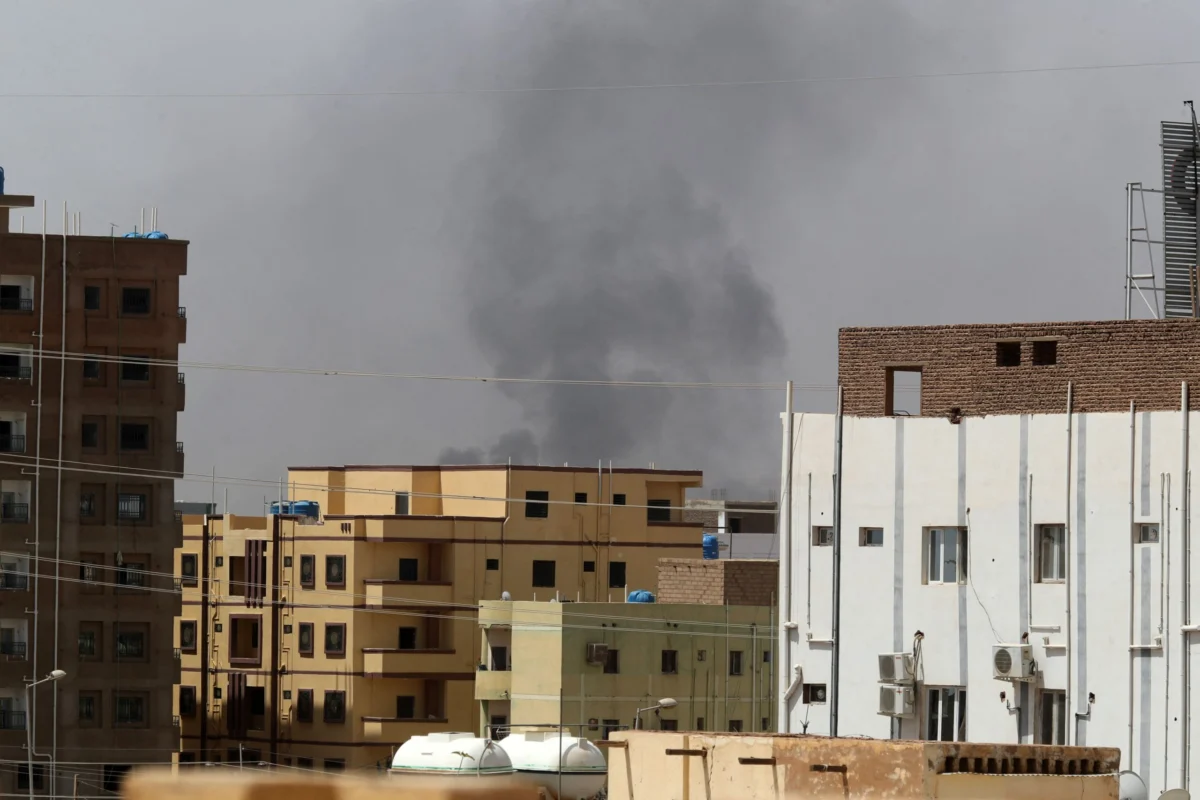
Sporadic fighting and heavy artillery fire continued to echo across Khartoum on Sunday, even as the Sudanese Armed Forces (SAF) and the paramilitary Rapid Support Forces (RSF) reached a breakthrough agreement for a week-long ceasefire intended to facilitate humanitarian relief. The deal, brokered by the United States and Saudi Arabia following intensive negotiations in Jeddah, is scheduled to take effect on Monday evening. However, the atmosphere in the capital remains tense, as previous attempts to halt the violence have collapsed within hours of their announcement. Unlike earlier verbal commitments, this agreement marks the first formally signed document between the two factions since the conflict erupted on April 15, 2023, raising cautious hopes for a genuine de-escalation in a war that has pushed the nation to the brink of collapse.
The seven-day truce includes an internationally supported monitoring mechanism, a critical addition that mediators hope will ensure accountability on the ground. According to the joint statement released by the Saudi and U.S. mediators, the mechanism will involve representatives from both the SAF and the RSF, alongside international observers, to track violations and facilitate the movement of humanitarian aid to millions of trapped civilians. Despite this diplomatic progress, the reality in Khartoum remains grim. Residents reported continued clashes in central and southern districts of the city on Sunday, underscoring the immense challenge of enforcing a ceasefire among decentralized units and entrenched urban combatants.
The Genesis of the Conflict: A Struggle for Supremacy
The current war is the violent culmination of a long-standing power struggle between General Abdel Fattah al-Burhan, the head of the SAF and Sudan’s de facto leader, and his former deputy, General Mohamed Hamdan Dagalo, widely known as Hemedti, who commands the RSF. The two generals were once uneasy allies, having collaborated in the 2019 ousting of long-time autocrat Omar al-Bashir and the subsequent 2021 military coup that derailed Sudan’s transition toward civilian-led democracy.
The alliance fractured over the specifics of a transition plan that would have integrated the RSF into the regular army. Disagreements over the timeline for this integration—the SAF demanded a two-year window while the RSF pushed for ten—and the chain of command under a civilian government eventually turned into an armed confrontation. On the morning of April 15, gunfire and explosions erupted in Khartoum and the northern city of Merowe, quickly spreading to the volatile Darfur region. What began as a political dispute over security sector reform has since devolved into a full-scale urban war that has devastated the country’s infrastructure and social fabric.
A Timeline of Escalation and Diplomacy
The road to the Jeddah agreement has been marked by a series of failed truces and intensifying violence. In the first week of the conflict, several 24-hour and 72-hour ceasefires were announced to allow for the evacuation of foreign diplomats and citizens. While these windows allowed thousands of expatriates to flee via Port Sudan and the Khartoum airport, they provided little relief to the Sudanese populace.
By early May, the conflict had reached a stalemate in the capital, with the RSF holding significant ground in residential neighborhoods and the SAF utilizing its superior air power to conduct strikes on paramilitary positions. On May 6, under pressure from the international community, representatives from both sides arrived in Jeddah for "pre-negotiation" talks. The initial result was the "Jeddah Declaration of Commitment to Protect the Civilians of Sudan," signed on May 11, which established general principles for humanitarian conduct but failed to stop the fighting. The new agreement signed this weekend represents a more concrete step, specifically outlining the cessation of hostilities and the restoration of essential services like water and electricity.
The Humanitarian Toll and Displacement Crisis
The human cost of the five-week conflict is staggering. According to the World Health Organization (WHO), at least 705 people have been confirmed killed and more than 5,287 injured. However, medical professionals and local activists warn that these figures are significant undercounts, as many bodies remain uncollected in the streets or are buried in private gardens because it is too dangerous to reach cemeteries.
The displacement crisis has reached alarming proportions. The United Nations reports that approximately 1.1 million people have been forced to flee their homes. Of these, more than 840,000 are internally displaced within Sudan, while over 250,000 have crossed borders into neighboring countries including Egypt, Chad, South Sudan, and Ethiopia. This mass exodus is placing immense strain on regional resources and threatens to destabilize an already fragile Horn of Africa.
In Khartoum, those who have not fled face a daily battle for survival. The city’s healthcare system has effectively collapsed; the Sudanese Doctors’ Union estimates that nearly 70% of hospitals in conflict zones are out of service, having been shelled, occupied by military forces, or depleted of medical supplies. Residents are grappling with acute shortages of food and fuel, while electricity and water services are intermittent at best. "We are tired of this war," Safaa Ibrahim, a 35-year-old resident who fled her home, told Reuters. "Our families are scattered, and we just want to return to a life where we aren’t constantly fearing for our safety."
Military Strategy and the Arming of Civilians
The tactical nature of the fighting has exacerbated civilian suffering. The RSF has embedded its fighters within densely populated residential areas, occupying private homes, schools, and hospitals to shield themselves from SAF airstrikes. In response, the SAF has employed heavy artillery and aerial bombardment, often resulting in significant collateral damage to civilian infrastructure.
A concerning development in the conflict’s trajectory is the potential mobilization of civilian militias. Senior army general Yassir al-Atta recently addressed the media, stating that while the army is not currently requiring civilians to take up arms, they have a "natural right" to defend themselves against RSF attacks. This rhetoric has raised fears among analysts that the conflict could transform into a communal or civil war, particularly if tribal leaders begin to arm their followers on a large scale. In the Darfur region, this shift is already visible, as the conflict has reignited long-standing ethnic tensions between Masalit and Arab-aligned groups, leading to reports of mass killings and the burning of displacement camps.
Regional and International Implications
The stability of Sudan is paramount to the security of the Red Sea and the broader Sahel region. As Africa’s third-largest country by land area, Sudan shares borders with seven nations, many of which are already dealing with their own internal conflicts and economic crises. A prolonged civil war in Sudan could lead to a massive refugee crisis, the proliferation of small arms, and the creation of a power vacuum that extremist groups might exploit.
The United States and Saudi Arabia have taken the lead in mediation, reflecting their strategic interests in the region. For Saudi Arabia, a stable Sudan is essential for the security of its "Vision 2030" projects along the Red Sea coast. For the U.S., the priority is preventing a total state collapse that could embolden Wagner Group mercenaries—who have historical ties to the RSF’s gold mining operations—or other adversarial actors.
However, the effectiveness of the Jeddah talks has been questioned by those who note the absence of civilian political leaders. Many Sudanese activists argue that a deal between two generals will only result in a temporary pause rather than a lasting peace. "The people of Khartoum are waiting for the truce, but we need more than just a break in the shooting," said Mohamed Hamed, a local activist. "We need the restoration of services and a return to the civilian transition we were promised."
Analysis: Can the Ceasefire Hold?
The primary challenge for the new ceasefire lies in the command and control structures of both the SAF and the RSF. While General al-Burhan and Hemedti have sent representatives to Jeddah, it remains unclear if they can—or wish to—enforce total compliance among their rank-and-file soldiers. Both leaders have previously expressed a desire for total military victory, viewing the conflict as an existential struggle for the future of the Sudanese state.
The inclusion of a monitoring mechanism is a significant improvement over previous attempts, but its success depends on the willingness of the warring parties to grant observers access to the front lines. Furthermore, the duration of seven days is remarkably short given the scale of the humanitarian disaster. Mediators have indicated that these seven days are intended to be a "confidence-building" period, which could be extended if the terms are respected.
As the Monday evening deadline approaches, the international community remains watchful. The success of this truce is not merely a matter of stopping the gunfire; it is about creating a corridor for the survival of millions of people. If the Jeddah agreement fails like its predecessors, the window for a negotiated settlement may close, leaving Sudan to face a protracted war of attrition that neither side is likely to win, but which the nation is certain to lose. For now, the residents of Khartoum can only wait and hope that the silence of the guns lasts longer than a few hours.
