

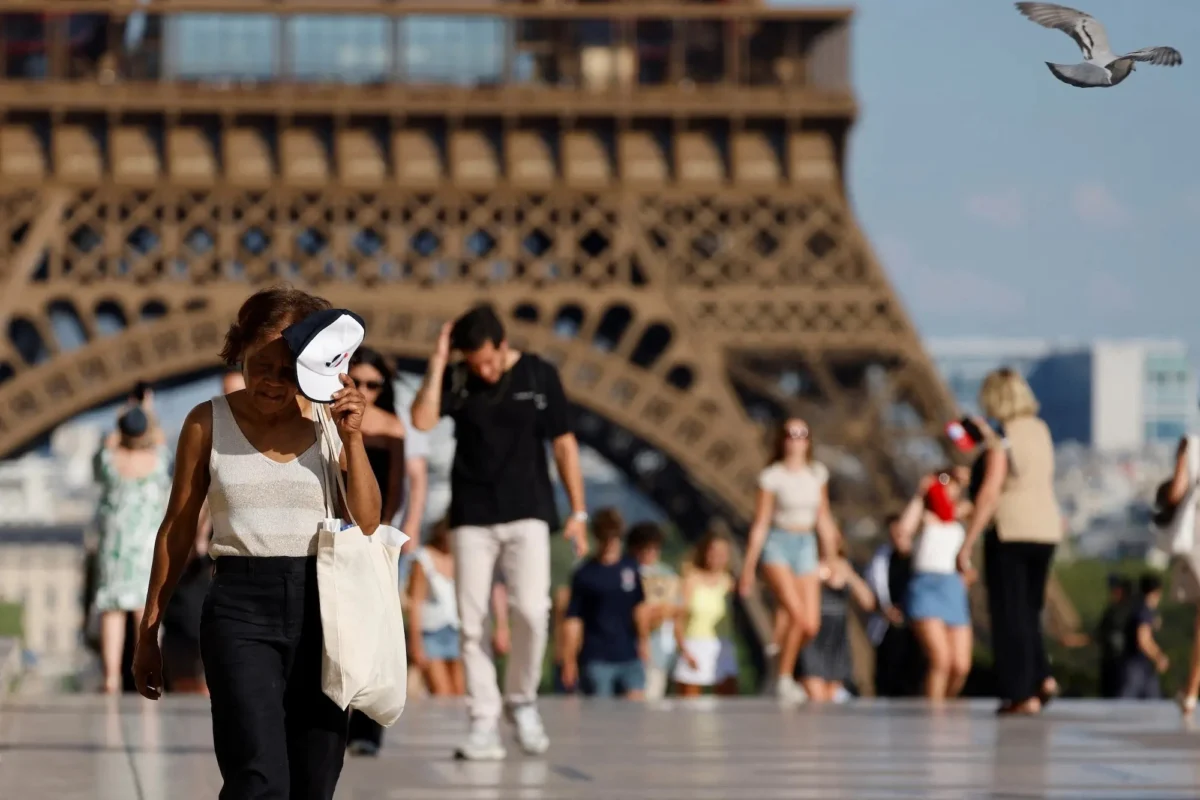
Once underground, the students participated in a meticulously crafted role-playing exercise. Some youngsters simulated the effects of food poisoning caused by mass refrigeration failure during a power outage. Others mimicked the symptoms of carbon monoxide poisoning from faulty backup generators. Nearby, Red Cross workers and medical professionals practiced triage, making high-stakes decisions about which "victims" to prioritize for transport to hospitals that were, in this scenario, already at breaking point. Surrounding them was a cohort of firefighters, city officials, and educators, all attempting to navigate the chaotic cascading failures that a heat wave of unprecedented duration and intensity would likely trigger.
This exercise, titled "Paris à 50°C" (Paris at 50 degrees Celsius), was developed to prepare for a reality where the mercury hits 122 degrees Fahrenheit. While such temperatures were once the stuff of dystopian fiction, climate scientists warn that this extreme threshold is increasingly likely to be reached by the end of the century. The exercise combined live-action drills with tabletop simulations to refine a strategy for protecting the city’s 2.1 million residents. Once a niche activity for a few select municipalities, these "stress tests" are becoming a global necessity as local governments realize that health services, emergency responses, and essential infrastructure are not yet equipped for the thermal extremes of the 21st century.
The Scientific Context: Why 50 Degrees Celsius?
The choice of 50 degrees Celsius (122 degrees Fahrenheit) is not arbitrary. Current climate modeling suggests that Europe is warming faster than many other parts of the world. European governments are currently being advised to prepare for warming of 2.8 to 3.3 degrees Celsius (5 to 6 degrees Fahrenheit) above pre-industrial levels. According to research published in Science Direct and data from the Intergovernmental Panel on Climate Change (IPCC), such a trajectory could push Paris toward dangerous summertime peaks by 2100.
Currently, the record high for Paris stands at 108.68 degrees Fahrenheit (42.6 degrees Celsius), recorded on July 25, 2019. The jump to 122 degrees Fahrenheit represents a qualitative shift in danger. At those temperatures, the "urban heat island" effect—where concrete and asphalt trap heat—prevents cities from cooling down at night, leading to a cumulative physiological strain on the human body. The World Health Organization (WHO) estimates that extreme heat already contributes to roughly 500,000 deaths globally each year. When the body can no longer cool itself through perspiration, symptoms escalate rapidly from heat exhaustion to heat stroke, which can cause permanent organ damage or death, particularly in the elderly and those with pre-existing renal or cardiovascular conditions.
Chronology of a Crisis Simulation
The Paris simulation was the result of 18 months of intensive planning led by Pénélope Komitès, the city’s deputy mayor in charge of resilience. "It was very important for us to show people that heat waves are not just something we see on the TV, but something that can happen soon," Komitès stated during the event.
The timeline of the project followed a rigorous path:
- Modeling Phase (9 Months): Scientists at the Île-de-France Regional Climate Change Expertise Group collaborated with city leaders to model the specific atmospheric conditions of a 50-degree dome over the city.
- Scenario Development (9 Months): Crisotech, a consultancy specializing in crisis management, developed 12 distinct scenarios where urban services might buckle. These included transit failures, grid instability, and the "missing resident" problem—identifying vulnerable individuals who do not appear on official social service registries.
- The Drill (October 2023): A two-day event. The first day featured role-playing with citizens and students to test "on-the-ground" response. The second day consisted of tabletop exercises where 100 different organizations—including utilities, nonprofits, and emergency services—coordinated their high-level responses.
- Analysis and Policy Integration (Late 2023 – 2024): The findings were distilled into 50 specific recommendations, which have since been integrated into the Paris 2024–2030 Climate Action Plan.
Global Expansion of Heat Rehearsals
The trend of simulating climate disasters is gaining momentum far beyond the borders of France. According to C40, a global network of nearly 100 mayors committed to climate action, heat simulations are becoming a standard tool for urban resilience.
In the United States, Phoenix, Arizona—a city already accustomed to extreme heat—conducted exercises that led to the creation of a dedicated "Heat Response and Mitigation" department. In Australia, Melbourne has hosted workshops to identify how transport failures during heat waves can prevent medical staff from reaching their shifts.
Taiwan is also expanding its simulation efforts. Ken-Mu Chang, deputy director general of the country’s Climate Change Administration, noted that Taiwan conducted a tabletop exercise last year and plans a live simulation in July 2024. The Taiwanese approach focuses on the friction between national and local agencies. "We want agencies not only to explain what they have, but also to identify what is still missing under a more extreme situation," Chang explained.
In Barcelona, Spain, city officials are currently adapting the Paris model. The Mediterranean basin is warming 20 percent faster than the global average, making Barcelona a primary climate "hot spot." Irma Ventayol, who leads Barcelona’s climate change department, is overseeing a simulation that asks granular questions: Can waste management trucks operate at 50 degrees Celsius? How do you protect the workers responsible for essential city maintenance? Ventayol aims to create a "scalable methodology" that can be shared with other cities facing similar threats.
Infrastructure and Implementation: The Logistics of Survival
One of the primary goals of these simulations is to identify "unforeseen" failures. Dr. Satchit Balsari, a professor of emergency medicine at Harvard Medical School, argues that while many cities have "heat action plans" on paper, they often lack the logistical know-how to implement them.
"How do you take a large human body and put it in ice? Is there a bucket that big?" Balsari asked, highlighting the practical difficulties of treating mass heat stroke. "The answer is no, so is it a body bag? Where do you get all this ice?" Simulations force officials to confront these visceral realities.
Furthermore, infrastructure failures often trigger a domino effect. High temperatures can cause train tracks to expand and buckle (a phenomenon known as "sun kinks"), paralyzing transit systems. This prevents residents from reaching cooling centers and prevents emergency responders from reaching victims. Simulations allow engineers and transit authorities to determine the exact thermal thresholds of their equipment, allowing for preemptive shutdowns or reinforcements.
From Rehearsal to Reality: The Impact on Paris
The "Paris à 50°C" exercise has already moved beyond the theoretical. The 50 recommendations generated from the drill are being actively implemented. Key actions include:
- Residential Insulation: A massive program to insulate thousands of public housing units to reduce indoor temperatures.
- Urban Greening: The removal of asphalt parking spaces in favor of "urban forests." In the winter of 2023-2024 alone, the city planted 15,000 trees to increase canopy cover and natural cooling.
- Public Cooling Access: The opening of three permanent bathing spots along the Seine River, which debuted during the 2024 Olympics, serves as a long-term cooling resource for residents.
- The Campus of Resilience: Opened in March 2024, this center serves as a permanent hub for the civil protection agency and the fire department to train citizens in heat-safety protocols.
Analysis of Implications
The rise of heat simulations marks a shift in climate policy from "mitigation" (reducing emissions) to "adaptation" (surviving the changes already locked in). While these exercises carry a significant price tag—the Paris event cost approximately €200,000 ($215,000)—experts argue the cost of inaction is exponentially higher.
However, simulations also reveal a sobering truth: many cities remain fundamentally unprepared. The Paris drill’s biggest takeaway was not a failure of technology, but a gap in public awareness. Deputy Mayor Komitès noted that the most shocking realization was how little the average citizen knew about identifying heat stroke or locating local cooling resources.
Ultimately, while rehearsals can improve the coordination of emergency services and the resilience of infrastructure, they cannot replace the structural changes needed to cool urban environments. As Cassie Sunderland of C40 noted, true resilience requires a dual-track approach: practicing for the disaster while simultaneously working to ensure the city does not reach those lethal temperatures in the first place. The guides and reports published by Paris following their simulation now serve as a blueprint for cities worldwide, providing a "step ahead" for those who realize that the heat is no longer a distant threat, but an impending reality.
