

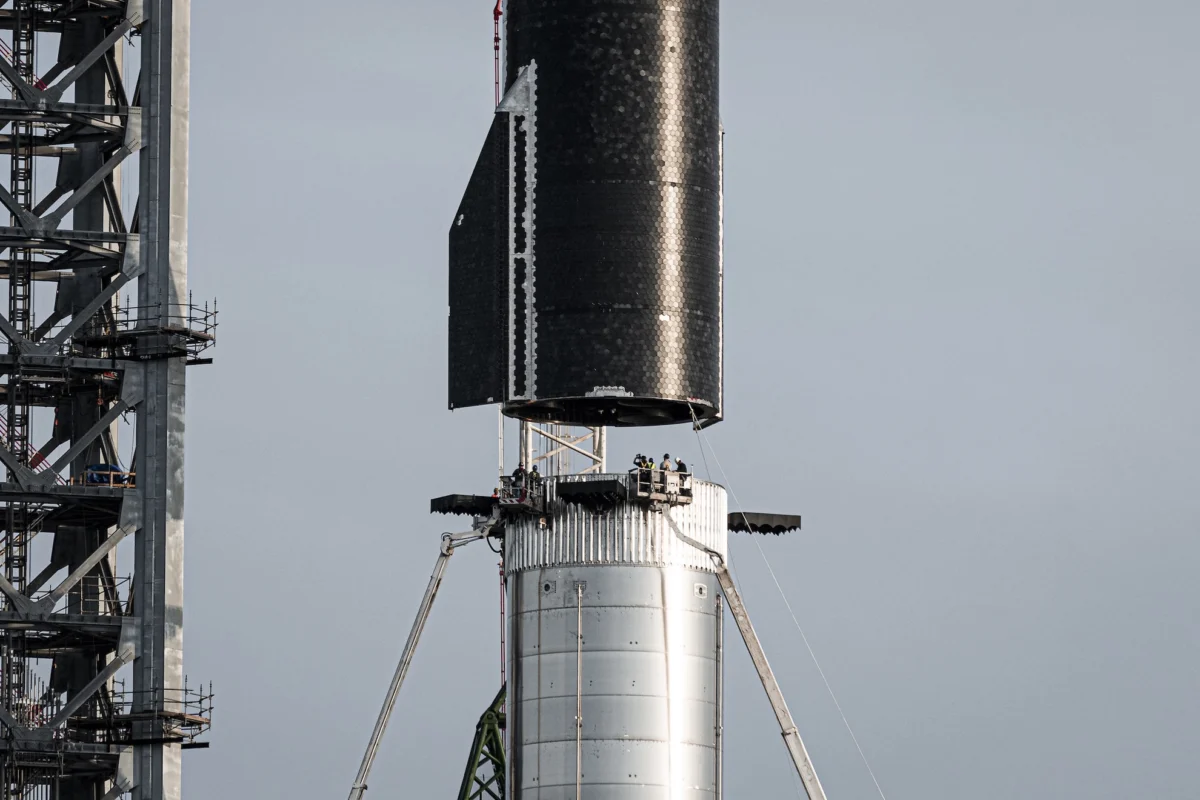
The Occupational Safety and Health Administration (OSHA) has officially launched a comprehensive investigation following a fatal incident at SpaceX’s Starbase launch facility in South Texas. The tragedy, which occurred in the early morning hours of May 15, marks a somber moment for the aerospace company as it prepares for a series of high-profile milestones, including the next flight of its massive Starship rocket. According to reports confirmed by local law enforcement and federal regulators, the unidentified worker died at approximately 4:17 a.m. local time at the sprawling site located near Boca Chica Beach.
While the specific identity of the victim and the precise nature of the accident have not yet been disclosed to the public, the Cameron County Sheriff’s Office and OSHA representatives have confirmed the death. The incident underscores growing concerns regarding the safety culture at Elon Musk’s private space exploration firm, which has faced repeated scrutiny over its workplace injury rates and regulatory compliance. As of Monday, neither SpaceX nor the newly-incorporated City of Starbase had issued a formal statement regarding the loss of life, and local emergency services in nearby Brownsville have remained tight-lipped as the investigation commences.
The Morning of the Incident: A Chronology of Events
The fatal event took place during a period of intense activity at Starbase. The facility operates as a 24-hour construction and testing hub, where engineers and laborers work in shifts to assemble the world’s most powerful rocket system. At approximately 4:17 a.m. on Wednesday, May 15, emergency services were alerted to a medical crisis or accident at the site.
The San Antonio Express-News first reported the death on Monday, citing information from OSHA and local officials. Following this, the Wall Street Journal received confirmation from the Cameron County Sheriff that a contractor or employee had indeed perished at the facility. OSHA, the federal agency tasked with ensuring safe and healthful working conditions, confirmed to media outlets that it had opened an active investigation into the "apparent accident."
Under federal guidelines, OSHA has up to six months to complete its investigation and issue any potential citations or fines. This timeline suggests that the full details of what transpired in the pre-dawn hours at Starbase may not be known until late 2024 or early 2025. In the interim, the site remains operational as SpaceX pushes toward its next launch window, a juxtaposition that has drawn criticism from labor advocates.
A History of Safety Concerns at Starbase
The recent fatality is not an isolated incident in the history of SpaceX’s operations. For years, the company has been the subject of reports detailing a high-pressure environment where safety protocols are sometimes perceived as secondary to rapid prototyping and launch schedules.
A 2025 analysis of OSHA data conducted by TechCrunch revealed a startling trend: the injury rate at the Texas launch site significantly outpaces those of its primary industry rivals, such as United Launch Alliance (ULA) and Blue Origin. The data indicated that Starbase was the most dangerous of all SpaceX worksites, a fact attributed to the site’s unique status as both a manufacturing plant and an active orbital launch complex.
Furthermore, a landmark investigation by Reuters in 2023 uncovered more than 600 previously unreported injuries at SpaceX facilities nationwide. These injuries ranged from crushed limbs and head trauma to amputations and chemical burns. The Reuters report also highlighted a 2014 death at SpaceX’s McGregor, Texas, test site, where worker Lonnie LeBlanc died after being blown off a trailer. Critics argue that the "move fast and break things" philosophy, common in the tech industry, has translated into a "move fast and risk lives" culture within Musk’s aerospace endeavors.
Recent Regulatory Friction and Legal Challenges
In January 2024, OSHA hit SpaceX with seven "serious" safety violations. These citations were linked to an incident in June 2023, where a crane collapsed at the Starbase facility. Federal inspectors found that the company had failed to properly inspect the machinery before its operation. OSHA levied the maximum allowable financial penalties on six of those seven violations, totaling $115,850. While this sum is considered negligible for a company valued at approximately $180 billion, the "serious" designation carries significant weight in regulatory history. SpaceX is currently contesting these penalties in federal court.
The company is also grappling with private litigation. In December 2023, Eduardo Cavazos, an employee of a SpaceX subcontractor, filed a lawsuit after a harrowing accident at the Starbase site. Cavazos was reportedly crushed by a massive metal support beam that fell from a crane. The accident left him with a broken hip, a shattered knee, and a fractured tibia.
The legal outcome of the Cavazos case highlights the complexities of Texas labor laws. The lawsuit was recently dropped because the subcontractor provided workers’ compensation insurance, which under Texas law acts as an "exclusive remedy," effectively shielding the employer from further liability through civil litigation. This legal framework often makes it difficult for injured workers or the families of the deceased to seek damages beyond standard insurance payouts, even in cases of alleged negligence.
The High Stakes of the Starship Program
The timing of this latest fatality is particularly sensitive for SpaceX. The company is currently in the final stages of preparation for the fourth integrated flight test of the Starship and Super Heavy booster. Starship is the cornerstone of SpaceX’s future, designed to carry humans to the Moon and eventually Mars. It is also a critical component of NASA’s Artemis program, which intends to return American astronauts to the lunar surface.
Every delay or safety investigation at Starbase has the potential to ripple through the broader aerospace industry. NASA officials have expressed confidence in SpaceX in the past, but they also maintain strict safety standards for their contractors. A pattern of fatalities or severe injuries could lead to increased oversight from the Federal Aviation Administration (FAA) or NASA’s own safety advisory panels.
In addition to the physical launch preparations, SpaceX is navigating a pivotal moment in its corporate evolution. Reports have circulated that the company is preparing to release a detailed prospectus for an initial public offering (IPO) or a significant secondary market transaction. Some analysts expect this to be one of the largest financial transactions in the history of the private sector. News of a workplace death and an ongoing federal investigation could complicate the narrative for potential investors who are increasingly focused on Environmental, Social, and Governance (ESG) metrics.
The Human Cost of the New Space Race
The transition of the Boca Chica area from a quiet coastal community to the "City of Starbase" has been a point of local and national debate. Elon Musk’s vision for a "gateway to Mars" has brought thousands of jobs and millions of dollars in investment to South Texas, but it has also brought the inherent risks of industrial expansion.
The worker who died on May 15 is a reminder of the human cost behind the spectacular videos of rocket launches and landings. Industry experts note that aerospace manufacturing is inherently dangerous, involving high-pressure gases, heavy machinery, and volatile fuels. However, they also point out that other major aerospace firms maintain lower injury rates by implementing more rigorous, and often slower, safety checks.
"The challenge for SpaceX is balancing the urgency of their mission with the fundamental right of every worker to go home safe at the end of their shift," says one former OSHA inspector. "When you have a site that is under constant construction and constant pressure to meet launch windows, the margin for error disappears."
Looking Ahead: The Investigation and Its Implications
As OSHA investigators comb through the Starbase facility, they will be looking for specific violations of federal safety standards. This includes checking whether proper personal protective equipment (PPE) was used, whether machinery was maintained according to code, and whether the workers involved had received adequate training for their specific tasks.
If OSHA finds that SpaceX "willfully" violated safety standards, the fines could increase significantly, and the company could face heightened monitoring. A "willful" violation occurs when an employer either intentionally disregards OSHA’s requirements or demonstrates plain indifference to employee safety.
For the community of Brownsville and the workers at Starbase, the focus remains on the loss of a colleague. The silence from SpaceX leadership has been noted by local observers, who are waiting to see how the company addresses this latest tragedy. Whether this incident prompts a fundamental shift in the company’s safety culture or is treated as another hurdle in the race to the stars remains to be seen.
The implications for the Starship program are also substantial. While the FAA oversees the safety of the public during launches, OSHA oversees the safety of the workers on the ground. Both agencies must be satisfied before the company can maintain its aggressive schedule. As the investigation unfolds, the eyes of the world—and the aerospace industry—will remain fixed on South Texas, waiting for answers that may take months to arrive.
