

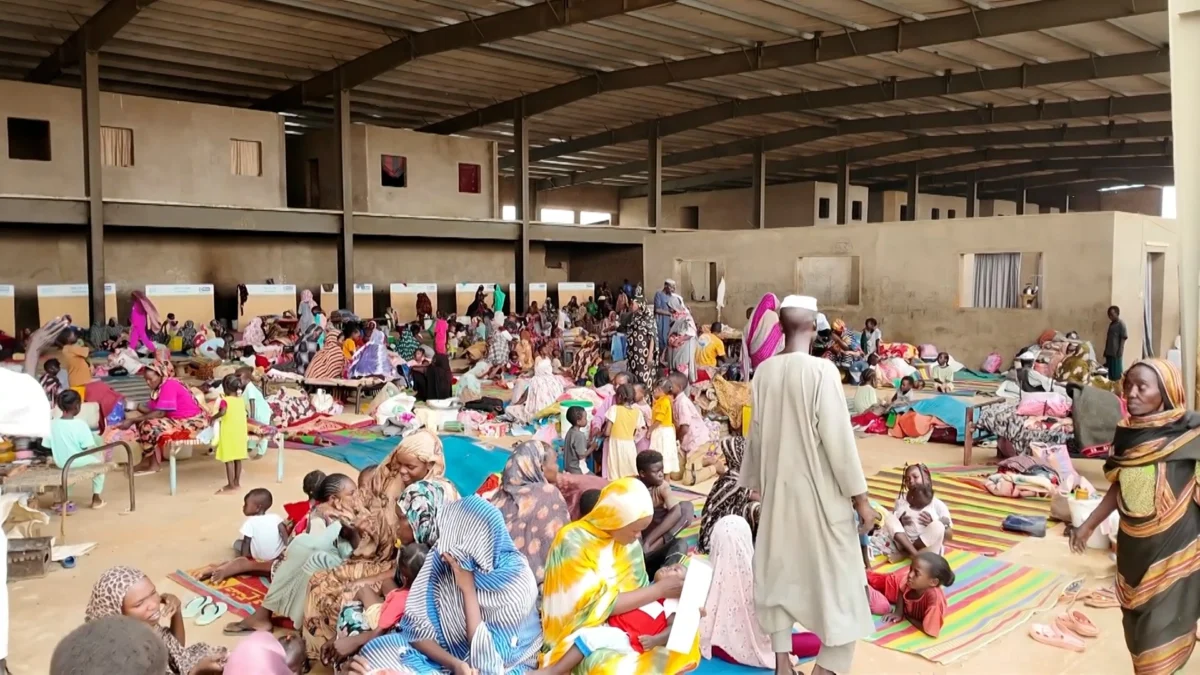
Fighting in Sudan’s North Kordofan State has triggered a mass exodus, with thousands of families abandoning their homes in a desperate search for safety and sustenance. The relentless conflict, a brutal extension of the wider civil war gripping Sudan since April 2023, has pushed an already vulnerable population to the brink, forcing countless individuals, predominantly mothers and their children, into dire conditions. The provincial capital, El Obeid, has become a reluctant sanctuary, its existing camps now grotesquely overcrowded, struggling to accommodate hundreds of thousands who have sought refuge from the violence. Queues for basic necessities, particularly food, stretch endlessly, painting a stark picture of a humanitarian catastrophe unfolding in plain sight.
Background to a Nation in Crisis: The Sudan Conflict
The current humanitarian disaster in North Kordofan is a direct consequence of the protracted conflict that erupted on April 15, 2023, between the Sudanese Armed Forces (SAF) and the paramilitary Rapid Support Forces (RSF). The roots of this conflict lie in a power struggle following the 2021 military coup, which derailed Sudan’s transition to civilian rule after the overthrow of long-time dictator Omar al-Bashir in 2019. Tensions between SAF commander General Abdel Fattah al-Burhan and RSF leader General Mohamed Hamdan Dagalo (Hemedti) escalated over the integration of the RSF into the regular army and the future command structure of Sudan’s security forces. This simmering rivalry exploded into open warfare, primarily centered in the capital Khartoum, but quickly spreading to other strategically vital regions, including Darfur and Kordofan.
North Kordofan, situated centrally within Sudan, holds significant strategic importance due to its agricultural productivity, particularly its gum Arabic belt, and its position as a crucial transit hub connecting Khartoum to the western regions of Darfur and South Kordofan. Control over its capital, El Obeid, provides a strategic advantage, enabling control over key supply routes and communication lines. Consequently, the state has become a battleground, subjected to intense clashes, aerial bombardments, and ground offensives, severely disrupting civilian life and infrastructure.
A Chronology of Intensification in Kordofan
The conflict’s impact on North Kordofan has evolved over several phases:
- April 2023: Immediately following the outbreak of national hostilities, sporadic clashes were reported around El Obeid and strategic installations in North Kordofan as both SAF and RSF sought to consolidate control over vital infrastructure and supply lines. The city’s airport, a key logistical point, became an early target.
- May-July 2023: As the conflict deepened in Khartoum, pressure mounted on regional capitals. El Obeid saw an influx of internally displaced persons (IDPs) from Khartoum and other parts of Kordofan, straining its limited resources. Reports of skirmishes outside the city intensified, restricting humanitarian access.
- August-September 2023: Fighting intensified significantly around El Obeid and across North Kordofan. Reports from humanitarian agencies indicated a sharp rise in civilian casualties and displacement, with entire villages being abandoned. Essential services, including healthcare and water supply, began to collapse under the strain.
- Late 2023 – Early 2024: The conflict escalated further, with both sides vying for dominance. Blockades and restrictions on movement severely hampered the delivery of humanitarian aid. The continuous violence and insecurity led to recurrent waves of displacement, pushing hundreds of thousands into El Obeid and other relatively safer, but equally strained, areas. This period saw a dramatic increase in food insecurity as agricultural activities were disrupted and supply chains broken.
- Mid-2024 onwards: The current period reflects a sustained crisis, with ongoing reports of large-scale displacement from areas experiencing active fighting. The existing infrastructure in cities like El Obeid is completely overwhelmed, and humanitarian needs have reached unprecedented levels, particularly for food, clean water, and shelter.
Humanitarian Catastrophe Unfolding: Supporting Data
The scale of the humanitarian crisis across Sudan is staggering, and North Kordofan is a microcosm of this broader tragedy. According to the United Nations Office for the Coordination of Humanitarian Affairs (OCHA), over 10.7 million people have been displaced within Sudan or across its borders since April 2023, making it the world’s largest displacement crisis. North Kordofan alone accounts for a significant portion of this figure, with hundreds of thousands of individuals having sought refuge in El Obeid.
- Food Insecurity: The World Food Programme (WFP) estimates that nearly 18 million people in Sudan face acute food insecurity, with 5 million on the brink of famine, particularly in conflict-affected regions like Kordofan and Darfur. The disruption of agricultural seasons, destruction of livelihoods, and blockages of humanitarian aid have created a severe food deficit. Families arriving in El Obeid often have not eaten for days, arriving with nothing but the clothes on their backs.
- Health Crisis: The healthcare system across Sudan has largely collapsed. In North Kordofan, medical facilities are either destroyed, non-functional due to lack of staff and supplies, or inaccessible due to insecurity. Overcrowding in IDP camps significantly increases the risk of disease outbreaks such as cholera, measles, and acute watery diarrhea, particularly among malnourished children and pregnant women. Water scarcity and poor sanitation exacerbate these health risks.
- Shelter and Sanitation: El Obeid’s existing infrastructure was never designed to host such a massive influx of people. Makeshift shelters, often inadequate against the harsh climate, are the norm. Access to clean water is severely limited, and sanitation facilities are grossly insufficient, leading to unsanitary conditions that further threaten public health.
- Protection Concerns: Women and children, who constitute the majority of the displaced population, face heightened protection risks. Reports of gender-based violence, including sexual assault, abduction, and forced marriage, are alarmingly high. Children are vulnerable to recruitment by armed groups, exploitation, and severe psychological trauma from witnessing or experiencing extreme violence. Education has come to a standstill for millions of children, jeopardizing an entire generation’s future.
The Plight of Women and Children
The narrative from North Kordofan underscores the disproportionate impact of the conflict on women and children. Mothers, often sole caregivers, bear the immense burden of ensuring their children’s survival in unimaginable circumstances. They navigate treacherous journeys, endure hunger, and confront constant threats to their safety, all while trying to protect their young ones. In the overcrowded camps of El Obeid, children exhibit signs of severe malnutrition, trauma, and lack of access to basic childhood vaccinations. The loss of routine, education, and safe spaces has profound long-term developmental consequences. The psychological scars of witnessing violence, displacement, and deprivation will undoubtedly persist for years, necessitating comprehensive and sustained psychosocial support.
Official Responses and International Appeals
The international community, through various bodies and non-governmental organizations, has voiced grave concerns over the escalating crisis in Sudan. The United Nations has repeatedly called for an immediate cessation of hostilities and unhindered humanitarian access to all affected areas.
- UNHCR (UN Refugee Agency): Has highlighted the unprecedented internal displacement and the spillover of refugees into neighboring countries like Chad, South Sudan, and Egypt, which are themselves struggling with their own crises. They have appealed for urgent funding to provide shelter, protection, and basic aid.
- WFP (World Food Programme): Has consistently warned of the looming famine and the critical need for food assistance. Despite significant challenges, WFP and its partners strive to deliver aid, but logistical hurdles, insecurity, and bureaucratic impediments frequently obstruct their efforts. They have called for safe passage for humanitarian convoys.
- OCHA (Office for the Coordination of Humanitarian Affairs): Coordinates the overall humanitarian response and issues regular reports detailing the severity of the crisis. Their Sudan Humanitarian Response Plan for 2024 sought billions of dollars to address the needs of millions, but funding remains critically short, exacerbating the suffering.
- Statements from Aid Agencies: Numerous international and local NGOs operating in Sudan have corroborated these reports, emphasizing the acute needs on the ground. They routinely call on all parties to the conflict to respect international humanitarian law, protect civilians, and allow safe, unimpeded access for aid delivery. Many agencies report being stretched to their limits, operating with minimal resources in extremely dangerous environments.
However, despite these urgent appeals, the global response has often been overshadowed by other international crises, leaving Sudan’s catastrophe severely underfunded and under-addressed. Both the SAF and RSF have been criticized for obstructing humanitarian aid, targeting civilian infrastructure, and failing to protect non-combatants, further complicating relief efforts.
Broader Impact and Implications
The protracted conflict in Sudan, epitomized by the crisis in North Kordofan, carries severe broader implications:
- Regional Instability: Sudan’s location at the crossroads of East Africa, the Sahel, and North Africa means its instability has profound regional consequences. The influx of refugees strains the resources and social fabric of neighboring countries. The proliferation of arms and the potential for regional proxy battles threaten to destabilize an already fragile geopolitical landscape.
- Long-Term Development Setbacks: Decades of development progress in Sudan have been erased in a matter of months. Infrastructure crucial for economic growth—roads, bridges, communication networks—has been destroyed. The education and health sectors are in ruins. The long-term impact on human capital, productivity, and future economic prospects is catastrophic, likely trapping generations in poverty.
- Risk of Famine and Public Health Crises: The deliberate targeting of agricultural land, destruction of livestock, and disruption of markets, combined with displacement, has created conditions ripe for widespread famine. The collapse of public health services and sanitation systems presents a high risk of preventable disease outbreaks, which could claim more lives than the direct violence itself.
- Challenges to Peacebuilding and Governance: The deep divisions exacerbated by the conflict will make any future peacebuilding efforts incredibly complex. The emergence of new armed actors and the breakdown of traditional social structures pose significant challenges to establishing a stable, inclusive, and legitimate government. The trust between communities and between the populace and any future authority has been severely eroded.
- Erosion of International Law: The widespread reports of atrocities, war crimes, and violations of international humanitarian law underscore a dangerous disregard for civilian protection and basic human rights. Without accountability, such actions risk setting a precedent that further undermines global norms and protections for civilians in conflict zones.
The ongoing suffering in North Kordofan is a poignant reminder of the devastating human cost of Sudan’s internal conflict. As thousands continue to flee violence, facing hunger, disease, and insecurity, the urgent need for a sustained political solution, coupled with robust and unhindered humanitarian assistance, cannot be overstated. The world’s attention and resources are critical to avert a complete societal collapse and to prevent an even greater tragedy from unfolding across the vast and tormented land of Sudan.
