

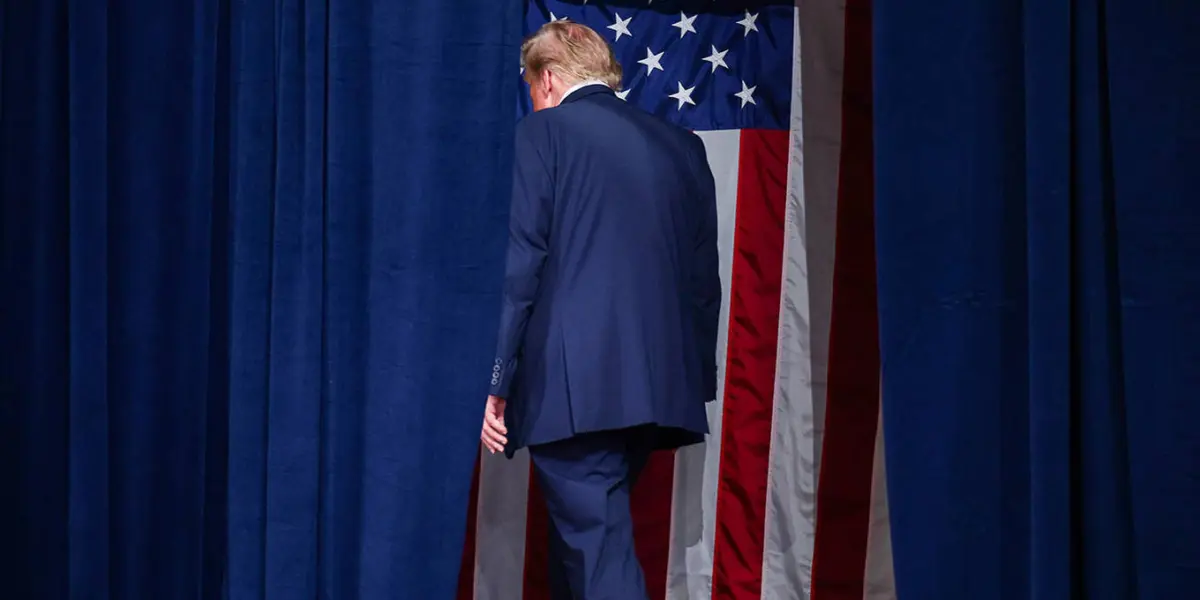
The world must not succumb to euphoria following Donald Trump’s latest defeat. If anything, his lame-duck status deprives Americans and everyone else of an excuse for avoiding hard conversations about the truly radical changes that will be needed to avert future catastrophes.
Ljubljana – The duty of a philosopher, in this instance, is to temper the ecstatic sense of relief that has pervaded international discourse following the recent United States midterm elections. At first glance, the outcomes appear to represent a collective triumph. Donald Trump’s party not only suffered a significant electoral setback, but the former president himself has, at least publicly, accepted the results and indicated a willingness to cooperate with the incoming Democratic congressional majority. This outcome has averted, for the immediate present, the specter of a declared state of emergency or contested election results that had generated widespread anxiety.
Midterm Elections: A Shifting Political Landscape
The midterm elections, held on November 5, 2026, were widely anticipated as a critical barometer of the American electorate’s sentiment. Historically, the party holding the presidency tends to lose seats in Congress during midterm cycles, a phenomenon often attributed to voter fatigue and a desire for checks and balances. This year’s elections, however, carried an added layer of gravity due to the prolonged influence of Donald Trump on the Republican Party and the deeply polarized nature of American politics.
Initial projections and reporting indicated a more significant Republican wave than many analysts had predicted. However, as vote counts continued through the subsequent days, a different narrative began to emerge. While Republicans did secure a majority in the House of Representatives, their gains were more modest than anticipated, falling short of the "red wave" that had been forecast. The Senate, in contrast, remained closely divided, with Democrats managing to hold onto key seats and potentially expand their slim majority depending on the outcome of runoff elections in certain states.
The defeat, in this context, refers not to an outright national repudiation of Trump-aligned candidates, but rather a failure to achieve the decisive victory that many in the Republican Party had hoped for and that Trump had actively campaigned to deliver. Several high-profile candidates endorsed by Trump underperformed in swing states, signaling a potential erosion of his influence among a broader segment of the electorate, particularly independent voters and suburban constituencies that had previously been receptive.
The Lingering Shadow of Donald Trump
Donald Trump’s impact on American politics extends far beyond his presidency. His endorsements played a crucial role in many Republican primaries, elevating candidates who espoused his populist agenda and often his confrontational style. The midterm elections were, in many ways, a referendum on his continued sway within the party and his vision for the nation.
The outcome, therefore, presents a complex picture. While the Democratic Party can claim a measure of success in stymying what was expected to be a significant Republican resurgence, the continued electoral viability of Trump-backed candidates in numerous races underscores the enduring appeal of his base. His public statement accepting the results, while seemingly conciliatory, has been met with a degree of skepticism given his history of disputing election outcomes. The specific phrasing and any subsequent actions will be closely scrutinized by political observers.
Philosophical Underpinnings: The Illusion of Relief
The philosopher’s role, as articulated in the initial assessment, is to challenge the immediate sense of relief that often accompanies the avoidance of worst-case scenarios. The current political climate, marked by profound ideological divides and a sustained questioning of democratic norms, suggests that the challenges facing the United States and the global order are not resolved by a single electoral cycle.
The "lame-duck" status of a defeated president or a party that fails to achieve its electoral objectives can, paradoxically, create a dangerous complacency. It allows for a temporary reprieve from the immediate threat, but it can also serve as an excuse to postpone the difficult and often uncomfortable discussions necessary to address the underlying systemic issues. These issues, the argument posits, include, but are not limited to, economic inequality, the existential threat of climate change, the erosion of democratic institutions, and the proliferation of misinformation.
The Imperative for Radical Change
The call for "truly radical changes" is not a hyperbole but a reflection of the scale of the challenges confronting contemporary societies. The post-World War II liberal international order, built on principles of multilateralism, democratic governance, and free trade, is under considerable strain. Forces of nationalism, populism, and authoritarianism have gained traction globally, questioning the very foundations of this order.
In the United States, the polarization has reached a point where bipartisan consensus on critical issues has become exceedingly rare. This deadlock hinders the ability to enact significant policy reforms that could address long-term challenges. The reliance on short-term political maneuvering and the focus on immediate electoral gains, rather than on foundational societal shifts, can perpetuate a cycle of crises.
The philosopher’s concern, therefore, is that the current respite might lead to a failure to engage with the fundamental restructuring of political and economic systems. This could involve rethinking the nature of representation, the role of technology in shaping public discourse, the equitable distribution of wealth and opportunity, and the global mechanisms for addressing shared threats.
Background Context: A Divided Nation
The United States has been grappling with deep societal divisions for decades, a trend that has accelerated in recent years. The 2016 election of Donald Trump, and his subsequent presidency, brought these divisions to the forefront of national and international attention. His populist rhetoric, his challenges to established institutions, and his embrace of a nationalist agenda resonated with a significant portion of the electorate, while alienating others.
The aftermath of his presidency saw continued political turmoil, including the January 6th Capitol attack, which further highlighted the fragility of democratic processes. The 2020 election, won by Joe Biden, was followed by widespread challenges to its legitimacy by Trump and his allies, fueling ongoing distrust in electoral systems.
The 2022 midterms were thus viewed as a crucial test of whether the country would continue on a path of heightened polarization or seek a more stable political equilibrium. The results, as they unfolded, offered a complex and nuanced answer, suggesting that while a decisive shift might not have occurred, the trajectory of American politics remains a subject of intense debate and uncertainty.
Supporting Data and Trends
Several key data points from recent years offer context for the current political landscape:
- Economic Inequality: Data from the U.S. Census Bureau and organizations like the Pew Research Center have consistently shown widening income and wealth disparities. This economic discontent has been a significant factor fueling populist movements.
- Political Polarization: Polling data from organizations such as Gallup and the Pew Research Center have documented increasing ideological sorting among both Democrats and Republicans, with fewer individuals holding moderate views. This has led to increased partisan animosity and gridlock.
- Trust in Institutions: Surveys have indicated declining public trust in various institutions, including government, media, and even electoral processes. This erosion of trust makes it harder to achieve consensus and implement effective policy.
- Climate Change Concerns: Despite political divisions, a majority of Americans, according to numerous polls, express concern about climate change and support for policies to address it. However, the political will to enact comprehensive legislation remains a significant hurdle.
Reactions from Related Parties (Inferred)
While official statements are still emerging and evolving, several reactions can be logically inferred based on past patterns and stated positions:
- Democratic Party: While expressing relief at averting a larger Republican victory, Democratic leaders are likely to acknowledge the continued challenges posed by the opposition and the need for continued vigilance. They will likely emphasize the importance of legislative action on issues like climate change and economic relief, while also preparing for future political battles.
- Republican Party: Elements within the Republican Party will likely engage in internal debates about the election results. Some may attribute the underperformance to specific candidate choices or campaign strategies, while others might continue to align themselves closely with Donald Trump’s messaging and appeal. There may be a push for introspection regarding the party’s broader electoral strategy.
- Donald Trump: His public acceptance of the results, as mentioned, is a significant development. However, given his history, his future pronouncements and actions will be closely watched for any signs of continued engagement in political contests or efforts to shape the Republican Party’s future direction.
- International Allies: Many international leaders will likely express cautious optimism about the stability offered by the avoidance of more extreme outcomes. However, they will also be keenly observing the ongoing political dynamics in the U.S. and their implications for global cooperation on issues such as trade, security, and climate.
Broader Impact and Implications
The outcome of the midterm elections, and the subsequent analysis by figures like Slavoj Žižek, points to several broader implications:
- Continued Political Volatility: The election results suggest that American politics will likely remain highly polarized and potentially volatile. The absence of a clear mandate for either party could lead to continued legislative gridlock and uncertainty.
- The Future of the Republican Party: The ongoing influence of Donald Trump on the Republican Party remains a central question. The extent to which the party can broaden its appeal beyond its core base will be critical for its future electoral success.
- Global Governance: The United States’ domestic political stability and its capacity to engage in international cooperation are crucial for global governance. Continued internal divisions could hinder its ability to address pressing global challenges.
- The Urgency of Systemic Reform: The philosopher’s critique highlights the imperative for a deeper societal reckoning with the systemic issues that fuel political instability and existential threats. This includes re-evaluating democratic processes, economic models, and approaches to information dissemination in the digital age.
In conclusion, while the immediate relief following the 2026 midterm elections is understandable, it is imperative to recognize that this outcome does not signal an end to the profound challenges facing the United States and the world. The opportunity for introspection and the initiation of truly transformative changes, rather than superficial adjustments, is now. Failure to seize this moment, due to a desire to avoid difficult conversations, could have far-reaching and detrimental consequences for the future. The philosophical imperative is clear: to move beyond the immediate euphoria and confront the deep-seated issues that require more than just electoral adjustments.
