

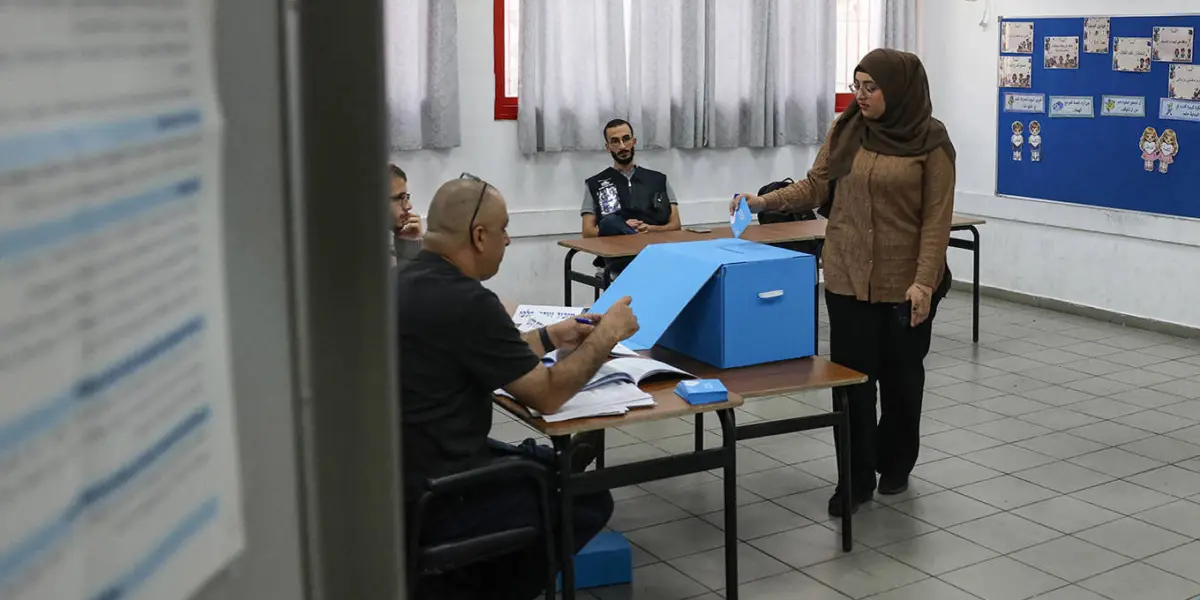
While Israel’s recent election did not deliver the transformation for which many might have hoped, it could open the way to restoring Israeli democracy. By building a coalition with the Arab-led parties, the opposition bloc could defeat not only Benjamin Netanyahu but also the violent, racist ideology he embodies.
TEL AVIV – The dust has settled on Israel’s latest general election, a contest that, in the estimation of many observers, failed to produce the decisive mandate many had anticipated. The results, characterized by a deeply entrenched political deadlock, have underscored the profound societal divisions that continue to shape the nation’s electoral landscape. This outcome, while perhaps disappointing for those seeking a radical shift, may nevertheless present a pivotal opportunity to reassess the trajectory of Israeli democracy and confront the ideological currents that have become increasingly prominent in public discourse.
The election campaign was marked by intense political polarization, with the electorate appearing to be cleaved along tribal and cultural lines. Prime Minister Benjamin Netanyahu, a figure who has dominated Israeli politics for decades, faced a populace grappling with a complex array of domestic and international challenges. Despite presiding over a period marked by protracted military engagements, accusations of war crimes, and a perceived decline in Israel’s global standing, Netanyahu’s Likud party, along with its right-wing and religious allies, secured a significant bloc of seats, preventing a clear victory for the opposition.
A Nation Divided: The Electoral Landscape
The 2026 Israeli election, held on November 6th, saw a voter turnout of approximately 71.3%, a figure that reflects a high level of engagement but also the deep divisions within Israeli society. The final seat distribution painted a picture of a fractured parliament, with no single bloc able to form a stable governing majority. The Likud party, led by Benjamin Netanyahu, emerged as the largest single party, but fell short of the 61 seats required to form a coalition government independently.
The opposition, a broad and ideologically diverse coalition, also struggled to consolidate its gains. While parties ranging from centrist to left-wing and even some Arab-led factions found common ground in their opposition to Netanyahu, the internal differences and the sheer number of parties involved made coalition building a formidable challenge. This intricate parliamentary arithmetic has become a recurring feature of Israeli politics in recent years, leading to a series of elections and unstable governments.
Historical Context: The Netanyahu Era and its Discontents
Benjamin Netanyahu’s political career is intrinsically linked to the evolution of modern Israeli politics. His first term as Prime Minister began in 1996, and he has since served multiple terms, becoming the longest-serving Prime Minister in Israel’s history. His tenure has been characterized by a hawkish security policy, a focus on economic liberalization, and a significant shift in the country’s relationship with the international community.
However, Netanyahu’s leadership has also been accompanied by increasing domestic criticism. Critics point to a series of prolonged conflicts, including the Gaza wars, which have resulted in significant casualties and drawn international condemnation. Allegations of war crimes, documented by various human rights organizations, have cast a shadow over Israel’s international reputation. Domestically, concerns have been raised about the erosion of democratic norms, the increasing influence of far-right and religious parties, and the exacerbation of societal divisions.
The rise of the Arab-led parties in the Knesset, particularly the Joint List and its successor alliances, represents another significant development. These parties, historically representing the interests of Israel’s Arab minority (comprising over 20% of the population), have increasingly found themselves in a position to influence the political landscape, either by acting as a spoiler or, as some now suggest, by becoming a potential coalition partner. Their inclusion in any coalition government, or even their tacit support, would represent a significant departure from previous political norms and could signal a more inclusive approach to governance.
The Election Campaign and its Aftermath
The campaign leading up to the November 6th election was, as predicted by many analysts, devoid of any radical change in foreign policy. Instead, the focus remained on domestic issues, security, and the fundamental identity of the Israeli state. Prime Minister Netanyahu campaigned on his experience and his ability to secure Israel’s borders, while the opposition coalition emphasized the need for change, accountability, and a renewed commitment to democratic values.
The results, however, defied the hopes of those who believed the electorate would deliver a decisive verdict against the incumbent government. The deep fissures within Israeli society, fueled by a complex interplay of religious, ethnic, and political identities, ensured that the election would yield a fragmented parliament. The "tribal and cultural lines" mentioned in the initial assessment refer to these deep-seated divisions, often manifesting as a stark divide between secular and religious communities, Ashkenazi and Mizrahi Jews, and the Jewish majority and the Arab minority.
The Potential for a New Coalition Dynamics
The current political stalemate, while frustrating for many, has opened up a new avenue for coalition formation. The opposition bloc, comprising a diverse array of parties, now faces the strategic challenge of building a coalition that can command a parliamentary majority. A critical element in this equation is the potential role of the Arab-led parties.
Historically, Arab parties have largely operated in opposition, due to a combination of ideological differences with mainstream Jewish parties and a distrust of the political establishment. However, in the current fragmented political landscape, their support has become increasingly crucial for any opposition bloc seeking to oust Benjamin Netanyahu.
Analysis of Implications:
Restoring Israeli Democracy: The argument for forming a coalition with Arab-led parties is rooted in the belief that it can serve as a crucial step towards restoring and strengthening Israeli democracy. By bringing these parties into the governing fold, it could signal a more inclusive and representative model of governance, where the voices of all citizens, including the Arab minority, are actively incorporated into the decision-making process. This could, in turn, lead to policies that address the concerns of the Arab community and foster greater social cohesion.
Challenging Extremist Ideologies: The article posits that by defeating Benjamin Netanyahu, the opposition could also challenge the "violent, racist ideology he embodies." This refers to the increasing influence of far-right and religious nationalist elements within Israeli society and politics, which have been accused of promoting exclusionary policies and rhetoric. A coalition that explicitly includes Arab parties would, by its very nature, stand in direct opposition to such ideologies, signaling a commitment to a more pluralistic and egalitarian vision of Israel.
International Standing: Israel’s global standing has been a subject of considerable debate. Critics have argued that the policies of successive Netanyahu governments, particularly those related to the Israeli-Palestinian conflict and the expansion of settlements, have damaged the country’s international reputation. A government formed with the inclusion of Arab parties, and one that signals a commitment to democratic principles and inclusivity, could potentially lead to an improvement in Israel’s international relations and a more constructive engagement with the international community.
Challenges and Uncertainties:
The formation of such a coalition would not be without its significant challenges. Deep-seated mistrust between some Jewish and Arab political factions, as well as within the broader society, would need to be overcome. The specific policy platforms of the diverse parties involved would require careful negotiation and compromise. Furthermore, the potential for internal dissent and external pressure, both domestically and internationally, would need to be managed effectively.
Statements and Reactions (Inferred):
While direct quotes from parties involved in potential coalition talks are not yet public, one can infer likely reactions. Opposition leaders are likely to express a cautious optimism about the possibility of forming a government, emphasizing the need for unity and compromise. Leaders of Arab-led parties would likely reiterate their commitment to representing the interests of the Arab community and advocate for policies that promote equality and address systemic discrimination. Conversely, supporters of Benjamin Netanyahu and the right-wing bloc would likely decry any coalition involving Arab parties as a threat to national security and the Jewish character of the state.
Looking Ahead:
The outcome of the 2026 Israeli election, while not delivering the sweeping transformation many had hoped for, has nevertheless placed the nation at a critical juncture. The deadlock presents a unique opportunity to forge a new political path, one that could potentially strengthen democratic institutions, foster greater inclusivity, and redefine Israel’s identity in the 21st century. The coming weeks and months will be crucial in determining whether this opportunity will be seized, leading to a more representative and resilient Israeli democracy, or whether the country will continue on its current trajectory of division and political instability. The decision to build a coalition that embraces the Arab-led parties, as suggested, represents a bold, albeit challenging, step towards a more inclusive and perhaps more hopeful future for Israel.
