

The initial evaluation of the Kunming-Montreal Global Biodiversity Framework, unveiled at the recent UN Biodiversity Conference (COP17) in Yerevan, has delivered a deeply concerning verdict: progress on crucial biodiversity targets is falling critically short. While the framework, adopted four years ago and lauded as the "Paris agreement for nature," established ambitious goals for the protection of terrestrial and marine areas, ecosystem restoration, and the halting of human-caused extinctions, the latest assessment reveals a significant gap between aspirations and reality. The findings underscore a fundamental flaw not in the targets themselves, but in the global financial architecture that, by its very design, incentivizes environmental destruction while penalizing conservation efforts.
A Sobering Assessment of Biodiversity Goals
The State of Biodiversity Action report, released in Yerevan, paints a grim picture. Despite nearly 90% of signatory nations having established targets to conserve at least 30% of land and sea areas, restore 30% of degraded ecosystems, and halt extinctions driven by human activity, fewer than half of these assessed targets are demonstrably on track for achievement by the 2030 deadline. This stark reality emerged during COP17, a pivotal moment intended by UN Secretary-General António Guterres as an "moment of accountability." However, the report’s findings suggest that genuine accountability necessitates a deeper diagnosis of the underlying systemic issues.
The framework’s faltering implementation is not attributable to a lack of commitment from governments regarding the importance of nature. Instead, the report points to a global economic and financial system that actively rewards the exploitation and degradation of natural resources while imposing significant penalties on those who strive to protect them. Data from the UN Environment Programme (UNEP) reveals a staggering sum of approximately $7.3 trillion flowing into activities that directly harm nature in 2023. This figure, representing roughly 7% of global Gross Domestic Product (GDP), highlights a perverse incentive structure where for every dollar invested in nature’s preservation, a substantial $30 is spent on its destruction.
The Biodiversity Finance Gap and Systemic Misalignment
The Kunming-Montreal framework explicitly calls for bridging the substantial biodiversity finance gap, estimated at $700 billion annually. This ambitious goal is to be achieved through a dual strategy: reducing nature-harming subsidies by $500 billion per year and mobilizing an additional $200 billion annually in incremental finance, with a significant portion, $30 billion, expected from external official sources. A critical insight from the report is that over half of this required investment is earmarked for the implementation of sustainable management practices across vital sectors like agriculture, rangelands, fisheries, and forestry. The remaining funds are designated for crucial ecosystem restoration and preservation initiatives.
However, the problem extends beyond mere market failures. As noted by David Obura in the co-edited volume Nature, People, and Sustainable Development, a profound disconnect exists between what society economically values and what is ecologically necessary. Current economic models primarily capture nature’s utilitarian value, failing to account for its intrinsic and relational worth. This leads to nature being perceived as a cost – land that could be developed and economic growth that is potentially forgone – a burden often disproportionately placed on developing nations. This perception is further reinforced by credit-rating agencies, which frequently downgrade the creditworthiness of developing countries citing the risk of slower economic growth, a direct consequence of prioritizing conservation over perceived immediate economic gains.
Reframing Nature as an Investment: The Bioeconomy’s Potential
A more constructive approach, the report suggests, lies in emphasizing the immense potential of the bioeconomy. This perspective reframes the protection of nature not as an economic cost, but as a strategic driver of growth. Approximately 55% of global GDP, a colossal $58 trillion, is already directly dependent on natural ecosystems. The bioeconomy, defined as the use of biological resources in a regenerative and nature-positive manner, currently contributes around $4 trillion to the global economy. Unlocking its full potential could see this figure soar to an astounding $30 trillion by 2050, forging vital links between producers and global supply chains that encourage higher value-added activities.
This paradigm shift is particularly crucial for countries endowed with abundant natural resources but facing fiscal constraints, including nations like Indonesia, Brazil, Peru, Zambia, Ecuador, the Philippines, and Mozambique. These governments often rely heavily on extractive industries such as logging, mining, and large-scale agriculture to generate foreign exchange, funds that are frequently channeled into servicing external debt. The ensuing ecological damage leaves these nations more vulnerable to the escalating impacts of climate disasters, including floods, droughts, and severe storms. Ironically, these climate-related vulnerabilities often lead to credit rating downgrades, while existing debt frameworks fail to adequately recognize the significant benefits derived from building resilience to such shocks.
Creating Incentives in Commodity Supply Chains: The Cocoa Example
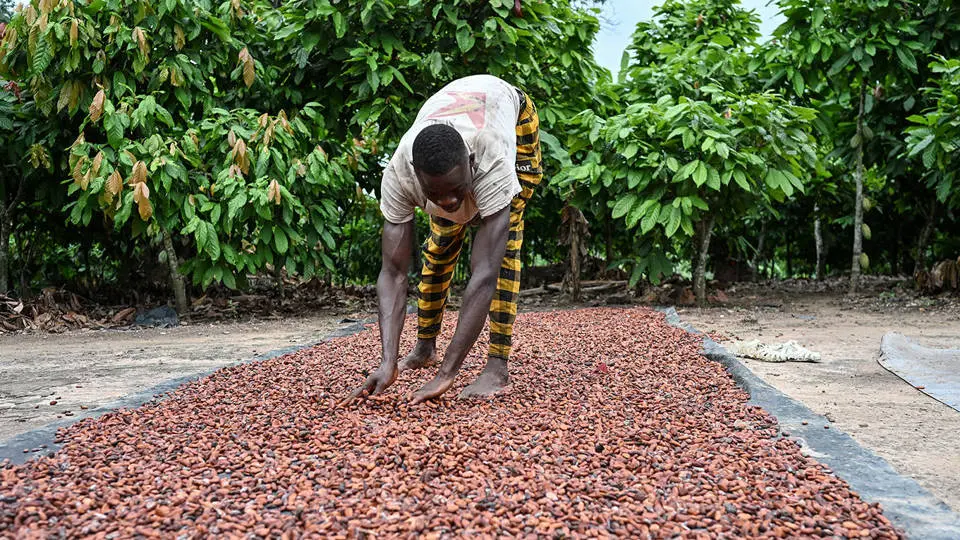
The imperative to create appropriate economic incentives is especially pronounced within global commodity supply chains. Consider the case of Côte d’Ivoire and Ghana, which collectively account for nearly two-thirds of the world’s cocoa supply, primarily from smallholder farms. Despite their significant contribution, a staggering 73% to 90% of cocoa-producing households in these nations earn meager incomes. These farmers often lack the financial resources to cover the costs associated with replanting aging trees, such as fertilizer and weed control. Consequently, they are compelled to expand into forested areas where establishing new plantations is more economically viable.
The global chocolate industry, characterized by the concentration of processing and manufacturing within a handful of major corporations, possesses considerable influence over global outcomes. The European Union, a significant importer of cocoa beans, is set to implement its Deforestation Regulation in December. This regulation will make market access for commodities like cocoa and coffee conditional on deforestation-free supply chains. To foster compliance and support these efforts, significant traders should be incentivized to provide financial backing for replanting initiatives and enhance traceability systems. This would empower smallholder farmers to meet regulatory standards and, in turn, achieve higher earnings for their sustainable practices.
Environmental Crime and the Role of Indigenous Peoples
Furthermore, the protection of nature is inextricably linked to global security. Environmental crime, encompassing illegal logging, mining, wildlife trafficking, and fishing, generates an estimated $110 billion to $280 billion annually. A significant portion of these illicit proceeds is laundered through channels identical to those used for narcotics and other illegal financial activities. The report advocates for a strategic shift in enforcement, moving beyond the prosecution of individual offenders to targeting chokepoints within these criminal networks. This includes focusing on mills, refineries, ports, traders, and financiers, while simultaneously securing land rights and public finance for the most effective custodians of nature: Indigenous peoples and local communities. Their profound connection with and stewardship of the natural world embody its intrinsic and relational values, offering a model for sustainable coexistence.
A Call for Systemic Change at Future Climate and Biodiversity Negotiations
The overarching lesson from the State of Biodiversity Action report is unequivocal: merely augmenting the number of targets, while continuing to treat nature as just another economic sector, will not suffice. As discussions around climate and nature action continue, particularly at the upcoming UN Climate Change Conference (COP31) in Antalya and in ongoing UN dialogues concerning the post-2030 agenda for Sustainable Development Goals, a fundamental reorientation of priorities is required. The focus must shift towards altering the ingrained incentives that have systematically hindered progress. This necessitates a fundamental redefinition of nature, not as an economic cost, but as a vital investment, thereby ensuring that those who champion its protection are rewarded, not penalized. The success of future frameworks hinges on this critical recalibration of our economic and financial systems.
