

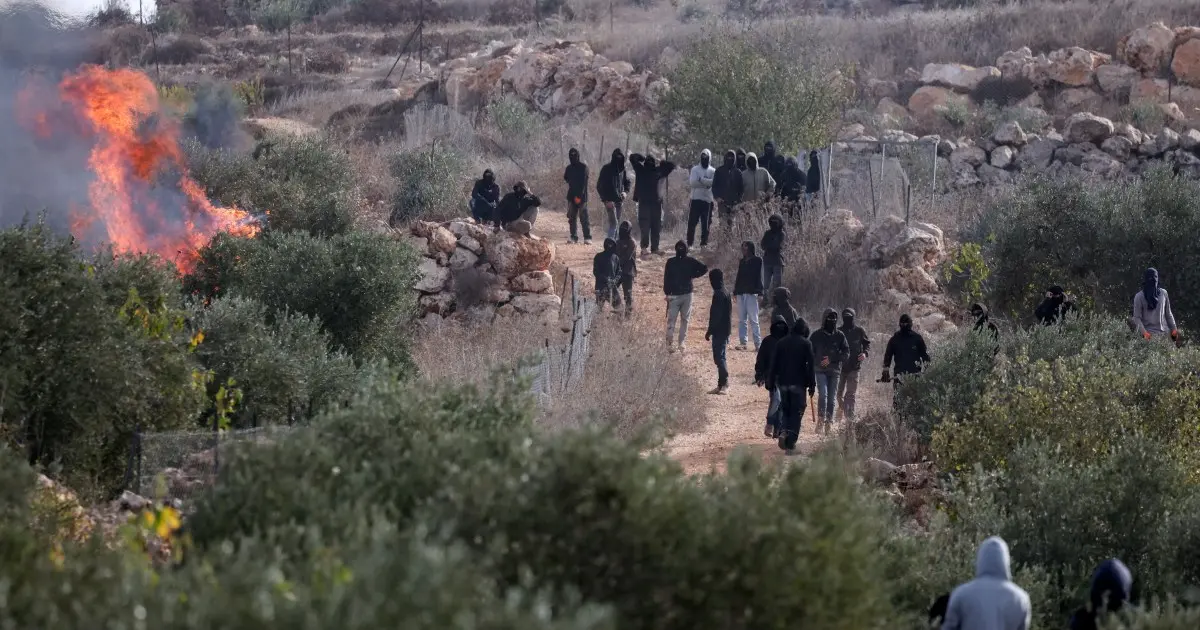
A month into this year’s olive harvest season, a stark picture of environmental devastation emerges from the occupied Palestinian territories. Reports indicate that Israeli settlers and soldiers have already damaged or uprooted approximately 4,500 olive trees in the West Bank. This recent destruction adds to an alarming cumulative total of 100,000 olive trees destroyed across the West Bank since January of this year alone. In the Gaza Strip, the scale of destruction is catastrophic, with an estimated 97 percent of Gaza’s two million olive oil trees wiped out since October 2023. This systematic obliteration of vital agricultural resources is not a new phenomenon; historical data reveals that between 1967, when Israel occupied Gaza and the West Bank, and the 2010s, over 800,000 olive trees had already been destroyed. This ongoing assault on Palestine’s natural environment casts a long shadow over Israel’s repeated claims of "making the desert bloom," a narrative that critics argue serves as a form of "greenwashing" to obscure a deliberate policy of ecological destruction.
Historical Roots of Environmental Transformation
The narrative of "making the desert bloom" is deeply embedded in Zionist discourse, often presented as a testament to Israeli ingenuity and agricultural prowess. However, historical accounts and contemporary research challenge this assertion, revealing a fertile and productive landscape prior to the late 19th and early 20th centuries, when the first Zionist settlers arrived. Far from being a barren desert, historical Palestine was a vibrant agricultural region, capable of sustaining its population and even exporting produce across the Ottoman Empire and to parts of Europe.
Palestinian farmers, for generations, cultivated a diverse range of crops including wheat, barley, and oats, alongside extensive olive and fruit orchards. The Mediterranean coast hosted lush gardens yielding various vegetables and fruits, while the arid Naqab (Negev) desert in the south supported Bedouin tribes engaged in pastoralism, raising sheep, goats, and camels for meat, milk, and wool. These communities had developed sophisticated, sustainable agricultural practices tailored to local conditions, utilizing drought-resistant crops in drier areas and irrigation-dependent ones in valleys near water sources, reflecting a deep understanding and harmonious coexistence with their diverse ecosystems, from wetlands to arid zones.
In contrast, Zionist settlers, largely originating from Europe, often sought to reshape Palestine’s landscape to mirror environments familiar to them. This approach frequently involved introducing non-native species, such as the stone pine, and in many instances, uprooting indigenous trees, including ancient olive groves. Large-scale projects were undertaken to drain swamps, reroute natural streams, and afforest desert landscapes. While some of these initiatives were framed as modernization, they often had detrimental effects on local ecosystems. For instance, the widespread planting of eucalyptus trees, a species imported from Australia, proved highly flammable and has been linked to an increased frequency and intensity of wildfires, further degrading the natural environment.
Critics argue that these efforts to re-engineer the landscape were not solely driven by agricultural innovation but were intrinsically linked to a broader political objective: the erasure of Palestinian presence and identity. Trees were frequently planted over the rubble of depopulated Palestinian villages post-1948, serving as a physical and symbolic covering of historical displacement. The imposition of European-style agricultural methods often supplanted native Palestinian techniques that had sustained communities for centuries, contributing to a systematic undermining of indigenous knowledge and practices.
Ecocide Under Occupation: A Systematic Erosion of Land and Livelihoods
The systematic assault on Palestinian land and its natural resources intensified following the 1967 occupation of the West Bank and Gaza Strip. Under military rule, control was exerted not only over the Palestinian population but also over their vital natural resources, central among them being water.
Water has become a critical instrument of control and a major flashpoint. As illegal Israeli settlements proliferated across the occupied territories, settlers began appropriating local water sources. Today, Mekorot, Israel’s national water company, manages an extensive water system that controversially diverts water from Palestinian towns and villages to serve these settlements. This has led to severe disparities in water access, with Palestinian communities often experiencing drastic water shortages, particularly during the hot summer months, while nearby settlements maintain a steady and ample supply. According to reports from organizations like B’Tselem and the United Nations, Israeli settlers consume significantly more water per capita than Palestinians, whose access is often restricted to a fraction of the recommended minimum for daily needs. This deliberate rerouting and restriction of water has had devastating consequences for Palestinian agriculture, diminishing crop yields, and severely impacting local ecosystems, leading to desertification in some areas previously reliant on traditional irrigation.
Beyond water, land theft and degradation have manifested through various violent and coercive means. For years, the Israeli army and settlers have employed tactics such as spraying Palestinian agricultural lands with pesticides, ostensibly for "security reasons" or to clear "buffer zones," but effectively deterring farmers from cultivating their fields. The burning and uprooting of trees and other vegetation, alongside the extensive construction of settlements, bypass roads, and the Separation Barrier, have contributed to widespread soil damage and erosion. These actions not only destroy current harvests but also impair the long-term fertility and viability of agricultural land, undermining Palestinian food security and economic independence.
The Gaza Strip: An Environmental Catastrophe Unfolding
The ongoing conflict in the Gaza Strip since October 2023 has escalated environmental destruction to an unprecedented scale, constituting what many international observers and environmental groups describe as an act of ecocide. The relentless bombardment and ground operations have laid waste to vast swathes of agricultural land, decimated forests and olive groves, and contaminated soil and water resources.
Satellite imagery and on-the-ground reports confirm the catastrophic loss of Gaza’s agricultural capacity. The estimated destruction of 97 percent of Gaza’s two million olive trees alone represents an irreparable loss to the region’s biodiversity, economy, and cultural heritage. Beyond trees, the war has seen approximately 85 percent of buildings in the Gaza Strip destroyed or severely damaged, generating an estimated 70 million tonnes of rubble. This debris is not merely inert material; it is saturated with various toxins, including heavy metals such as lead, cadmium, arsenic, tungsten, and aluminum, as well as explosive compounds like TNT, RDX, and perchlorates.
These hazardous substances pose an immense long-term environmental and public health crisis. As they leach into the soil and groundwater, they contaminate vital water sources, impacting human health through drinking water and food chains, and rendering agricultural land infertile for potentially decades. The continuous bulldozing of buildings and land by Israeli forces further exacerbates this problem by stripping away the precious topsoil, which is rich in organic matter and nutrients essential for plant growth. This process fundamentally degrades agricultural land, making future cultivation exceedingly difficult and prolonging the humanitarian crisis by undermining any prospects for self-sufficiency. The United Nations Environment Programme (UNEP) and other international bodies have expressed grave concerns about the environmental fallout, warning of severe and lasting ecological damage that will complicate any future recovery efforts.
A Chronicle of Destruction and Resilience
The pattern of environmental destruction in Palestine is not a series of isolated incidents but a continuous policy interwoven with the broader political conflict. Since the Nakba of 1948, the reshaping and degradation of the natural landscape have been central to Israeli colonial policies.
In the West Bank, the establishment and expansion of settlements, often accompanied by military orders declaring vast areas as "state land" or "firing zones," have led to the confiscation of private Palestinian property, including agricultural land. Farmers frequently face harassment, violence, and destruction of their crops and trees by settlers, often under the protection of the Israeli military. The construction of the Separation Barrier, deemed illegal by the International Court of Justice, has further fragmented Palestinian land, isolating communities from their fields and water sources.
The personal narrative of a Palestinian family, such as that of the author’s grandfather, Hamdan, powerfully illustrates this relentless cycle of destruction and resilience. For decades, Hamdan diligently tended an eight-dunam olive grove that annually produced 1,500kg of olive oil, a cornerstone of his family’s livelihood and identity. This grove was first bulldozed by the Israeli army during the 2008 war on Gaza. Undeterred, Hamdan, with family assistance, replanted the trees. Just as the grove began to recover, it was destroyed again during the 2014 war. The profound shock of this second destruction contributed to Hamdan’s death less than a week later, a testament to the deep spiritual and cultural connection Palestinians have to their land and trees.
Yet, the family did not abandon hope. In 2015, they embarked on the arduous task of restoring and replanting the land, a process that took several months. It took three years for the new trees to bear fruit, yielding olives for two seasons before the grove was once more bombed by the Israeli army during the 2021 war. The damage was so severe, including bomb craters and contamination, that the land was no longer suitable for olive cultivation. Despite this, the family cleared the contamination and managed to plant seasonal crops like wheat. The cycle of destruction continued into December 2023, when the Israeli army devastated the grove again. The family’s inability to replant today is due to the land falling beyond the ever-expanding "Yellow Line," a term referring to areas made inaccessible or dangerous by Israeli military presence or settlement expansion.
This enduring commitment to the land is a defining characteristic of Palestinian identity. Even in displacement camps, many Palestinians cultivate small gardens, planting mint, basil, and flowers in front of their tents, a symbolic act of defiance and a powerful affirmation of their connection to the land and their heritage.
Official Responses and Broader Implications
Israeli officials often frame their actions in the West Bank and Gaza as necessary for security, combating terrorism, or managing resources efficiently. They frequently highlight their own advancements in water management and agricultural technology, reinforcing the "making the desert bloom" narrative. However, these claims are increasingly challenged by human rights organizations, environmental groups, and international bodies that point to documented evidence of disproportionate resource allocation, land confiscation, and environmental degradation that primarily harms Palestinians.
Palestinian authorities and civil society organizations consistently condemn these actions, calling for international intervention to protect their land, resources, and livelihoods. They argue that the destruction of olive trees, water theft, and land degradation are not collateral damage but integral components of a strategy to dispossess and displace Palestinians, undermine their economy, and erase their cultural heritage.
The broader implications of this environmental assault are profound and far-reaching.
- Food Security and Sovereignty: The destruction of agricultural land and resources severely undermines Palestinian food security, increasing reliance on external aid and diminishing their capacity for self-sufficiency. This also impacts their economic independence, as agriculture is a significant sector for many Palestinian communities.
- Cultural Heritage and Identity: Olive trees, in particular, are deeply symbolic for Palestinians, representing resilience, rootedness, and a continuous connection to their land spanning generations. Their destruction is not merely an economic loss but a profound attack on cultural heritage and national identity.
- Environmental Justice and Climate Vulnerability: The ecocide exacerbates environmental injustices, disproportionately affecting vulnerable Palestinian communities. In a region already highly susceptible to climate change impacts like water scarcity and desertification, the deliberate degradation of ecosystems makes communities even more vulnerable and less resilient.
- International Law: The actions described may constitute violations of international humanitarian law and international environmental law, particularly concerning the protection of natural resources in occupied territories and the prohibition of widespread, long-term, and severe damage to the natural environment.
- Long-Term Recovery and Peace: The extensive environmental damage, particularly in Gaza, presents immense challenges for any future recovery or reconstruction efforts. Contaminated land and water, destroyed infrastructure, and degraded ecosystems will hinder rehabilitation, prolong suffering, and complicate prospects for a sustainable peace.
Despite all the propaganda and greenwashing Israel deploys on international platforms, it is becoming increasingly clear to the world who truly nurtures the Holy Land. It is not those who destroy, poison, and bulldoze ancient groves and fertile lands. It is those who remain deeply rooted, who consistently plant, grow, and care for the soil, even in the face of repeated devastation. These are the true custodians of the land, demonstrating an unwavering commitment to its flourishing, a testament to their enduring connection and stewardship.
