

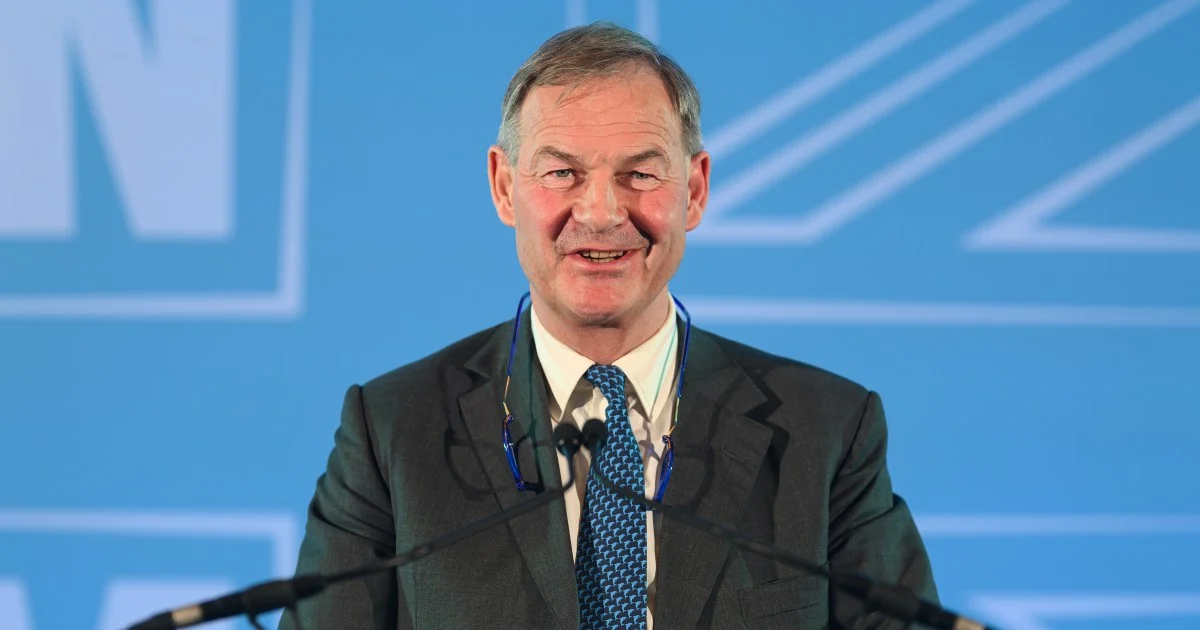
When Nigel Farage, leader of the far-right, anti-immigration party Reform UK, addressed the nation while bizarrely standing in a field this week, he was a man on a mission. “It is time to respond with pure cold rage,” he pronounced. His impassioned address, delivered against an incongruous rural backdrop, underscored the escalating tensions within British politics, particularly on the hard right, as a pivotal by-election looms and societal anxieties over crime and immigration reach a fever pitch. Farage’s rhetoric was a direct response to the tragic death of Henry Nowak, an event that has ignited a fierce national debate and exposed deep fissures in public trust and political alignment.
The Henry Nowak Tragedy: A Catalyst for Rage
Farage was speaking about the fatal stabbing of a white teenage boy, Henry Nowak, in December 2025 by a Sikh man armed with a ceremonial knife. The incident, which occurred under highly contentious circumstances, has become a flashpoint for intense public anger and political exploitation. According to reports, when police arrived at the scene, instead of immediately apprehending the attacker, they allegedly took his (false) claim that Nowak had racially abused him as credible, and reportedly refused to believe the dying 18-year-old when he desperately told them he had been stabbed. This alleged dereliction of duty by the responding officers has sparked widespread outrage and accusations of institutional bias, fueling a narrative of injustice that extremist elements have eagerly seized upon.
Further exacerbating public fury, footage from the incident—which Nowak’s family bravely allowed to be released to the public—shows a devastating scene in which the dying boy is handcuffed, uttering his last words, “I can’t breathe.” The harrowing video, widely circulated across social media platforms and news outlets, has drawn stark parallels to the death of George Floyd in the United States, amplifying calls for accountability and reform within the police force, while simultaneously being weaponized by far-right figures to advance their anti-immigration agendas. The image of a dying white teenager, restrained by authorities while gasping for air, has resonated deeply with a segment of the population already predisposed to believe in systemic failures and perceived injustices against the native-born population.
Political Reactions and Exploitation
The tragedy of Henry Nowak’s death has swiftly become a political battleground, with numerous politicians attempting to reap capital from the profound public grief and anger. Kemi Badenoch, leader of the former governing – now floundering – Conservative Party, sought to connect with the national mood, telling The Times newspaper on Tuesday, “I just kept thinking, that’s someone’s boy. That could be my boy.” Her statement, while appearing empathetic, was widely interpreted as an attempt to reclaim ground with a conservative electorate increasingly disaffected by the party’s performance and drawn to more hardline stances on law and order and immigration.
Nigel Farage, ever adept at capitalizing on public sentiment, seized the opportunity to rally Reform supporters. He framed the tragedy as an appalling example of extreme racism towards a white boy, going so far as to explicitly liken the killing to that of George Floyd by a police officer in the US. This comparison, while controversial, served to underscore his argument about systemic failures and alleged anti-white bias, aiming to galvanize his base and attract disillusioned voters. Farage’s strategy is clear: to present Reform UK as the only party willing to confront uncomfortable truths and address the perceived grievances of a segment of the white working class.
However, observers suggest Farage’s primary target audience for this message was not just the general public, but specifically former supporters who have deserted Reform UK in droves. These defectors have gravitated towards a new, even more hardline far-right group: Restore Britain. This emergent party, arguably more anti-immigration than Farage himself, represents a significant threat to Reform’s growing influence. Since its launch less than four months ago by disgruntled former Reform member Rupert Lowe, Restore Britain has amassed more than 96,000 members and secured 13 councillors, most of whom have defected directly from Reform. This internal fracturing of the far-right vote signals a complex and volatile political landscape ahead.
The Emergence of Restore Britain: A Far-Right Schism
The rise of Restore Britain, and the subsequent splintering of the far-right vote, introduces a new dynamic into British politics. While it might seem counterintuitive for a new party to emerge and divide an already niche voter base, political analysts suggest it reflects a deeper ideological struggle within the anti-immigration movement. Georgios Samaras, assistant professor of public policy at the School for Government and the Policy Institute at King’s College London, told Al Jazeera that this development is not entirely surprising. He explains that Reform UK, in its quest for broader appeal, is increasingly perceived as "mainstreaming" its ideas, attempting to make itself more palatable to the population at large.
“Reform in the eyes of far-right extremists is too soft,” Samaras stated, pinpointing the ideological void that Restore Britain has sought to fill. This "gap in the market" has been exploited by Rupert Lowe, a former MP for Great Yarmouth and a disgruntled ex-member of Reform. Lowe’s new party caters to a segment of the electorate that views Reform’s policies as insufficiently radical, demanding a more uncompromising stance on immigration and national identity. Samaras did not mince words, asserting, “They [Restore] know that a percentage of Reform is openly fascist, and they are trying to attract that audience. I don’t know how serious the damage is going to be, but Rupert Lowe seems to be filling a gap that will further demonstrate that the far right has become quite powerful.” He went further, declaring, “In my view, Rupert Lowe and Restore Britain are the expressions of neo-Nazism in this country, and that audience requires a politician to express those ideas. Rupert Lowe is that man.” Samaras also noted the insidious nature of this ideology, adding, “Their narratives don’t have to involve Nazi symbolism; they can support Nazi ideas without being openly, symbolically, and stylistically Nazi.” This highlights the evolving face of extremism, which often shuns overt symbols in favor of coded language and policy proposals.
Makerfield By-Election: A Battleground for the Far Right
The internal battle within the far-right is set to play out dramatically in the upcoming Makerfield by-election. This single parliamentary seat in the north of England is preparing for a critical contest that could significantly influence the trajectory of the United Kingdom’s next prime minister later this month. The by-election, expected on June 18 in Makerfield, Greater Manchester, follows the departure of current Labour MP Josh Simons. Simons has stepped aside to pave the way for Manchester Mayor Andy Burnham to contest the seat. If successful, Burnham, a prominent figure in the Labour Party, will re-enter Westminster after an absence of nine years. His return is widely seen as a precursor to a potential leadership challenge against Prime Minister Keir Starmer, whose leadership has been severely weakened by disastrous local election results last month. Burnham previously served as MP for Leigh until May 2017, after which he became Mayor of Manchester.
However, securing the Makerfield seat will be no easy feat for Burnham. Labour has held the constituency since 1983, a stronghold in the traditional "Red Wall." Yet, the party faces stiff competition from Farage’s increasingly popular Reform UK, which surprisingly came second in Makerfield in the general election in 2024, signaling a significant shift in the electoral landscape of the industrial North. An opinion poll by Survation last week placed Burnham only slightly ahead of Reform UK’s candidate, Robert Kenyon, with 43 percent and 40 percent, respectively. This narrow margin underscores the vulnerability of Labour in its traditional heartlands and the formidable challenge posed by Reform.
Crucially, the same poll revealed that Reform’s share has been dented in a small but significant way by the newcomer, Restore Britain. Their candidate, Rebecca Shepherd, is polling at 7 percent in her party’s inaugural parliamentary contest. While 7 percent might appear modest, in a tightly contested by-election, it could prove decisive, potentially splitting the anti-establishment vote and inadvertently aiding Labour. The Makerfield by-election, therefore, becomes a microcosm of the broader political struggle, illustrating the complex interplay of traditional party loyalties, emerging populist movements, and the splintering of the far-right.
The Core Tenets of Restore Britain: Extreme Immigration Stance
Rupert Lowe has skillfully positioned Restore Britain as the only party truly willing to take decisive action against immigration, a stance that is attracting considerable attention and controversy. On Monday this week, tech billionaire and owner of SpaceX, Elon Musk, publicly endorsed Lowe, declaring on X (formerly Twitter), “Only Restore Britain can save Britain.” Musk retweeted a post by Lowe himself, who claimed that he had been persecuted for his views, stating that attempts were made to “put me in prison because I backed the mass deportation of Pakistani child rapists and their foreign wives/relatives who allowed it to happen.” This inflammatory statement is an apparent reference to a grooming gangs scandal that has simmered in the UK for several years, which has been consistently exploited by far-right groups to stoke racial and anti-immigrant sentiment.
Lowe reiterated his party’s core mission: “I founded Restore Britain to give the British people the democratic option to agree with me. Restore Britain will, without apology, deport every last foreign rapist and all foreign accomplices who knew it was happening, yet failed to act.” He then attacked his former party, adding, “Now, Reform are incandescently angry that we are giving the British people that choice. Deploying increasingly desperate smears against our movement.” This aggressive rhetoric highlights the direct competition between the two far-right parties, each vying for the mantle of the most uncompromising voice on immigration.
Restore Britain’s manifesto outlines an alarming agenda, promising the “most ambitious programme of mass deportations ever seen in Britain.” This program would extend beyond criminal offenders, explicitly including legal foreign-born migrants if they claim benefits or are unable to speak English. Such proposals represent a radical departure from existing immigration policy and would undoubtedly face significant legal and humanitarian challenges, if ever implemented. The party’s platform appeals directly to those who believe that immigration is a primary cause of Britain’s societal and economic woes, promising a return to a perceived golden age of national purity and control.
The "Great Replacement" Theory and its Ramifications
At the heart of Restore Britain’s ideology is adherence to the far-right "Great Replacement" conspiracy theory. This insidious theory, which originated in France and has gained traction globally, falsely claims that "native" British people will be outnumbered by "non-native" citizens within a few decades. The party’s manifesto asserts, "Native British births will account for fewer than 50 percent of total births in Britain" by 2030, and further projects that, by 2070, "native Brits will be an absolute minority." These claims, often based on misinterpretations of demographic data and fueled by racial anxieties, are designed to instill fear and mobilize support for extreme anti-immigrant measures.
The "Great Replacement" theory is a dangerous narrative that underpins much of the rhetoric of white nationalist and supremacist movements worldwide. It posits that there is a deliberate, organized effort to replace white populations with non-white immigrants, often implicating global elites or specific ethnic groups in a grand conspiracy. By embracing this theory, Restore Britain positions itself firmly within the extremist fringe, legitimizing racist and xenophobic views under the guise of demographic concern. The implications of such a theory gaining mainstream political traction are profound, potentially leading to increased social division, racial tension, and discriminatory policies.
Broader Policy Platform: "Britain First"
Beyond its extreme immigration stance, Restore Britain’s manifesto articulates a broader "Britain first" policy platform. The party pledges to "put British interests first," which includes "ending all forms of foreign aid that do nothing to advance Britain’s national interests in the world." This isolationist approach mirrors elements of other populist nationalist movements, advocating for a reallocation of resources towards domestic priorities and a withdrawal from international commitments deemed not directly beneficial to the UK.
Domestically, the party proposes ending Diversity, Equity, and Inclusion (DEI) directives in the British Armed Forces, arguing that such initiatives undermine military effectiveness and national identity. It also promises to "make Britain safe again" by implementing widespread stop-and-search powers for the police, a controversial measure that critics argue disproportionately targets minority communities and erodes civil liberties. In terms of economic policy, Restore Britain states it would rebuild the country’s industries and infrastructure and repeal net-zero goals, aligning with a skepticism towards environmental policies often found on the far-right. However, like Reform UK, the manifesto offers scant details on how these ambitious and costly proposals would be funded, raising questions about the fiscal viability of its agenda.
Socioeconomic Factors Fueling Discontent
The appeal of parties like Reform and Restore Britain, despite their radical platforms, is not inexplicable. Georgios Samaras attributes the growing appetite for such rhetoric to rising socioeconomic deprivation across the UK. He argues that the far right has skillfully blamed immigration for these woes, presenting a simplistic solution: remove immigrants and free up the money they are supposedly costing the country. “I think that a lot of Brits who are willing to vote for Reform or Restore, in this case, have no understanding of how migration works and they have no understanding of the costs of migration, so it’s very easy to demonize migrants, scapegoat migrants,” Samaras explained.
He challenges the foundational claims made by Restore Britain: “How many people actually receive benefits who are legally resident foreign nationals? How many of them cannot speak English, and how many of them refuse to work? These are Restore Britain’s claims. The percentage is tiny. It’s incredibly tiny, but people don’t know that. So, their appetite derives from vibes and political claims from two dangerous entities that are trying to politicize migration.” This highlights a critical disconnect between the factual realities of immigration and the public’s perception, a gap effectively exploited by populist narratives that thrive on fear and misinformation rather than data. The economic anxieties stemming from factors like the cost of living crisis, stagnant wages, and perceived decline in public services are fertile ground for parties offering easy scapegoats.
Rising Islamophobia and Hate Crime Statistics
A new era of multi-party politics, coupled with a growing appetite for hardline, anti-immigration and Islamophobic views, is unequivocally driving the rise of the far right in the UK. Tim Bale, professor of politics at Queen Mary University of London, observed to Al Jazeera, “There is a market out there for some pretty extreme issue-stances on migration and multiculturalism – one that Reform UK might find difficult to cater to if it also wants to attract more moderate (albeit anti-immigration and sometimes Islamophobic) voters.” This nuance suggests that even within the anti-immigration camp, there are varying degrees of extremism, with Restore Britain occupying the most radical end.
Moreover, Samaras added, the current scapegoating of Muslims in the UK is “unprecedented in European standards.” This disturbing trend is evidenced by alarming statistics from Tell MAMA, an organization that monitors anti-Muslim attacks. In 2024, Tell MAMA recorded 6,313 cases of anti-Muslim hate, marking the highest number since the project’s inception in 2011/2012. This figure represents a staggering 165 percent rise in verified cases reported since 2022. The surge in Islamophobia occurs against a backdrop of complex geopolitical events and domestic anxieties, but its politicization by certain factions exacerbates societal divisions.
Paradoxically, this rise in public anger towards immigrants and Muslims is taking place alongside a documented drop in net migration. The Office for National Statistics (ONS) reported last week that net migration fell to 171,000 in the 12 months to the end of December from 331,000 a year earlier, continuing a sharp decline from 2026. This statistical reality directly contradicts the narrative of an out-of-control influx often propagated by the far right, underscoring the emotional and ideological basis of public discontent rather than a purely factual one. “It’s a cycle that cannot be broken unless politicians stop talking about other people’s religions and focus on the economy,” Samaras contended. “The idea of Islamic terrorism in this country, there is an obsession of the British population with Islam… its xenophobia and Islamophobia that have emerged during times of socioeconomic deprivation.”
The Leaders’ Rift and External Endorsements
The personal animosity between the leaders of Reform UK and Restore Britain has been simmering for some time. The rift deepened ever since Rupert Lowe, while still a member of Farage’s Reform UK, had the party whip suspended last year due to bullying and harassment complaints – claims that Lowe vehemently denied. This personal grievance likely played a significant role in Lowe’s decision to form a rival party, injecting a layer of personal vendetta into the ideological battle.
The public endorsement by Elon Musk further complicated the dynamic. On Sunday, Farage expressed his bewilderment and frustration to The Telegraph newspaper, suggesting Musk was actively seeking to split the right wing in British politics. Farage dismissed Restore Britain as “a party that’s one man with a social media account.” He added, “Quite what he’s trying to achieve, I have no idea,” implying that Musk’s intervention was misguided or ill-informed. Farage also cynically remarked that Labour’s Andy Burnham would be “delighted” by Musk’s efforts, recognizing that a split in the far-right vote could only benefit the mainstream parties.
Implications for the UK Political Landscape
Ultimately, the UK political landscape is entering a period where the far right may inadvertently contribute to its own challenges. The splintering of this vote, while potentially weakening the overall electoral power of any single far-right entity, also signifies a deepening radicalization within a segment of the electorate. Experts like Tim Bale caution against dismissing Restore Britain too easily. He argues that with public anger and frustration towards the government over immigration running high, a party like Restore Britain “might have a future.”
Bale elaborated, “At least as a party that could pick up a few seats here or there wherever those voters are concentrated.” More significantly, he points out the immediate strategic impact: “More importantly, it could – as it might do in Makerfield – snatch a few votes that might otherwise go to Reform, making it more difficult for Farage’s outfit to form a government after the next election, even if it emerges, as looks possible right now, as the largest party in parliament.” This scenario suggests a paradox: the very extremism that drives Restore Britain could undermine the broader ambitions of the far-right, fragmenting their influence in key electoral contests and potentially altering the balance of power in Westminster. The battle for the soul of the British right is intensifying, with profound implications for the nation’s future political direction and social cohesion.
