

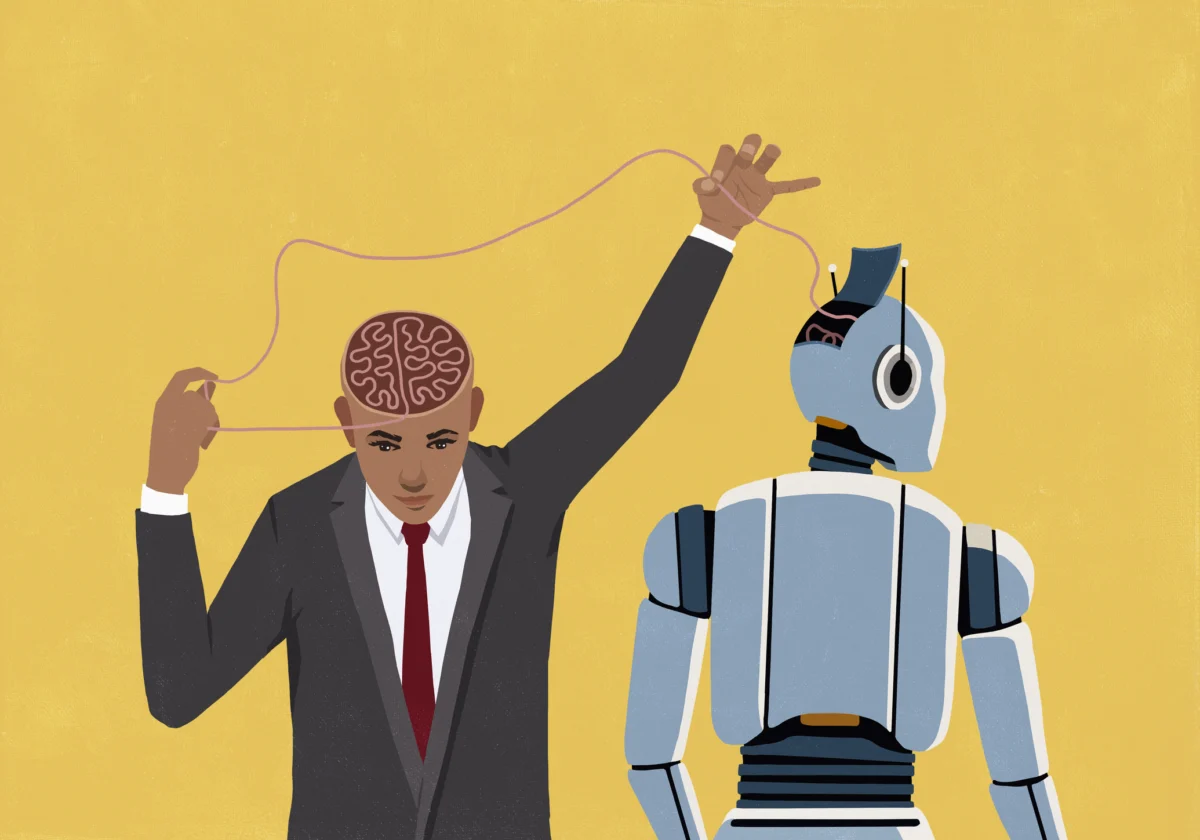
Amazon Web Services (AWS) has officially announced a definitive timeline for the winding down of Mechanical Turk (MTurk), the pioneering crowdsourcing marketplace that once defined the "human-in-the-loop" model of digital labor. According to an update posted on the official Mechanical Turk website and associated AWS documentation, the platform will stop accepting new customers on July 30, 2026. While existing customers will retain access to the service for the foreseeable future, Amazon has signaled that the platform is entering a maintenance-only phase, with no plans to introduce new features or expand the service’s capabilities.
The decision marks a significant turning point in the history of the internet economy. For nearly two decades, Mechanical Turk served as the invisible engine behind some of the most complex technological advancements of the 21st century, providing the raw human intelligence required to train machine learning models and perform tasks that computers could not yet master. However, the rise of generative artificial intelligence and the proliferation of automated bots have fundamentally altered the landscape of digital labor, rendering the original MTurk model increasingly obsolete.
The Genesis of Artificial Artificial Intelligence
Launched in 2005, Mechanical Turk was born from a unique necessity within Amazon’s own operations. The company needed a way to identify duplicate product pages and perform other simple tasks that were easy for humans but difficult for the algorithms of the era. Jeff Bezos, Amazon’s founder, famously described the service as "artificial artificial intelligence."
The name itself was a reference to an 18th-century hoax: a chess-playing automaton known as the Mechanical Turk. Built by Wolfgang von Kempelen, the machine appeared to play chess at a grandmaster level, but it was actually controlled by a human player hidden inside the cabinet. Amazon’s digital version mirrored this concept, allowing developers to integrate human intelligence directly into their software code via an API.
For workers, known colloquially as "Turkers," the platform offered a marketplace of "Human Intelligence Tasks" (HITs). These tasks ranged from transcribing audio snippets and identifying objects in photographs to completing academic surveys and sentiment analysis. In its prime, the platform boasted a global workforce of hundreds of thousands of individuals who performed millions of micro-tasks for payments that often amounted to only a few cents per task.
A Chronology of Influence and Controversy
The history of Mechanical Turk is a timeline of both technological enablement and ethical debate. Its influence on the tech sector and academia cannot be overstated, yet it frequently faced criticism regarding labor standards and data integrity.
- 2005: Amazon launches Mechanical Turk as a public beta.
- 2010–2012: The platform becomes a staple of social science and psychological research. Academics find that they can recruit thousands of diverse participants for studies in hours, rather than weeks, at a fraction of the cost of traditional laboratory studies.
- 2014: The platform faces its first major wave of public scrutiny regarding "digital sweatshop" conditions. Reports highlight that after accounting for the time spent searching for tasks, many workers earn significantly less than the federal minimum wage.
- 2018: Mechanical Turk is integrated into Amazon SageMaker Ground Truth. This move sought to formalize the platform’s role in the AI pipeline, specifically for labeling the massive datasets required for deep learning and neural networks.
- 2018: It is revealed that Aleksandr Kogan, the researcher at the heart of the Facebook-Cambridge Analytica scandal, used Mechanical Turk to recruit participants for his personality quiz app, which harvested the data of millions of Facebook users.
- 2023: A landmark study by researchers at the Swiss Federal Institute of Technology (EPFL) reveals that a substantial portion of MTurk workers are using Large Language Models (LLMs) to complete tasks intended for humans, creating a feedback loop that threatens the quality of AI training data.
- 2024: Amazon announces the 2026 cutoff for new customers, signaling the beginning of the end for the service.
The Data Crisis: The Snake Eating Its Own Tail
The decline of Mechanical Turk was accelerated by the very technology it helped create. In June 2023, research titled "Artificial Artificial Artificial Intelligence" analyzed the output of MTurk workers and found that between 33% and 46% of workers were using tools like ChatGPT to complete their assignments.
This revelation was catastrophic for the platform’s primary value proposition. If the purpose of MTurk was to provide "ground truth" data—the objective, human-verified information used to correct and train AI—then the presence of AI-generated responses in the workforce rendered the data useless. When an AI is trained on data generated by another AI, it can lead to "model collapse," a phenomenon where the resulting algorithm becomes increasingly unstable and prone to errors.
Furthermore, the platform struggled with an influx of bots and fraudulent accounts. As tools for automating web interactions became more sophisticated, "bad actors" developed scripts to claim and complete HITs instantly, often providing low-quality or nonsensical data. For researchers and companies, the overhead required to filter out this "noise" began to outweigh the cost savings of using the platform.
Economic and Labor Implications
The sunsetting of Mechanical Turk raises important questions about the future of the gig economy and the workers who relied on it. For many in the United States, MTurk was a source of supplemental income—a way to pay for groceries or utilities during lean months. In developing nations, such as India, MTurk often provided a primary source of income that was competitive with local wages.
Critics of the platform have long argued that MTurk bypassed labor laws by classifying workers as independent contractors with no benefits, no minimum wage guarantees, and no recourse for unpaid work if a "requester" (the employer) decided to reject a task. However, proponents argued that the platform provided "extreme flexibility" and accessibility for those unable to hold traditional jobs due to disability, caregiving responsibilities, or geographic isolation.
The shift away from MTurk does not mean the end of data labeling, but rather its professionalization. Companies like Scale AI, Labelbox, and Appen have largely superseded MTurk by offering managed workforces with higher tiers of quality control and specialized expertise. These firms often employ workers in dedicated facilities or through vetted remote programs, moving away from the "open bazaar" model that Amazon pioneered.
Official Response and Technical Transition
In its communication regarding the 2026 deadline, AWS emphasized its commitment to existing users while acknowledging the shift in its strategic focus. "AWS continues to invest in security and availability improvements for Mechanical Turk, but we do not plan to introduce new features," the company stated.
Industry analysts suggest that Amazon’s decision is likely driven by a desire to consolidate its AI efforts under the broader SageMaker and Bedrock umbrellas. As generative AI becomes the dominant force in the industry, the need for a general-purpose micro-task marketplace has been replaced by the need for high-quality, high-stakes RLHF (Reinforcement Learning from Human Feedback).
For existing customers, the July 2026 deadline provides a two-year window to migrate workflows. Many academic researchers are already moving toward platforms like Prolific, which was designed specifically for academic research and features more robust identity verification and higher minimum pay standards.
The Legacy of a Digital Pioneer
As Mechanical Turk moves toward its eventual retirement, its legacy remains complex. It proved that human intelligence could be commodified and delivered via a cloud interface, a concept that paved the way for the modern gig economy and the "platformization" of labor seen in companies like Uber and DoorDash.
However, its demise also serves as a cautionary tale about the fragility of digital ecosystems. The "dead internet theory"—the idea that the internet is increasingly populated by bots and AI-generated content—found its most practical evidence on MTurk. When the line between human and machine blurred to the point of invisibility, the platform’s original mission became impossible to sustain.
The closure of MTurk to new customers in 2026 marks the end of the "Wild West" era of crowdsourcing. It leaves behind a world where the distinction between human and artificial intelligence is more critical than ever, yet harder than ever to define. For the thousands of workers who once spent their days solving CAPTCHAs and labeling images for pennies, the end of Mechanical Turk is the final chapter in a unique experiment that changed the way the world thinks about work, data, and the humans behind the machines.
