

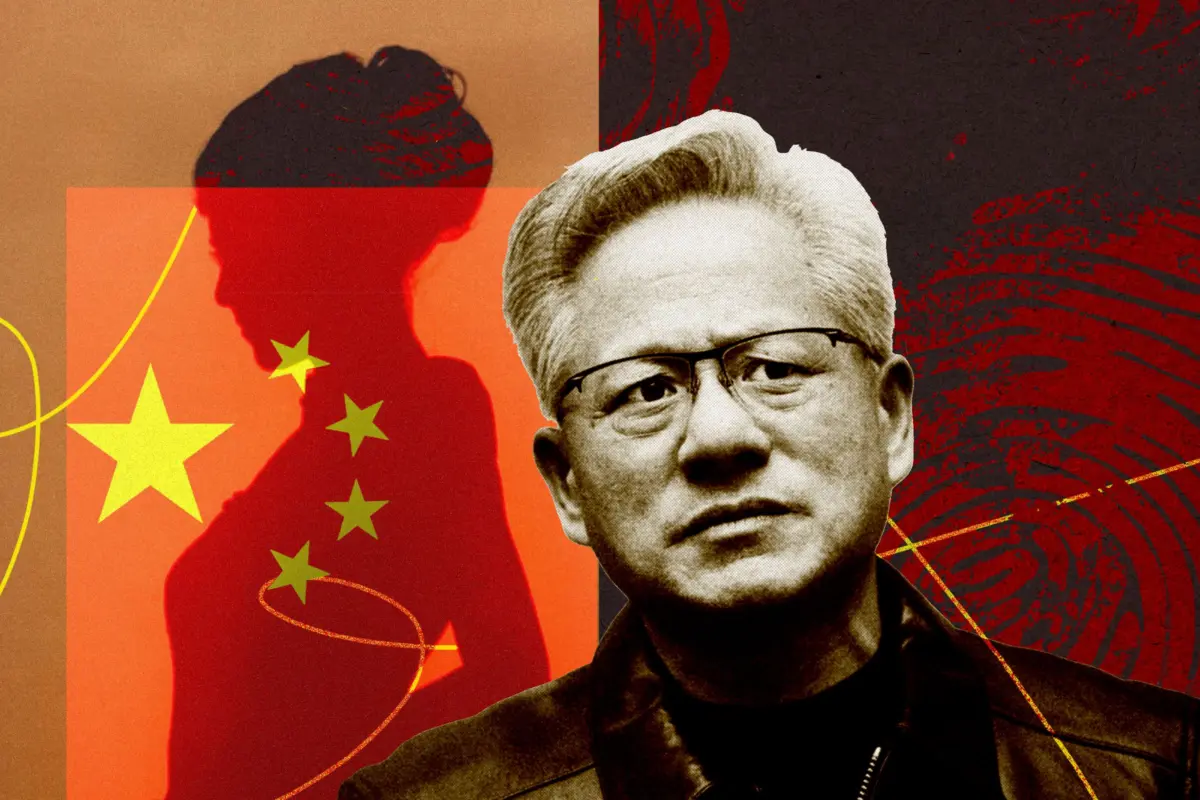
The specific mantra drilled into government workers, military officers, and intelligence personnel during counterintelligence briefings is as blunt as it is memorable: "If she’s a 10 and you’re a 5, she’s a spy." This adage, frequently cited by the U.S. Army’s Counterintelligence Command, serves as a stark warning against the "honeytrap"—a maneuver where attractive operatives seduce high-value targets to extract secrets or exert influence. For Jensen Huang, the centibillionaire CEO of Nvidia and a central figure in the global artificial intelligence revolution, this warning has transitioned from a theoretical briefing point to the center of a geopolitical firestorm.
As the leader of a company that has become arguably the most consequential corporate entity of the 21st century, Huang occupies a position of unparalleled sensitivity. Nvidia’s graphics processing units (GPUs) are the bedrock of modern AI, powering everything from advanced military simulations to the large language models defining the next era of computing. This prominence makes Huang a Tier-1 target for foreign intelligence agencies. Recent reports suggest that despite the high-security environment surrounding his life, Huang became embroiled in a scandal involving infidelity, international espionage, and high-level political maneuvering that now threatens both his legacy and the stability of the American tech sector.
The Anatomy of a High-Stakes Spy Scandal
The controversy erupted in late October 2026, following a comprehensive investigation by The New York Times. The report alleged that Huang had engaged in a multi-year extramarital affair with Alice Huang (no relation), a former executive at Megaspeed, a Singapore-based cloud service provider. U.S. intelligence agencies have identified Alice Huang, also known as Huang Le, as a likely asset of China’s Ministry of State Security (MSS). While the MSS typically utilizes professional intelligence officers, an "asset" is often an outsider—such as a business executive or journalist—who provides assistance to the state, sometimes under duress and sometimes for financial or ideological gain.
According to intelligence briefings, the relationship began between 2024 and 2025. During this period, Alice Huang was positioned within a company—Megaspeed—that served as a major regional player in the Pacific cloud market. More importantly, Megaspeed was a significant customer of Nvidia, specializing in the deployment of advanced computer chips. This professional proximity provided a plausible veneer for frequent contact between the two, masking what intelligence officials now believe was a calculated effort by Beijing to gain proximity to the architect of the AI age.
Nvidia’s board of directors has since launched an internal probe. In an initial statement, the board claimed it had "no reason to believe that either national security or Nvidia secrets were compromised." However, the scope of the investigation is expanding as federal authorities examine whether the relationship influenced Nvidia’s business decisions or lobbying efforts regarding export controls.
A Chronology of Compromise: 2010–2026
The timeline of this scandal suggests a long-term cultivation effort by Chinese interests. While the affair itself is reported to have begun in the mid-2020s, the connections between the parties involved stretch back over a decade.
- The Early 2010s: Jensen Huang reportedly establishes an initial acquaintance with Kang Weigh, the husband of Alice Huang. This early connection provided a foundational level of trust that would later be exploited.
- 2024–2025: The romantic relationship between Jensen Huang and Alice Huang begins. During this same window, Jensen Huang began utilizing the services of Risa Heller’s crisis communications firm, a move that suggests early internal awareness of a potential personal scandal.
- Late 2025: Reports circulate within the U.S. government regarding concerns that Megaspeed, Alice Huang’s employer, was acting as a conduit for diverting restricted Nvidia chips to Chinese intelligence agencies.
- May 2026: Marco Rubio, serving as a key figure in the administration’s foreign policy apparatus, reportedly briefs President Donald Trump on the intelligence community’s concerns regarding Huang’s relationship. Despite this, Huang is invited to join the President on Air Force One for a high-profile diplomatic mission to China shortly thereafter.
- Fall 2026: President Trump awards Jensen Huang the National Medal of Science. Weeks later, the New York Times breaks the story of the MSS investigation.
- November 2026: Nvidia’s stock plummets by 25% in a single month as shareholder lawsuits are filed and the Democratic-led Congress begins a formal inquiry into the administration’s handling of the security threat.
The China Connection: Economic Espionage as State Policy
The allegations against Alice Huang must be viewed through the lens of China’s broader strategy of economic espionage. For decades, Beijing has prioritized the acquisition of foreign technology to accelerate its military and economic development. This has included the theft of blueprints for U.S. fighter jets, solar panel technology, and even proprietary chemical formulas for commercial paint.
Honeypots are a traditional tool in this arsenal. In 2011, French intelligence warned of a surge in Chinese honeytrap operations targeting pharmaceutical researchers. More recently, the "Fang Fang" case highlighted how a Chinese operative spent years cultivating relationships with Bay Area politicians, including U.S. Representative Eric Swalwell.
In response to these persistent threats, the U.S. government has taken increasingly drastic measures. Last year, personnel working in sensitive roles in China and Hong Kong were explicitly banned from engaging in romantic or sexual relationships with local citizens. The FBI and its "Five Eyes" allies have also issued warnings regarding "LinkedIn espionage," where intelligence officers use professional networking sites to build rapport with tech executives before transitioning to more covert forms of influence.
Political Fallout and the Trump Administration
The scandal has created a significant political crisis for the Trump administration. The central question—echoing the Watergate era—is: "What did the president know, and when did he know it?"
Evidence suggests that the administration was aware of the counterintelligence risks as early as May 2026. Despite this, Jensen Huang remained a close confidant of the President. Huang’s influence was visible in his successful lobbying for the relaxation of Biden-era export controls on cutting-edge AI chips, a move that critics argue may have inadvertently aided Chinese technological parity. Furthermore, Huang’s $25 million donation to the President’s ballroom project and his presence at a White House state dinner for Chinese President Xi Jinping have raised questions about whether financial and political ties blinded the administration to a clear national security risk.
President Trump has denied any prior knowledge of Alice Huang’s alleged role as a spy. In a recent press conference, he stated, "I asked him that question: ‘Did you have any idea that she was a spy?’ He said, ‘I had no idea that she was a spy.’" However, the existence of a classified memo authored by Marco Rubio warning of the relationship suggests that the administration’s top officials were formally alerted months before the public revelations.
Economic Implications and the Megaspeed Audit
The economic fallout for Nvidia has been devastating. After a five-year run that saw the company’s valuation surge by 600%, making it the second-most valuable company in the world, the scandal has erased hundreds of billions of dollars in market capitalization. Shareholders are now suing the company, alleging that the CEO’s "reckless" personal conduct and the board’s failure to mitigate the risk constituted a breach of fiduciary duty.
The role of Megaspeed is particularly troubling for investigators. A U.S. government-requested audit of the company conducted last year revealed a massive discrepancy: Megaspeed could not account for approximately 50,000 high-end Nvidia chips it had purchased. Bloomberg reports that these chips, worth billions of dollars, may have been diverted to Chinese state-linked entities, potentially providing the computational power necessary for China to bridge the gap in the global AI race.
Broader Impact and Industry Analysis
The Jensen Huang scandal represents more than just a personal failure; it is a systemic warning for the entire technology sector. As Silicon Valley becomes the front line of a new "Cold War" over artificial intelligence, the personal lives of its leaders are now matters of national security.
The implications are three-fold:
- Stricter Corporate Governance: Boards of directors at major tech firms are likely to implement more rigorous background checks and behavioral monitoring for executives with access to sensitive intellectual property. The era of the "untouchable" founder-CEO may be coming to an end.
- Regulatory Backlash: The scandal will almost certainly lead to a tightening of export controls. The "loose" approach championed by Huang and the Trump administration is likely to be replaced by a more hawkish "Small Yard, High Fence" strategy, regardless of the political party in power.
- Diplomatic Strain: The revelation of a high-level honeytrap targeting the heart of the U.S. tech industry will further chill relations between Washington and Beijing. It reinforces the narrative that economic engagement with China carries inherent risks of subversion.
As the Democratic-led Congress prepares for hearings, the focus will remain on the accountability of both Nvidia’s leadership and the executive branch. Whether Jensen Huang can survive this scandal remains to be seen, but the damage to Nvidia’s reputation and the perceived security of the American AI supply chain is already profound. The case of the "10 and the 5" has evolved from a counterintelligence cliché into a defining crisis for the modern technological age.
