

The global transition toward renewable energy has reached a significant milestone with the grid connection of the world’s largest open-sea floating solar farm, located approximately eight kilometers off the coast of Dongying in China’s Shandong province. Spanning a staggering 1,223 hectares—an area equivalent to roughly 1,600 standard football fields—the facility boasts a capacity of one gigawatt (GW). Operated by the state-owned CHN Energy, this project represents a massive leap in floating photovoltaic (FPV) technology, moving renewable infrastructure from the relatively calm waters of inland reservoirs to the volatile environments of the open ocean.
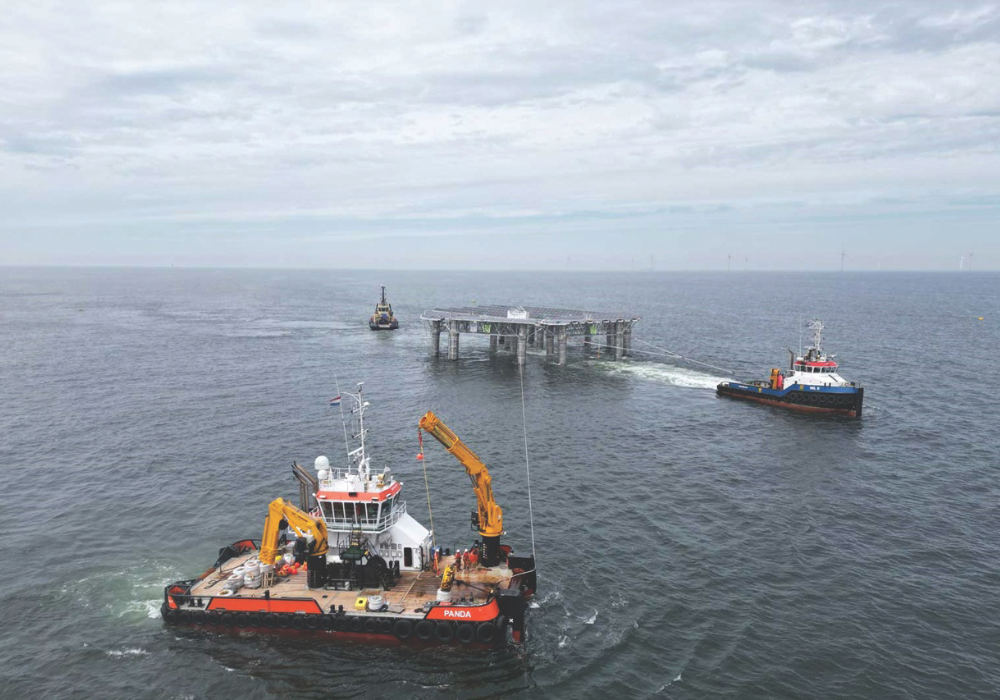
While the Dongying project currently stands in a league of its own regarding scale, it is the vanguard of a burgeoning global movement. In Taiwan, Hexa Renewables has commissioned a floating solar plant covering 347 hectares, capable of delivering 373 megawatts (MW) to the regional grid. Meanwhile, in the more turbulent waters of the North Sea, the Dutch-Norwegian firm SolarDuck is pioneering a five-megawatt floating solar park integrated with an offshore wind farm in collaboration with energy giant RWE. These projects signal a strategic shift in global energy policy: the utilization of "blue space" to bypass the increasingly contentious issue of land-use competition.
The Evolution of Floating Solar: A Decade of Exponential Growth
The trajectory of the floating solar industry has been nothing short of meteoric. Between 2013 and 2022, the installation of floating solar panels grew by more than 2,000%. Despite this rapid expansion, the technology remains in its infancy, accounting for only 1% of the total solar panels installed worldwide as of late 2022, according to data from Bloomberg News.
Historically, floating solar was confined to "near-shore" environments or man-made bodies of water such as irrigation ponds, hydroelectric reservoirs, and industrial mining pits. These locations offered two primary advantages: they did not compete with agriculture or urban development for land, and the cooling effect of the water naturally increased the efficiency of the photovoltaic cells by approximately 5% to 15% compared to land-based arrays.
The shift toward the open sea, however, represents a new frontier fraught with engineering challenges. Unlike inland installations, offshore solar farms must contend with corrosive saltwater, massive wave loads, and gale-force winds. The successful deployment of the 1GW Dongying plant suggests that the technical barriers to "ocean-paving" are being dismantled, paving the way for a new era of marine-based energy production.
Technical Milestones and Global Benchmarks
The scale of the Dongying project provides a blueprint for the future of the industry. The facility utilizes high-durability floating platforms designed to withstand the harsh conditions of the Yellow Sea. By achieving a one-gigawatt capacity, China has demonstrated that offshore solar can operate at the same scale as traditional coal-fired power plants or large-scale offshore wind farms.
In comparison, the Hexa Renewables project in Taiwan serves as a critical case study for high-density coastal regions. Taiwan, which faces severe land constraints for renewable energy development, has turned to its coastal waters to meet its goal of 20GW of solar capacity by 2025. Similarly, the SolarDuck project in the North Sea is testing the viability of "hybridization"—the practice of placing solar panels in the vacant spaces between offshore wind turbines. This approach maximizes the energy yield per square kilometer of ocean and allows both technologies to share expensive subsea cable infrastructure, significantly reducing the levelized cost of energy (LCOE).
The Ecological Equation: Shading and Primary Productivity
Despite the clear benefits for energy security and land conservation, the rapid expansion of offshore solar has raised urgent questions regarding marine ecology. The most immediate concern is the "shading effect." When vast arrays of solar panels cover the surface of the ocean, they block sunlight from reaching the water column below. This sunlight is the primary energy source for phytoplankton—the microscopic organisms that form the base of the marine food web and are responsible for producing a significant portion of the Earth’s oxygen.
"If, in a theoretical sense, we pave the ocean, that would be very bad," warns Steven Benjamins, a senior lecturer in marine vertebrate ecology at the Scottish Association for Marine Science. The concern is not merely speculative. Research into the North Sea environment suggests that the impact of shading is non-linear and highly dependent on the percentage of surface coverage.
A case study conducted in the North Sea indicated that if less than 20% of a specific water body’s surface area is covered by panels, the impact on primary productivity remains negligible—generally less than a 10% change. However, as coverage exceeds 40%, the ecosystem begins to show signs of severe distress. Significant reductions in light can lead to a collapse in phytoplankton populations, which in turn triggers a "bottom-up" ecological crisis, affecting everything from zooplankton and small fish to apex predators.
Impacts on Benthic Habitats and Marine Life
The ecological footprint of floating solar extends beyond the surface. Benthic habitats—the communities living on or near the ocean floor—are particularly vulnerable. "There are certain species and communities that would definitely suffer if a solar PV farm were placed on top of them," Benjamins notes. Seagrass beds, seaweed forests, and kelp groves require high levels of light to survive. These habitats serve as vital nurseries for commercial fish species and act as significant carbon sinks.
Furthermore, the physical presence of mooring lines and anchors required to stabilize thousands of solar panels can disturb the seabed. In areas with sensitive coral reefs or protected seagrass, the installation process itself could cause irreversible damage. As the industry moves from pilot projects to gigawatt-scale installations, marine spatial planning becomes essential to ensure that "green energy" does not come at the cost of "blue biodiversity."
The "Artificial Reef" Effect: A Complicated Biodiversity Question
Interestingly, the introduction of floating solar infrastructure does not only result in the loss of species; it can also attract new ones. Like offshore wind turbines and oil rigs, floating solar platforms provide a hard substrate in an environment that may otherwise be dominated by sand or mud. This leads to the colonization of the structures by "fouling organisms" such as mussels, barnacles, and anemones.
In some North Sea trials, this has led to a localized increase in biodiversity. However, ecologists remain cautious about whether this change is beneficial. "Whether this is good or not is a very, very complicated question, and it can be seen from many different angles," says Ninon Mavraki, a marine ecologist at Wageningen University in the Netherlands.
While the structures may support higher biomass, they can also act as "stepping stones" for non-indigenous or invasive species, allowing them to spread into new territories. Furthermore, the species that thrive on artificial structures are often different from those that naturally occur in the area, leading to a fundamental alteration of the local ecosystem’s character. "I think the best answer is to say we do not know yet," Mavraki adds, emphasizing the need for long-term monitoring.
Strategic Synergies: Wind, Solar, and Aquaculture
One of the most promising aspects of the offshore solar industry is its potential for multi-use synergy. Pairing offshore solar with wind farms offers a stabilizing effect on the power grid. Solar panels generate maximum power during calm, sunny days when wind speeds may be low, while wind turbines often peak during stormy or nighttime conditions. This complementarity ensures a more consistent energy supply and optimizes the use of the grid connection.
There is also growing interest in integrating floating solar with the aquaculture industry. The mussels and other shellfish that naturally colonize the undersides of solar platforms could be harvested commercially, creating a dual-revenue stream of clean energy and sustainable seafood. Moreover, the presence of large-scale solar parks effectively restricts the movement of commercial fishing trawlers. By preventing bottom trawling—a practice that is often destructive to the seabed—these solar parks could inadvertently function as "de facto" marine protected areas (MPAs), allowing fish stocks within the park boundaries to recover.
Looking Ahead: Scale, Planning, and Long-Term Viability
As the floating solar industry transitions from theoretical research to large-scale implementation, the focus is shifting toward long-term sustainability. The 1GW project in Dongying is a testament to what is possible, but it also serves as a massive experiment in marine engineering and environmental science.
The future of the industry will likely be defined by "smart" site selection. By placing arrays in areas with high turbidity where light penetration is already low, or in industrial harbor zones, companies can minimize the ecological impact. Conversely, placing them in clear, nutrient-rich waters could be catastrophic.
"It’s all about scale, careful planning, and long-term ecosystem considerations," Benjamins concludes. While there will inevitably be "winners and losers" in the marine environment, the goal for policymakers and energy companies is to ensure that the net impact is positive for both the climate and the ocean. With the 2,000% growth seen over the last decade likely to continue, the floating solar sector is no longer just a niche experiment—it is a cornerstone of the global maritime economy.
