

Luiz Inácio “Lula” da Silva has secured a historic fourth term as the President of Brazil, following a dramatic and unprecedented come-from-behind victory in the second-round runoff against Senator Flávio Bolsonaro. The election, which concluded on Sunday night, sent waves of relief through the international environmental community and solidified Lula’s position as the preeminent figure of the Latin American left. For the first time since Brazil’s return to democracy in 1985, a presidential candidate who trailed in the initial round of voting managed to overturn the deficit and clinch the presidency in the final stage. The victory not only ensures the continuity of Lula’s social and environmental agenda but also signals a decisive rejection of the far-right populist movement led by the Bolsonaro family, which had sought to regain the Planalto Palace through the candidacy of the former president’s eldest son.
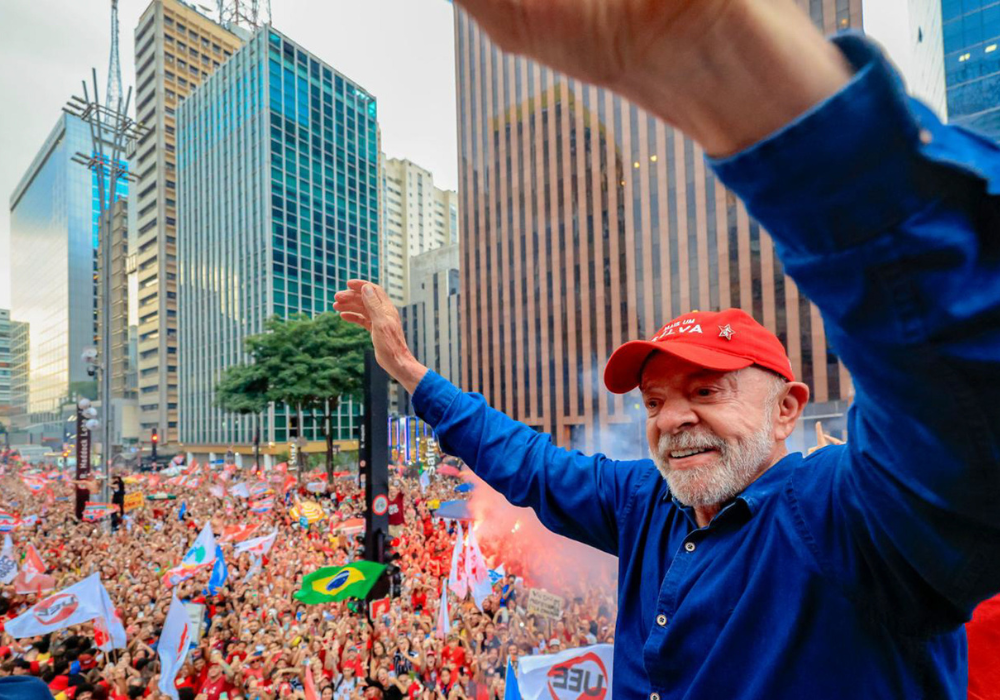
The final tally followed weeks of intense polarization and high-stakes campaigning that saw Lula successfully mobilize a broad democratic front to counter the surging influence of Flávio Bolsonaro. The younger Bolsonaro, a leader of the right-wing movement that includes the powerful "bancada ruralista" (agribusiness caucus) and a massive evangelical voting bloc, had entered the runoff with significant momentum after leading the first round on October 5. However, the final weeks of the campaign saw a shift in public sentiment as Lula’s supporters emphasized the environmental and social risks associated with a return to the policies of the Jair Bolsonaro era. In his victory speech delivered to a sea of supporters in São Paulo, Lula struck a tone of global responsibility, asserting that Brazil would lead the world by example in the fight against the climate crisis.
A Historic Political Rebound
The 2026 election will be remembered as one of the most significant political turnarounds in South American history. In the first round of voting, Flávio Bolsonaro capitalized on a strong showing in the South and Center-West regions, bolstered by the support of industrial agricultural interests and conservative social sectors. Lula, meanwhile, maintained his traditional stronghold in the Northeast but struggled to capture the middle-class vote in the urban centers of the Southeast. The second-round victory was made possible by a strategic pivot toward centrist voters and a relentless focus on the environmental successes of Lula’s third term, which ran from 2023 to 2026.
This victory cements Lula’s legacy as a leader who has shaped Brazil for over two decades. During his first two terms (2003–2010), his administration was credited with lifting nearly 30 million people out of poverty through landmark welfare programs like Bolsa Família and significant investments in education and housing. His third term, however, saw a fundamental shift in priorities, as he integrated climate policy into the core of Brazil’s economic and foreign policy. By winning a fourth term, Lula now has the mandate to complete the institutionalization of these environmental protections, ensuring they can withstand future political shifts.
Environmental Progress and the Climate Agenda
The central theme of the 2026 campaign was the fate of the Amazon rainforest, often described as the "lungs of the earth." Under the previous administration of Jair Bolsonaro, deforestation rates reached fifteen-year highs, driven by a policy of deregulation and the deliberate weakening of environmental enforcement agencies like IBAMA and ICMBio. In contrast, the Lula administration’s third term saw a radical reversal of these trends. According to data from the National Institute for Space Research (INPE), deforestation in the Amazon plummeted to a record low in 2026, marking a 71% decline over the four-year period.
The reduction in land clearing was matched by a significant drop in national greenhouse gas emissions. Brazil’s emissions fell by 13% in 2024 and another 6% in 2025, reaching their lowest levels since 2018. These gains were largely attributed to the government’s "clear and sustained commitment to environmental protection," which included the use of remote satellite monitoring, collective embargoes on illegally deforested areas, and the revitalization of the Amazon Fund, which had been frozen under the elder Bolsonaro. David Tsai, a coordinator and researcher at Brazil’s Institute for Energy and Environment, noted that while the progress in land use is noteworthy, the challenge for Lula’s fourth term will be to achieve similar reductions in other sectors, such as energy and transportation.
The Threat of a Bolsonaro Restoration
The prospect of a Flávio Bolsonaro presidency had caused significant alarm among local and international climate advocacy groups. Flávio, often viewed as a more polished but equally ideologically driven "disciple" of his father’s "ecocidal playbook," campaigned on a platform of ending what he termed "environmental obstacles." At a campaign rally in Pará, a frontline state in the battle over Amazonian land use, Bolsonaro promised to empower farmers to "do whatever they want on their land," a statement that environmentalists interpreted as a green light for unchecked expansion into protected biomes.
The Observatório do Clima, a prominent Brazilian environmental watchdog, was particularly vocal about the risks. In a press release following the first round, the group warned that a Flávio Bolsonaro victory would represent the "collapse of the Amazon" and the abandonment of all progress made on the climate agenda. They highlighted that during Jair Bolsonaro’s presidency, the country saw record invasions of Indigenous lands and the suspension of critical financing mechanisms like the Climate Fund. The observatory argued that the younger Bolsonaro intended to revive these policies, which would have likely led to Brazil’s international isolation and the potential triggering of an ecological "tipping point" in the Amazon.
Indigenous Rights and Territorial Protection
Another cornerstone of Lula’s recent governance has been the recognition and legal protection of Indigenous territories. Over the past four years, his administration granted legal status to at least 13 Indigenous lands, a move that provides a crucial barrier against illegal logging and mining. Indigenous leaders, who were frequently vilified under the Jair Bolsonaro administration, have become key allies in the Lula government’s conservation efforts.
The protection of these lands is not merely a matter of human rights but a critical component of Brazil’s climate strategy. Studies have consistently shown that Indigenous-managed lands have lower rates of deforestation than even government-protected parks. By securing these territories, the Lula administration has effectively created "buffer zones" that help preserve biodiversity and regulate the regional climate. However, these areas remain under threat from "garimpeiros" (illegal miners) and land grabbers, many of whom felt emboldened by Flávio Bolsonaro’s rhetoric during the campaign.
The Role of Agriculture and Economic Challenges
Despite the environmental successes, the Lula administration faces a complex relationship with the agricultural sector, which remains the backbone of the Brazilian economy. Agriculture is the most carbon-emitting economic activity in the country, accounting for approximately 70% of gross emissions when factoring in land-use changes. While some segments of the agribusiness industry have embraced sustainable practices to maintain access to European markets, a significant and vocal portion remains aligned with the Bolsonaro movement.
The challenge for Lula’s fourth term will be to transition the sector toward a low-carbon model without triggering economic instability. This involves scaling up the "ABC Plan" (Low Carbon Agriculture) and providing incentives for the recovery of degraded pastures rather than the clearing of primary forests. Furthermore, the administration has faced internal criticism for its support of an offshore oil-drilling project by Petrobras near the mouth of the Amazon basin. Environmental groups like Observatório do Clima have pointed out the contradiction between Lula’s climate leadership and his government’s continued reliance on fossil fuel expansion.
International Implications and the Road to 2030
Lula’s victory has profound implications for global climate diplomacy. Brazil is set to host the COP30 climate conference in Belém in 2025, an event that Lula intends to use as a platform to demand greater financial commitments from wealthy nations for forest conservation. His reelection ensures that Brazil will remain a proactive participant in the Paris Agreement and a leader among developing nations in the "Global South."
The international community has largely welcomed the results. Leaders from the European Union, the United States, and neighboring Latin American countries issued statements emphasizing the importance of Brazil’s democratic stability and its role in ecological preservation. For many global observers, the 2026 election was seen as a referendum on whether a major developing economy could successfully decouple economic growth from environmental destruction.
Conclusion and Future Outlook
As Luiz Inácio Lula da Silva prepares to begin his fourth term, the hurdles ahead remain formidable. He inherits a deeply divided country and a Congress where conservative interests still hold significant sway. The economic pressure to prioritize short-term gains over long-term sustainability will persist, particularly as global commodity prices fluctuate.
However, the data from the past four years suggests that the "Lula model" of environmental governance is yielding tangible results. With net emissions down 81% compared to the end of the Bolsonaro era and a historic low in Amazonian deforestation, the administration has proven that political will can indeed alter the trajectory of environmental decline. Lula’s victory speech on Sunday night was more than a celebration of a political comeback; it was a reaffirmation of a vision where Brazil’s prosperity is inextricably linked to the health of its natural biomes. The world will be watching closely as "Lula 4.0" attempts to solidify these gains and lead the global charge toward a more sustainable future.
