

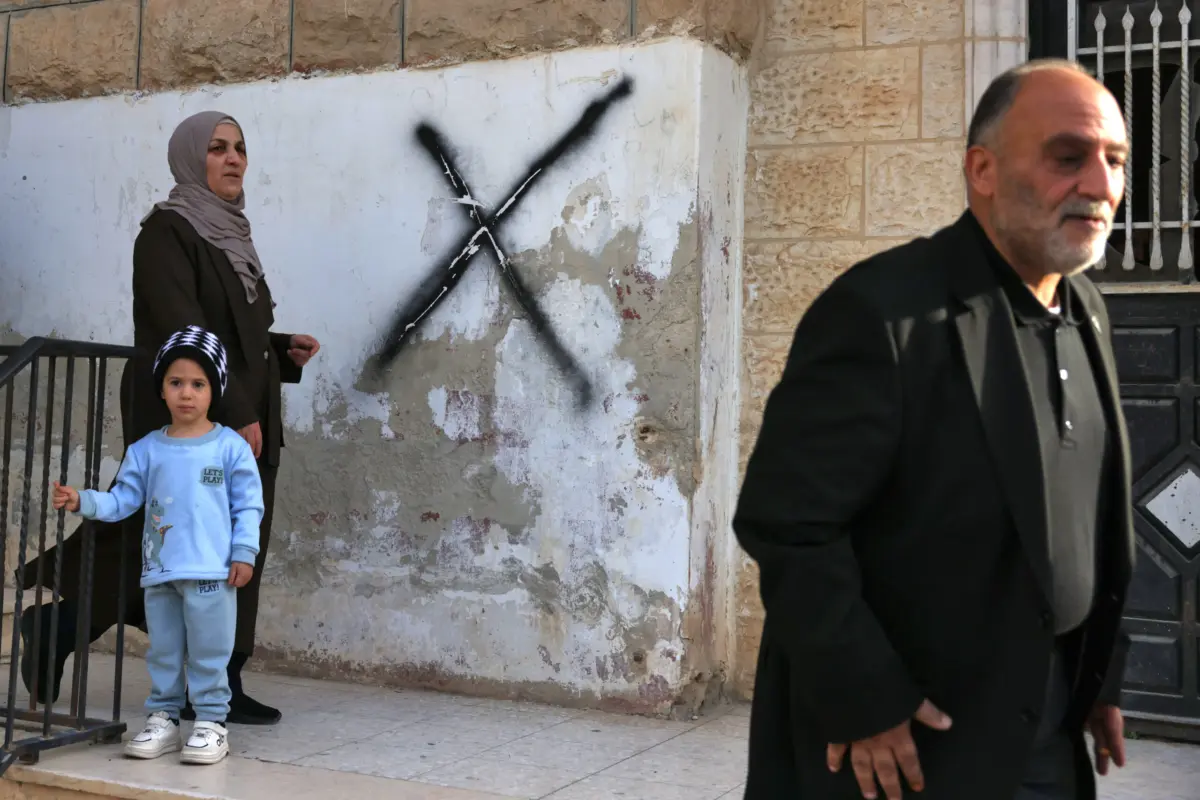
The aftermath of the recent Israeli elections has plunged the nation into political uncertainty, marked by a record surge in support for Arab-led parties juxtaposed with an intensified wave of delegitimizing rhetoric from mainstream Israeli politicians. Simultaneously, the occupied West Bank has endured a series of debilitating sieges, most notably in Hebron, while the Gaza Strip grapples with a deepening humanitarian crisis under a precarious and frequently violated ceasefire. These parallel narratives underscore a region teetering on the brink, with domestic political stalemates mirroring the severe pressures faced by Palestinians in their daily lives.
A Fractured Mandate: Israeli Elections and the Delegitimization of the Palestinian Vote
The Israeli general election concluded with a striking outcome for Palestinian citizens of Israel, whose Arab-led parties secured an unprecedented 19 seats in the Knesset. This electoral success, which saw nearly 840,000 people cast their ballots for Ra’am and the Joint List – a significant 64 percent increase compared to the 2022 elections – initially sparked hopes for a potential shift in the political landscape. Had these parties aligned with opposition leader Gadi Eisenkot’s bloc, an anti-Netanyahu coalition commanding 67 seats might have emerged, offering a clear path to government formation. Without their inclusion, the prospects for a stable government dwindle, leaving only the unlikely scenario of a unity deal between the main Zionist blocs or the specter of yet another election.
However, the euphoria among Palestinian citizens quickly dissipated amidst a week of escalating delegitimization. Israeli Prime Minister Benjamin Netanyahu’s Likud party spearheaded these efforts, making unsubstantiated claims that the election had been "stolen" by Palestinian parties through alleged Qatari financing. These accusations, despite their severity, lacked any credible evidence. Qatar swiftly denied such allegations, and police sources, as reported by The Times of Israel, found no proof of widespread fraud. By Sunday, election committee chairman Noam Sohlberg definitively declared the election "conducted properly," dismissing the claims as baseless.
Coalition Negotiations: A Barrier to Palestinian Political Inclusion
The rhetoric, however, proved to be more than just post-election grandstanding; it began to shape the critical coalition negotiations. Avigdor Lieberman, the firebrand leader of the right-wing Yisrael Beytenu party, unequivocally ruled out any partnership with Palestinian parties, reflecting a broader sentiment within segments of the Israeli right that views such alliances as illegitimate or a threat to Israel’s Jewish character.
Opposition leader Gadi Eisenkot, while seeking to form a broad coalition, presented four conditions for potential partners that effectively alienated Palestinian parties. These conditions, which included recognizing Israel as "a Jewish, democratic, liberal, and egalitarian state" and mandatory national service for all citizens (including Palestinians), are deeply problematic for Arab-led parties. For Palestinian citizens of Israel, recognizing Israel solely as a "Jewish state" often implies a secondary status for non-Jewish citizens, undermining their rights and national identity. Mandatory national service, historically viewed as service to a state that often discriminates against them and occupies their brethren, is likewise anathema to their political platforms and the sentiments of their constituents.
Despite these significant hurdles, Palestinian politicians continued to express a pragmatic willingness to support an Eisenkot government from outside the coalition. Their primary motivation remained consistent: to facilitate the departure of Benjamin Netanyahu and his far-right allies, whom they view as detrimental to the prospects of peace and equality. This strategic position highlights the complex calculations made by Arab-led parties, balancing ideological principles with the immediate political objective of regime change. This sentiment was echoed by thousands of Israelis who rallied in Tel Aviv, urging for a coalition that included parties representing Palestinian citizens, signaling a segment of the Israeli public that recognizes the necessity of their political integration.
Timeline of Post-Election Developments (October-November 2026):
- Election Night (late October): Arab-led parties achieve a record 19 seats, sparking initial optimism for their political leverage.
- Immediate Aftermath: Likud initiates a campaign alleging electoral fraud and Qatari financing, quickly denied by Qatar and internal Israeli police sources.
- Election Committee Ruling (Sunday): Chairman Noam Sohlberg declares the election "conducted properly," refuting fraud claims.
- Coalition Negotiations Begin: Avigdor Lieberman publicly rejects Palestinian partners.
- Eisenkot’s Conditions: Gadi Eisenkot outlines four conditions for coalition entry, effectively excluding Palestinian parties due to their ideological incompatibility.
- Palestinian Parties’ Stance: Leaders indicate willingness to support an anti-Netanyahu government from outside.
- Tel Aviv Rallies: Thousands demonstrate in support of a coalition including Palestinian citizen representatives.
The Siege of Hebron: A Humanitarian and Economic Crisis
While Israel’s political future remained in limbo, Palestinians in the occupied West Bank endured a continuous string of sieges and restrictions. The most prominent of these was the ten-day siege on Hebron, a city with a fraught history of Israeli military control and settler presence, particularly in its H2 area. By October 29, Al Jazeera’s data unit documented the sealing of 10 entrances to the city, effectively isolating its inhabitants and displacing approximately 5,000 people from their homes.
The operation was characterized by intense military activity. Over the course of the siege, Hebron witnessed at least 120 arrests, targeting a wide range of individuals. Furthermore, 13 businesses were demolished by Friday, exacerbating the economic hardship in a city vital to the Palestinian economy. The Israeli army also escalated its punitive measures by blowing up the homes of two men it blamed for an attack, a practice widely condemned as collective punishment under international law. Palestinian officials vehemently accused the Israeli government of exploiting the operation to "win settler votes," a common accusation given the historical patterns of increased military activity in the West Bank coinciding with Israeli election cycles or periods of political instability. No Israeli official, however, publicly confirmed such motivations.
On November 2, Governor Khaled Dudin announced the army’s withdrawal from Hebron, allowing displaced families to return. Reports by The Jerusalem Post revealed a critical detail: the army’s chief of staff had reportedly recommended ending the Hebron operation before the election, but Prime Minister Netanyahu had refused, suggesting political considerations might indeed have influenced the duration and intensity of the siege.
Economic and Social Devastation:
Even after the withdrawal, the damage inflicted upon Hebron was profound and lasting. The governor estimated daily economic losses at a staggering 10 million to 12 million shekels ($3.2 million to $3.8 million). This figure is particularly devastating for a city that accounts for approximately 40 percent of Palestinian industrial output, underscoring the long-term economic repercussions of such operations on the Palestinian economy. The psychological toll on a population subjected to such restrictions, arrests, and demolitions also cannot be overstated, contributing to a pervasive sense of insecurity and despair.
Expanding Sieges and the Assault on the Olive Harvest in the West Bank
Hebron was not an isolated incident but rather the largest manifestation of a broader pattern of closures and restrictions plaguing the West Bank. In Masafer Yatta, a cluster of Palestinian hamlets in the southern Hebron Hills facing ongoing threats of expulsion, at least 12 villages were cut off from the outside world. The Palestinian news agency Wafa reported further escalations, including the detention of 10 teachers from the Jinba school on a Sunday, disrupting education and daily life.
The human cost of these sieges was vividly illustrated by Yousef Shanaran, who, along with his family, had been besieged in his home in Wadi Rakhim for four weeks. Speaking to Al Jazeera, Shanaran recounted the desperate conditions: settlers had poisoned the well outside his family home, cutting off their access to water for days. "No water, no food, nothing at all I’ve got," he stated, emphasizing the complete isolation: "Nobody is allowed to bring anything to us." This deliberate targeting of basic necessities highlights the severe tactics employed to pressure Palestinian communities.
These localized sieges are occurring concurrently with a widespread disruption of the vital olive harvest across the West Bank, a season critical for Palestinian livelihoods and cultural heritage. The United Nations Office for the Coordination of Humanitarian Affairs (OCHA) documented an alarming surge in settler violence, recording 397 settler attacks causing casualties or damage in the first 26 days of October alone. This figure represents a monthly high since OCHA began tracking such incidents in 2006, indicating a significant escalation in violence and harassment.
A familiar and distressing pattern has emerged across numerous villages: Israeli settlers attack Palestinian olive pickers, often under the gaze of, or even with the direct support of, Israeli forces. The army then frequently declares the area a "closed military zone" and orders Palestinian farmers out, effectively preventing them from accessing their land and harvesting their olives. This systematic disruption not only leads to significant economic losses for farming families but also serves as a tool for land annexation and displacement.
The escalating violence has also impacted solidarity activists and journalists. Reports emerged of detentions and deportations of international and Israeli activists who had come to the West Bank to assist in the olive harvest. Activists accused settlers of assaulting three activist journalists at Umm al-Khair, further highlighting the dangers faced by those documenting or resisting the occupation. In a notable incident, Israel revoked Brad Lander’s travel authorization after he was detained while harvesting olives two weeks prior, underscoring the measures taken to prevent international observation and solidarity.
Gaza: A Deadly ‘Ceasefire’ and Looming Humanitarian Catastrophe
In the Gaza Strip, the term "ceasefire" remained a tragic misnomer, as attacks continued on a daily basis. The United Nations human rights office issued a stark warning on October 30, highlighting the systematic shrinking of space for Palestinians within Gaza. They described the "Yellow Line," a term referring to areas under direct Israeli military control or threat, as a "kill zone" that is relentlessly moving westward, pushing the population into ever smaller and more densely populated areas. This strategy, critics argue, raises fears of ethnic cleansing, as residents are confined to increasingly unlivable conditions.
By November 2, the Ministry of Health in Gaza reported a staggering death toll of 1,593 since what was termed "last year’s ceasefire," illustrating the continuous violence that belies any notion of true peace. Sunday proved to be the deadliest day of the week, with at least eight Palestinians killed in Israeli attacks across the Strip. Among those reported killed over the past week were Diaa Abu al-Rous, killed north of Nuseirat on Saturday, and Mohammed Qudeih, killed in a strike on a tent in Khan Younis the same day. Israeli authorities claimed many of those killed were Hamas fighters, including Abu al-Rous and Qudeih, whom they identified as members of Hamas’s Nukhba Forces. However, Palestinian reports countered these claims, describing Abu al-Rous, for instance, as a teacher, highlighting the discrepancy in narratives and the difficulty in verifying military claims independently.
The relentless violence unfolds against a backdrop of a deepening humanitarian crisis, exacerbated by the onset of winter. The dire conditions were tragically underscored by the deaths of two infant girls from burns in a tent fire in al-Mawasi on Friday, a poignant reminder of the inadequate shelter and precarious living arrangements for thousands of displaced families. The shelter situation is dire, with Gaza’s Social Development Ministry estimating a need for approximately 200,000 tents, yet only dozens have arrived due to stringent Israeli entry restrictions on construction materials and humanitarian aid.
The health system in Gaza, already teetering on the brink, faces an imminent collapse. The Red Crescent warned on Monday that 26 hospitals have gone out of service, leaving the remaining facilities critically vulnerable. Fuel shortages, a chronic issue due to Israeli restrictions, pose an existential threat to these remaining hospitals, jeopardizing their ability to power generators, maintain essential medical equipment, and provide life-saving care. The confluence of ongoing attacks, severe shortages, and the onset of harsh weather conditions paints a grim picture for the nearly 2 million residents of the besieged Gaza Strip, highlighting an urgent need for international intervention and a lasting cessation of hostilities.
The week’s events, from the contentious Israeli election results to the brutal sieges in the West Bank and the ongoing humanitarian catastrophe in Gaza, paint a grim picture of a region in perpetual crisis. The political deadlock within Israel, marked by the marginalization of Palestinian voices, mirrors the escalating violence and systemic oppression faced by Palestinians in the occupied territories. Without a fundamental shift in approach, both politically and humanitarianly, the cycle of conflict and suffering appears set to continue, with profound implications for all inhabitants of the land.
