

In the bustling industrial hubs of Southern China, specifically within the logistics corridors of Guangzhou, a profound shift in the automotive landscape has become increasingly visible: the rapid displacement of internal combustion engine (ICE) commercial vehicles by electric alternatives. This transition is not merely a gradual trend but a visible transformation, characterized by the proliferation of "green-plated" trucks—vehicles registered as New Energy Vehicles (NEVs). While the global automotive spotlight often remains fixed on passenger electric vehicles (EVs), the 2024 Beijing Auto Show (Auto China) highlighted a significant surge in commercial EV technology, with manufacturers like LANDKING, a division of the industrial giant Weichai, leading the charge with aggressive pricing and advanced technical specifications.
The Strategic Pivot to Electric Logistics in China
The rapid adoption of electric trucks in China is driven by a convergence of government policy, infrastructure development, and a maturing supply chain. For years, the Chinese government has incentivized the electrification of public and commercial fleets to combat urban air pollution and reduce the nation’s reliance on imported petroleum. In cities like Guangzhou, Shenzhen, and Beijing, strict emission zones and preferential licensing for NEVs have made electric trucks the most viable option for last-mile delivery and urban freight.
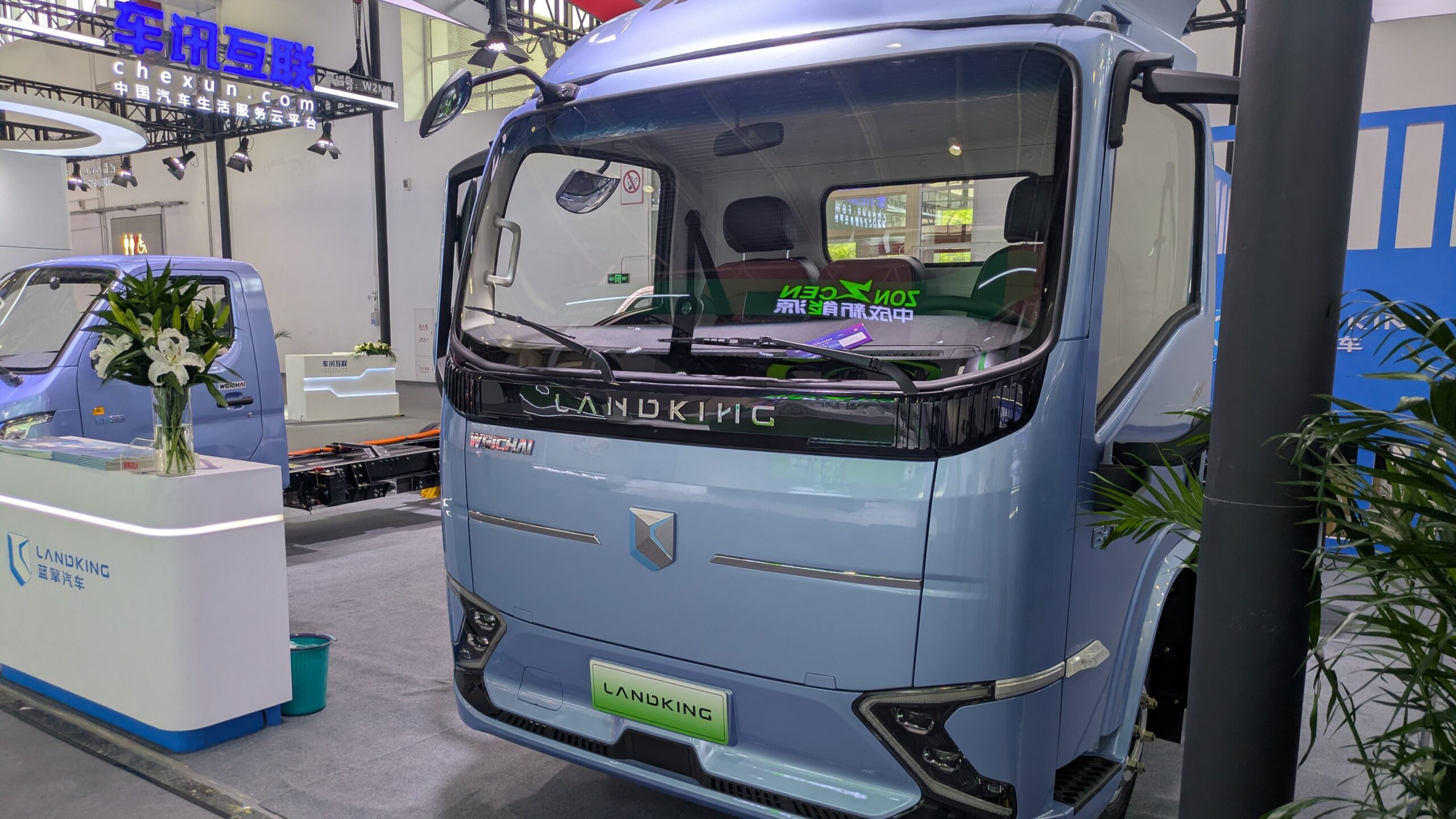
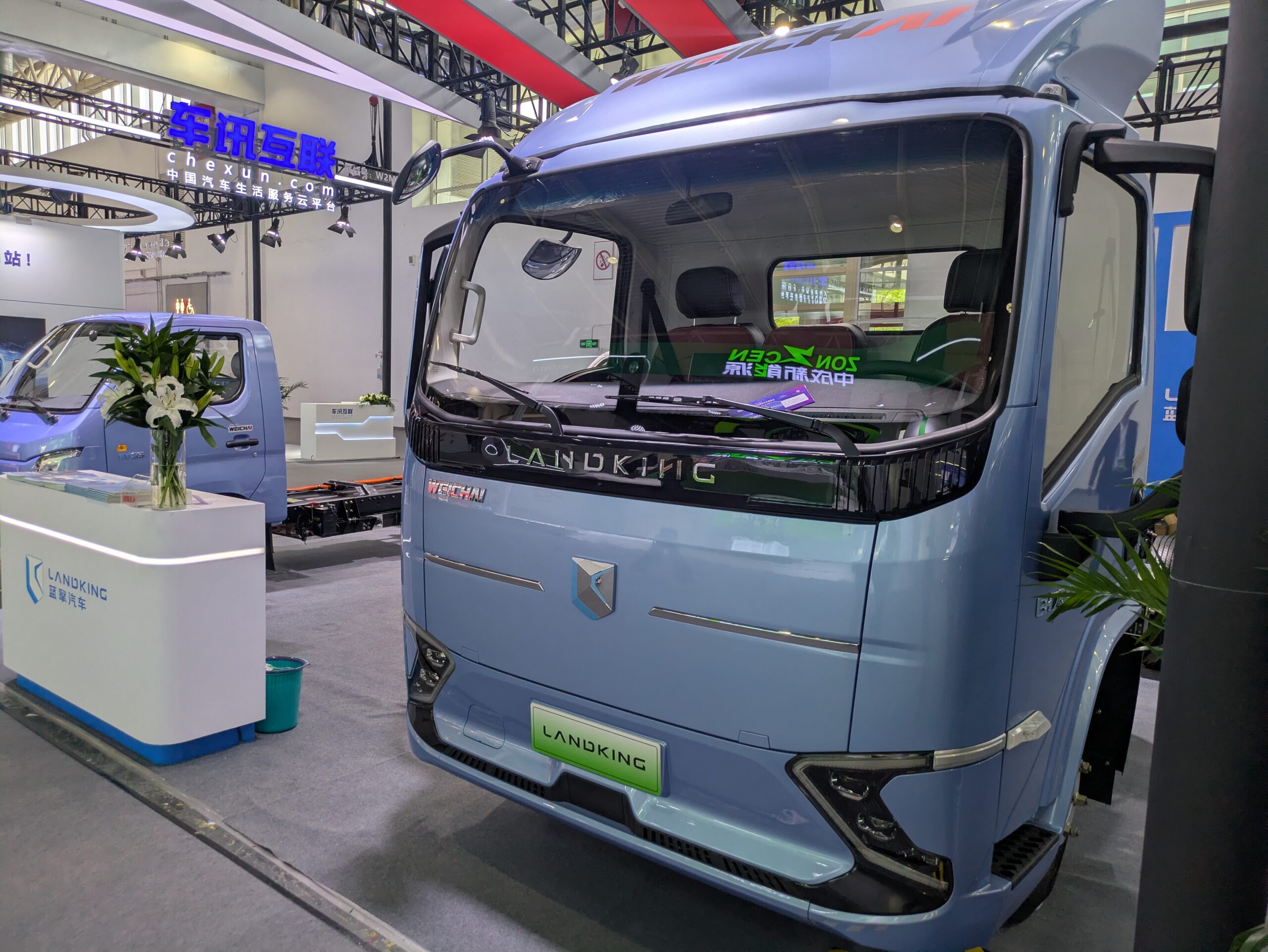
The 2024 Beijing Auto Show served as a critical platform for these developments. While the event was dominated by high-tech electric sedans and SUVs, the commercial vehicle pavilions showcased the next generation of logistics tools. LANDKING, a subsidiary of Weichai Power—one of the world’s largest manufacturers of diesel engines—demonstrated its pivot toward zero-emission solutions with its EH Pro and ES series. This move signals a broader industry trend where traditional heavy-machinery firms are leveraging their manufacturing scale to dominate the emerging electric truck market.
Technical Specifications: The LANDKING EH Pro and ES Series
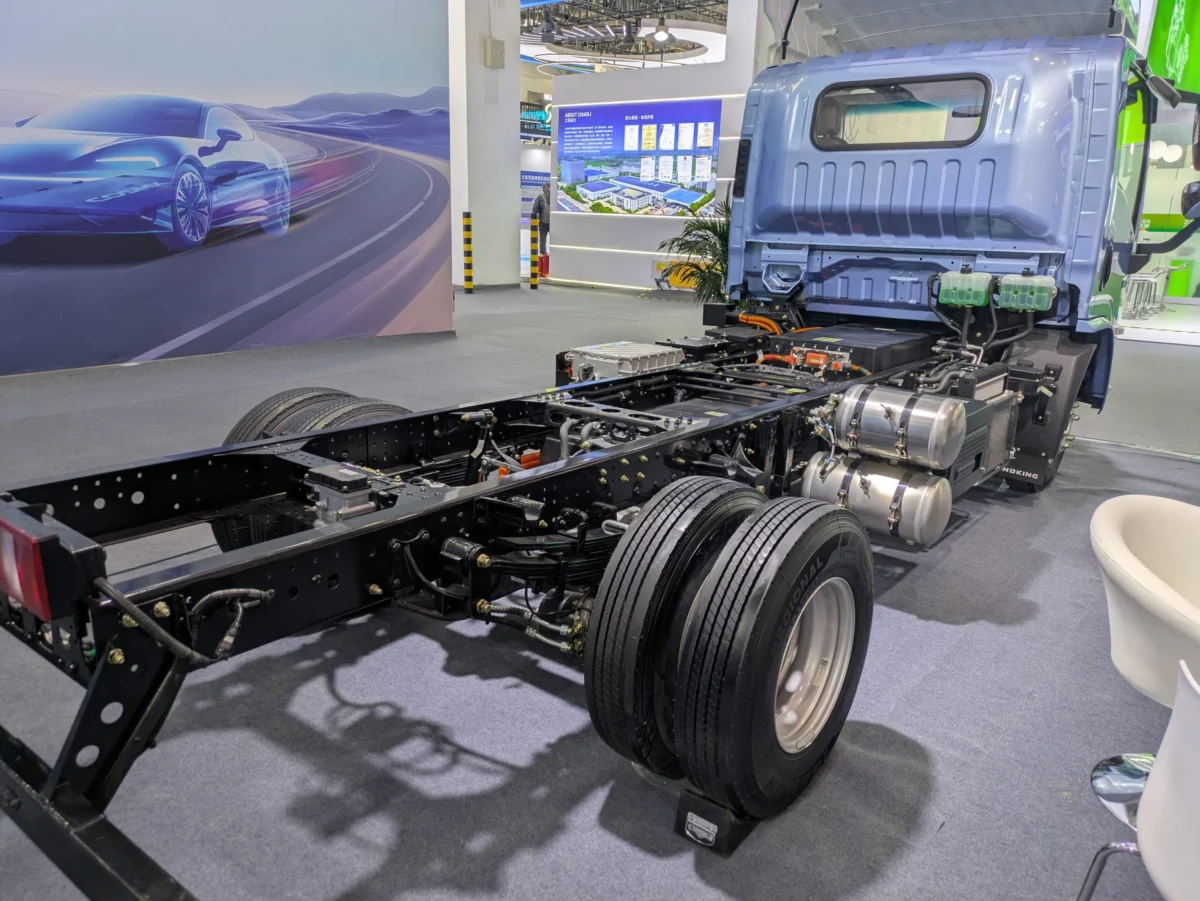
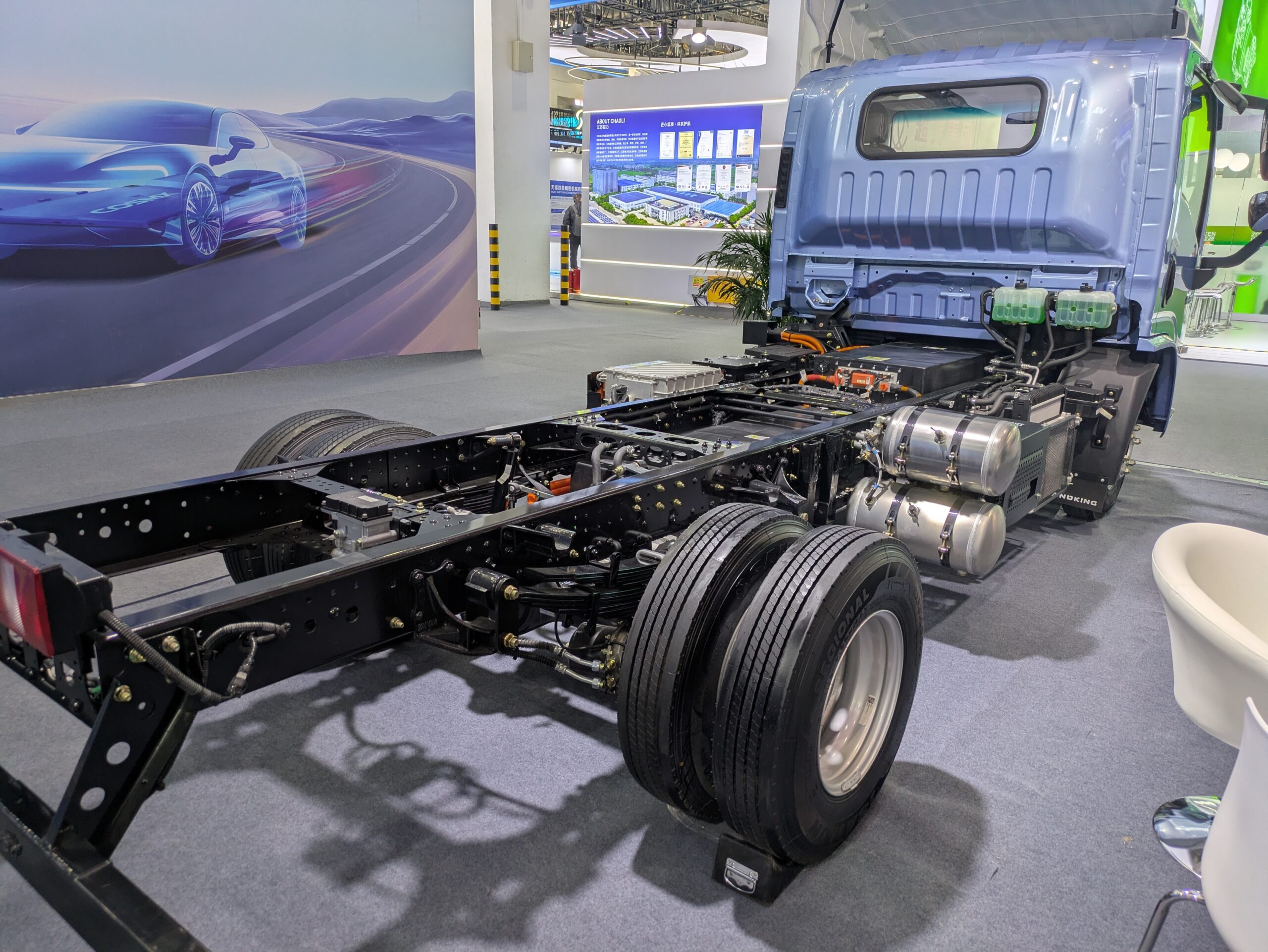
The LANDKING EH Pro 90 represents a significant entry into the medium-duty electric truck segment. Designed for urban and regional transport, the vehicle features a Gross Vehicle Weight Rating (GVWR) of 9,000 kg and a substantial payload capacity of up to 5,650 kg (approximately 12,456 lb). Its chassis, which can extend up to 8,320 mm, utilizes lightweighting engineering to shed hundreds of kilograms, thereby maximizing battery efficiency and cargo capacity.
At the heart of the EH Pro 90 is a 132 kWh Lithium Iron Phosphate (LFP) battery pack supplied by FinDreams, the battery manufacturing arm of BYD. LFP chemistry is preferred in the Chinese commercial sector due to its thermal stability, long cycle life, and lower cost compared to Nickel Manganese Cobalt (NMC) alternatives. The vehicle is powered by a single rear-axle motor producing 200 kW (268 hp) and 450 Nm of torque. In compliance with Chinese heavy-vehicle regulations, the truck’s top speed is electronically limited to 90 km/h (56 mph).
The EH Pro 90 boasts a range of approximately 330 km (205 miles) on a single charge. While this range is insufficient for long-haul cross-country routes, it is optimized for the "hub-and-spoke" logistics model prevalent in China, where freight is moved long distances by the nation’s extensive high-speed rail network and then distributed locally via trucks.
For smaller-scale logistics, the LANDKING ES Series offers a more compact solution. Ranging from five to six meters in length, the ES series is designed for maximum cargo volume within a minimal footprint. It utilizes a 56 kWh FinDreams LFP battery, providing a range of 200 to 300 km depending on the specific load configuration. This makes the ES series an ideal candidate for "last-mile" delivery services in densely populated urban environments.
Driver-Centric Design and Safety Integration
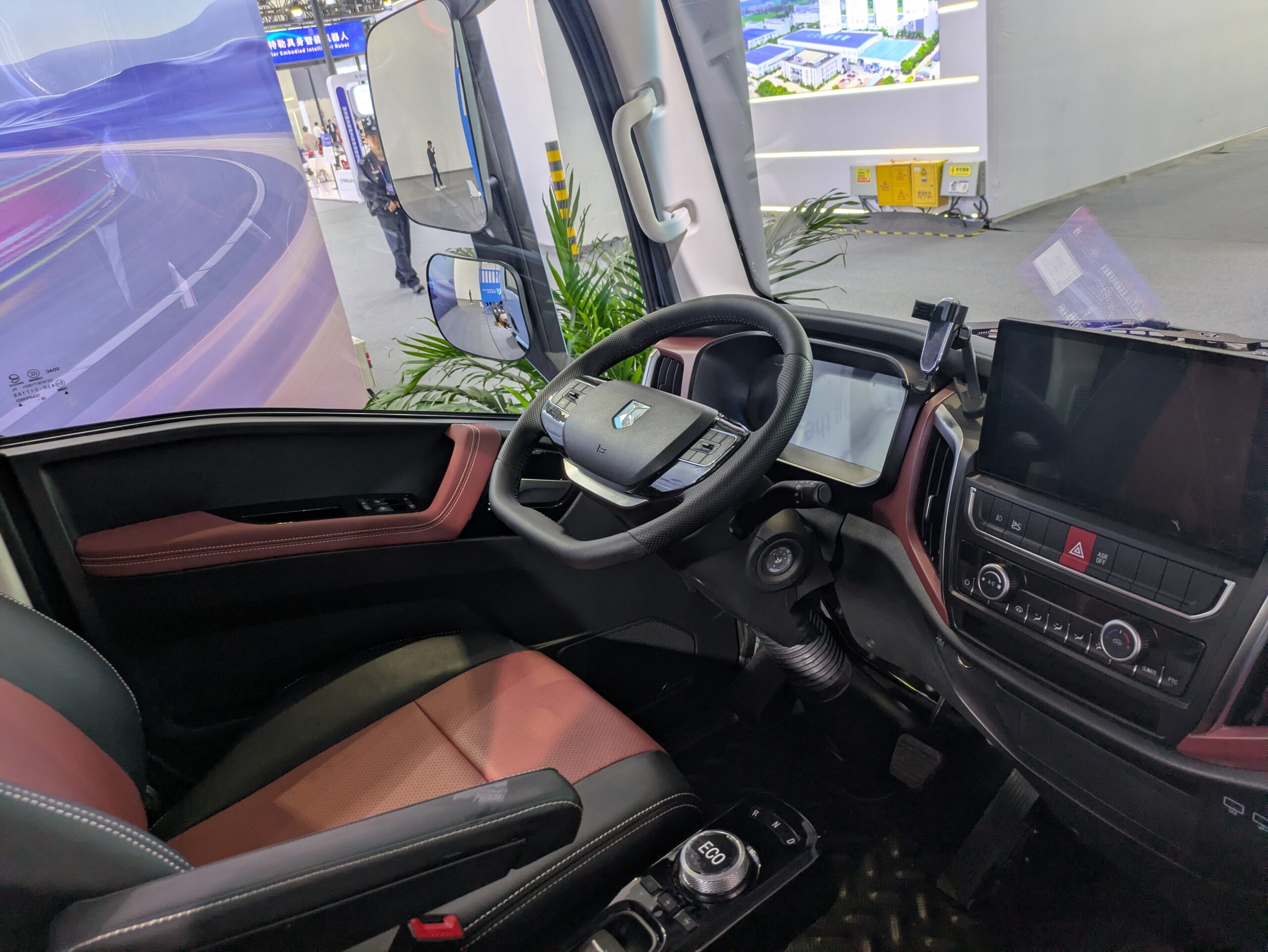
Modern Chinese electric trucks are increasingly bridging the gap between work-oriented utility and passenger-car comfort. The interior of the LANDKING EH Pro features a modern cockpit equipped with a central touchscreen interface, a multi-function steering wheel, and an electronic parking brake. To combat driver fatigue—a major concern in the logistics industry—the truck includes an air suspension seat with integrated heating and ventilation.
Safety and automation have also become standard features. The LANDKING models displayed at Auto China are equipped with Level 2 Advanced Driver Assistance Systems (ADAS). These include Autonomous Emergency Braking (AEB) and Lane Departure Warning (LDW) systems. The integration of air brakes with Anti-lock Braking Systems (ABS) and Advanced Parking Brakes (APB) further enhances the safety profile of these heavy vehicles. The reduction in noise, vibration, and harshness (NVH) compared to traditional diesel engines is also cited as a primary benefit for driver health and retention.
The Economic Disruption: Price Parity and Operating Costs
Perhaps the most significant revelation from the Beijing Auto Show was the pricing structure for these electric commercial units. According to representatives from LANDKING, the larger EH Pro is priced at approximately $22,500 USD, while the smaller ES Series enters the market at roughly $12,500 USD. To put these figures in perspective, the EH Pro costs significantly less than the base price of a mid-sized pickup truck in the United States, while the ES Series is priced comparably to high-end three-wheel scooters or micro-cars.
These aggressive price points are made possible by China’s vertically integrated supply chain. By sourcing batteries from FinDreams and leveraging Weichai’s massive production capacity, LANDKING can offer electric trucks at prices that challenge traditional diesel counterparts even before government subsidies are applied.
The Total Cost of Ownership (TCO) further strengthens the business case. In China, the price delta between electricity and diesel fuel is substantial. This economic advantage is amplified by China’s energy security strategy; as the nation relies heavily on oil imports—much of which passes through the volatile Strait of Hormuz—the government has accelerated the shift toward domestic electricity, much of which is now generated by renewable sources. For fleet operators, the combination of lower fuel costs and reduced maintenance requirements (due to fewer moving parts in electric drivetrains) results in immediate operational savings.
Global Implications and the Developing World
The availability of high-quality, low-cost electric trucks has significant implications for emerging markets, particularly in Southeast Asia. For example, the Philippines has long struggled with the electrification of its "Jeepney" fleet—the backbone of its public transport system. Traditional Jeepneys often use older, high-emission diesel engines. Previous attempts to modernize this fleet have been hampered by the high cost of electric replacements.
The entry of vehicles like the LANDKING ES Series, priced at $12,500, could represent a turning point for such markets. If Chinese manufacturers can export these platforms at similar price points, the financial barriers to greening public transport in developing nations could evaporate. This potential for export-led decarbonization is a key component of China’s "Belt and Road" industrial strategy.

Comparative Analysis: China vs. The West
While the transition to electric trucking faces headwinds in the United States and the European Union—often due to concerns over charging infrastructure for long-haul routes and higher initial purchase prices—the Chinese market is diverging. The focus in China has shifted from "proving the technology" to "optimizing the economics."
In Western markets, companies like Tesla with the Semi or Freightliner with the eCascadia are targeting the heavy-duty, long-haul segment, which requires massive battery packs and specialized "megawatt" charging stations. Conversely, Chinese firms like LANDKING, GAC, and BYD are saturating the light and medium-duty urban segments first. This strategy allows them to build scale, refine battery tech, and establish charging networks in concentrated urban areas where the return on investment is fastest.
Conclusion and Future Outlook
The rapid evolution of the electric truck sector in China is a testament to the power of industrial scale and focused policy. The LANDKING EH Pro and ES series demonstrate that electric trucks are no longer "vehicles of the future" but are current, cost-effective tools for modern commerce. As competition among manufacturers like Weichai, GAC, and Farizon (Geely’s commercial arm) intensifies, technical capabilities are expected to rise as prices continue to stabilize or fall.

The inevitability of electric commercial transport in China is now backed by a hard financial logic: when an electric truck is cheaper to buy, cheaper to fuel, and cheaper to maintain than a diesel truck, the environmental benefit becomes a secondary, albeit welcome, byproduct of a sound business decision. For the rest of the world, the Chinese model provides a blueprint—and a potential supply chain—for a rapid transition to zero-emission logistics. As these vehicles begin to appear in international markets, the global logistics industry may soon find itself following the "green-plated" path paved in the streets of Guangzhou.
