

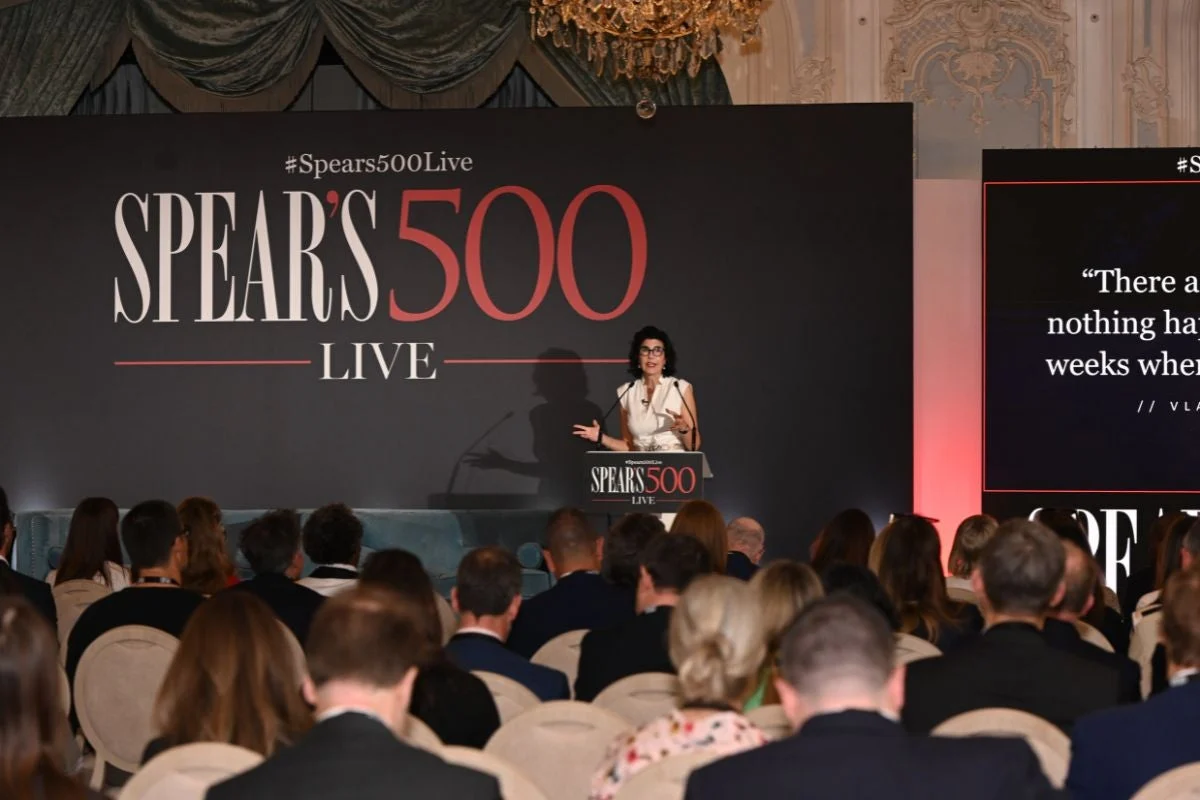
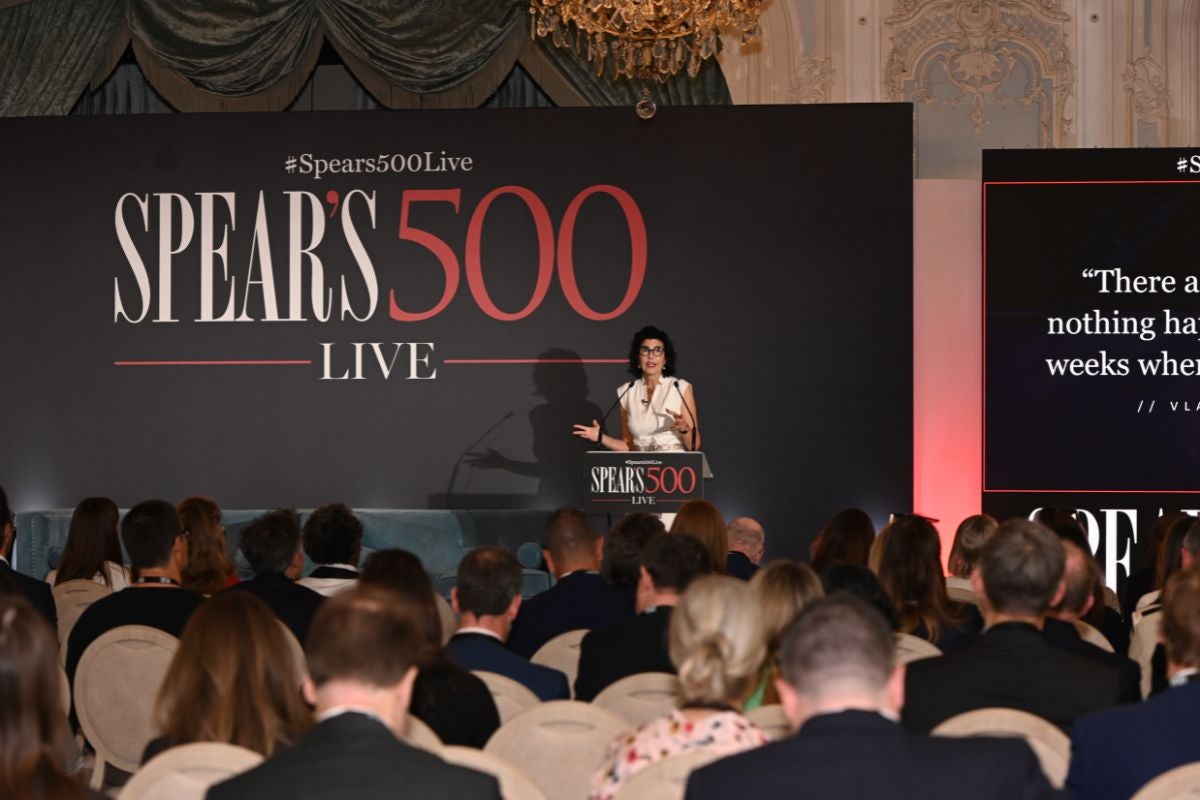
The question on the minds of many business executives and board members—when will things return to normal?—elicited a stark response from leading geopolitical strategist Tina Fordham. "It isn’t," she stated unequivocally, setting a definitive tone for the day’s discussions at Spear’s 500 Live, held at London’s prestigious Savoy Hotel on May 6th. Fordham, the founder of the geopolitical strategy firm Fordham Global Foresight, delivered a keynote address that framed the prevailing global landscape not as a series of transient disruptions, but as a fundamental alteration of the established order.
The year 2026, according to Fordham, began with a series of seismic events that have profoundly reshaped the political and economic terrain. The United States government’s apprehension of former Venezuelan leader Nicolás Maduro, coupled with then-President Donald Trump’s speculative comments regarding the potential annexation of Greenland, and the ongoing conflict in Iran, have collectively exerted significant influence on international politics and investor sentiment. These developments, she argued, are not isolated incidents but are indicative of a broader, more persistent trend of geopolitical instability.
The New Normal: Geopolitical Risk as a Permanent Fixture
Fordham’s central thesis revolves around the concept of geopolitical risk as a "structural change in trend." This implies that the current era of heightened global volatility is not a temporary anomaly but a lasting characteristic of the international system. "It’s not noise and it’s not temporary," she emphasized. Her advice to those awaiting a return to a perceived equilibrium was direct: "Waiting for the dust to settle actually is missing out on investment opportunities, as well as exposing yourself to downside risks." This perspective challenges conventional investment strategies that often seek to weather short-term storms before re-engaging with markets. Instead, Fordham advocates for an proactive approach, one that integrates an understanding of geopolitical dynamics into the core of investment planning.
The implications of this perspective are significant. Investors who fail to adapt may find themselves blindsided by events that, while seemingly external to financial markets, have a direct and often substantial impact on asset values, supply chains, and consumer demand. Conversely, those who embrace this new reality can potentially identify and capitalize on opportunities arising from these very shifts.
Fordham’s Expertise: A Foundation in Global Strategy
Tina Fordham’s insights are rooted in extensive experience advising a diverse range of influential figures. Her past engagements include advising political leaders, institutional investors, and military generals on the complex interplay of global events and their consequences. A testament to her standing in the international arena, she was appointed to the United Nations High-Level Panel on Women’s Economic Empowerment in 2016 by then-UN Secretary-General Ban Ki-moon. Furthermore, her tenure as a senior adviser within the UK Prime Minister’s Strategy Unit provided her with a unique vantage point on the strategic challenges facing national governments.
Her call to action for financial advisers was clear: to fully integrate geopolitical risk into their investment strategies. She posed a series of critical questions for consideration: "Are geopolitical developments going to move the needle? Are they going to result in changes to the way that industries and countries and asset classes work together? And what do we need to do about it?" These questions underscore the necessity for a more sophisticated and forward-looking approach to wealth management, one that moves beyond traditional economic indicators to encompass the broader geopolitical context.
Responding to Geopolitical Shifts: Investment Opportunities and Risks
Fordham’s analysis highlighted that discerning investors have already begun to recalibrate their portfolios in response to these evolving geopolitical realities. Asset classes that are demonstrably influenced by global events and real-world risks have, in many instances, shown robust performance.
Timeline of Key Geopolitical Events and Market Responses (Illustrative)
- Late 2025: Heightened geopolitical tensions globally.
- January 28, 2026: Gold reaches record highs of approximately $5,600 per ounce, driven by investor demand for safe-haven assets amidst economic and political uncertainty.
- Early 2026: US government takes action against Nicolás Maduro; speculative comments emerge regarding Greenland annexation; ongoing conflict in Iran intensifies.
- May 6, 2026: Tina Fordham speaks at Spear’s 500 Live, articulating the "structural shift" in geopolitical risk.
- Ongoing (2026): Increased investor interest in alternative assets such as gold, rare minerals, and AI investments via private equity, demonstrating a strategic pivot in response to perceived global instability.
Alternative investments, in particular, have captured significant attention. Gold, long considered a traditional safe haven, saw a surge in value. Similarly, investments in rare minerals and artificial intelligence, often accessed through the less liquid but potentially more rewarding avenue of private equity, have also been identified as areas where investors are seeking to navigate or capitalize on geopolitical trends.
The performance of gold serves as a pertinent example. While it experienced a significant price increase as a hedge against uncertainty, it also demonstrated the volatility inherent in asset classes sensitive to global sentiment. The subsequent sell-off after reaching record highs illustrates the dynamic nature of these markets, where perceived stability can be fleeting. This underscores Fordham’s point that simply waiting for "dust to settle" can lead to missed opportunities and potential losses.
The Enduring Impact of the Trump Presidency and Beyond
Fordham addressed the pervasive influence of the Trump presidency, noting that its impact extends beyond a mere historical anomaly. Her analysis, delivered in the context of anticipated midterm elections in the US, suggested that the current volatile geopolitical environment is unlikely to abate regardless of electoral outcomes. The sentiment that the world might be stabilizing or returning to a predictable state, she cautioned, "is not something that is on the cards right now."
This perspective suggests a long-term recalibration of global power dynamics, moving beyond the immediate political figures and towards more fundamental shifts in international relations. The assertion of American global dominance, while still present, is increasingly being met with strategic responses from other nations.
Diversification Strategies in a Shifting Global Order
The United States’ assertive foreign policy, coupled with concerns about potential technological "kill switches"—the ability of the US to deactivate critical systems like F-35 missiles or major cloud platforms such as Microsoft Cloud—is prompting other nations to reconsider their dependencies. Fordham noted that the EU is actively pursuing greater self-sufficiency in critical areas like AI and defense infrastructure. Similarly, Canada is reportedly increasing its internal trade activities in response to perceived US hostility.
These developments provide a clear signal to investors: a diversification away from over-reliance on the US economy and its technological infrastructure may be a prudent strategy. The concept of a "kill switch," once a theoretical concern, is now being taken "very seriously at the policy level," according to Fordham, highlighting a tangible risk that could impact global businesses and financial systems.

Geopolitical Leverage and Emerging Power Dynamics
Fordham also shed light on how geopolitical events, even those perceived as purely conflictual, can create unexpected leverage for certain nations. Citing reports from The Guardian, she noted that the war in Iran had impacted approximately 23,000 firms and factories within the country. However, she argued that Iran’s strategic control over the Strait of Hormuz has provided it with a more potent and immediate form of geopolitical influence than its decades-long pursuit of nuclear ambitions.
This situation has created a new dynamic where other nations are now seeking to establish their own strategic "choke points" from which they can exert influence and extract concessions. This suggests a more fragmented and multipolar world, where control over critical transit routes and resources becomes a primary tool of international power.
The Imperative of Agility in a Rapidly Changing World
Throughout her address, Tina Fordham consistently emphasized that there is no single, pre-ordained response to the complex geopolitical tensions defining the current era. However, she stressed the critical need for advisers, investors, and leaders to remain attuned to the accelerating pace and inherent volatility of global affairs.
Her concluding remarks, paraphrasing a sentiment attributed to Russian revolutionary leader Vladimir Lenin, underscored this point: "The world is spinning faster than ever." This vivid metaphor encapsulates the challenge of navigating a landscape where the speed of change can outpace traditional analytical frameworks and reactive strategies.
Spear’s 500 Live: A Platform for Navigating Complexity
Spear’s 500 Live, the premier event for private client professionals and key figures within the private wealth and family office ecosystem, provided a timely and crucial forum for these discussions. The 2026 edition, held on May 6th at The Savoy in London, brought together leading minds to grapple with the intricate challenges and opportunities presented by the current geopolitical climate. The event’s association with esteemed partners, including the Charities Aid Foundation, CMB Monaco, Guernsey Finance, HCA Healthcare UK, Payne Hicks Beach, Riverstone, Scott Dunn Private, and Stewardship, further highlights its significance as a hub for high-level discourse and strategic networking.

The discussions at Spear’s 500 Live reinforce the understanding that geopolitical risk is no longer a peripheral concern for investors and business leaders. It is a central, defining characteristic of the contemporary global economy, demanding a fundamental reassessment of strategies, a commitment to continuous learning, and a willingness to adapt to an ever-evolving world. The insights provided by Tina Fordham serve as a critical roadmap for those seeking to not only survive but thrive amidst this era of profound structural change.
Spear’s 500 Live is the premier live event for private client professionals and leading figures from the private wealth and family office ecosystem. The 2026 edition took place on 6 May at The Savoy in London.
Spear’s 500 Live was presented in association with our partners the Charities Aid Foundation, CMB Monaco, Guernsey Finance, HCA Healthcare UK, Payne Hicks Beach, Riverstone, Scott Dunn Private and Stewardship.
For commercial enquiries concerning Spear’s events, contact [email protected].
