

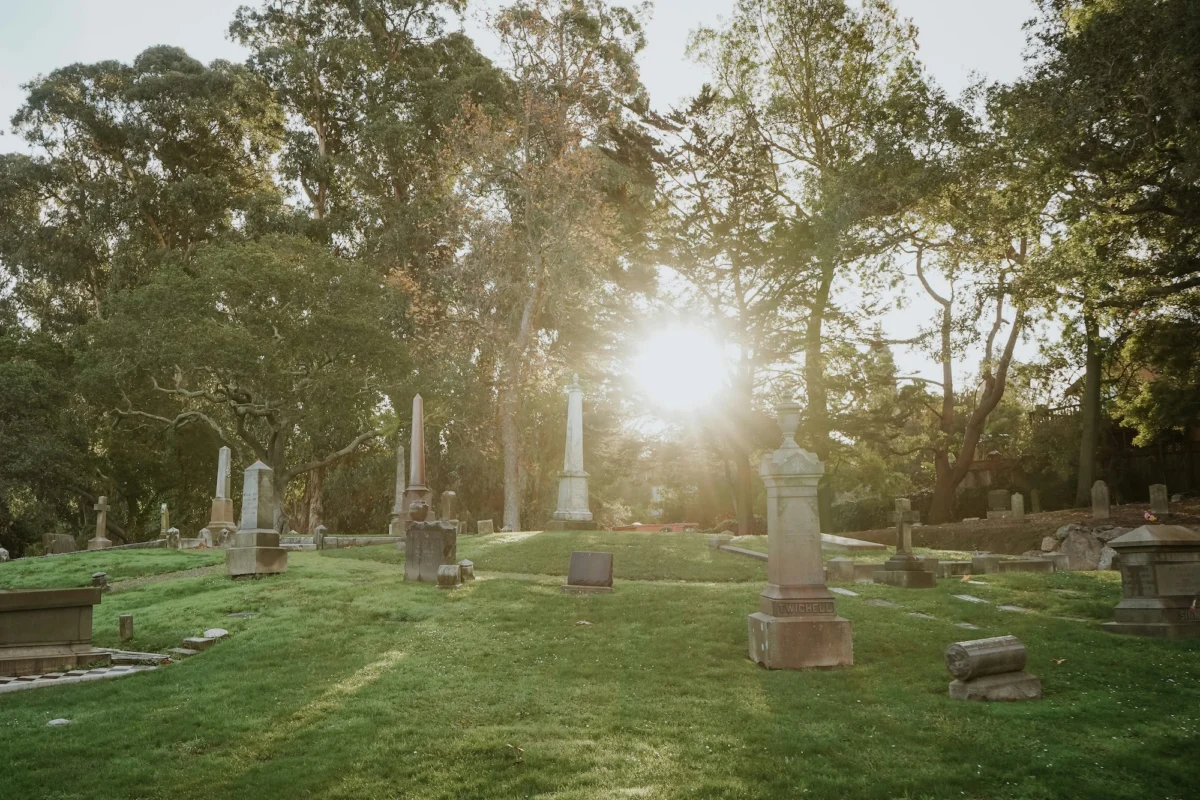
In the quiet, manicured rows of the East Lawn Cemetery in Ithaca, New York, a massive workforce is at work beneath the soil. While the site is dedicated to the memory of the deceased, it has recently been identified as a bustling hub of biological activity. Researchers from Cornell University have discovered that this particular cemetery is home to one of the largest and oldest known communities of ground-nesting bees in the world. Specifically, the site is a stronghold for Andrena regularis, commonly known as the regular miner bee. This discovery is part of a shifting scientific consensus that views cemeteries not merely as final resting places for humans, but as critical, inadvertent nature reserves that protect species increasingly threatened by urbanization and industrial agriculture.
The Secret Life of the Regular Miner Bee
To the casual observer, a cemetery appears to be a highly controlled, almost sterile environment characterized by stone monuments and tightly cropped turf. However, for the regular miner bee, these conditions are nearly ideal. Unlike the well-known honeybee, which lives in large social colonies centered around a queen, the miner bee is part of the 90 percent of bee species categorized as solitary. These insects do not build hives in trees or human-made boxes; instead, they excavate intricate tunnels directly into the earth.
The Andrena regularis is a fuzzy, black-and-tan insect that plays a vital role in the local ecosystem. By digging into the ground, these bees create "mining" shafts where they lay eggs and provide pollen for their larvae. When spring arrives, a new generation emerges to pollinate a wide variety of flora, including New York’s economically vital apple orchards. The discovery at East Lawn highlights a population of staggering proportions. Community ecologists at Cornell University estimate that the cemetery grounds host between 3 million and 8 million bees. In some sections of the cemetery, the density is so high that thousands of individual bees can be seen emerging from a single square meter of soil.
The preference for cemetery grounds is rooted in the specific geological and maintenance requirements of the species. Miner bees require soil that is easy to excavate but stable enough not to collapse, and they gravitate toward areas with excellent drainage to prevent their burrows from flooding. Furthermore, the very practice of keeping cemetery grass short—often viewed as a detriment to wildlife—actually benefits these ground-dwellers. Short grass allows the sun to warm the soil more quickly in the morning, enabling the bees to become active earlier in the day and providing them with clear flight paths to and from their nests.
A Growing Body of Evidence for Urban Refuges
The findings in Ithaca are supported by a burgeoning field of research suggesting that cemeteries are among the most biodiverse locations in urban and suburban landscapes. As natural habitats are cleared for housing, shopping centers, and infrastructure, cemeteries remain relatively undisturbed for decades, or even centuries. This permanence creates a "refuge effect" for species that cannot survive in more volatile environments.
Ecologists point to several factors that make cemeteries superior to traditional public parks for wildlife conservation. First, cemeteries generally have lower levels of human and domestic animal traffic. While parks are often filled with joggers, cyclists, and off-leash dogs—all of whom can disturb nesting sites—cemeteries are spaces of quiet and decorum. Second, cemeteries are largely devoid of high-speed vehicular traffic. In the United States, roadkill accounts for the deaths of hundreds of millions of animals annually, including birds, mammals, and countless insects. The slow-paced, restricted-access nature of cemetery roads significantly reduces this risk.
Beyond bees, researchers have documented a wide array of species thriving in these "cities of the dead." Migrating geese use the open spaces for rest, while owls and hawks find ample hunting grounds in the mature trees often found on older cemetery plots. Mammals such as bats, foxes, and coyotes have been observed using cemeteries as corridors to move through urban environments safely. Furthermore, because the soil in many older cemeteries has not been plowed or heavily treated with industrial chemicals for over a century, these sites often host rare and endangered plant species that have been eradicated elsewhere by modern agriculture.

The Ecological Indicator: Predator and Prey Dynamics
A key sign of a healthy ecosystem is the presence of specialized predators, and the East Lawn Cemetery population is no exception. Scientists observed the presence of Nomada imbricata, a variety of cuckoo bee that acts as a natural parasite to the miner bee. Similar to the cuckoo bird, this bee does not build its own nest. Instead, it enters the burrows of the miner bee to lay its own eggs. Once the cuckoo bee larvae hatch, they often consume the host’s food stores and, in some cases, the host larvae themselves.
While this may seem macabre, ecologists view the presence of the cuckoo bee as a positive indicator. Parasites can only thrive where there is a robust and stable host population. The fact that Nomada imbricata is present in significant numbers suggests that the miner bee colony is not just surviving, but is sufficiently large to support a multi-tiered food web. Additionally, researchers analyzed the sex ratios of the emerging miner bees. Producing female offspring requires more energy and resources from the mother bee than producing males. The discovery of a high proportion of healthy females at the Ithaca site further confirms that the environment provides an abundance of high-quality pollen and suitable nesting conditions.
Economic and Environmental Implications
The preservation of these bee colonies carries significant economic weight. Pollinators are the backbone of the agricultural industry, responsible for the fertilization of crops that sustain the global food supply. In New York State, where the apple industry is a billion-dollar enterprise, the "free" labor provided by wild solitary bees is essential. As honeybee populations continue to struggle with Colony Collapse Disorder (CCD) and various mites, wild species like the regular miner bee provide a critical safety net for food security.
Furthermore, the biodiversity found in cemeteries contributes to urban climate resilience. The dense vegetation and unpaved ground in these areas help mitigate the "urban heat island" effect, where concrete and asphalt trap heat and raise city temperatures. By supporting a wide variety of plants and pollinators, cemeteries help maintain "pocket forests" that cool the air and improve local air quality.

Recommendations for Future Management
As the value of cemeteries as biodiversity hotspots becomes clearer, experts are calling for subtle shifts in how these grounds are managed. While cemeteries must first and foremost serve as respectful places for mourning and remembrance, small changes in maintenance can yield significant ecological dividends:
- Adjusted Mowing Schedules: Researchers suggest that mowing grass early in the morning, before ground-nesting bees emerge for the day, can prevent accidental strikes on active insects.
- Native Plant Integration: Replacing ornamental, non-native flowers with indigenous species provides a better food source for local pollinators and requires less chemical fertilizer.
- Reduction of Rodenticides: Limiting the use of poisons to control rodent populations protects birds of prey, such as owls and hawks, which can suffer secondary poisoning after eating contaminated prey.
- Chemical Management: Reducing the application of broad-spectrum insecticides, particularly during the spring emergence of solitary bees, is vital for maintaining population levels.
Conclusion: A New Vision for Urban Conservation
The realization that millions of bees are thriving in a New York cemetery challenges the traditional dichotomy between "nature" and "the city." For decades, urban development was viewed as the antithesis of conservation. However, the Cornell study and similar research worldwide suggest a more nuanced reality: nature is remarkably resilient and will occupy any available niche, provided it is managed with a degree of sensitivity.
"It’s an ‘aha’ moment," says Christopher Grinter, collection manager of entomology at the California Academy of Sciences. "Not only is this happening without us noticing, we should now encourage and foster this biodiversity."
As the world continues to urbanize, the role of "accidental" sanctuaries like cemeteries will only grow in importance. By recognizing these spaces as living ecosystems, society can ensure that the final resting places of the past become the breeding grounds for a more biodiverse and resilient future. The massive colony of miner bees in Ithaca serves as a poignant reminder that even in places dedicated to the end of life, the natural world finds a way to flourish, connecting the subterranean tunnels of the insect world to the broader health of the planet.
