

The Paradox of Paradise: Hurricane Melissa and the Fragile Future of Caribbean Tourism began as a mere cluster of thunderstorms off the coast of West Africa on October 16, a routine meteorological occurrence that soon escalated into a defining crisis for the modern Caribbean. Within five days, the tropical wave transitioned across the Atlantic’s "hurricane alley," fueled by record-high sea surface temperatures, and entered the Caribbean Sea. By the time it was christened Melissa, the system had undergone rapid intensification, a phenomenon becoming increasingly common in the era of climate change. When Melissa made landfall on the western coast of Jamaica on October 28, she had reached Category 5 status, packing sustained winds of nearly 300 kilometers per hour. It was the most powerful storm ever recorded in Jamaican history and the third most intense in the annals of Atlantic hurricanes, leaving a trail of destruction that estimated between US$8 billion and $15 billion in damages.
Despite the catastrophic flattening of infrastructure, homes, and agricultural land, the response from the Jamaican government was swift and singularly focused. Even as emergency crews were clearing debris and residents were assessing the loss of their livelihoods, Edmund Bartlett, Jamaica’s Minister of Tourism, was engaging with international media outlets. His message was clear: Jamaica remained open for business, and travelers should not cancel their winter plans. This frantic drive to ensure all hotels were operational by the mid-December peak season highlighted a profound and uncomfortable contradiction. The Caribbean, a region of immense natural beauty and cultural richness, is locked in a cycle of dependency on an industry that is simultaneously a vital lifeline and a contributor to its long-term environmental undoing.
The Genesis and Chronology of Hurricane Melissa
The trajectory of Hurricane Melissa serves as a harrowing case study in modern meteorology. After its initial detection on October 16, the system moved westward at a steady pace. Meteorologists at the National Hurricane Center (NHC) in Miami noted that the atmospheric conditions—low wind shear and exceptionally warm waters—were ideal for cyclogenesis. By October 21, the system was upgraded to a tropical depression, and by October 23, it became Tropical Storm Melissa.
As the storm entered the central Caribbean, it encountered a "heat pool" of water that allowed for a period of rapid intensification. In just 24 hours, Melissa jumped from a Category 2 to a Category 5 hurricane. When the eye of the storm passed over the western parishes of Jamaica, it brought a four-meter storm surge and more than 500 millimeters of rainfall. The physical impact was absolute: power grids were decimated, bridges were swept away, and the lush, green canopy of the island was stripped bare. The $15 billion damage estimate represents nearly the entirety of Jamaica’s annual Gross Domestic Product (GDP), underscoring the totalizing nature of such weather events on small island developing states (SIDS).
The Tourism Monoculture: A Double-Edged Sword
The Caribbean is officially the most tourism-dependent region on the planet. For the 33 political entities that comprise the region—ranging from sovereign nations to overseas territories—tourism accounts for an average of 11% of GDP. However, these averages mask much more extreme realities in specific nations. In Antigua and Barbuda, for instance, the sector is responsible for a staggering 88% of the country’s GDP and provides 91% of all employment.
This reliance creates what economists often call a "tourism monoculture." Much like the sugar and banana plantations of the colonial era, the modern Caribbean economy is frequently centered on a single export: the "sun, sea, and sand" experience. When a hurricane like Melissa strikes, it does more than damage property; it threatens the fundamental economic engine of the state. Minister Bartlett’s rush to reassure the global market was not merely a matter of optics but a desperate attempt to prevent a total economic collapse. If the December peak season were to fail, the secondary and tertiary effects on local suppliers, taxi drivers, and service staff would be catastrophic.
The Reality of Economic Leakage
While the region is dependent on tourism, the economic benefits are not distributed equitably. One of the most critical issues facing Caribbean policymakers is the concept of "economic leakage." Data from the United Nations World Tourism Organization (UNWTO) suggests that approximately 80% of the money spent by tourists in the Caribbean does not remain in the local economy. Instead, it "leaks" back to the developed nations where the major airlines, cruise lines, and international hotel chains are headquartered.
For every dollar a traveler spends on an all-inclusive package, only a small fraction reaches the local community. Meanwhile, the local government remains responsible for 100% of the environmental and infrastructural costs associated with the industry. This includes the management of massive amounts of solid waste, the provision of water and electricity to high-consumption resorts, and the maintenance of roads and airports. This imbalance leaves Caribbean nations with a thin margin for error when disaster strikes, as they must service high levels of external debt while funding their own recovery from climate-induced disasters.
Climate Change and Existential Vulnerability
The impact of Hurricane Melissa is a harbinger of a broader environmental crisis. Over the last 50 years, the Caribbean has lost nearly half of its hard coral cover. This loss is attributed to rising ocean temperatures and acidification, which lead to coral bleaching. Coral reefs are not just a draw for snorkelers; they are vital natural barriers that break the force of waves before they reach the shore. Without them, even minor storms can cause significant coastal erosion.
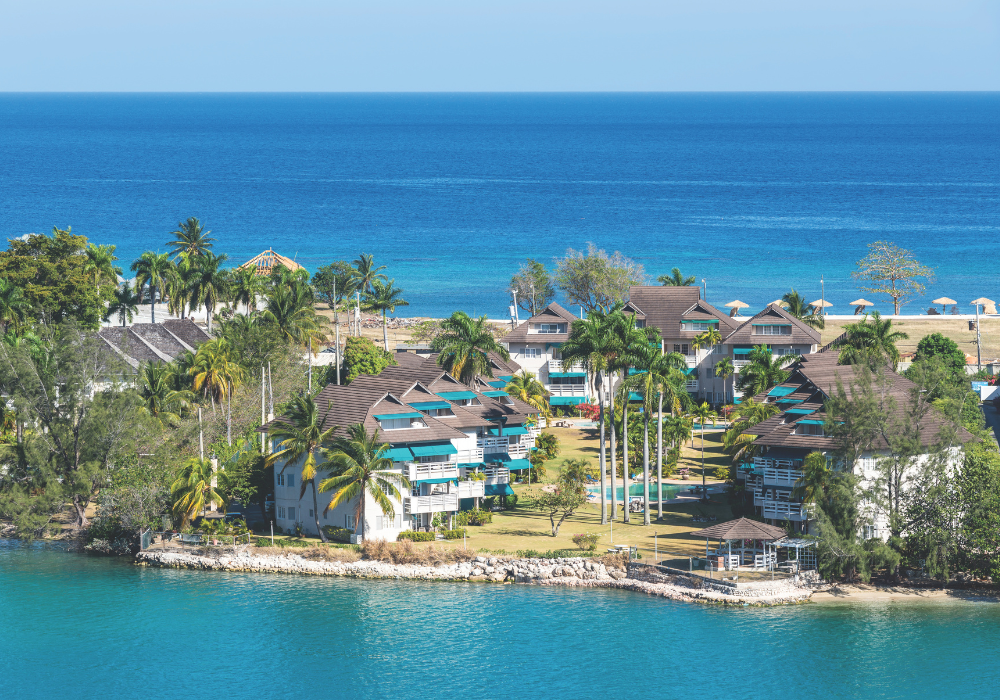
Projections for the remainder of the 21st century are grim. At current rates of sea-level rise, it is estimated that half of the Caribbean’s sandy beaches will disappear by 2100. Furthermore, nearly one-third of the region’s existing hotel infrastructure is located in low-lying coastal zones that are at risk of permanent inundation. Extreme heat events are also becoming more frequent, putting a strain on the very "tropical paradise" image that the industry sells.
Therez Walker, a lecturer on sustainable tourism at NHL Stenden University and a native of Antigua, notes that the environmental degradation is already palpable. "The beach I went to as a child is barely recognizable," Walker says. She points to the removal of mangrove swamps—often cleared to make way for unobstructed ocean views at resorts—as a primary cause of vulnerability. Mangroves act as a buffer against storm surges and provide nurseries for local fish populations. Their removal for the sake of aesthetic tourism is a classic example of short-term gain leading to long-term disaster.
The Colonial Logic of Modern Tourism
The current structure of Caribbean tourism is often critiqued as a continuation of colonial-era extractive economics. In her seminal 1988 book, A Small Place, Antiguan author Jamaica Kincaid argued that the transition from a plantation economy to a tourism economy changed the "resource" being exploited—from sugar to sand—but kept the power dynamics largely intact.
Beienetch "Bennie" Watson, a tourism policy expert at the University of the West Indies in Mona, Jamaica, echoes this sentiment. She argues that the industry has historically operated on a "top-down" model where decisions are made by foreign investors and local elites, often excluding the voices of the residents who live in the communities being developed. This "colonial logic" prioritizes the comfort of the visitor over the basic needs of the local population. In times of drought, it is common for local residents to have their water supply rationed while resorts with lush gardens and multiple swimming pools continue to operate without interruption.
A Shift Toward Resilience and Solidarity
Despite the challenges, there are signs of a shift in how the Caribbean approaches tourism. The COVID-19 pandemic, which saw arrivals drop to near zero, served as a "great reset" for many islands. It exposed the danger of over-reliance on a single sector and prompted a move toward diversification.
In the wake of Hurricane Melissa, a different kind of recovery has been observed alongside the official marketing blitz. In Kingston and western Jamaica, local communities and church groups have spearheaded rebuilding efforts that focus on social solidarity rather than just commercial viability. Dr. Watson observes that this "bottom-up" recovery proves the strength of the Caribbean social fabric.
There is also a growing movement toward "regenerative tourism," which seeks to ensure that travel actually improves the destination rather than just minimizing harm. This includes promoting homestays, eco-tourism, and "slow travel" options that encourage visitors to spend more time—and more money—in local communities. A 2025 World Bank report emphasized that the future of the region lies in moving beyond the "sea, sun, and sand" model toward an integrated approach that values the "Blue Economy"—the sustainable use of ocean resources for economic growth.
Conclusion: The Path Forward
The story of Hurricane Melissa is more than a report on a natural disaster; it is a narrative about the precariousness of the Caribbean’s economic foundation. Sustainability in this region is no longer a theoretical goal or a marketing buzzword; it is a requirement for survival. For tourism to remain a viable mainstay, it must evolve into a model that is resilient to the inevitable impacts of climate change, protective of the ecosystems that make the region unique, and, most importantly, equitable for the people who call the Caribbean home.
As Therez Walker concludes, the responsibility for this change lies both with policymakers and the global traveling public. "We need to demand more of tourism," she asserts. The recovery from Melissa has shown that while the Caribbean can rebuild its hotels in record time, the long-term task of building a sustainable and sovereign future remains the region’s greatest challenge.
