

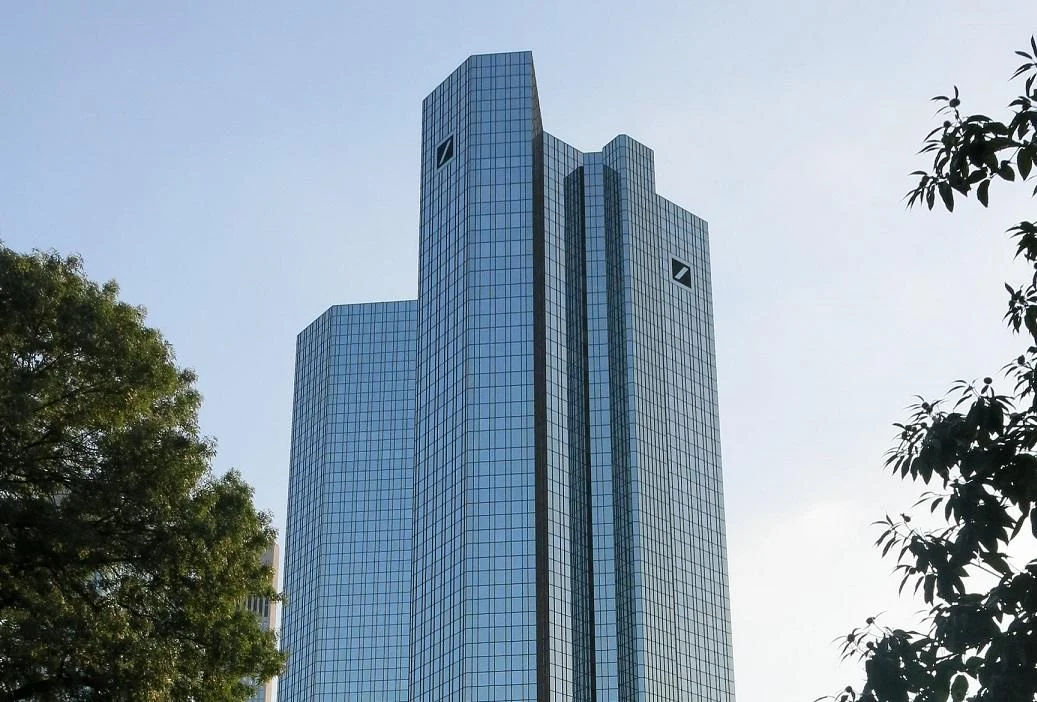
Deutsche Bank has achieved a significant milestone in its multi-year environmental, social, and governance (ESG) journey, recording its most robust quarter for sustainable and transition financing in nearly five years. According to the bank’s latest financial disclosures for the second quarter of 2026, the Frankfurt-based lender facilitated €31 billion (approximately $35.5 billion) in sustainable and transition financing volumes. This figure represents an 11% increase compared to the same period in 2025 and marks the strongest performance since the end of 2021. Furthermore, it stands as the second-highest quarterly volume since the bank officially inaugurated its sustainability strategy in 2020, signaling a powerful acceleration in the institution’s commitment to financing the global shift toward a low-carbon economy.
The performance in the second quarter has bolstered the bank’s mid-year results significantly. For the first half of 2026, Deutsche Bank’s total sustainable and transition finance volumes reached €52 billion ($59.6 billion), an 18% rise over the first half of the previous year. This trajectory places the bank on a firm path toward its ambitious long-term target: facilitating a cumulative €900 billion in sustainable finance and investments by the end of 2030. Since the inception of this tracking in 2020, the bank has already achieved a cumulative total of €523 billion, suggesting that it has surpassed the halfway mark of its decade-long goal well ahead of schedule.
Strategic Evolution and the Pivot to Transition Finance
The surge in volumes during the first half of 2026 follows a pivotal strategic recalibration that took place in late 2025. Recognizing that the "pure green" sector—such as renewable energy projects—was only one part of the climate solution, Deutsche Bank expanded its sustainability strategy to include "transition finance." This approach focuses on providing capital to companies in hard-to-abate sectors, such as steel, cement, chemicals, and aviation, which are currently carbon-intensive but have credible plans to decarbonize.
Central to this shift was the release of the bank’s Transition Finance Framework. This document established rigorous rules and parameters to ensure that transition-linked loans and bonds are grounded in science-based targets rather than superficial "greenwashing." By formalizing these definitions, Deutsche Bank has been able to capture a larger share of the market as industrial clients increasingly seek financing to overhaul their legacy infrastructure.
Jörg Eigendorf, Deutsche Bank’s Chief Sustainability Officer, highlighted the resilience of this demand in a recent assessment of the Q2 results. Eigendorf noted that while quarterly figures are subject to the ebbs and flows of market volatility and specific client deal cycles, the underlying trend is undeniably positive. He emphasized that clients across various geographies are remaining committed to their long-term transition strategies, viewing decarbonization not merely as a regulatory requirement but as a fundamental component of future economic competitiveness.
A Detailed Breakdown of Divisional Performance
The growth in sustainable finance volumes has not been uniform across the bank’s various business units, reflecting the diverse ways in which different sectors of the economy are engaging with the green transition.
The Investment Bank: The Engine of Growth
The Investment Bank remains the primary driver of Deutsche Bank’s ESG volumes. In the first half of 2026, this division accounted for €36.3 billion of the total volume, a 25% increase compared to the first half of 2025. This growth was largely propelled by a resurgence in the green bond market and an increase in sustainability-linked revolving credit facilities. As global interest rates began to stabilize in early 2026, corporate issuers returned to the capital markets to fund large-scale energy transition projects, with Deutsche Bank acting as a lead arranger on several high-profile international mandates.
The Private Bank: Rapid Retail Adoption
Perhaps the most surprising growth came from the Private Bank, which saw its volumes skyrocket by 71% year-over-year to reach €9.7 billion in the first half of 2026. This surge is attributed to a significant increase in consumer demand for "green" mortgages and ESG-integrated investment products. In Europe, particularly in Germany, stricter building efficiency regulations have incentivized homeowners to seek financing for energy-efficient renovations and heat pump installations. Additionally, the bank reported a recovery in ESG assets under management (AUM) within its wealth management and retail arms, driven by strong net inflows as individual investors sought exposure to sustainable funds.
The Corporate Bank: A Temporary Retraction
In contrast to the other divisions, the Corporate Bank saw its sustainable finance volumes pull back by 43% to €5.9 billion in the first half of the year. Analysts suggest this decline does not necessarily reflect a waning interest in sustainability among corporate clients, but rather a shift in the timing of large-scale infrastructure projects and a more selective approach to lending. The Corporate Bank’s focus has shifted toward deeper, more complex transition advisory roles which, while potentially more impactful in terms of carbon reduction, may not always result in the same immediate volume of financing as traditional lending.
Chronology of Deutsche Bank’s Sustainability Milestones
To understand the significance of the 2026 results, it is necessary to view them through the lens of the bank’s six-year evolution in the ESG space:
- May 2020: Deutsche Bank announces its first formal sustainability targets, pledging to facilitate €200 billion in sustainable financing and ESG investments by 2025.
- Late 2021: The bank experiences its previous peak in sustainable finance volumes, driven by a post-pandemic boom in green bond issuance and favorable regulatory tailwinds.
- May 2022: Due to rapid progress, the bank accelerates its targets, moving the €200 billion goal forward to 2023 and setting a new long-term ambition of €500 billion by 2025.
- 2023-2024: The bank navigates a more challenging macroeconomic environment. While volumes remained steady, the pace of growth slowed slightly due to rising interest rates and increased scrutiny of ESG methodologies across the financial sector.
- Late 2025: Deutsche Bank unveils its most comprehensive sustainability update to date. It introduces the €900 billion target for 2030 and launches the Transition Finance Framework to address hard-to-abate sectors.
- July 2026: The bank reports its strongest quarter in over four years, confirming that the strategic shift toward transition finance is resonating with the market.
Market Context and Regulatory Drivers
The record-breaking quarter for Deutsche Bank does not exist in a vacuum. It is part of a broader European and global trend where financial institutions are being pushed by both regulators and clients to play a more active role in climate mitigation.
In Europe, the implementation of the Corporate Sustainability Reporting Directive (CSRD) and the continued refinement of the EU Taxonomy have created a more standardized environment for sustainable finance. These regulations require companies to disclose their transition plans in greater detail, which in turn allows banks like Deutsche Bank to assess the "greenness" of a loan with higher confidence.
Furthermore, the European Central Bank (ECB) has become increasingly vocal about climate-related financial risks. The ECB has conducted several stress tests on the banking sector, urging institutions to manage their exposure to carbon-intensive industries. By aggressively pursuing sustainable and transition finance, Deutsche Bank is not only capturing new business but also de-risking its balance sheet against future carbon taxes and "stranded asset" scenarios.

Implications for the Future of Banking
The results for Q2 2026 suggest that sustainable finance has moved from a niche offering to a core business driver for major global banks. For Deutsche Bank, the ability to generate €31 billion in a single quarter demonstrates that ESG is no longer just a matter of corporate social responsibility but a significant source of revenue and competitive differentiation.
However, the path forward is not without challenges. As the bank nears its €900 billion goal, the "low-hanging fruit" of renewable energy financing may become more crowded and competitive, leading to tighter margins. The bank’s success will increasingly depend on its ability to execute complex transition finance deals in sectors like heavy manufacturing and shipping, where the technological pathways to net zero are still being defined.
Moreover, the financial industry continues to face "anti-ESG" sentiment in certain regions, notably parts of the United States, where some policymakers have criticized banks for their climate commitments. Deutsche Bank’s balanced approach—emphasizing "transition" rather than "divestment"—appears to be a strategic attempt to navigate these political waters by supporting existing industrial clients through their evolution rather than cutting them off from capital.
Conclusion: A Benchmark for the Industry
As Deutsche Bank moves into the second half of 2026, the momentum from its record-breaking second quarter provides a strong foundation. With €523 billion already achieved toward its €900 billion target, the bank is positioned as a leader in the European sustainable finance landscape.
The focus for the remainder of the year will likely be on maintaining the growth in the Private Bank and revitalizing the Corporate Bank’s sustainable portfolio. If the current trend of "renewed demand" from clients continues, Deutsche Bank may find itself revising its 2030 targets upward once again, further cementing the role of finance as the primary engine of the global energy transition. The success of the Frankfurt lender serves as a case study for how a traditional banking giant can pivot its operations to align with the demands of a changing climate and a shifting global economy.
