

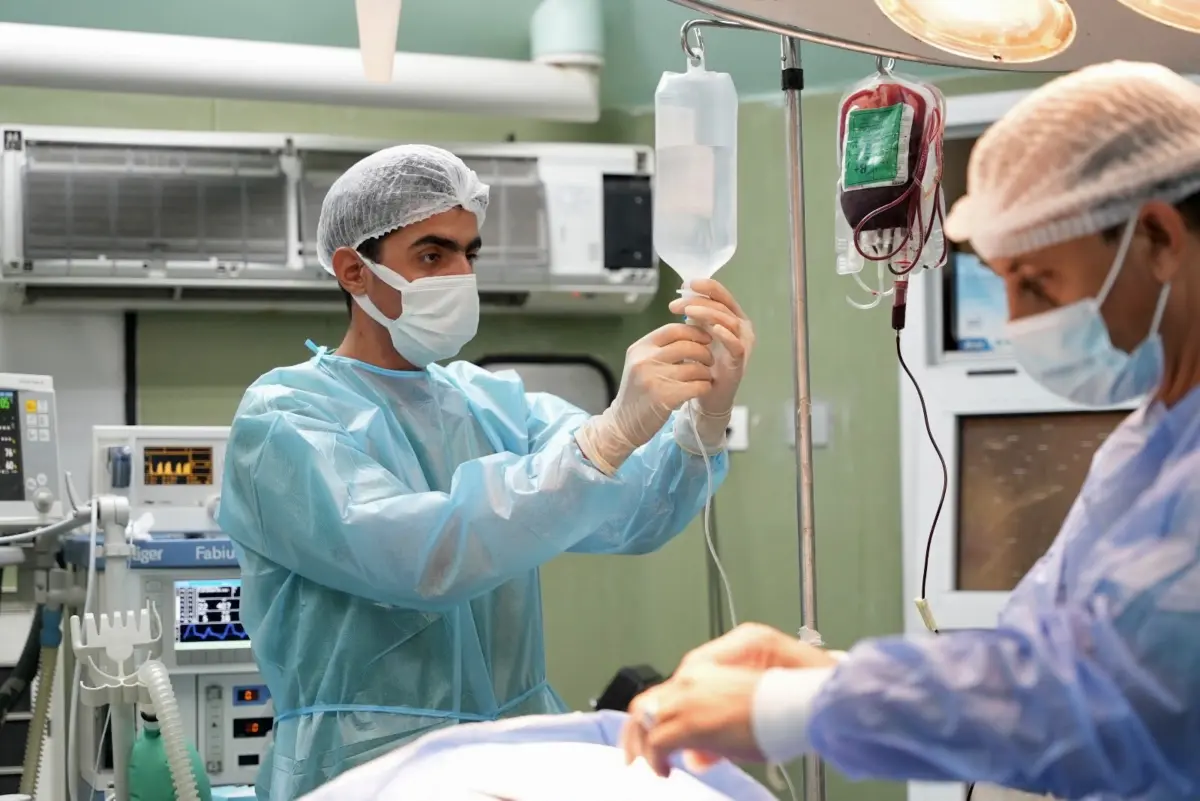
In the sterile, high-pressure environment of the Al-Aqsa Martyrs Hospital in Deir el-Balah, the boundary between professional duty and personal tragedy has become increasingly indistinguishable. For Manar Fayyad, a 29-year-old anaesthesiologist, the technical demands of his role were eclipsed by a singular, life-altering moment of recognition that has effectively ended his medical career. Since the escalation of the conflict in Gaza in October 2023, the healthcare sector has not only faced a physical dismantling of its infrastructure but a profound psychological erosion of its human capital. Fayyad’s experience is emblematic of a broader, systemic crisis where those tasked with saving lives find themselves confronted by the corpses of their own kin.
The turning point for Fayyad occurred on December 27, 2023, a day that remains etched in his memory with clinical precision. Summoned to the operating room to administer anaesthesia to a critically injured patient following an Israeli air strike, Fayyad arrived to find the man had already succumbed to his wounds. It was only upon closer inspection of the deceased’s clothing and the subsequent uncovering of his face that Fayyad realized the patient was his 34-year-old brother, Shadi. The shock of this encounter has left Fayyad with severe psychological and neurological trauma, rendering him unable to return to the medical field. He now spends his days in self-imposed isolation, seeking a tenuous solace in writing by the sea, haunted by the memory of the operating table and the desire to leave Gaza behind to escape the ubiquitous reminders of his loss.
A Chronology of Loss and the Burden of Duty
The psychological attrition of Gaza’s medical staff began in the earliest days of the conflict. On October 18, 2023, Khaled Raafat, a 29-year-old emergency department nurse at Al-Aqsa Martyrs Hospital, was on shift when he learned that an air strike had struck his family home. The attack claimed the lives of his wife, his children, his mother, and several of his siblings. Raafat, who was actively attempting to save the lives of other casualties arriving at the hospital, found himself suddenly transitioned from a provider of care to a victim of the very violence he was treating.
Raafat’s journey highlights the varying trajectories of trauma among healthcare workers. While Fayyad found the psychological weight of his experience insurmountable, Raafat eventually chose to return to the front lines after a period of intense mourning. "I realized that life could not stop at the tragedy," Raafat noted, describing a painful process of rebuilding that included remarriage and a return to his humanitarian duties. However, he acknowledges that the hospital, once a site of professional pride, is now permanently linked to the memory of his family’s demise.
The timeline of the health system’s struggle is marked by these individual tragedies, set against a backdrop of continuous bombardment. By December 2023, the intensity of the arrivals at hospitals like Al-Aqsa and Nasser Medical Complex had reached levels that international observers described as unsustainable. The sheer volume of trauma cases, combined with the personal bereavements of the staff, created a "secondary trauma" environment where medical personnel were constantly re-exposed to the sources of their own grief.

Statistical Realities: A System Under Absolute Strain
The human cost to Gaza’s healthcare sector is quantifiable through grim statistics provided by Gaza’s Government Media Office and independent research. At least 1,700 medical personnel have been killed in attacks since the war began, and approximately 83 remain in Israeli detention. These losses represent a significant percentage of the total medical workforce, creating a vacuum of expertise that cannot be easily filled during an active conflict.
Beyond the fatalities and detentions, the psychological landscape is even more devastating. A report published in the Public Library of Science (PLOS) Global Public Health journal provides a window into the mental health of those remaining. The study found that:
- 41 percent of healthcare workers reported losing immediate family members.
- 46 percent experienced the dual trauma of personal bereavement and forced displacement from their homes or workplaces.
- 78 percent of these workers lack any access to formal mental health services.
This data suggests that the vast majority of Gaza’s medical staff are working while suffering from various stages of Post-Traumatic Stress Disorder (PTSD), depression, and chronic anxiety. The "brain drain" mentioned by health officials is not merely a physical relocation of doctors but a functional loss where trauma prevents highly trained professionals from performing their duties.
The Geography of Grief Within Hospital Walls
For many, the physical location of their work serves as a constant trigger. Hiba al-Tawil, a 39-year-old nurse at the Nasser Medical Complex in Khan Younis, experienced the death of her brother within the very Intensive Care Unit (ICU) where she was stationed. The intimacy of the ICU—a place where she had fought for the lives of hundreds—became a site of personal horror. "Being in the intensive care unit afterwards reminded me of what had happened and made it harder to cope with the loss," she explained.
Al-Tawil’s case demonstrates the necessity of administrative flexibility as a form of psychological first aid. She eventually requested a transfer to a different department, a move that allowed her to maintain her professional contributions while distancing herself from the specific room where her brother died. This "geography of grief" is a common phenomenon in Gaza’s hospitals, where every corridor and ward can become a repository for traumatic memories.
Official Responses and the Challenge of Retention
Munir al-Bursh, the Director General of Gaza’s Ministry of Health, has been vocal about the precarious state of the medical workforce. He emphasizes that the survival of the healthcare system depends as much on the mental health of the staff as it does on the availability of medicine and fuel. "They are caught between their professional duty to save lives and the pain of losing the people closest to them," al-Bursh told Al Jazeera. "They find themselves treating others’ wounds while struggling to heal their own."

The Ministry of Health faces a logistical paradox: the staff needs rest and psychological intervention to recover, but the constant influx of new casualties makes it impossible to grant leave. The shortage of personnel is compounded by the fact that many remaining doctors are working double or triple shifts for months on end. Protecting medical personnel, according to al-Bursh, must involve safeguarding their mental wellbeing and providing "time to rest and recover," a luxury that the current intensity of the conflict does not afford.
Clinical Interventions and the Path to Recovery
At the Nasser Medical Complex, a small psychological clinic attempts to address the needs of traumatized staff. Reham Abu Rokba, a psychologist at the facility, works with doctors and nurses who are displaying symptoms of severe psychological disorders. The treatment protocols typically involve cognitive behavioral therapy (CBT), aimed at helping individuals understand and manage their physiological and emotional responses to trauma.
Abu Rokba explains that a standard treatment plan for PTSD involves approximately 12 individual sessions, sometimes supplemented by medication when symptoms like insomnia or severe panic attacks interfere with daily functioning. However, the efficacy of such treatment is challenged by the lack of a "post-trauma" environment. In traditional clinical settings, PTSD is treated after the traumatic event has concluded. In Gaza, the trauma is ongoing, meaning that a doctor may attend a therapy session only to return to an emergency room filled with the sights and sounds that caused the trauma in the first place.
Broader Implications: The Long-Term Erosion of Public Health
The psychological collapse of the medical workforce has implications that will resonate for decades. The loss of human resources—through death, detention, or psychological incapacitation—represents a diminished capacity that affects everything from emergency surgery to neonatal care and chronic disease management.
Furthermore, the "brain drain" of medical professionals seeking to leave the territory out of a desperate need for peace, as in the case of Manar Fayyad, threatens to leave Gaza with a permanent shortage of specialists. The international community and humanitarian organizations have noted that the targeting of healthcare infrastructure and the resulting pressure on staff constitute a violation of international humanitarian law, specifically the Geneva Conventions which mandate the protection of medical personnel.
As the conflict continues, the battle for the mental health of Gaza’s healers remains a silent but critical front. The stories of Fayyad, Raafat, and al-Tawil illustrate a healthcare system that is being kept alive by individuals who are themselves broken. Without systemic support and a cessation of the conditions causing this trauma, the healers of Gaza may find that the wounds they carry are the ones that finally bring the system to a total, irreversible halt.
