

Across the road from the Toronto Zoo, tucked away in a low-profile industrial building that remains largely invisible to the thousands of tourists visiting the nearby wildlife exhibits, a sophisticated biological process is unfolding. Here, elephant dung and unsold grocery store produce are not merely waste products destined for a landfill; they are the raw materials for a renewable energy revolution. This facility, operated by the ZooShare Biogas Co-operative, represents a pioneer attempt to localize energy production, yet its journey also highlights the complex financial and operational hurdles facing community-led green infrastructure in Canada.
The facility exists because the Toronto Zoo, which leases the land to ZooShare, sought a sustainable solution for the massive volume of animal and food waste generated by its operations. When the co-operative was formed in 2011, the founders faced a common obstacle: they lacked the tens of millions of dollars required to construct a modern biogas plant, and traditional financial institutions were hesitant to back a novel, small-scale project. To bridge this gap, ZooShare turned to a "community bond" model, effectively bypassing big banks to borrow directly from the public.
The Rise of Community Financing
Beginning in 2013, ZooShare launched its first round of community bonds. These debt instruments function similarly to conventional bonds, allowing residents to lend money to a local project in exchange for a promised return of principal plus interest over a fixed term. For many of the 300 initial investors who contributed to the first $2.2-million raise, the motivation was as much ethical as it was financial.
According to Rob Grand, ZooShare’s general manager, the cooperative’s membership—which has grown to approximately 800 individuals—prioritizes value-driven investment. This sentiment is echoed by the fact that membership costs a mere $10, and subsequent bond offerings have consistently sold out, eventually bringing the total bond financing to over $4 million. However, the idealism of community-led energy has recently met the harsh realities of industrial operations.
Despite the initial enthusiasm and the successful commissioning of the plant in April 2021, ZooShare has encountered significant financial headwinds. Recent disclosures indicate that the facility’s quarterly revenues are currently barely sufficient to cover its immediate operating expenses. This has left the co-operative with no surplus cash to distribute to its investors. In a pivotal 2023 member vote, the co-operative decided to alter its repayment structure: bondholders will now only be repaid when funds are available. This development serves as a sobering reminder that while community bonds democratize investment, they also carry the inherent risks of any early-stage infrastructure project.
The Environmental Mandate: Tackling Methane
The significance of projects like ZooShare extends far beyond its balance sheet. Canada has committed to an ambitious climate target of reducing greenhouse gas emissions by 40% to 45% below 2005 levels by 2030. A critical component of this strategy involves mitigating methane emissions from organic waste.
Municipal landfills are currently responsible for approximately 23% of Canada’s methane emissions. Methane is a particularly aggressive greenhouse gas, possessing a warming potential roughly 86 times greater than carbon dioxide over a 20-year period. While the federal government aims to cut landfill methane by 50% by 2030, experts agree that capturing gas at existing large-scale dumps will not be enough to reach this goal.
This is where anaerobic digesters, such as the one operated by ZooShare, become vital. By processing organic matter in a controlled environment, these facilities prevent the uncontrolled release of methane into the atmosphere. The ZooShare plant currently converts 15,000 tonnes of food waste and zoo manure annually into biogas. This gas is then burned to generate electricity, producing enough power to support the equivalent of 250 average Toronto households. Furthermore, the process yields a high-quality fertilizer, certified by the Canadian Food Inspection Agency, which is distributed to farmers in the Rouge Valley, creating a closed-loop circular economy.
A Chronology of Community Energy in Canada
The trajectory of ZooShare is part of a broader, national movement toward decentralized energy systems. While ZooShare utilized retail bonds, other communities across Canada have employed different models of ownership and financing:
- 2011: ZooShare Biogas Co-Operative is founded with a mission to turn zoo waste into power.
- 2013: The first round of community bonds is issued, raising $2.2 million from local investors.
- 2019: In northwestern Ontario, the Kiashke Zaaging Anishinaabek (Gull Bay First Nation) launched a solar-and-battery microgrid in partnership with Ontario Power Generation. This project, owned entirely by the community, was designed to offset 130,000 litres of diesel fuel annually.
- 2021: The ZooShare plant officially comes online after a decade of planning and two years of construction.
- 2023: ZooShare members vote to restructure bond repayments due to revenue shortfalls, highlighting the financial volatility of independent power projects.
- 2026 (June): The federal government commits $21.6 million to the Sayisi Dene First Nation in Manitoba to build an integrated renewable microgrid, aimed at reducing carbon dioxide emissions by 500 tonnes per year.
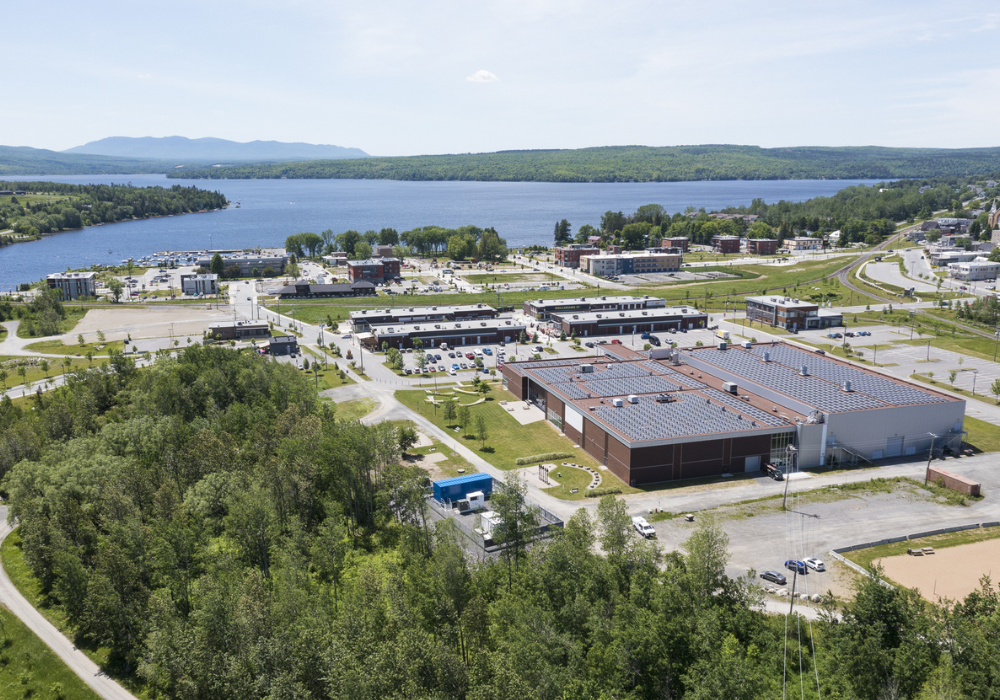
These milestones illustrate a shift from centralized, utility-owned grids toward a patchwork of "islands" of energy production. In Quebec, the town of Lac-Mégantic has become a global case study for this model. Following the 2013 rail disaster, the town’s rebuilt core now operates on a Hydro-Québec microgrid capable of "islanding"—disconnecting from the main provincial grid to run independently on solar and battery power during outages or peak demand.
The "Capital Stack" and the Information Gap
Despite the clear environmental and social benefits, the scaling of community energy projects in Canada remains slow. Basma Majerbi, an associate professor of finance at the University of Victoria and lead researcher for the Accelerating Community Energy Transformation initiative, argues that the primary barrier is not a lack of money, but a lack of specialized knowledge.
Majerbi’s research suggests that many community groups default to seeking government grants and stop their search once those funds are exhausted. However, successful projects rarely rely on a single source of income. Instead, they utilize a "capital stack"—a strategic layering of grants, low-interest loans, community bonds, co-op equity, and private partnerships.
To address this information deficit, Majerbi launched the Community Energy Finance Navigator in May 2026. This pilot database tracks 86 projects across Canada, detailing how they were financed and structured. The goal is to provide a roadmap for new groups, helping them move from "accidental" financing to strategic financial planning. Majerbi emphasizes that financing should not be an afterthought but a foundational element of the project’s design.
Ownership vs. Participation: A Critical Distinction
As the sector grows, scholars are also scrutinizing the definition of "community" energy. Julie MacArthur, Canada Research Chair in Reimagining Capitalism at Royal Roads University, points out a significant trend: most successful, majority-owned community microgrids in Canada are Indigenous-led rather than co-operative-led.
MacArthur cautions that there is a profound difference between a project located in a community and a project owned and governed by that community. Many large-scale renewable projects are backed by private developers who offer "benefits agreements" to local residents. While these agreements provide revenue, they do not grant the community a vote in the project’s management or a share in the long-term equity. The ZooShare model, despite its current financial struggles, remains a rare example of true democratic ownership, where 800 members each hold a vote and elect the board of directors.
Implications for the Future of Energy Equity
The ZooShare experiment provides a vital case study for the future of energy equity and democratic infrastructure. By transforming a "commodity" (energy) into a community-led service, these projects challenge the traditional utility model. However, the 2023 repayment restructuring at ZooShare underscores the need for more robust support systems for small-scale producers.
For community energy to move from the fringes of the industrial landscape to a central pillar of Canada’s climate strategy, experts suggest several key shifts:
- Standardized Financial Tools: Developing more robust insurance or loan guarantees to protect community bondholders.
- Strategic Blended Finance: Encouraging community groups to move beyond a "grant-only" mindset and embrace complex capital stacks.
- Regulatory Reform: Simplifying the process for small-scale producers to sell power back to provincial grids at fair market rates.
As the ZooShare facility continues to process the waste of the Toronto Zoo, it serves as both a beacon of sustainability and a cautionary tale of the financial complexities inherent in the green transition. The "emotional investment" of the co-op’s members has kept the project alive through a decade of hurdles, proving that while the financial returns may be delayed, the community’s appetite for a cleaner, more democratic energy future remains undiminished.
