

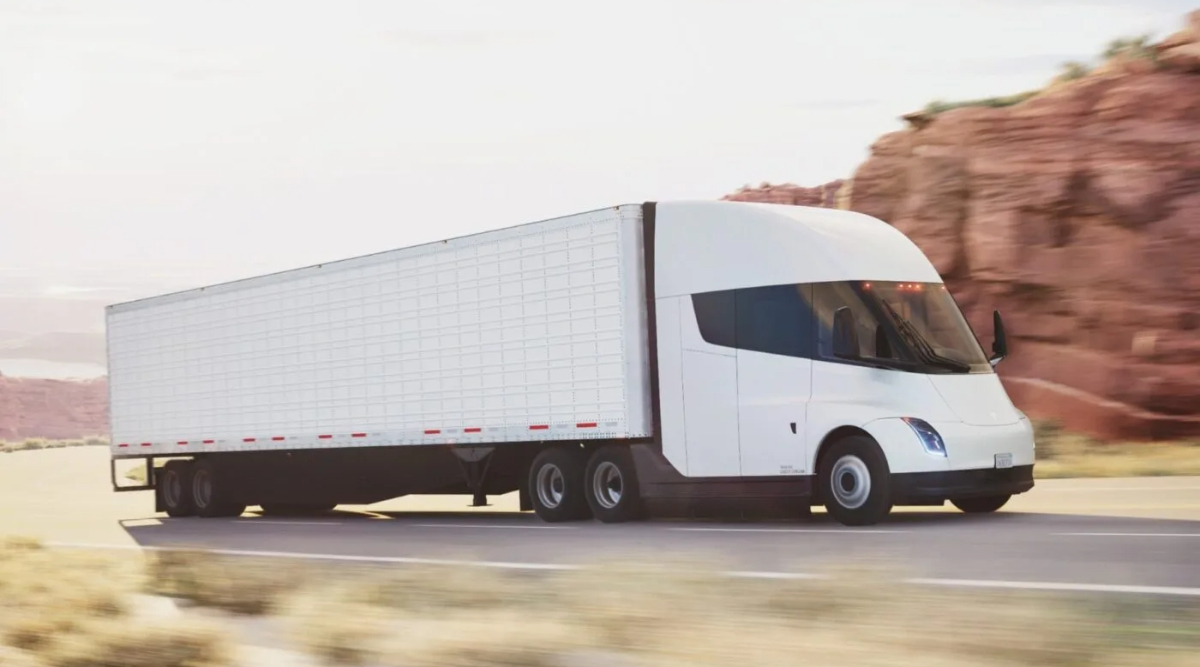
The transition toward zero-emission freight transport faced another significant challenge on Tuesday night when a Tesla Semi caught fire on Interstate 880 in Hayward, California, resulting in a nearly 10-hour highway closure. The incident, which occurred during the evening commute, marks the second time in less than three months that a single electric heavy-duty truck has caused a major logistical paralysis on a California interstate. While the driver escaped the vehicle without injury, the event has reignited intense debate regarding the engineering of high-capacity battery packs, the preparedness of emergency responders for lithium-ion fires, and the cultural differences between Silicon Valley tech giants and traditional commercial vehicle manufacturers.
Incident Chronology and Emergency Response
The incident began on Tuesday evening as the Tesla Semi was traveling southbound on I-880 through the East Bay area. Near the interchange with Highway 92, the driver reportedly noticed an anomaly with the vehicle, successfully maneuvered the tractor to the shoulder, and evacuated before the fire intensified. Local reports indicate that there was no preceding collision or external impact; the fire appeared to originate within the vehicle’s battery system.
As the lithium-ion battery pack entered a state of thermal runaway, the California Highway Patrol (CHP) took the drastic step of shutting down the freeway in both directions. The decision was prompted by the release of thick, toxic smoke, a characteristic byproduct of burning lithium-ion cells, which contain hazardous chemicals including hydrogen fluoride and carbon monoxide. While the northbound lanes were eventually reopened, the southbound lanes remained a "dead zone" for nearly ten hours.
Firefighting crews from the Hayward area were forced into a defensive posture. Unlike traditional vehicle fires, which can often be extinguished with several hundred gallons of water and foam, the massive energy density of the Tesla Semi—estimated to house a battery pack between 800 and 900 kilowatt-hours (kWh)—presents a self-sustaining chemical reaction. By the time the blaze was fully managed and the pack had "burned itself out," the tractor was reduced to its rear axles and a skeletal frame amidst a pile of ash.
A Growing Pattern of Disruption
This Hayward fire follows a remarkably similar incident that occurred in August 2024. In that event, a Tesla-operated Semi drifted off Interstate 80 near Emigrant Gap, struck a tree, and ignited. The resulting fire required an extraordinary response from Cal Fire, including air drops of fire retardant and the application of 50,000 gallons of water to cool the battery cells. That incident resulted in a 15-hour closure of a vital arterial route connecting California and Nevada.
The recurrence of these high-profile shutdowns highlights a statistical anomaly. While the "anti-EV" movement often portrays electric vehicles as inherently more prone to fire, data from the National Fire Protection Association (NFPA) suggests otherwise. In the United States, fire departments respond to approximately 15,000 large truck fires annually—roughly 40 incidents per day. Most of these involve diesel rigs suffering from blown turbochargers, seized wheel bearings, or overheated braking systems.
However, the critical difference lies in the "time-to-clear" metric. A diesel fire can typically be suppressed within an hour, allowing towing crews to remove the wreckage and restore traffic flow. In contrast, the two Tesla Semi fires in California have resulted in a combined 25 hours of interstate closures, highlighting a significant gap in the efficiency of current emergency protocols for heavy-duty electric vehicle (EV) incidents.
The Science of Thermal Runaway in Class 8 Vehicles
To understand why these fires are so disruptive, one must examine the chemistry of the batteries. Modern electric trucks utilize high-nickel lithium-ion chemistries to achieve the energy density required to haul 80,000-pound loads over long distances. When a cell is compromised—whether through a manufacturing defect, mechanical stress, or an internal short—it can enter thermal runaway. This is a chain reaction where the heat from one cell ignites adjacent cells.
Crucially, lithium-ion fires are self-oxidizing; the breakdown of the cathode material releases oxygen, meaning the fire can continue to burn even without atmospheric air. This renders traditional fire-smothering foams largely ineffective. Firefighters are left with two primary options: apply massive, continuous volumes of water to lower the temperature of the surrounding cells, or allow the vehicle to undergo a controlled burn. In the Hayward incident, the prolonged closure suggests that the intensity of the chemical reaction required the latter, effectively turning the highway into a hazardous materials site for the duration of the night.
Silicon Valley Engineering vs. Heavy-Duty Durability
The Tesla Semi represents a "clean sheet" approach to trucking, prioritizing aerodynamic efficiency and maximum range. To achieve its touted 500-mile range, Tesla employs a structural battery pack. This monolithic design integrates the battery cells into the very chassis of the truck to save weight and increase rigidity. While this is an engineering triumph for passenger cars, the commercial trucking environment is significantly more hostile.
A Class 8 truck is subject to extreme torsional stress as it navigates uneven loading docks and endures constant low-frequency vibrations over hundreds of thousands of miles. Industry analysts suggest that the "move fast and break things" philosophy of Silicon Valley may be clashing with the mechanical realities of heavy-duty hauling. If a single coolant line fails or a busbar flexes beyond its tolerance due to road vibration, the resulting short circuit in a monolithic pack can be catastrophic.
In contrast, traditional manufacturers like Volvo Trucks and Daimler Truck (Freightliner) have adopted a modular approach. The Volvo VNR Electric and the Freightliner eCascadia utilize smaller, separate battery enclosures mounted to the exterior of the frame rails. While this design is less aerodynamically efficient and heavier, it provides physical isolation. If one battery module fails, the risk of the fire spreading to the entire energy storage system is reduced, and the individual components are easier to service or replace.
Regulatory Oversight and Preventative Systems
The Hayward fire also brings the role of institutional safety systems into focus. In 2023, Volvo and Mack Trucks issued a voluntary recall through the National Highway Traffic Safety Administration (NHTSA) for several hundred electric trucks. The recall was triggered by a manufacturing defect in the battery packs provided by a third-party supplier, Romeo Power. The issues included coolant leaks and loose internal fasteners that posed a fire risk.

The key distinction is that these defects were identified through internal monitoring and minor incidents in controlled environments before they could lead to a massive highway shutdown. Legacy manufacturers rely on a century of "scar tissue"—institutional knowledge gained from decades of recalls and safety failures. This culture favors "stop-ship" orders and physical inspections over the over-the-air (OTA) software patches often favored by Tesla.
While Tesla has revolutionized the industry by proving that long-haul electric trucking is viable, the Hayward incident suggests that the company may still be navigating the steep learning curve of commercial vehicle durability. The active Tesla Semi fleet is currently estimated to be between 150 and 300 units, mostly operated by Tesla itself or pilot partners like PepsiCo. With two major fire-related highway closures in such a small sample size, regulators and industry stakeholders are likely to increase scrutiny on the Semi’s battery management systems and physical housing.
Economic and Logistical Implications
The impact of a 10-hour closure on a major corridor like I-880 extends far beyond the destroyed vehicle. The East Bay is a critical artery for the movement of goods from the Port of Oakland to the rest of California. When an interstate is shut down for half a day, the ripple effects include delayed shipments, increased fuel consumption for idling or detouring vehicles, and lost productivity for thousands of commuters.
For the trucking industry to fully embrace electrification, the "reliability" of the vehicle must include its behavior during a failure. Fleet operators are sensitive not only to the purchase price and operating costs but also to the liability associated with catastrophic failures. If electric trucks are perceived as "rolling time bombs" that can paralyze a region’s infrastructure for a day, insurance premiums and regulatory hurdles could slow the pace of adoption.
Conclusion: Bridging the Expertise Gap
The Hayward Tesla Semi fire serves as a stark reminder that the electrification of the heavy-duty transport sector is as much a mechanical challenge as it is a chemical or digital one. Tesla’s entry into the market has undoubtedly accelerated the development of high-speed charging infrastructure and long-range powertrains, forcing legacy players to innovate faster than they otherwise would have.
However, the "legacy" approach to safety—characterized by modularity, redundancy, and a cautious response to mechanical anomalies—remains vital. The future of the industry likely lies in a synthesis of these two worlds: the high-energy innovation of Silicon Valley tempered by the rugged, safety-first engineering of the traditional trucking world. Until then, as both startups and established manufacturers refine their designs, emergency responders and commuters alike may continue to face the challenges posed by the growing pains of the electric freight revolution.
