

As global institutional investors and sovereign wealth funds congregate in Toronto for the Canada Investment Summit, a high-profile event spearheaded by Mark Carney, the federal government’s investment prospectus has placed a massive infrastructure project at the center of the national stage. The Kino Aski LNG project, carrying an estimated price tag of US$23 billion (approximately CAD$31 billion), represents one of the most significant energy export proposals in North American history. The project aims to transport natural gas from the Western Canadian Sedimentary Basin across a 1,000-kilometre pipeline through Ontario to Baie-Comeau, Quebec. There, three floating liquefaction facilities would process the gas into 15 million tonnes of liquefied natural gas (LNG) annually for shipment to international markets.
While the federal prospectus markets the project as a premier opportunity for sustainable energy development, a deeper analysis of the project’s regulatory, environmental, and social landscape reveals a complex web of unresolved challenges. The proposal rests on two primary pillars: its majority Indigenous ownership and its promise of ultra-low-emission production. However, energy analysts, environmental scientists, and legal experts warn that these selling points may mask significant financial and permitting risks that could hinder the project’s ultimate bankability.
The Evolution of the Project: From GNL Québec to Kino Aski
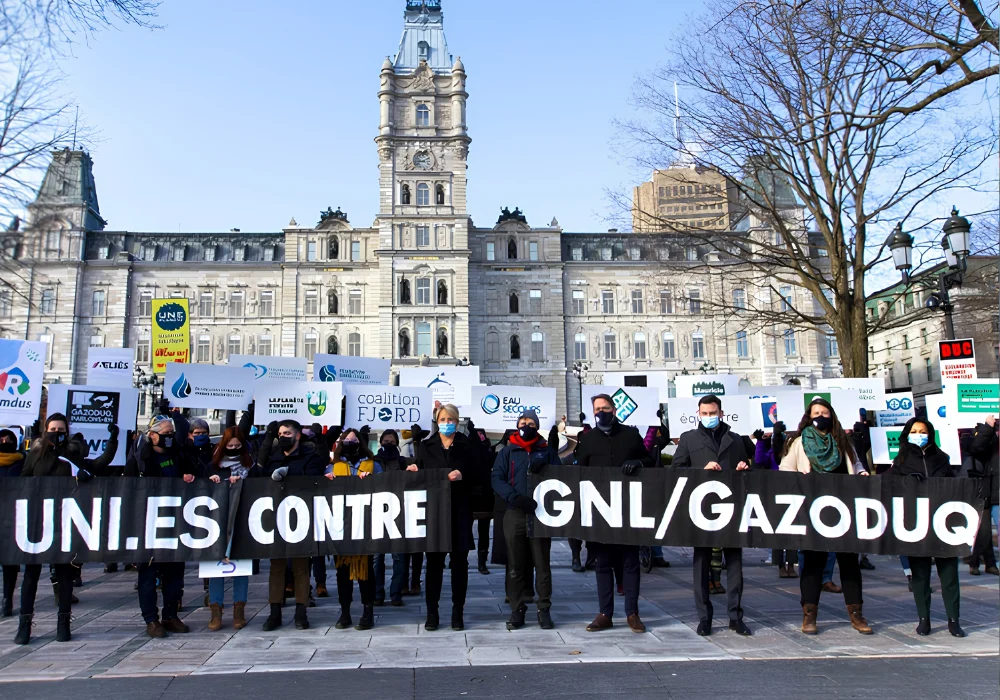
To understand the current status of Kino Aski, one must examine the history of its predecessor. The project is largely viewed as a revival of the GNL Québec–Énergie Saguenay proposal, which faced a decade of intense scrutiny before being formally rejected by both provincial and federal authorities between 2021 and 2022. The previous iteration failed primarily because the proponents could not demonstrate a net benefit to the environment or secure sufficient social acceptability within Quebec.
The rejection of GNL Québec was a landmark moment in Canadian energy policy. Provincial regulators at the Bureau d’audiences publiques sur l’environnement (BAPE) concluded that the project would likely increase global greenhouse gas emissions rather than reduce them. Federal Environment Minister Steven Guilbeault echoed these concerns in early 2022, citing the project’s potential to cause significant adverse environmental effects that could not be adequately mitigated.
The transition to Kino Aski Inc. represents an attempt to address these past failures through a new ownership structure and a revamped energy procurement strategy. Under the leadership of the Atikamekw Nation Council, Kino Aski Inc. holds a 50.1% stake in the project. The remaining equity is held by Marinvest, a Norwegian-led investment group, alongside other undisclosed partners. By placing Indigenous leadership at the forefront, the proponents aim to align the project with Canada’s commitment to the United Nations Declaration on the Rights of Indigenous Peoples (UNDRIP) and the principles of economic reconciliation.
Indigenous Ownership vs. Territorial Consent
The federal prospectus emphasizes the 50.1% Indigenous ownership as a safeguard against the social and legal hurdles that typically derail major Canadian infrastructure. However, legal experts point out a critical distinction in Canadian law: ownership by one Indigenous nation does not equate to the consent of all affected nations.
The proposed 1,000-kilometre pipeline corridor would traverse the ancestral territories of numerous First Nations across Ontario and Quebec. Under Section 35 of the Constitution Act, 1982, the Crown has a fiduciary duty to consult and, where appropriate, accommodate any Indigenous group whose rights may be impacted by a project. This includes nations who are not shareholders in Kino Aski Inc.
The "Ownership is not Consent" argument is a recurring theme in Canadian resource development. Similar challenges were seen with the Coastal GasLink pipeline in British Columbia and the Trans Mountain Expansion project, where internal disagreements between elected band councils and hereditary chiefs led to prolonged legal battles and physical blockades. For Kino Aski, the risk remains that nations along the pipeline route—who may have different environmental priorities or territorial claims—could exercise their right to say "no," regardless of the Atikamekw Nation’s majority stake.
The Emissions Debate: Low-Carbon Claims Under Scrutiny
The second major selling point of Kino Aski is its "ultra-low-emission" profile. The project plans to utilize 1,700 megawatts (MW) of dedicated wind capacity, supplemented by 550 MW of firm power from the Hydro-Québec grid, to drive its liquefaction processes. By using electricity instead of gas-fired turbines to compress and cool the gas, the project aims to significantly reduce its Scope 1 and Scope 2 emissions.
However, the scientific community remains skeptical. In August 2026, a group of 30 prominent academics published an open letter warning that the project remains incompatible with global climate targets. The primary concern lies in the life-cycle emissions of the gas. Even if the liquefaction plant in Baie-Comeau is electrified, the methane leakage during extraction in Western Canada and the emissions generated when the gas is eventually burned by consumers abroad (Scope 3 emissions) remain substantial.
Data from the original GNL Québec proposal estimated that the project’s full life-cycle emissions could range from 50 to 83 megatons of CO2 equivalent annually. Kino Aski has yet to release a detailed technical breakdown demonstrating how its design would deviate from these figures. Furthermore, the composition of the "feed-gas" arriving from the west is a critical variable. If the gas contains high levels of carbon dioxide that must be removed before liquefaction, and if that CO2 is vented into the atmosphere rather than captured and stored, the "green" credentials of the facility would be severely compromised.
Infrastructure Constraints and the Hydro-Québec Factor
The project’s reliance on Quebec’s electricity grid introduces another layer of risk. Quebec is currently undergoing a massive energy transition, with the provincial utility, Hydro-Québec, warning that the era of massive energy surpluses has ended. The utility is currently prioritizing the electrification of transportation and the decarbonization of existing heavy industries.
Allocating 550 MW of firm power—equivalent to the consumption of a medium-sized city—to a new LNG export facility would require significant political and technical maneuvering. It would also place the project in direct competition with other "green" industrial projects, such as battery gigafactories and green hydrogen plants, which the Quebec government has identified as strategic priorities.
The 1,700 MW wind power proposal also faces logistical hurdles. Constructing and integrating such a massive amount of intermittent renewable energy into the grid requires substantial investment in transmission infrastructure and energy storage, costs that may not yet be fully accounted for in the US$23 billion estimate.
Political Climate and Regulatory Uncertainty
The timing of the Kino Aski pitch coincides with a period of political flux in Quebec. As the province approaches an election cycle, the project has become a lightning rod for debate over Quebec’s economic future and its role in the global energy market. The provincial government has not yet authorized the project, and the "pre-application" status listed in the federal prospectus indicates that Kino Aski has not even entered the formal environmental assessment phase.
For investors, this creates a significant "regulatory risk." In Canada, the Impact Assessment Act (formerly Bill C-69) provides a rigorous framework for evaluating major projects. Given the history of the site and the previous rejection of GNL Québec, the bar for approval will be exceptionally high. Investors are essentially being asked to provide early-stage development financing for a project that lacks a clear path to a "Final Investment Decision" (FID).
Global Market Context and Financial Viability
Beyond the domestic challenges, Kino Aski must compete in a rapidly evolving global LNG market. While the invasion of Ukraine in 2022 spurred a temporary surge in demand for non-Russian gas, several major LNG projects in the United States and Qatar are slated to come online in the late 2020s. Analysts warn of a potential global supply glut by the time Kino Aski would reach completion in the early 2030s.
Canadian LNG projects also face unique geographic and economic disadvantages. The cost of building a 1,000-kilometre pipeline across two provinces is astronomical, especially given the rising costs of labor and materials. If the project experiences delays—a common occurrence in Canadian energy infrastructure—the interest on the US$23 billion debt could quickly erode the project’s profitability.
Conclusion: The Need for Independent Due Diligence
The inclusion of Kino Aski in the federal investment prospectus provides the project with a veneer of official credibility, but it does not constitute an endorsement or a guarantee of success. As Mark Carney and other leaders at the Canada Investment Summit look toward "bankable" transition projects, Kino Aski stands as a test case for the complexities of modern energy development.
The project’s success hinges on more than just capital; it requires a alignment of Indigenous consent across multiple nations, a verifiable solution to life-cycle emissions, and a guaranteed supply of clean electricity in a constrained market. Without these elements, the US$23 billion proposal remains a high-stakes gamble. For the global investors gathered in Toronto, the task will be to look past the "pre-application" promises and conduct the rigorous due diligence required to determine if Kino Aski is a visionary step toward reconciliation and energy security, or a repeat of the regulatory failures of the past.
