

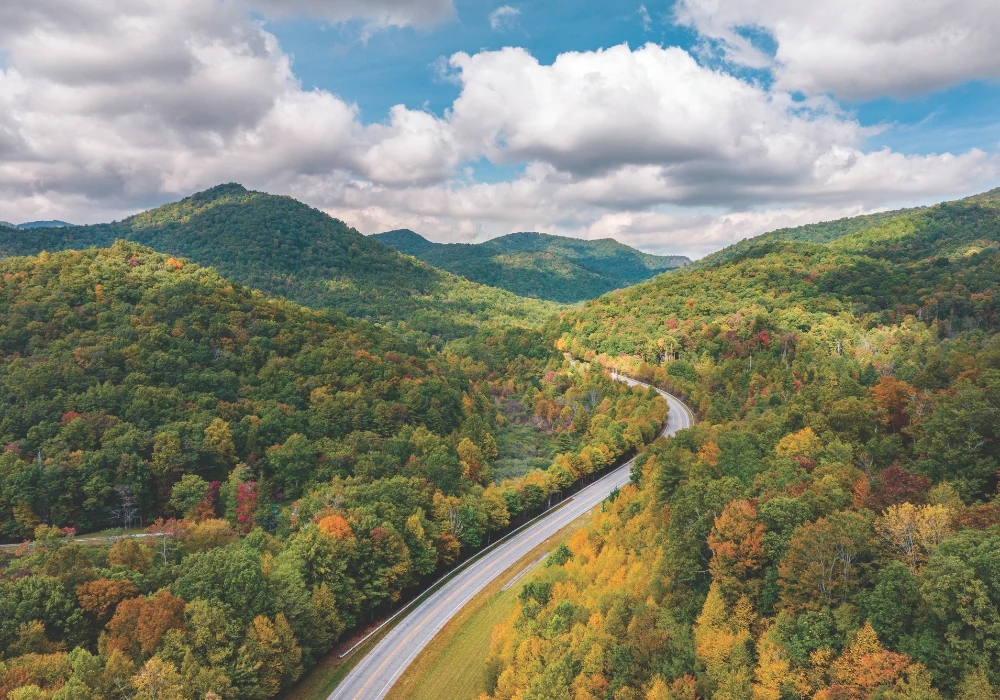
As the global climate undergoes a rapid transformation, the biological world is reacting in ways that were once thought to occur only over millennia. Among the most significant yet subtle of these changes is the phenomenon known as "range migration," a process where entire tree species are shifting their geographical footprints in a desperate bid to remain within their optimal survival envelopes. Unlike the nomadic migrations of animals or the seasonal travels of humans, the movement of forests is a slow-motion odyssey dictated by the dispersal of seeds and the changing chemistry of the soil and atmosphere. However, recent data suggests that the pace of this migration is accelerating, driven by a combination of rising temperatures, shifting moisture patterns, and direct human interference.
For decades, the scientific community has viewed the movement of trees as a testament to the resilience of the natural world. Historically, as glaciers retreated or advanced, forests followed the changing climate, reclaiming land or yielding to the ice. Today, however, the catalyst is not a natural geological cycle but the anthropogenic warming of the planet. Trees are moving north toward cooler latitudes and upward to higher elevations. This is not the dramatic march of the Ents from J.R.R. Tolkien’s Middle-earth, but a generational struggle played out through wind-blown seeds, animal-carried nuts, and water-borne saplings. Yet, despite this inherent resilience, a growing body of evidence suggests that the natural speed of trees is no match for the current rate of environmental change.
The Dynamics of Treeline Shifts: A Two-Decade Analysis
A landmark study recently published in the International Journal of Applied Earth Observation and Geoinformation provides a comprehensive look at how these shifts have manifested in the 21st century. Utilizing satellite imagery and remote sensing data from 2000 to 2020, researchers tracked the movement of treelines across diverse global landscapes. The findings paint a complex picture of adaptation and struggle. According to the study, approximately 42% of the treelines monitored shifted "upslope," moving to higher altitudes where temperatures are lower. Conversely, 25% of treelines were observed shifting "downslope."
This downward movement, while seemingly counterintuitive in a warming world, is often attributed to changes in moisture availability. In many regions, while temperatures are rising, precipitation patterns are also shifting. If higher elevations become too arid, species may be forced downward into valleys where water is more abundant, even if the temperatures there are higher than their historical preference. This "moisture-tracking" behavior highlights the fact that temperature is only one variable in the complex equation of forest survival.
The study further emphasizes that these movements are not occurring in a vacuum. Anthropogenic disturbances, particularly the increasing frequency and intensity of wildfires, play a decisive role in the speed and direction of treeline shifts. Fire acts as a catalyst; by clearing existing old-growth canopies, it creates a vacuum that allows new species—those better suited to the warming climate—to take root. In the absence of such disturbances, the "biological inertia" of established forests can delay migration for decades, as mature trees continue to occupy space even when the climate is no longer ideal for their seedlings.
The Migration Lag and the Need for Speed
The fundamental challenge facing global forests is the "migration lag." While the climate is shifting at a rate of kilometers per decade, the natural dispersal of most tree species is limited to meters. Large-seeded trees, such as oaks or hickories, rely on squirrels and birds, which may only move seeds a short distance from the parent tree. Even wind-dispersed species like pines and maples are limited by the physical reach of their winged seeds.
Ecologists estimate that for many species to stay within their required climate niche, they would need to migrate at a rate ten times faster than they are currently capable of moving. This discrepancy has led to the emergence of "climate-mismatched" forests—stands of trees that are currently alive and healthy but are effectively "ecological ghosts," unable to reproduce successfully because the local conditions have become too warm or too dry for their saplings to survive.
Assisted Migration: Human Intervention in the Canadian Wilderness
As the gap between climate velocity and tree migration widens, the concept of "assisted migration" has moved from the fringes of ecological theory to the center of forestry policy. Assisted migration involves the intentional movement of species or genotypes to new locations that are predicted to be climatically suitable in the future.
In Canada, where the impacts of northern warming are particularly acute, this practice is already being integrated into provincial land management. The provinces of British Columbia and Alberta have been at the forefront of this movement. Traditionally, forestry regulations required that harvested areas be replanted with seeds sourced from the immediate local area to ensure genetic adaptation. However, recognizing that the "local" climate of today will not be the local climate of fifty years from now, these provinces have extended seed transfer zones. In many areas, seeds can now be moved 200 meters higher in elevation than previously allowed.
A specific example of this policy in action is the Western Larch (Larix occidentalis). Historically confined to the interior of British Columbia, the Western Larch is a prized species for both its ecological value and its high-quality timber. Under new provincial guidelines, the planting of Western Larch is now permitted in areas outside its historical range, moving it further north and west into regions where climate models suggest it will thrive in the coming decades.
The Risks and Ethical Dilemmas of Relocation
Despite the potential benefits, assisted migration remains a deeply controversial topic within the scientific community. Critics view it as another form of human "meddling" in complex ecosystems that we do not fully understand. There are several primary concerns associated with the practice:
- Invasive Potential: A species that is native to one region may become invasive when introduced to another. Without its natural pests and competitors, a relocated tree species could outcompete local flora, leading to a loss of biodiversity.
- Ecosystem Mismatch: Trees do not exist in isolation. They are part of a complex web involving soil fungi (mycorrhizae), specialized pollinators, and local herbivores. Moving a tree species without its associated ecological partners can lead to failure or unforeseen consequences.
- Genetic Dilution: There is a risk that introduced genotypes could hybridize with local populations, potentially diluting unique genetic traits that have developed over thousands of years.
- Soil and Photoperiod Issues: Even if the temperature is correct, a species moved significantly north will face different day-lengths (photoperiods) and potentially different soil chemistry, which can affect its growth cycles and frost hardiness.
Canada’s Ministry of Natural Resources addressed these complexities in a 2025 briefing note, stating, "The idea that humans can help fill the gap between the ability of species to migrate and the rate of change in climate conditions is increasingly being considered and debated as a possible management option." The ministry emphasized that while the risks are real, the risk of "doing nothing"—which could lead to massive forest die-offs and the collapse of timber economies—may be even greater.
Economic and Ecological Implications
The migration of trees is not merely a matter of botanical interest; it has profound implications for the global economy and the fight against climate change. Forests are the planet’s primary terrestrial carbon sinks. If forests cannot migrate quickly enough to adapt, we may see large-scale forest "diebacks," where vast tracts of trees succumb to heat stress, drought, or pests like the mountain pine beetle, which thrives in warmer winters.
When forests die, they stop sequestering carbon and instead begin releasing it back into the atmosphere through decay or fire, creating a dangerous feedback loop that accelerates global warming. Furthermore, the timber industry, which supports millions of jobs globally, relies on predictable growth cycles and species health. In Canada alone, the forestry sector contributes billions to the GDP; a failure to adapt the "standing crop" of the nation’s forests to a changing climate could have devastating long-term economic consequences.
Looking Ahead: A Managed Landscape
The 21st century is likely to be defined by a transition from "preservation" to "stewardship." The old model of conservation—protecting a landscape and keeping it exactly as it was—is becoming increasingly untenable in a world where the very climate that defines that landscape is in flux.
The movement of trees, whether natural or assisted, represents a fundamental restructuring of the Earth’s biosphere. As scientists continue to monitor the upslope and downslope shifts of treelines, the data will be used to refine climate models and forestry practices. The goal is no longer just to observe the migration of the woods, but to ensure that the forests of the future have the best possible chance of survival.
In the end, the "range migration" of trees is a stark reminder that the planet is a dynamic system. As humans continue to alter the atmospheric composition, the silent, slow-moving giants of our world are being forced to find new homes. Whether they find them in time, or whether they will require a human hand to guide them, remains one of the most pressing questions for the next century of environmental science.
