

The landscape of the modern office has undergone a radical transformation over the past decade, moving away from static cubicles toward dynamic, height-adjustable workstations. While the standing desk was once hailed as a panacea for the sedentary lifestyle associated with office work, recent longitudinal studies and expert analysis suggest a more nuanced reality. As the global standing desk market continues to expand—projected to reach a valuation of several billion dollars by the end of the decade—consumers and corporations alike are grappling with a complex intersection of health claims, technological advancements, and ergonomic requirements.
The Health Debate: Moving Beyond the Sitting is Killing You Narrative
For years, the prevailing health narrative suggested that sitting for prolonged periods was a primary driver of metabolic syndrome, obesity, and cardiovascular decline. However, new research published in the International Journal of Epidemiology indicates that the solution may not be as simple as merely standing up. The study, which utilized accelerometer data to track the movement of over 80,000 participants, found that while standing limits sedentary time, standing for excessive periods—exceeding two hours in a workday—can actually increase the risk of circulatory issues, such as varicose veins and deep vein thrombosis. Furthermore, the research did not find a significant reduction in the risk of cardiovascular disease solely through standing.

Anne-Kristina Arnold, a kinesiology expert and senior lecturer at Simon Fraser University, notes that the results of such epidemiological research illustrate the difficulty of providing a "one-size-fits-all" recommendation. Arnold argues that the efficacy of a standing workstation depends on a multitude of variables, including an individual’s body size, fitness level, footwear, and the specific nature of the tasks being performed. According to Arnold, the goal should not be to replace sitting with standing entirely, but rather to foster frequent movement. Current expert recommendations suggest a ratio of approximately 20 minutes of standing for every hour of work, with the remaining time spent sitting or moving. For those without adjustable desks, Arnold suggests a brief walk every 15 to 20 minutes to reset the circulatory system.
A Chronology of the Standing Desk Evolution
The history of the standing desk is surprisingly long, though its technological boom is a 21st-century phenomenon. In the 18th and 19th centuries, standing desks were the domain of the intellectual elite; figures such as Thomas Jefferson and Ernest Hemingway famously preferred standing while working. However, these were fixed-height pieces of furniture.
The transition to the modern "sit-to-stand" era began in the late 1990s and early 2000s as ergonomic awareness grew. By 2010, the "Silicon Valley" office aesthetic popularized the motorized desk, leading to a surge in demand. This was followed by a period of "smart" integration between 2018 and 2024, where desks began incorporating AI sensors, Bluetooth connectivity, and automated height adjustments to nudge users into healthier habits. Today, the market is bifurcated into high-end luxury models and budget-friendly, mass-produced options, each catering to the diverse needs of a global remote and hybrid workforce.

Technical Specifications: Electric Versus Manual Systems
When selecting a height-adjustable workstation, the primary mechanical choice is between electric and manual systems. Electric standing desks utilize internal motors—often dual-motor systems for stability—to raise and lower the desktop at the push of a button. These models are preferred for users who intend to switch positions multiple times a day, as they offer convenience and the ability to save height presets.
Manual desks, conversely, rely on hand-crank mechanisms or pneumatic lifts. While generally more affordable and environmentally friendly due to their lack of power consumption, they require physical effort to adjust. Experts suggest that if the adjustment process is cumbersome, users are less likely to utilize the standing feature, potentially negating the health benefits of the investment.
Ergonomic Standards and Maintenance Protocols
Regardless of the desk’s price point, improper use can lead to musculoskeletal strain. Ergonomic specialists emphasize the "90-degree rule": when standing or sitting, elbows should be at a 90-degree angle with the keyboard at elbow height. The monitor should be positioned so that the top of the screen is at eye level, preventing neck strain. For laptop users, the use of a separate laptop stand and an external keyboard is considered essential to maintain these vertical alignments.

Beyond posture, cable management has emerged as a critical safety and maintenance concern. The act of raising a desk creates tension on wires; if not properly corralled, cables can disconnect, damage hardware, or even pull heavy equipment off the desk surface. Industry veterans recommend using integrated cable trays and flexible spines to ensure that power and data lines have enough slack to accommodate the desk’s full range of motion.
Market Analysis: Leading Models and Consumer Categories
The current market offers a wide spectrum of desks designed for different environments, from the student dormitory to the executive suite.
The Luxury and Design-Forward Tier
For high-end home offices, the Room & Board Lincoln ($5,399) represents the pinnacle of craftsmanship, utilizing solid woods like walnut and cherry. Similarly, the Beflo Tenon Premium ($3,998) integrates advanced features such as touchscreen controls, built-in power strips, and LED lighting. These models prioritize aesthetics and stability, often including "white-glove" assembly services to manage their significant weight and complexity.

The Mid-Range Workhorses
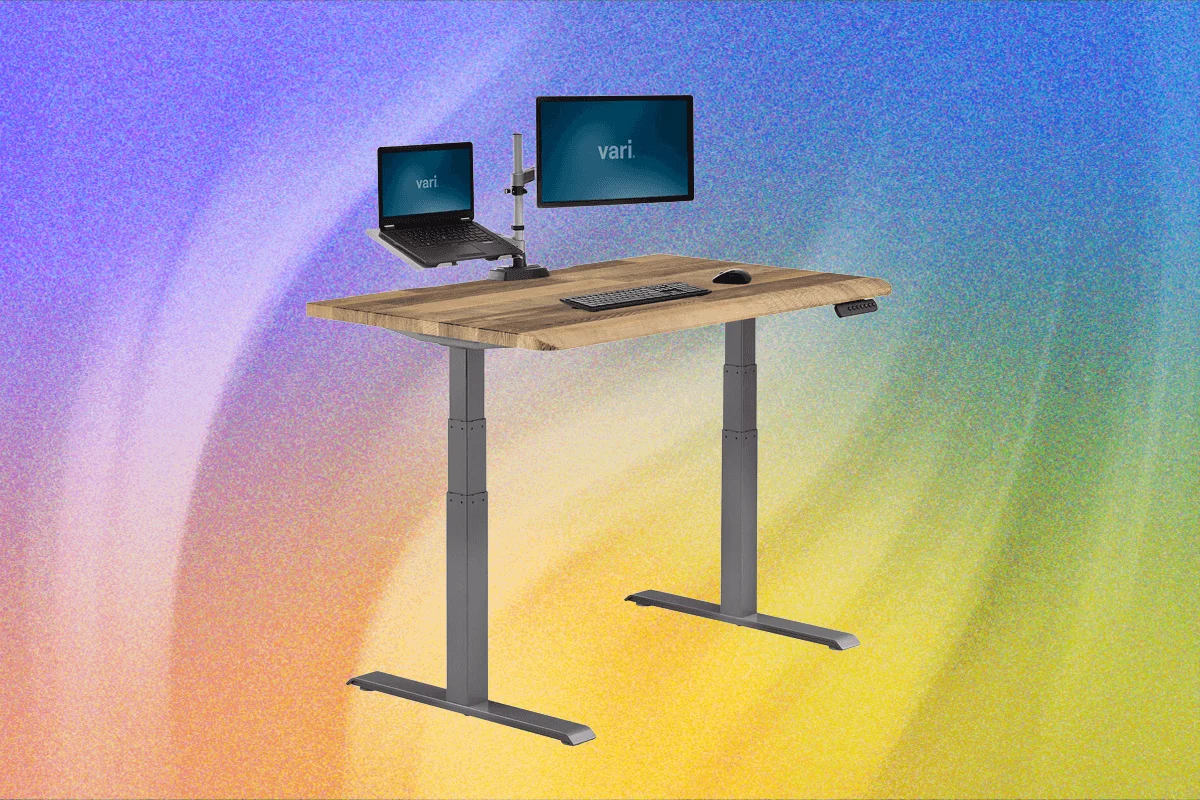
Desks like the Herman Miller Jarvis ($1,325) and the Vari Solid Wood Electric Standing Desk ($829) are designed for long-term durability. The Jarvis, a staple in the industry for years, is praised for its contoured bamboo tops and responsive controls. The Vari model is noted for its "ComfortEdge" design, which reduces wrist fatigue during long typing sessions.
Innovative and Automated Systems
Newer entrants like the Ergodriven Tempo ($629) introduce "Cruise Control" functions, which automatically adjust the desk height throughout the day to ensure the user stays active. The Autonomous Desk Pro ($600) takes this a step further by incorporating "Desk AI," which monitors environmental factors like air quality and noise levels to provide a holistic view of the workspace environment.
Budget and Small-Space Solutions
For those with limited space or budgets, the Luxor Compact Electric Standing Desk ($200) offers a 23.5-inch deep footprint, ideal for tight corners. The Staples Union & Scale line provides a middle-ground option ($513) that balances affordability with dual-motor reliability, though it lacks some of the premium finishes found in more expensive models.

Critical Analysis of Product Failures and Limitations
The standing desk industry is not without its pitfalls. Long-term testing by ergonomic reviewers has highlighted significant failure points in certain designs. A notable example is the Corsair Platform:6 ($1,400), which, despite its innovative rail system for mounting monitors, has faced reports of the rail tilting forward under the weight of standard displays. Furthermore, software errors in control units—such as the "rE5" error—can render motorized desks temporarily immobile.
Stability also remains a concern at maximum height extensions. Lower-cost models, such as the FlexiSpot E7 Pro, can exhibit a "wobble" when fully extended, which may be distracting for users performing precision tasks. Maintenance issues, such as loose screws in shipping or motors that overheat during frequent adjustments, are common complaints in the budget sector, underscoring the importance of warranty terms, which can range from a mere five years to a robust 15 years.
Broader Impact and the Future of Work
The rise of standing desks reflects a broader shift in corporate culture toward employee wellness and "activity-based working." Large corporations are increasingly outfitting entire floors with adjustable furniture to attract talent and reduce long-term healthcare costs associated with sedentary behavior.
-front-Reviewer-Photo-SOURCE-Julian-Chokkattu-(no-border).jpg)
However, the future of the industry likely lies in more sophisticated integration. As remote work becomes a permanent fixture, desks are evolving into "smart hubs" that manage not just height, but lighting, power, and digital connectivity. The data-driven approach to ergonomics—where the desk learns the user’s habits and adjusts accordingly—suggests that the next generation of office furniture will be as much about software as it is about hardware.
In conclusion, while the standing desk is a valuable tool in the fight against a sedentary lifestyle, it is not a standalone solution. The consensus among health professionals and ergonomic experts is clear: the best position is the next position. The true value of these technological marvels lies in their ability to facilitate a more dynamic, movement-oriented workday, provided they are used within the framework of established ergonomic guidelines and supported by high-quality engineering.
