

Mecka AI, a Silicon Valley startup specializing in the collection and synthesis of human motion data to train humanoid robots, is reportedly in the final stages of securing a new round of financing led by Sequoia Capital. According to sources familiar with the matter, the deal is expected to value the company at approximately $500 million, a figure that represents a meteoric rise for a firm founded less than a year ago. This anticipated capital infusion arrives a mere three months after Mecka AI announced a $60 million Series A round led by Framework Ventures, which saw participation from prominent investors including Menlo Ventures, SV Angel, and Kindred Ventures. The rapid succession of funding rounds highlights an intensifying arms race in the robotics sector, where the primary bottleneck has shifted from hardware engineering to the acquisition of high-quality, real-world behavioral data.
While the exact size of the Sequoia-led round has not been disclosed and terms remain subject to final adjustment, the transaction signals a significant vote of confidence in Mecka’s specialized approach to "physical intelligence." Both Mecka AI and Sequoia Capital have declined to provide official comments regarding the specifics of the deal. However, the momentum behind the startup reflects a broader industry realization: for humanoid robots to transition from controlled laboratory environments to unpredictable real-world settings, they require massive datasets of human movement that the internet—dominated by text and 2D images—cannot provide.
The Genesis of Mecka AI and the Data Bottleneck
Mecka AI was established in early 2024 by a team of four entrepreneurs: Josh Gao, Mogen Cheng, Jason Chong, and Duy Nguyen. Interestingly, the founding team does not hail from traditional academic robotics backgrounds. Gao and Cheng previously found success in the fintech sector, building a restaurant-focused startup, while Chong arrived via the cryptocurrency space after his exchange was acquired by Coinbase. Nguyen, the sole non-Canadian on the founding team, oversees the company’s complex operational logistics.
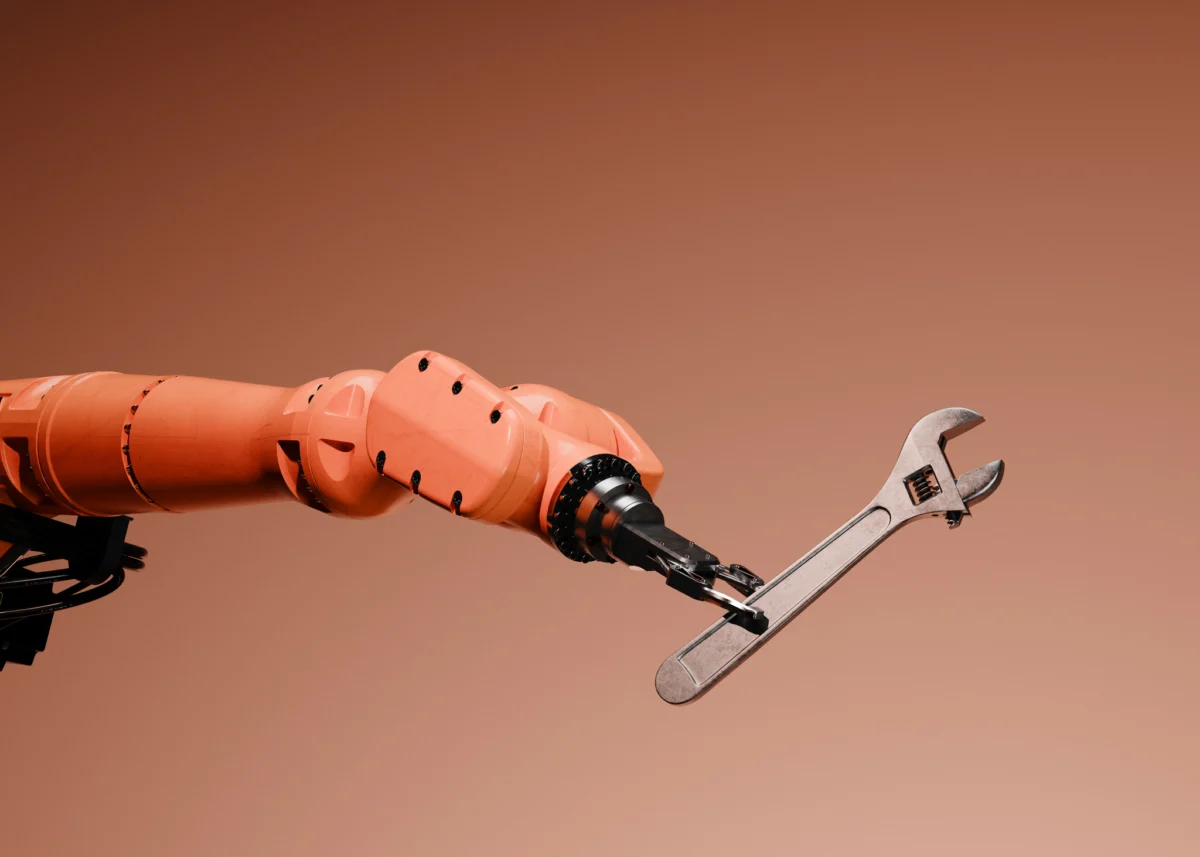
The founders’ outsider perspective allowed them to identify a critical market gap. While companies like Tesla, Figure AI, and Boston Dynamics were making strides in robotic hardware, the software "brains" of these machines were starved for data. Large Language Models (LLMs) like GPT-4 were trained on trillions of tokens of text, but a robot learning to fold laundry or use a wrench cannot learn solely from reading a manual. It requires "embodied" data—precise recordings of how human joints move, how much force is applied, and how visual inputs translate into motor commands.
The startup’s name, Mecka, is a play on "mecha," the science-fiction term for giant human-controlled robots. This reflects the company’s core methodology: using humans as the blueprint for robotic autonomy. By positioning itself as the data infrastructure layer for the robotics industry, Mecka aims to do for humanoid machines what Scale AI and Surge AI did for generative AI models—providing the human-verified data necessary for supervised learning and reinforcement learning.
Methodology: Egocentric Data and the Human-in-the-Loop Model
The technical foundation of Mecka AI rests on the collection of "egocentric" data. Unlike traditional computer vision, which might use a stationary camera to watch a human work, egocentric data is captured from the perspective of the person performing the task. Mecka pays a global network of contractors to wear specialized body sensors, including Inertial Measurement Units (IMUs) and head-mounted cameras or smartphones, while performing everyday chores.
These tasks range from the mundane to the highly technical, including:
- Preparing beverages and food in a kitchen setting.
- Performing routine maintenance on automotive components.
- Navigating complex domestic or industrial environments.
- Handling fragile objects with varying degrees of pressure.
By capturing these movements in high fidelity, Mecka creates a digital library of "trajectories" that roboticists can use to train neural networks. This approach addresses the "sim-to-real" gap—the notorious difficulty of taking a robot trained in a simulated digital environment and making it function in the messy, physical world. Real-world data accounts for variables that simulations often miss, such as lighting changes, tactile feedback, and the subtle "noise" of human motion.
Financial Projections and Market Momentum
The financial trajectory of Mecka AI is as ambitious as its technical goals. In June 2024, during the announcement of the $60 million round, co-founder Josh Gao told Fortune that the company was projecting an annual run rate (ARR) of $100 million by the end of 2026. Achieving such a milestone would require Mecka to become the primary data vendor for nearly every major player in the burgeoning humanoid robotics market.
The demand for this data is driven by a surge in "General Purpose Robotics" (GPR). Unlike the industrial robots of the 20th century, which were programmed to do one thing repeatedly, the new generation of AI-driven robots is intended to be versatile. Companies like OpenAI, which recently re-entered the robotics space through partnerships and investments, and specialized labs like Physical Intelligence (Pi), are hungry for the exact type of motion data Mecka is harvesting.
A Comparative Analysis of the Competitive Landscape
Mecka AI is not alone in its quest to map human motion for machine learning. The sector is becoming increasingly crowded as venture capitalists pivot from software-only AI to "embodied AI."
Last week, reports surfaced that XDOF, another startup in the robot-training data niche, is nearing a Series B round at a $1.2 billion valuation, just three months after emerging from stealth. XDOF similarly focuses on high-quality physical data but may differ in its specific collection hardware or data processing pipelines.
Furthermore, established data labeling giants like Scale AI are expanding their purview. Scale AI, valued at nearly $14 billion, has built its empire on labeling data for autonomous vehicles and LLMs, but it is increasingly moving into the "physical world" data space. Another competitor, Micro1, recently raised funds at a $500 million valuation, positioning itself as a platform for human-verified data that spans both digital and physical tasks.
The emergence of multiple firms with valuations in the hundreds of millions or billions of dollars suggests that the industry views motion data as a "winner-takes-most" commodity. The company that can provide the most diverse, accurate, and scalable dataset will likely become the standard platform for robotic training.
Timeline of Key Events
The rapid development of Mecka AI can be traced through a condensed timeline of 2024:
- Early 2024: Mecka AI is founded by Gao, Cheng, Chong, and Nguyen with a focus on human-to-robot data transfer.
- June 2024: The company announces its first major institutional round—$60 million led by Framework Ventures. At this time, the company begins scaling its "human-as-a-sensor" network.
- July–August 2024: Mecka expands its operations, reportedly hiring hundreds of data collectors globally to build a proprietary library of diverse physical tasks.
- September 2024: Reports emerge that Sequoia Capital is leading a new round at a $500 million valuation, reflecting a nearly 8x increase in perceived value in just a few months.
Broader Implications for the AI and Robotics Industry
The heavy investment in Mecka AI by a tier-one firm like Sequoia Capital has several implications for the future of the technology sector. First, it signals that the "data wall" for LLMs is pushing researchers toward new frontiers. As high-quality text data on the internet becomes exhausted, the next leap in AI capability is expected to come from understanding the physical world.
Second, it validates the "Human-in-the-Loop" (HITL) economy. While the ultimate goal of these startups is to create fully autonomous machines, the path to that autonomy is paved by thousands of humans performing manual labor. This creates a temporary but massive secondary market for human workers whose primary job is to "teach" their eventual mechanical replacements.
Third, the valuation suggests a belief that humanoid robots are closer to commercialization than previously thought. If investors are willing to pay $500 million for the data used to train these robots, they likely anticipate that the robots themselves will be deployed in warehouses, hospitals, and homes within the next three to five years.
Conclusion and Future Outlook
As Mecka AI nears the closing of its latest funding round, the focus will shift from fundraising to execution. The company must prove that its data can actually improve the performance of humanoid robots in diverse environments. The challenge lies in quality control; motion data is significantly more complex to verify than text or image labels. A slight error in a recorded trajectory could lead to a robot damaging itself or its surroundings.
However, with the backing of Sequoia Capital and a significant capital runway, Mecka is well-positioned to remain at the forefront of the robotics data sector. As the "Scale AI of Robotics," its success or failure will likely serve as a bellwether for the entire humanoid industry. If Mecka can hit its $100 million revenue target by 2026, it will confirm that the most valuable asset in the age of AI is not just the algorithm or the hardware, but the granular, real-world data of human experience.
