

September has traditionally served as the pivotal month for the television industry, marking the transition from the light, escapist fare of summer to the high-stakes prestige dramas and complex narratives of the fall season. As major streaming platforms and traditional networks roll out their most ambitious projects, the current landscape reflects a sophisticated intersection of technology, politics, and culture. The 2026 fall lineup is characterized by a blend of established intellectual properties (IP) being reimagined for new audiences and original series that challenge the boundaries of genre. From German climate-dystopia thrillers to the continuation of long-running satirical institutions, the following selections represent the critical and commercial highlights available for streaming this month.
The Evolution of Workplace Comedy: The Paper
On September 9, the second season of The Paper arrived on streaming platforms, continuing its exploration of a medium in crisis. Developed as a spiritual successor to the American iteration of The Office, creators Greg Daniels and Michael Koman have pivoted from the mundane world of paper sales to the high-stakes environment of local journalism. The series centers on the Toledo Truth Teller, a struggling Midwestern newspaper attempting to maintain relevance in an era dominated by algorithmic news feeds and social media fragmentation.
The narrative focuses on the idealistic editor-in-chief Ned Sampson, portrayed by Domhnall Gleeson, and ambitious reporter Mare Pritti, played by Chelsea Frei. Season 2 delves into the complexities of investigative reporting in the digital age, specifically focusing on the ethical dilemmas of "clickbait" versus "conscience." According to industry data, nearly one-third of American newspapers have shuttered since 2005, a reality that The Paper uses as a backdrop for its sharp, often poignant humor. The show’s ability to balance cringe-inducing comedy with a genuine defense of the Fourth Estate has made it a standout in the 2026 season.
Rebranding the Galaxy: Lego Star Wars: The Mandalorian
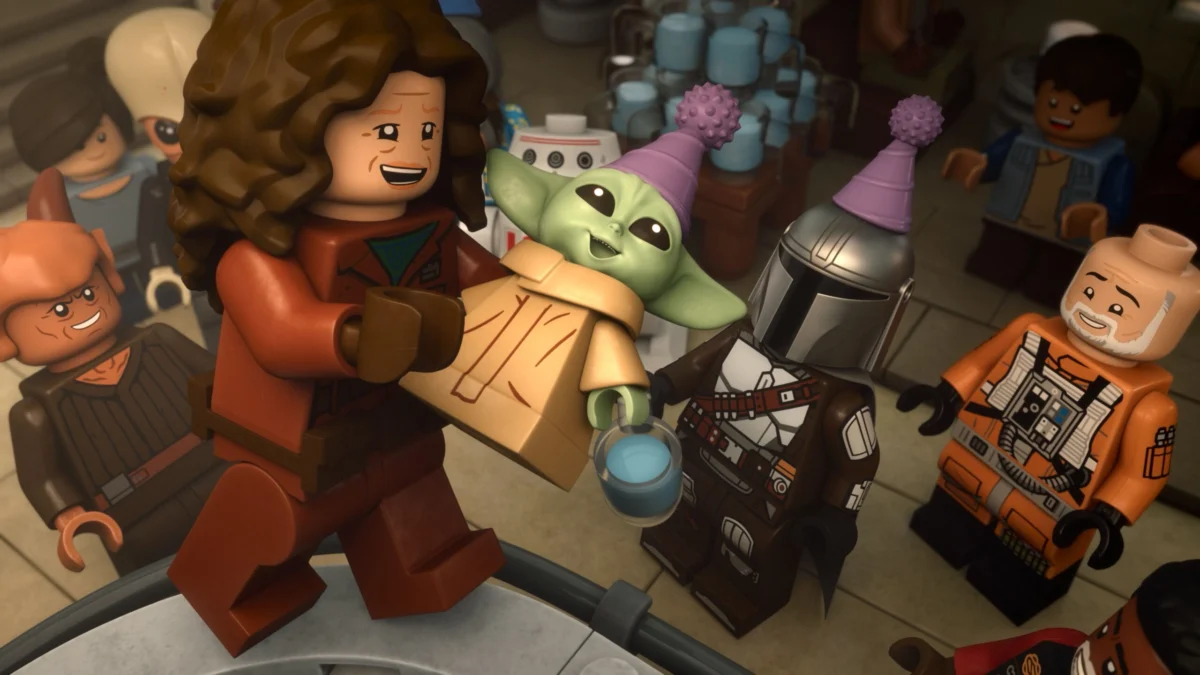
Following the lukewarm commercial performance of the live-action feature The Mandalorian and Grogu earlier this summer, Lucasfilm has pivoted to a familiar and historically successful medium: Lego animation. The new 49-minute special, Lego Star Wars: The Mandalorian, reimagines the first three seasons of the Pedro Pascal-led series through the lens of self-referential comedy.
This move follows a broader industry trend where major franchises utilize "de-aged" or "reimagined" formats to maintain brand engagement between major live-action releases. While the original series leaned into the "Space Western" aesthetic, the Lego iteration utilizes meta-humor to address fan theories and the "Baby Yoda" cultural phenomenon. Gavin Hammon takes over voicing duties for Din Djarin, providing a comedic timing that contrasts with the stoic nature of the live-action original. For Disney+, this release serves as a strategic bridge, catering to both younger demographics and long-term fans who may have experienced "franchise fatigue" with recent theatrical entries.
Political Satire in a Changing Climate: South Park’s Rebranding
South Park enters its 29th season on September 16 with a significant structural overhaul. Creators Trey Parker and Matt Stone have announced that the show will be rechristened South America for the upcoming season, a move that parodies the trend of corporate rebranding and political isolationism. This follows a highly successful 2025-2026 run that saw the series win the Emmy for Outstanding Animated Program, largely due to its relentless satire of the current American political landscape.
The show, which has been a cultural mainstay for nearly three decades, continues to leverage its quick-turnaround production cycle to comment on real-time events. The upcoming season is expected to double down on its critique of global geopolitical tensions. Despite past controversies—including public rebukes from various political figures—the series remains a cornerstone of Paramount’s streaming strategy. Financial analysts point to the $900 million deal signed by Parker and Stone in 2021 as evidence of the show’s enduring value in an increasingly fragmented media market.
The Return of the Misfit Spy: Slow Horses Season 6
Apple TV+’s Slow Horses returns for a sixth season on September 16, solidifying its reputation as the preeminent spy thriller of the decade. Based on Mick Herron’s Slough House novels, the series follows a group of MI5 agents who have been sidelined due to professional failures. At the center of the series is Jackson Lamb, played by Academy Award winner Gary Oldman, whose performance has been hailed as a career-defining turn.
Season 6 arrives amidst heightened interest in the cast, particularly Jack Lowden, who has become a frontrunner in betting markets for the next James Bond. The show’s success lies in its rejection of the glamorous tropes associated with the espionage genre, opting instead for a gritty, bureaucratic realism punctuated by dark humor. As the streaming wars favor high-budget "prestige" content, Slow Horses has maintained a consistent viewership by balancing high-stakes action with intricate character development.
International Dystopia: City of Blood
Representing the surge in high-quality European co-productions, the German miniseries City of Blood premieres on September 16. The show is set in a near-future Berlin where extreme climate change has created a stark societal divide. While the elite reside in climate-controlled domes, the general population navigates a sweltering, resource-scarce urban sprawl.
The series blends the "cli-fi" (climate fiction) genre with traditional supernatural elements, introducing a vampire insurgency that views human blood as the ultimate commodity in a collapsing economy. Starring Lea Drinda and Soma Pysall as estranged sisters, City of Blood serves as a metaphorical exploration of wealth inequality and environmental degradation. Critics have noted that the series reflects a growing trend in international television where genre tropes are used to address urgent socio-political issues.
Behind-the-Scenes Tension and On-Screen Grit: MobLand Season 2
MobLand returns for its second season on September 18, shadowed by widely reported tensions between star Tom Hardy and the production’s veteran leads, Pierce Brosnan and Helen Mirren. Despite these rumors of "creative differences," the series has already been renewed for a third season, indicating strong confidence from the network.
The crime drama follows the Harrigan family’s criminal empire as it faces internal fracturing and external threats. Hardy plays Harry Da Souza, a fixer who utilizes modern technological surveillance to manage "old-school" criminal operations. The show’s aesthetic, characterized by its brutal realism and a soundtrack featuring Fontaines D.C., has earned it a cult following. The intersection of traditional organized crime narratives with 21st-century cyber-warfare provides MobLand with a unique niche in the crowded crime-drama market.
Expanding the Outlander Lore: Blood of My Blood
The Outlander franchise expands on September 18 with the second season of its prequel, Blood of My Blood. The series employs a dual-timeline narrative, simultaneously exploring the lives of Jamie Fraser’s parents in 18th-century Scotland and Claire Beauchamp’s parents during World War I-era England.
The prequel aims to capture the "Droughtlander" audience—the dedicated fan base that has supported the original series for eight seasons. By focusing on the historical precursors to the main series’ events, Blood of My Blood deepens the franchise’s world-building. Production data suggests that Outlander remains one of the most successful examples of "romantasy" (romance and fantasy), a genre that has seen exponential growth in both literature and television over the last five years.
The Anthology Endgame: American Horror Story Season 13
On September 26, American Horror Story returns for what creators Ryan Murphy and Brad Falchuk are calling an "endgame-level" event. Season 13 is designed as a retrospective of the show’s decade-long history, integrating characters and plotlines from previous seasons, most notably the fan-favorite Coven and Apocalypse cycles.
The season features a massive ensemble cast of returning stars, including Sarah Paulson, Evan Peters, and Jessica Lange. This "greatest hits" approach is a strategic move to consolidate the show’s legacy while providing a definitive narrative arc for long-term viewers. As an anthology, AHS revolutionized the format in 2011, and Season 13 represents an attempt to redefine the boundaries of shared-universe storytelling within the horror genre.
Preservation and Prestige: Neon Genesis Evangelion
In a move that highlights the growing importance of archival content for streaming platforms, the Criterion Channel is making the original 1995 Japanese-language version and the original English dub of Neon Genesis Evangelion available this month. This release is significant for animation historians and enthusiasts, as it provides access to the version of the show that first gained international acclaim before later re-dubs and modifications.
Evangelion, directed by Hideaki Anno, is widely regarded as one of the most influential works of Japanese animation, known for its deconstruction of the "Giant Robot" genre and its profound exploration of psychological trauma. Its inclusion in the Criterion Channel’s library marks a continued effort to treat high-quality anime with the same critical reverence as classic world cinema.
Broader Impact and Industry Implications
The September 2026 slate reveals several key trends in the global television market. First, there is a clear reliance on "reimagined IP"—using existing brands like The Mandalorian or Outlander to anchor subscriber growth. Second, the success of international series like City of Blood suggests that audiences are increasingly comfortable with non-English language content, provided it offers high production values and relevant themes. Finally, the return of long-running series like South Park and American Horror Story demonstrates the enduring power of brand loyalty in an era of "peak TV." As the industry moves into the fourth quarter, these shows will likely set the tone for the upcoming awards season and dictate the programming strategies of major streaming services heading into 2027.
