

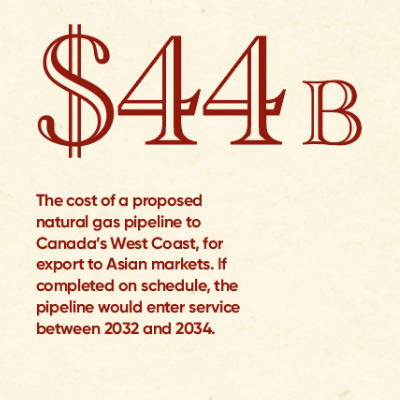
The global energy landscape is undergoing a profound transformation that is challenging long-held assumptions about the permanence of fossil fuel dominance. While the International Energy Agency’s (IEA) World Energy Outlook 2025 initially suggested a slowing of the energy transition, subsequent data indicates that the shift toward electrification and renewable energy is accelerating at a pace that few analysts predicted. This rapid evolution has created a strategic paradox for Canada, a nation currently doubling down on massive infrastructure projects—including the proposed $44 billion Pacific Link pipeline and a significant expansion of liquefied natural gas (LNG) capacity—even as its primary future markets in Asia pivot toward a low-carbon economy.
The Accelerating Global Pivot to Renewables
In late 2024, the energy sector reached several critical milestones that signaled a decoupling of economic growth from fossil fuel consumption. For the first time, solar power generated more electricity on the European Union grid than any other single energy source. Simultaneously, the electrification of road transportation, encompassing everything from passenger cars to two-wheeled delivery vehicles, has begun to displace significant volumes of oil. In 2025 alone, the transition to electric vehicles (EVs) and improvements in fuel efficiency displaced approximately 3.2 million barrels of road fuel per day.
The most significant shift, however, is occurring in China. For two decades, China served as the primary engine of global oil demand growth, accounting for more than half of the world’s increase in crude imports between 2005 and 2024. However, the latest figures show that China’s annual demand for oil declined in 2024 for the first time in 20 years. This decline is largely attributed to the rapid adoption of EVs, which reduced gasoline consumption by 12% compared to pre-market penetration levels. With China’s transport oil use having plateaued in 2021, analysts now expect peak oil demand in the world’s second-largest economy to arrive well before 2030.
A Chronology of Shifting Energy Projections
To understand the current tension in Canadian energy policy, it is necessary to look at the timeline of projections and policy shifts over the last 24 months:
- November 2024: The IEA releases its World Energy Outlook 2025, suggesting that 1.5°C climate targets are slipping out of reach and that fossil fuel demand might remain resilient for longer than expected.
- Early 2025: Real-world data begins to contradict these cautious outlooks. EU solar production surges, and global energy consumption growth slows to 1.3%, with low-emission sources meeting nearly 60% of that new demand.
- Mid-2025: China reports a sustained drop in crude imports, signaling a structural change in its energy appetite.
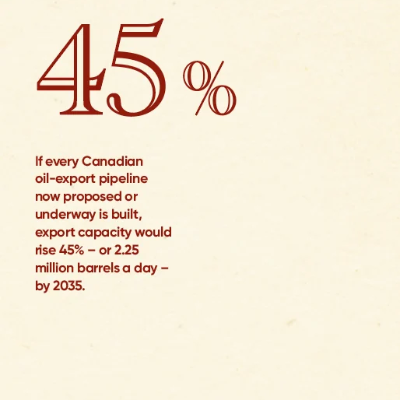
- Late 2025: The Canadian federal government and the Alberta provincial government sign a memorandum of understanding (MOU) to explore the Pacific Link pipeline, a project intended to transport one million barrels of heavy crude daily to the West Coast for export to Asia.
- Early 2026: S&P Global and TD Bank release reports highlighting a potential "pipeline capacity crisis" in Canada by the winter of 2026, while simultaneously warning that Asian demand for heavy crude may flatten by the mid-2030s.
The Pacific Link Pipeline: A $44 Billion Gamble
At the heart of Canada’s energy strategy is the Pacific Link pipeline. The proposed 1,250-kilometre conduit would move crude from Alberta’s Western Canada Sedimentary Basin to the Roberts Bank Terminal south of Vancouver. Declared a project of "national interest," the pipeline is designed to operate for at least 40 to 50 years.
The business case for this project relies on the assumption that Asian refineries—particularly those in China equipped to handle heavy "sour" crude—will maintain high demand through 2070. Alberta Premier Danielle Smith has championed the project as a way to double the province’s oil production and "strengthen access to growing Asian markets."
However, the Institute for Energy Economics and Financial Analysis (IEEFA) has raised alarms regarding the project’s viability. Analysts Mark Kalegha and Will Scargill argue that the $44 billion price tag represents an immense risk. If global demand plateaus and tolls for using the pipeline exceed the price premiums offered by Asian buyers, the project could become a "stranded asset," leaving taxpayers or producers to cover the shortfall.
The LNG Surge and the Carbon Footprint
Parallel to the oil expansion is a massive build-out of liquefied natural gas (LNG) infrastructure. The world is currently on track to add 300 billion cubic metres of LNG export capacity by 2030, a 50% increase in global supply. Canada is a significant player in this expansion, viewing natural gas as a "bridge fuel" that can help Asian nations transition away from coal.

The environmental implications of this surge are stark. The projected increase in LNG capacity is expected to add more than 560 million metric tons of carbon dioxide equivalent to the atmosphere annually. According to the U.S. Environmental Protection Agency’s Greenhouse Gas Equivalencies Calculator, this is the atmospheric equivalent of adding 130 million gasoline-powered cars to the road every year. The IEA’s "Stated Policies Scenario" (STEPS) suggests that while gas demand may grow into the early 2030s, the market will likely face a 65-billion-cubic-metre surplus by 2035, potentially crashing prices and undermining the economics of new Canadian terminals.
Perspectives from Industry and Analysts
The debate over Canada’s pipeline capacity is divided between those who prioritize immediate logistics and those who focus on long-term market trends.
The Pro-Expansion Argument:
Kevin Birn, chief analyst for Canadian oil markets at S&P Global, argues that Canada desperately needs "spare capacity" to prevent system fragility. He notes that Western Canada will produce over five million barrels a day this year, and any minor disruption in the current pipeline network can cause massive backups and force producers to sell their oil at deep discounts. From this perspective, the Pacific Link is not just about growth; it is about insurance against a "bottleneck" that could cost the Canadian economy billions in lost revenue.
The Market-Skeptic Argument:
Conversely, analysts at the Pembina Institute and IEEFA point to the lack of private sector investment as a "canary in the coal mine." Despite the federal government’s insistence that private investors are interested, the development is currently being led by the state-owned Trans Mountain Corporation and the Alberta Petroleum Marketing Commission. Private capital remains "skittish," according to Birn, due to "bad memories" of regulatory hurdles and the increasingly uncertain long-term outlook for oil. Skeptics argue that if the project were truly a robust investment, private firms would be vying for a larger stake than the non-binding 10% currently held by Pembina Pipeline.
Energy Security in a Volatile World
The urgency felt by Canadian proponents is fueled in part by global geopolitical instability. The recent energy shocks caused by conflicts in the Middle East and the closure of the Strait of Hormuz—which cut off nearly 20% of the world’s oil and gas supply—have redefined energy security as a strategic vulnerability.
For Canada, being able to ship oil directly to Asia from the Pacific coast is seen as a way to reduce dependency on the United States, an increasingly protectionist trading partner. However, this strategy may be fighting the last war. As the U.K. think tank Ember has noted, the global energy system is shifting from a "commodity-based" system of extraction to a "manufacturing-based" system. In the new economy, energy security is found not in securing oil routes, but in the production lines for solar panels, batteries, and electric motors—sectors where Asia is already far ahead of North America.

Broader Economic and Climate Implications
The decision to move forward with massive fossil fuel infrastructure carries profound implications for Canada’s economic future. The federal energy regulator’s 2026 outlook predicts a substantial growth in domestic electricity demand as the Canadian economy electrifies, while hydrocarbon use remains stable or declines.
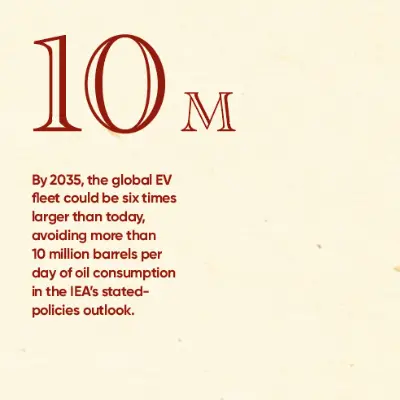
If Canada allocates its limited capital to oil and gas infrastructure that faces a shrinking market by the 2040s, it risks missing the opportunity to invest in the manufacturing and grid upgrades required for the next era of energy. The IEA’s STEPS scenario positing a sixfold growth in the global electric vehicle fleet by 2035 suggests that the world will avoid 10 million barrels per day in oil consumption within the next decade.
As the earth’s climate continues to change at an accelerating rate, the window for justifying long-lived fossil fuel export infrastructure is closing. Canada finds itself at a crossroads: it can continue to bet on the traditional energy markets of the past, or it can pivot its capital toward the rising manufacturing-based energy economy of the future. The $44 billion question remains whether the Pacific Link will be a bridge to new prosperity or a monument to a miscalculation of global demand.
