

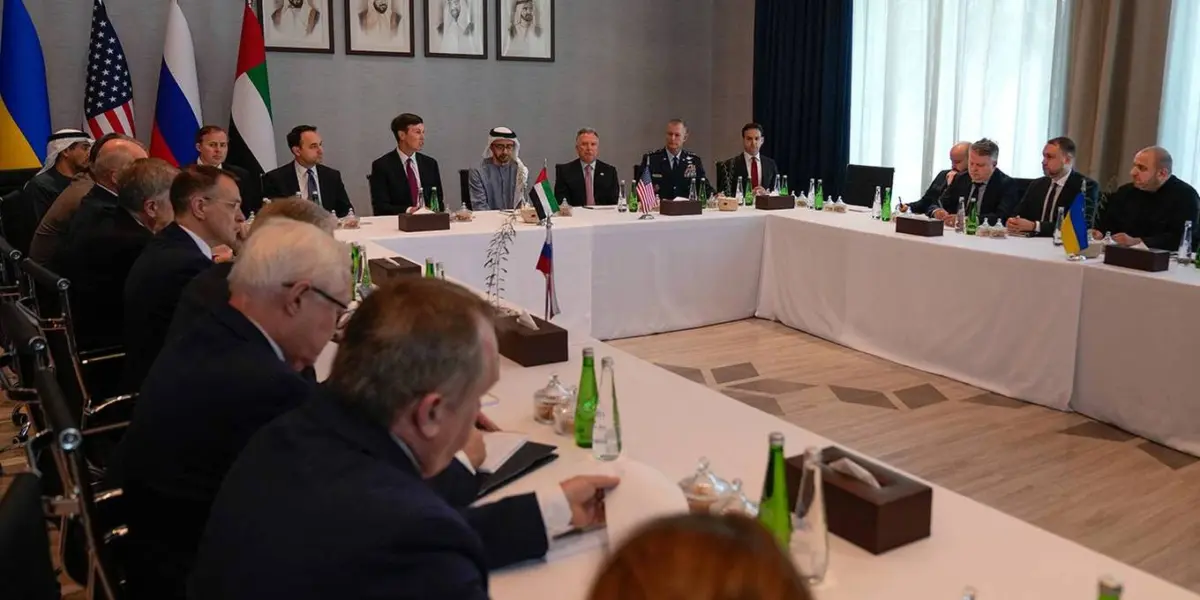
STOCKHOLM – The bedrock principle of the European security order, forged in the ashes of devastating conflicts, is an unwavering commitment to the non-tolerance of aggression. This fundamental tenet requires no revision, despite recent proposals from the Kremlin. Instead, the path forward lies in awaiting a Russian regime that demonstrates a genuine willingness to respect the territorial integrity of other nations and to uphold its own prior international commitments. This stance has been underscored by recent developments surrounding peace talks and the persistent conflict in Ukraine.
The Kremlin’s Gambit: Redefining European Security
Earlier this month, Russian negotiators, having seemingly agreed to engage in new peace talks with Ukrainian and American representatives, abruptly shifted the agenda. Their sudden insistence on discussing the broader European security order was widely interpreted as a strategic maneuver, an attempt to divert attention from the immediate and pressing need for a ceasefire in the brutal war initiated by Russian President Vladimir Putin against Ukraine. This conflict, now nearing its fifth year, has inflicted immense suffering and destabilized the continent.
The European security order, established in the post-World War II era and further solidified by the Helsinki Accords of 1975, is built upon several key pillars. These include the inviolability of borders, the sovereign equality of states, the peaceful settlement of disputes, and respect for human rights and fundamental freedoms. The implicit understanding has always been that any violation of these principles, particularly through the use of force or the threat thereof to alter existing borders, would not be countenanced by the international community.
The Kremlin’s recent overtures, however, suggest a desire to renegotiate these established norms, a move that many European capitals view with deep skepticism. The proposal to "revise" the security order appears to be a veiled attempt to legitimize Russia’s current actions and to erode the collective security framework that has largely preserved peace in Europe for decades. This perspective is rooted in the historical context of post-war European diplomacy, which sought to prevent a recurrence of the continent’s devastating past.
A Chronology of Escalation and Stalled Diplomacy
The current crisis in Ukraine can be traced back to Russia’s annexation of Crimea in March 2014, followed by the instigation of a separatist conflict in eastern Ukraine’s Donbas region. This act of aggression was a direct violation of Ukraine’s territorial integrity and sovereignty, principles enshrined in international law and the very foundations of the European security order.
2014:
- February-March: Following the Ukrainian Revolution of Dignity, Russian forces, initially unmarked, seized control of strategic locations in Crimea.
- March 16: A disputed referendum was held in Crimea, which resulted in a declaration of independence from Ukraine and subsequent annexation by Russia. This action was widely condemned by the international community and deemed illegal under international law.
- April: Pro-Russian separatists, with alleged support from Moscow, began an armed insurgency in the Donbas region, leading to protracted fighting with Ukrainian government forces.
2015-2021:
- February: The Minsk II agreement, brokered by France and Germany, was signed by representatives of Ukraine, Russia, the separatist leaders, and the Organization for Security and Co-operation in Europe (OSCE). The agreement aimed to establish a ceasefire, withdraw heavy weaponry, and implement political reforms.
- Despite the Minsk II agreement, sporadic fighting continued along the front lines in eastern Ukraine, with frequent violations of the ceasefire by both sides.
- Throughout this period, diplomatic efforts to find a lasting resolution remained largely stalled, with Russia and Ukraine holding differing interpretations of the agreement’s implementation.
2022:
- February 24: Russia launched a full-scale invasion of Ukraine, dramatically escalating the conflict and marking a watershed moment for European security. This act of unprovoked aggression shattered the post-Cold War security architecture and triggered widespread international condemnation.
- March-April: Intense fighting occurred in and around major Ukrainian cities, including Kyiv, Kharkiv, and Mariupol. Reports of war crimes and humanitarian atrocities emerged from occupied territories.
- May: The city of Mariupol fell to Russian forces after a prolonged and brutal siege. Ukraine’s military continued to resist, particularly in the eastern and southern regions.
- September: Russia announced the annexation of four Ukrainian regions – Donetsk, Luhansk, Kherson, and Zaporizhzhia – following staged referendums, a move again widely condemned as illegal.
2023 – Present:
- The conflict continued, characterized by intense artillery duels, drone warfare, and positional battles. Ukraine launched counteroffensives aimed at reclaiming occupied territories.
- December 2023 – January 2024: Reports emerged of renewed diplomatic engagement, with Ukrainian and American representatives agreeing to peace talks. Simultaneously, Russian negotiators began advocating for discussions on the European security order, a move perceived by many as a diversionary tactic.
The Evolving Landscape of European Security
The current European security order, while not without its imperfections, has been instrumental in preventing large-scale interstate conflict on the continent for over seven decades. It is a system that emphasizes dialogue, cooperation, and the adherence to established international norms. The post-Cold War settlement, built upon the principles of the Helsinki Accords, sought to integrate Russia into a stable and predictable security framework. However, Russia’s actions, particularly its invasion of Ukraine, represent a fundamental challenge to this order.
The proposal to "revise" the European security order can be analyzed through several lenses. Firstly, it suggests a desire by the Kremlin to reassert its perceived sphere of influence and to push back against the eastward expansion of NATO and the European Union. Secondly, it could be an attempt to legitimize its territorial gains and to extract concessions from the West without a genuine commitment to de-escalation or withdrawal.
Supporting Data and International Reactions
The human cost of the conflict in Ukraine is staggering. According to United Nations estimates, as of early 2024, millions of Ukrainians have been displaced internally or have sought refuge in neighboring countries. The number of civilian casualties, though difficult to ascertain precisely, is in the tens of thousands. The economic damage to Ukraine is immense, with infrastructure destroyed and vital sectors of the economy crippled.
International reactions to Russia’s actions and its proposals regarding European security have been largely consistent. The vast majority of European nations, alongside the United States and other allies, have condemned the invasion of Ukraine and have imposed extensive sanctions on Russia.
-
European Union: The EU has adopted multiple packages of sanctions against Russia, targeting its financial, energy, and defense sectors. It has also provided significant financial and military assistance to Ukraine. The EU’s High Representative for Foreign Affairs and Security Policy, Josep Borrell, has consistently reiterated the bloc’s commitment to Ukraine’s sovereignty and territorial integrity, and has dismissed any attempts to revise the foundational principles of European security. "The aggression against Ukraine is a clear violation of international law and the principles of the UN Charter. We will not accept any attempt to redraw the map of Europe by force," Borrell stated in a recent press conference.
-
United States: The U.S. has been a leading provider of military and financial aid to Ukraine and has played a crucial role in coordinating international responses. Secretary of State Antony Blinken has repeatedly emphasized the importance of upholding international law and deterring further aggression. "The European security order is not up for negotiation by aggressors. It is based on principles that have kept our continent peaceful for decades, and those principles must be defended," a State Department spokesperson commented.
-
NATO: The North Atlantic Treaty Organization has bolstered its defenses in Eastern Europe and has provided substantial support to Ukraine. NATO Secretary General Jens Stoltenberg has been a vocal critic of Russia’s actions, underscoring the alliance’s commitment to collective defense. "Russia’s attempt to rewrite the rules of the game in Europe is a dangerous precedent. The foundational principles of sovereignty, territorial integrity, and the right of nations to choose their own security arrangements are non-negotiable," Stoltenberg remarked during a recent security forum.
-
Ukraine: Ukrainian officials have consistently maintained that any discussion of European security must begin with the full restoration of Ukraine’s territorial integrity and the withdrawal of Russian forces from all occupied territories. President Volodymyr Zelenskyy has repeatedly called for accountability for war crimes and for Russia to adhere to international law.
Analysis of Implications: A Test for the International Order
The Kremlin’s insistence on discussing the European security order at this juncture carries significant implications. It signals a potential hardening of Russia’s stance and a reluctance to engage in genuine de-escalation without achieving its broader strategic objectives. The attempt to frame the conflict as a dispute over the "security order" rather than an act of unprovoked aggression aims to shift the narrative and to create a perception of parity between the aggressor and the victim.
The international community’s response to this gambit will be crucial. A unified and firm rejection of Russia’s attempts to redefine the existing security architecture, coupled with continued support for Ukraine, is essential. The underlying principle that aggression will not be tolerated, and that territorial gains achieved through force will not be recognized, must be upheld.
The potential for a revised European security order, as envisioned by some, would likely involve a return to a Cold War-like confrontation or a fragmented Europe where the rule of law is subordinate to the dictates of power. This is precisely the scenario that the post-war security order was designed to prevent.
Therefore, the focus must remain on supporting Ukraine’s efforts to regain its sovereignty and territorial integrity, holding Russia accountable for its actions, and reinforcing the international norms that have underpinned European peace and stability. The path forward is not to revise the existing order, but to ensure its principles are respected and upheld, awaiting a future Russian leadership that is willing to abide by them. The current approach, while challenging, offers the most robust framework for long-term stability and security on the continent.
