

The residential real estate landscape is currently witnessing a significant tension between brokerage-driven exclusivity and broad market transparency, a conflict underscored by the recent launch of a major platform redesign by Compass and the simultaneous release of a comprehensive industry study. On September 22, Compass, the nation’s largest residential brokerage by transaction volume, unveiled "See It First," a centralized digital showcase designed to provide consumers with early access to "coming-soon" and "private exclusive" listings. While the company positions this as a consumer-centric innovation intended to streamline the discovery process, a concurrent study of more than 10 million home sales suggests that the financial outcomes for sellers may vary drastically depending on how these early-access listings are eventually transitioned to the broader market.
The Evolution of the Compass Digital Ecosystem
The "See It First" initiative represents the most significant overhaul of the Compass.com interface in a decade. By aggregating listings from its nine various brands into a single early-access portal, Compass seeks to leverage its significant market share to create a proprietary destination for home seekers. Julie Keef, Compass’s head of consumer search, noted that the platform is designed to offer consumers the opportunity to discover properties earlier in the sales cycle. This strategic move is supported by a multimillion-dollar advertising campaign and follows a period of robust digital growth for the firm; Compass reported a 56% year-over-year increase in web traffic for August 2024.
The platform focuses on two distinct categories of inventory: "Coming Soon" listings and "Private Exclusives." The former generally refers to properties that are pre-marketed within the brokerage before being listed on the Multiple Listing Service (MLS), while the latter often refers to properties that are marketed exclusively within the Compass network, sometimes bypassing the MLS entirely. This distinction has become the focal point of a broader industry debate regarding market efficiency and fiduciary responsibility.
Chronology of a Market Conflict
The timing of the Compass launch coincided with the release of data that challenges the narrative of exclusivity as a value-add for sellers. On September 23, the day following the "See It First" debut, a landmark study was publicized by the Association of Real Estate License Law Officials (ARELLO). The study analyzed over 10 million residential transactions occurring between January 2024 and June 2026, providing a high-resolution look at how different marketing strategies impact the final sale price.
This chronological overlap has forced a re-examination of the "pocket listing" or "private listing" model. While Compass has aggressively pushed for the right to market listings outside the traditional MLS framework, the ARELLO data suggests that the "network effect" of a broad market remains the most potent tool for maximizing seller equity.
Analyzing the Data: The Premium of Exposure
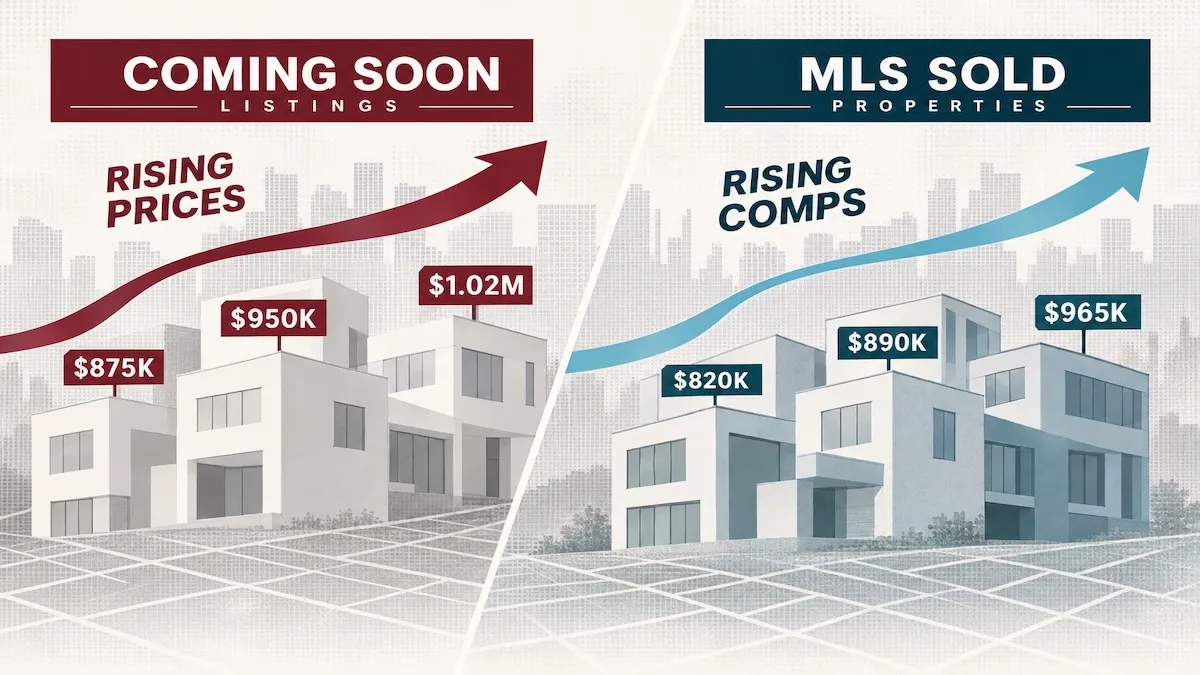
The ARELLO study identifies a clear divergence in financial outcomes based on how a property is introduced to the market. The data indicates that "Coming Soon" listings—those that are pre-marketed to generate buzz but ultimately listed on the MLS—command a significant price premium. In the mid-market segment, these listings sold for approximately $9,200 more than comparable properties that went straight to the MLS without a pre-marketing period. In the luxury or "top-of-market" segment, this premium expanded to nearly $17,000.
Conversely, properties that remained "Private Exclusives" and were never exposed to the full MLS audience saw a negative price impact. Mid-range private listings sold for roughly $5,000 below their MLS-listed counterparts, while high-end private listings trailed by approximately $3,500. These figures suggest that while pre-marketing (the "Coming Soon" phase) creates a competitive "launch runway," keeping a property "hidden" within a single brokerage’s gated ecosystem often results in a lower final check for the homeowner.
Market participation trends further support this finding. The volume of "Coming Soon" listings rose by 13% in the year ending June 2026, indicating that agents and sellers are increasingly using pre-marketing to build anticipation. Meanwhile, the volume of strictly private listings fell by 3% over the same period, suggesting a cooling of enthusiasm for off-MLS sales as data-driven transparency becomes more prevalent.
Demographic Disparities and Fiduciary Concerns
Perhaps the most critical finding in the ARELLO report involves the impact of private listings on diverse communities. The study revealed that the "private-listing discount" was not applied equally across all neighborhoods. In majority-white areas, private listings sold for 0.88% below the MLS average. However, this gap widened significantly in minority communities: private listings in majority non-white areas sold for 2.21% below the MLS average, and in majority-Hispanic areas, the discount reached 3.33%.
While ARELLO clarified that these findings do not inherently establish causation or prove unlawful discrimination, the organization emphasized that the data warrants "further examination." For real estate fiduciaries, these numbers raise significant questions about the ethics of limiting a property’s exposure. If a smaller audience leads to a smaller check—particularly in vulnerable or underserved communities—the decision to keep a listing private may conflict with an agent’s duty to act in the best financial interest of the client.
The Policy Debate: Clear Cooperation and Industry Pushback
The conflict over exclusive listings is rooted in a long-standing battle over the National Association of Realtors (NAR) "Clear Cooperation Policy." This policy requires that any listing marketed to the public must be submitted to the MLS within one business day. The intent of the policy is to ensure that all participants in the market have access to the same information, preventing the fragmentation of the housing market into "private clubs."
Compass CEO Robert Reffkin has been a vocal critic of this policy, labeling it "anti-competitive and anti-consumer." Reffkin has argued that the policy restricts a seller’s right to choose how their home is marketed and maintains that brokerages should have the freedom to offer exclusive inventory to their clients. Compass has stated that it does not intend to adhere to certain aspects of the Clear Cooperation Policy, positioning itself as a disruptor of the traditional MLS-centric model.
However, the ARELLO study provides a data-backed counter-argument to the brokerage’s stance. While Compass argues for consumer choice, the transaction data suggests that the choice to remain private often comes at a quantifiable cost to the seller. The industry is currently at a crossroads: defending the traditional rules of broad market exposure versus embracing a tech-enabled model of proprietary "early access."
Strategic Implications for Real Estate Professionals
The divergence between marketing slogans and transaction data places a heavy burden on real estate agents to provide evidence-based advice. The study suggests a "best of both worlds" approach that agents are now encouraged to adopt:
- Utilize Pre-Marketing: Use tools like "Coming Soon" portals to build demand and test pricing.
- Ensure Full Exposure: Transition the property to the MLS to capture the maximum number of potential buyers and drive competitive bidding.
- Document Informed Consent: If a seller insists on a private sale for reasons of privacy or convenience, agents are increasingly advised to document the potential financial trade-offs in writing to protect both the client’s interests and the agent’s professional standing.
The "See It First" platform is a powerful tool for lead generation and brand positioning for Compass agents, but its ultimate value to the seller depends on the final destination of the listing. The data suggests that the platform is most effective when used as a "launch runway" rather than a "closed door."
Broad Impact and the Future of the Market
The rise of platforms like "See It First" signifies a shift toward a more fragmented real estate market where large brokerages attempt to act as "mini-MLSs." This trend poses a challenge to the centralized nature of the American real estate system, which has historically relied on the MLS to ensure market liquidity and price discovery.
As portals continue to spend millions to "own the first click" from the consumer, the real value of the real estate professional is shifting toward data interpretation. The ability to explain the "exposure premium" versus the "exclusivity discount" will likely become a defining characteristic of successful agents in the coming years.
In conclusion, while the Compass redesign offers a sleek, modern interface for home discovery, the underlying economics of the real estate transaction remain tied to the principles of supply and demand. The ARELLO study serves as a reminder that in a market as significant as residential real estate, exclusivity is rarely a substitute for the competitive pressure of a transparent, open market. For sellers, the "real story" is not where the marketing begins, but where the final price lands—and for now, the data indicates that the widest possible audience remains the surest path to the highest possible price.
