

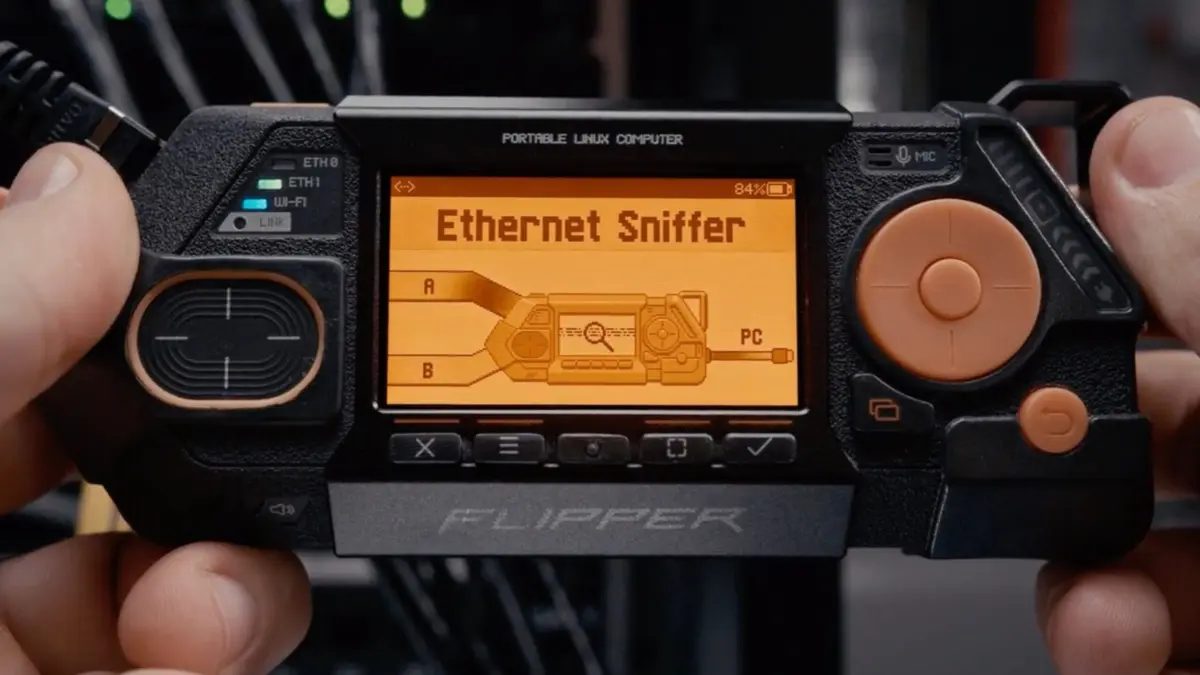
The landscape of portable penetration testing and hardware exploration has undergone a significant transformation with the official unveiling of the Flipper One, the successor to the globally recognized Flipper Zero. While the original Flipper Zero captured the public imagination as a versatile multi-tool for interacting with digital environments, the Flipper One represents a fundamental architectural shift, transitioning from a microcontroller-based device to a fully-fledged Linux-based pocket computer. This evolution is designed to cater to a more professional tier of security researchers, moving beyond simple signal playback and infrared manipulation into the realm of complex network analysis, software-defined radio (SDR), and edge computing.
The Flipper Zero, released following a highly successful 2020 Kickstarter campaign, became a cultural phenomenon due to its accessible user interface and the "Tamagotchi-style" gamification of hacking tasks. It allowed users to interact with Sub-GHz radio frequencies, Near Field Communication (NFC), Radio Frequency Identification (RFID), and Infrared (IR) systems with minimal technical overhead. However, the hardware limitations of its STM32 microcontroller meant that it could not run a standard operating system or handle high-bandwidth data processing. The Flipper One addresses these limitations by integrating a powerful system-on-a-chip (SoC) and a significantly expanded memory architecture, effectively bridging the gap between a handheld tool and a professional "cyberdeck."
Technical Specifications and Hardware Architecture
The core of the Flipper One’s performance lies in its move to the Rockchip RK3576, an 8-core ARM SoC. This processor is a substantial leap from the single-core architecture of the Flipper Zero. The RK3576 includes high-performance Cortex-A72 cores and power-efficient Cortex-A53 cores, allowing the device to handle multitasking and complex Linux distributions. Furthermore, the inclusion of a dedicated Neural Processing Unit (NPU) provides the hardware acceleration necessary for on-device machine learning tasks, which could theoretically be utilized for pattern recognition in radio signals or automated vulnerability scanning.
Memory and storage have seen a tenfold increase to accommodate the requirements of a Linux environment. The Flipper One features 8GB of LPDDR5 RAM and 64GB of UFS 2.2 internal storage. For context, the Flipper Zero relied primarily on an external microSD card for storage and had mere kilobytes of internal RAM. The transition to LPDDR5 and UFS 2.2 ensures high data throughput, which is critical when the device is used for capturing and analyzing large volumes of network traffic or radio data. The display has also been upgraded to a 256 × 144 grayscale LCD, providing more screen real estate for terminal outputs and complex graphical interfaces while maintaining the low-power philosophy of the original design.

To manage the user interface and basic input/output operations without taxing the main SoC, Flipper Devices has implemented a secondary low-power microcontroller (MCU). This dual-processor architecture ensures that the device remains responsive even when the main Linux system is under heavy computational load. Additionally, the device retains a microSD slot for expandable storage, ensuring compatibility with existing user workflows established on the Flipper Zero.
Comparative Pricing and Market Positioning
The shift in hardware capabilities is reflected in the Flipper One’s pricing structure. The Flipper Zero currently retails for approximately $169, positioning it as an affordable entry-level tool for hobbyists and students. In contrast, the Flipper One enters the market at a base price of $399 during its initial crowdfunding phase, with an expected retail price of $550.
According to Flipper Devices, the $399 price point is largely driven by the cost of components. The company has stated that the high-performance RAM and UFS storage alone account for nearly half of the total hardware production cost. This transparency serves to justify the price hike to a community that has historically been sensitive to the cost of "prosumer" hacking tools.
For users requiring specialized capabilities, the company has introduced the "Ultimate Bundle," priced at $759. This package includes three critical modular add-ons:
- Software-Defined Radio (SDR) Module: Unlike the Sub-GHz radio in the Zero, which was limited to specific frequencies, an SDR module allows for wide-band signal reception and transmission, enabling analysis of everything from FM radio to satellite communications.
- 5G Module: This allows for cellular network testing and remote connectivity, turning the Flipper One into a mobile workstation capable of operating independently of Wi-Fi networks.
- LoRa Module: Designed for Long Range mesh networking, this module facilitates low-power, long-distance communication, which is increasingly relevant in Industrial IoT (IIoT) security research.
Crowdfunding Performance and Community Reception
The market’s appetite for a more powerful portable Linux computer is evidenced by the overwhelming success of the Flipper One’s Kickstarter campaign. With an initial goal of $300,000, the project has garnered over $13 million in pledges from more than 24,000 backers. Data from the campaign suggests a high demand for the most capable versions of the hardware; approximately 5,300 backers opted for the $759 Ultimate Bundle, outperforming the 4,300 backers who chose the base model.

However, the reception within technical communities such as Reddit has been more nuanced. While many enthusiasts praise the hardware specifications, others have expressed concern regarding the "feature creep" and the significantly higher barrier to entry. Critics argue that at the $550 retail price point, the Flipper One faces stiff competition from established portable Linux platforms and high-end Single Board Computers (SBCs) like the Raspberry Pi 5, which can be integrated into custom-built "cyberdecks" for a fraction of the cost. The counter-argument, championed by Flipper’s supporters, is that the Flipper One offers a polished, integrated experience with purpose-built security hardware that a DIY Raspberry Pi project cannot easily replicate in a pocket-sized form factor.
Historical Context and the Flipper Zero Legacy
To understand the significance of the Flipper One, one must look at the impact of its predecessor. The Flipper Zero was often criticized—and simultaneously celebrated—for its visibility on social media platforms like TikTok. Viral videos often depicted the device being used for legally dubious activities, such as changing gas station price signs or opening Tesla charging ports. While many of these videos were staged or utilized simple replay attacks, they cemented the device’s reputation as a "Swiss Army knife" for the modern age.
The Flipper Zero’s success was rooted in its ability to demystify complex protocols like NFC and Sub-GHz radio for a general audience. It provided a tangible way to "see" the invisible waves that govern modern life. However, for professional penetration testers, the Zero was often seen as a limited "toy" that lacked the processing power to run standard security tools like Wireshark, Metasploit, or custom Python scripts natively. The Flipper One is a direct response to this professional feedback, aiming to provide a platform that is as capable as a laptop but as portable as a smartphone.
Chronology and Production Timeline
The development and distribution of the Flipper One follow a multi-year roadmap:
- November 2026: Launch of the Kickstarter campaign and public unveiling of final specifications.
- December 17, 2026: Scheduled conclusion of the crowdfunding phase.
- Early 2027: Finalization of hardware revisions and transition to mass production.
- July 2027: Estimated commencement of shipping for early backers.
This timeline is subject to the volatility of the global electronics supply chain. Flipper Devices has explicitly warned backers that component shortages represent the most significant risk to the delivery schedule. Specifically, the company noted that if the prices of LPDDR5 RAM continue to fluctuate or rise, they may be forced to adjust the product specifications, which could include reducing the total RAM from 8GB to a lower capacity to maintain price stability.

Implications for the Cybersecurity Industry
The introduction of the Flipper One signals a shift in the democratization of sophisticated hacking tools. By providing a portable, high-performance Linux environment equipped with NPU-accelerated processing and 5G connectivity, the device lowers the barrier to performing advanced network and radio frequency attacks in the field.
From a defensive standpoint, the existence of such a device necessitates a more robust approach to physical and wireless security. The Flipper One’s ability to act as a LoRa node or a 5G-connected rogue access point makes it a formidable tool for "Red Teaming" exercises. Security analysts predict that the device will become a staple in professional toolkits, used for everything from auditing smart city infrastructure to testing the resilience of industrial control systems.
Furthermore, the Flipper One’s reliance on a standard Linux kernel means it will likely benefit from a vast ecosystem of open-source security tools. Unlike the Flipper Zero, which required custom-written apps in C or Flipper-specific scripting, the One will theoretically be able to run any tool compatible with the ARM architecture. This interoperability transforms the device from a specialized gadget into a universal computing platform, potentially redefining the category of "portable security research tool" for the next decade.
