

In July 2026, Spain endured what forestry experts have characterized as one of the most catastrophic wildfire events in the nation’s modern history. Raging through the parched landscapes west of Madrid, the blaze exhibited a level of intensity that rendered traditional firefighting efforts largely ineffective. According to official reports from Spanish authorities, the fire advanced with a "blistering speed," consuming roughly 20 kilometers of terrain in a mere 30 minutes—a rate of spread that outpaced motorized evacuation efforts in several sectors. By the time the flames were brought under control, approximately 77,000 hectares of land had been reduced to ash, necessitating the emergency evacuation or lockdown of 87,000 residents. Entire villages were leveled, leaving local populations to describe the ordeal as an apocalyptic event that signaled a permanent shift in the regional climate reality.
The Spanish disaster was not an isolated incident but rather the centerpiece of a record-breaking year for wildfires across the European continent. By early November 2026, data indicated that over 704,000 hectares had been burned across Europe, representing a staggering 82% increase over the twenty-year average of 386,483 hectares for the same period. While Mediterranean nations such as France, Croatia, Greece, and Italy faced their expected seasonal trials, the crisis extended into northern latitudes. Countries traditionally considered low-risk for major wildfires, including Belgium, Germany, and the United Kingdom, reported intense fire activity, highlighting a systemic vulnerability fueled by rising global temperatures and prolonged periods of drought.
The Limits of Reactive Firefighting and Detection
In response to the escalating threat, the European Union and various international bodies have significantly increased investments in firefighting infrastructure. Following the devastating 2026 summer season, the EU announced the development of a modernized firefighting fleet, designed to provide rapid aerial support across member states. Similarly, initiatives such as the European Space Agency’s funding calls and the XPrize Wildfire competition have directed millions of dollars toward early detection technologies, utilizing satellite imagery and AI-driven sensors to identify ignitions in their infancy.
However, a growing chorus of experts warns that focusing solely on suppression and detection is a reactive strategy that fails to address the root causes of the crisis. Lindon Pronto, a senior fire management expert and co-founder of the Fire Climate Resilience Initiative, emphasized in a recent analysis that while early detection is valuable, it does not equate to prevention. "That’s just chasing after the problem because the fire already started," Pronto noted. He argues that the increasing frequency and intensity of "mega-fires" mean that once a fire reaches a certain threshold, even the most advanced detection systems cannot prevent catastrophic outcomes if the landscape itself is a "tinderbox."
The consensus among fire scientists is shifting toward a "before-the-burn" philosophy. Angela Iglesias Rodrigo, head of Spain’s forest fire defense service, articulated this necessity in a briefing to the World Health Organization. She noted that many European nations remain overly reliant on emergency response mechanisms, neglecting the critical role of forest management and landscape architecture. In a world characterized by hotter and drier conditions, the way land is managed, restored, and designed will determine the speed and severity of future wildfire seasons.
The Emergence of Restoration-as-a-Business
As public funding for long-term land management often falls short of the required scale, a novel "restoration-as-a-business" industry is emerging in Europe. This sector seeks to bridge the gap between ecological necessity and economic viability by partnering with corporations to fund large-scale reforestation and land-resilience projects. These companies view forest management not as a charity, but as a critical infrastructure investment for a climate-unstable world.
A primary player in this field is Land Life, an end-to-end reforestation company that focuses on building fire-resilient ecosystems. The company’s methodology begins the moment a fire is extinguished. The immediate priority in the aftermath of a wildfire is the mitigation of soil erosion. Intense heat can destroy the root systems that stabilize the earth; without these anchors, subsequent rainfall can wash away topsoil, leading to a cascade of environmental failures. This runoff can contaminate local water supplies and devastate marine ecosystems downstream.
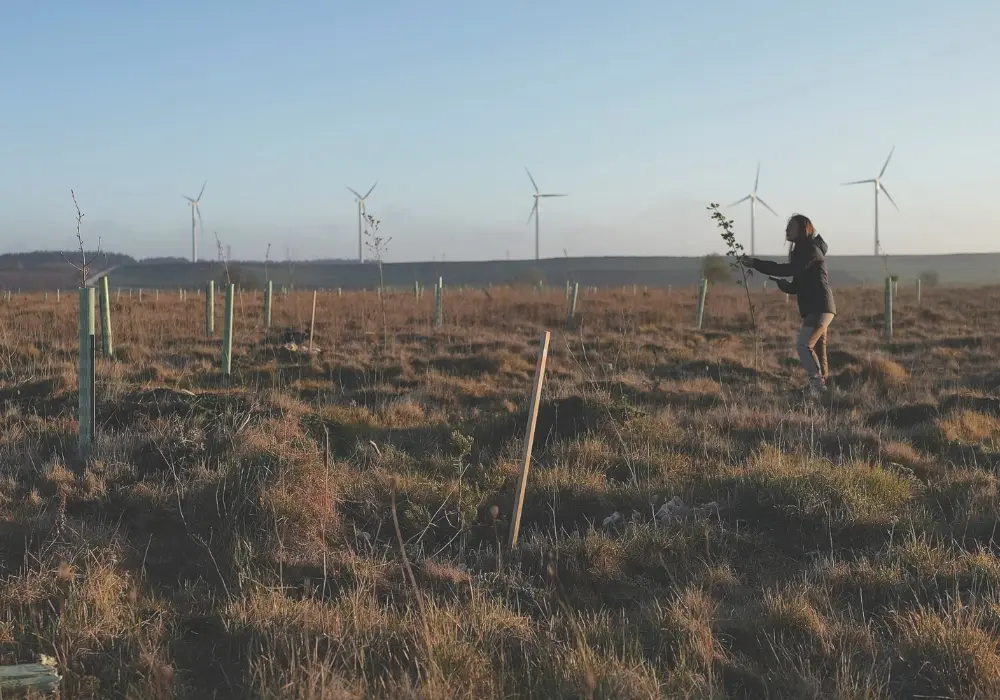
To combat this, Land Life utilizes mulching—applying shredded bark or remains of dead trees—to protect the soil surface and create a micro-environment conducive to natural regrowth. Francisco "Pancho" Purroy, Land Life’s regional director for Iberia, explains that the goal is not merely to plant trees, but to design a landscape capable of surviving the next fire. This involves a move away from "monoculture" planting—what Purroy describes as a "wheat field of pines"—which can ignite easily and burn with uncontrollable intensity. Instead, the focus is on planting diverse native species adapted to local conditions and managing the density of both the leafy canopy and the shrubby understory. Strategic "fire breaks," or gaps in vegetation, are integrated into the design to naturally slow the spread of future blazes.
Technological Innovation: From Drones to Autonomous Robots
The physical act of replanting hundreds of thousands of hectares presents a logistical nightmare. While traditional manual labor is the gold standard for quality, it is slow and physically taxing. Seeding drones have been proposed as a high-tech alternative, but their success rates vary wildly depending on the species and the terrain.
In Portugal, a startup named Trovador is introducing a third way: autonomous "robot dogs." These four-legged robotic platforms are designed to navigate the treacherous, steep slopes of fire-ravaged areas where human workers or traditional machinery cannot safely operate. Founded in 2023 by Sebastião Mendonça and Marta Bernardino, Trovador aims to make reforestation faster, cheaper, and more precise.
Marta Bernardino explains that the robots are equipped with advanced algorithms that allow them to assess their immediate environment in real-time. By distinguishing between sandy soil and rocky outcrops, the robots can determine the optimal placement for each sapling, significantly increasing the chances of survival. Currently testing a beta prototype in Portugal’s Mafra National Park, Trovador represents a shift toward "precision forestry," where technology is used to adapt to nature rather than trying to force nature to adapt to technology.
The Economic Imperative and the Path Forward
The transition toward proactive forest management is increasingly supported by economic data. The European Commission estimates that wildfires currently cost the continent at least €2.5 billion annually in damages, lost timber, and emergency response costs. As climate change accelerates, these costs are projected to rise exponentially, threatening supply chains, infrastructure, and private landholdings.
Research cited by the World Bank suggests a powerful financial incentive for a shift in strategy: for every €1 invested in wildfire prevention and landscape resilience, between €4 and €7 can be saved in future response and recovery expenditures. This high return on investment is what makes the "restoration-as-a-business" model attractive to private investors and corporations looking to offset their environmental footprints or protect their assets.
Despite the clear benefits, experts like Alexander Held of the European Forest Institute point out that private industry participation in "building back better" is still in its infancy. "Very little from the industry side goes into this space of restoration," Held observed, noting that most corporate environmental social responsibility (ESR) funds still favor simple tree-planting initiatives over complex, long-term resilience projects.
The 2026 wildfire season has served as a wake-up call for the European Union. While the expansion of firefighting fleets and the deployment of satellite detection systems are necessary components of a modern safety net, they are insufficient on their own. The future of European landscape security lies in the hands of those who can transform scorched earth back into resilient forests. As Purroy of Land Life emphasizes, nature restoration must become a collaborative effort where the private sector contributes significantly to the public good. In the face of a warming planet, the business of restoration may soon become one of the most vital industries on the continent, turning the "end of the world" feeling of 2026 into a foundation for a more resilient 2030 and beyond.
