

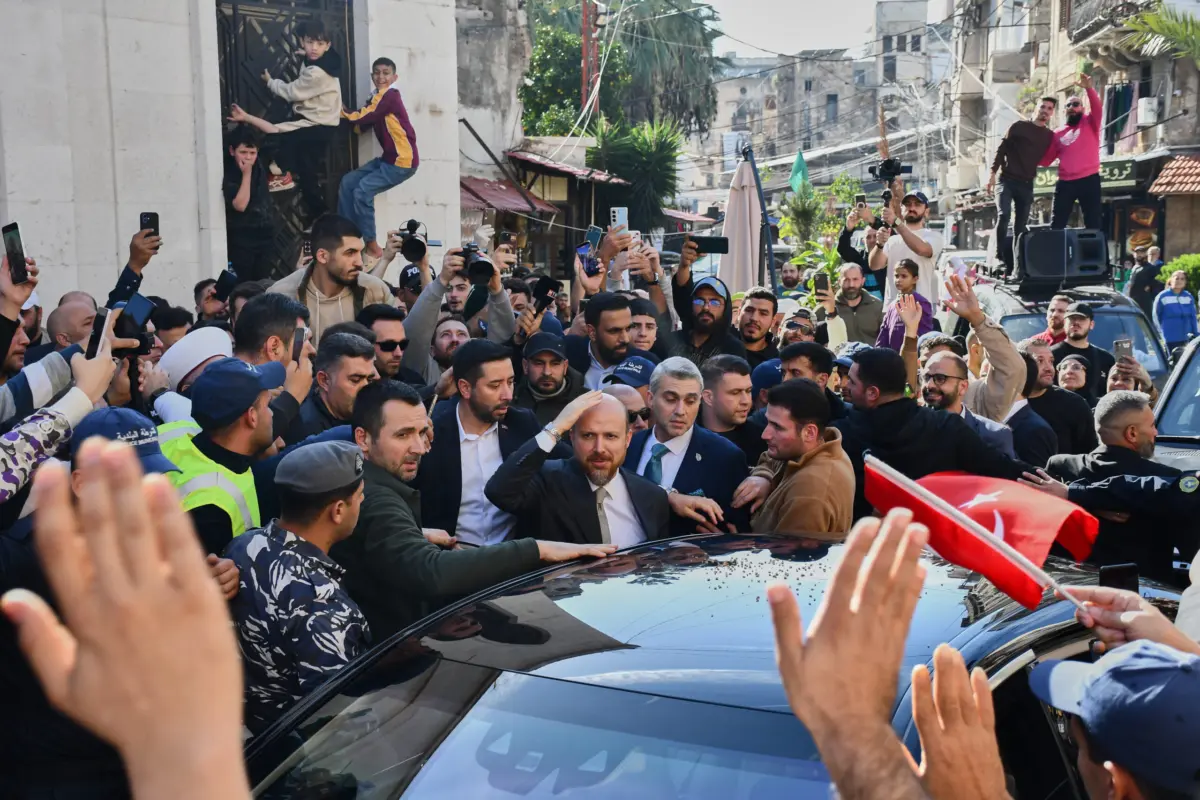
A high-level Turkish delegation recently concluded a pivotal three-day visit to Lebanon, signaling Turkiye’s intensified commitment to fostering stability, economic recovery, and regional cooperation in the Levant. The visit, undertaken by a prominent Turkish official, emphasized the profound historical and cultural ties between the two nations, transcending mere diplomatic relations to embrace a shared future built on mutual respect and partnership. Hosted by Dr. Tarek Mitri, Lebanon’s Deputy Prime Minister, the delegation engaged with a wide spectrum of Lebanese political, spiritual, and community leaders, articulating a clear vision for a sovereign Lebanon standing on its own feet, supported by partners rather than patrons. This engagement comes at a critical juncture for Lebanon, a nation grappling with multifaceted crises and geopolitical pressures.
Background and Context: Lebanon’s Complex Landscape
Lebanon, a nation often described as the "Switzerland of the Middle East" for its confessional diversity and historical role as a financial hub, has in recent years faced unprecedented challenges. The country has been navigating a severe economic collapse since 2019, characterized by hyperinflation, widespread poverty affecting over 80% of its population, and a banking crisis that has frozen citizens’ savings, effectively collapsing the national currency. This economic downturn was brutally exacerbated by the devastating Beirut port explosion in August 2020, which killed over 200 people, injured thousands, and destroyed large swathes of the capital, further crippling its infrastructure and public morale. Politically, Lebanon has struggled with chronic instability, frequent governmental stalemates, and persistent challenges to institutional reform, often leading to prolonged presidential vacuums and caretaker governments.
Regionally, Lebanon’s strategic location has often rendered it vulnerable to external conflicts. The ongoing war in Gaza and its spillover effects have significantly impacted Lebanon’s southern border, leading to increased tensions and cross-border exchanges of fire, resulting in displacement and humanitarian concerns. The presence of various armed groups, alongside the United Nations Interim Force in Lebanon (UNIFIL), underscores the delicate security balance in the south, where UN Security Council Resolution 1701 remains a critical, albeit often challenged, framework for stability. Turkiye, with its deep historical connections to the Levant stemming from centuries of Ottoman rule, views a stable and prosperous Lebanon as integral to broader regional security and economic integration. The visit by the Turkish official sought to reaffirm Turkiye’s role not as an external actor seeking to impose solutions, but as a committed neighbor invested in Lebanon’s resilience and self-determination.
Chronology of a Transformative Visit
The three-day visit unfolded across Lebanon’s diverse geographical and political landscape, commencing in the vibrant capital, Beirut, and extending northward to Tripoli and the Akkar region. The schedule was meticulously designed to encompass high-level political dialogues, engagements with spiritual leaders, and direct interactions with communities, reflecting a comprehensive approach to understanding Lebanon’s current realities and future aspirations.
Upon arrival in Beirut, the Turkish delegation was received by Dr. Tarek Mitri, Lebanon’s Deputy Prime Minister, setting the tone for a visit steeped in hospitality and substantive discussions. Key meetings included separate engagements with President Joseph Aoun, Prime Minister Nawaf Salam, and the veteran Speaker of Parliament, Nabih Berri. These discussions centered on Lebanon’s political stability, the urgent need for institutional reforms, and pathways to national unity. The Turkish official underscored Turkiye’s unwavering support for Lebanon’s sovereignty and territorial integrity, a message particularly resonant given the ongoing geopolitical sensitivities and challenges to state authority.
Beyond the political sphere, the delegation engaged with a broad spectrum of Lebanon’s diverse confessional fabric. Significant meetings were held with the Grand Mufti of the Lebanese Republic, Sheikh Abdul Latif Derian, and the Greek Orthodox Metropolitan of Beirut, His Eminence Elias Audi. These interactions highlighted Lebanon’s unique model of coexistence, where numerous Christian (Maronite, Greek Orthodox, Armenian Orthodox, etc.) and Muslim (Sunni, Shia, Druze, Alawite) communities live side-by-side, and the critical role of religious institutions in fostering social cohesion. Further engagements included Mrs. Bahia Hariri, Vice President of the Future Movement, and Mr. Walid Jumblatt, former leader of the Progressive Socialist Party, demonstrating an effort to connect with a wide array of political perspectives and community representatives across the sectarian divide.
The itinerary also extended beyond Beirut to shed light on Lebanon’s regional dynamics. A visit to Tripoli, the northern port city, held particular symbolic importance. Historically a vital commercial hub and a city rich in cultural heritage, Tripoli today faces significant socio-economic challenges, including high unemployment rates and poverty. The delegation experienced the city’s unique charm, including its culinary traditions, such as the famous sweets of Hallab, while engaging with local stakeholders on avenues for economic development and urban revitalization. The official’s remarks on Tripoli’s historical significance as a Phoenician common council venue underscored the vision for a revitalized regional identity and cooperation, harking back to an era of thriving trade and collective decision-making.
The journey further ventured into the Akkar region, one of Lebanon’s most underserved and impoverished areas, where direct community engagement offered insights into the daily lives and needs of the population. The experience of sharing a traditional za’atar breakfast on the road to Akkar symbolized the personal connection forged during the visit, reinforcing the message of partnership and shared humanity. Throughout these travels, from the bustling streets of Beirut, where a late-night shawarma at Barbar offered a taste of local life, to the quieter roads of Akkar, the delegation observed a quiet determination among the Lebanese people to rebuild and secure a better future, a sentiment that deeply resonated with the Turkish official. The visit concluded with a strong sense of gratitude for Lebanese hospitality and a conviction that the bonds between the two nations extend far beyond diplomatic formalities, rooted in a shared "geography of hearts."
Key Pillars of Turkiye-Lebanon Partnership: A New Framework
The Turkish official’s reflections crystallized into five core convictions, outlining a comprehensive framework for Turkiye’s engagement with Lebanon. These convictions represent a strategic approach aimed at empowering Lebanon from within and fostering regional stability.
1. Upholding National Unity as Lebanon’s Foremost Strength
Turkiye firmly believes that Lebanon’s rich tapestry of faiths, communities, and traditions is not a source of weakness but an invaluable asset. The official articulated that this diversity, if managed constructively, is a "richness to be protected," serving as the bedrock for national resilience. Lebanon’s unique confessional system, while designed to ensure representation for its diverse Christian and Muslim communities, has also at times been a source of political deadlock and internal division. The meetings with leaders across the political and spiritual spectrum, from President Joseph Aoun and Prime Minister Nawaf Salam to the Grand Mufti Sheikh Abdul Latif Derian and Metropolitan Elias Audi, reinforced the shared aspiration for a state that genuinely serves all its citizens, fosters robust and transparent institutions, and creates a future compelling enough for its youth to remain within the country, rather than seeking opportunities abroad. Turkiye’s interest, therefore, is unequivocally in a strong, whole, and united Lebanon, recognizing that internal cohesion is the ultimate guarantor of security, recovery, and long-term prosperity.
2. Asserting Lebanese Sovereignty and Self-Determination
A critical conviction expressed was that Lebanon’s decisions must exclusively belong to the Lebanese people. For too long, Lebanon has been perceived and treated as an arena for proxy rivalries by external powers, a dynamic that has inflicted immense suffering and hindered its progress. The official unequivocally stated that this era must conclude. The principle of Lebanon’s sovereignty and territorial integrity is non-negotiable and must be upheld across "every inch of its land." This sentiment is particularly poignant in the south, where towns, farmlands, and families have borne the brunt of recent conflicts and where questions of occupation and state control remain pressing. The call for an end to occupation in the south and for the Lebanese state to extend its protective umbrella to all citizens, from Beirut to the southern border, underscores Turkiye’s respect for international law and national self-determination. Turkiye’s stance is clear: real friends offer support when requested and respectfully withdraw when not, a principle that guides its engagement, seeking to empower rather than dictate.
3. Forging a Levant-Driven Future through Trade and Economic Integration
The vision extends beyond national borders to advocate for a revitalized regional approach. The official posited that the complex problems of the Levant cannot be solved in isolation by individual capitals or through external interventions. Instead, the region must rediscover its historical tradition of acting as a cohesive entity, much like the Phoenician cities that held common councils in Tripoli to deliberate on matters of profound importance over two millennia ago. Tripoli, with its warm reception and historical significance as a nexus of ancient trade routes, was highlighted as a fitting starting point for this renewed regional dialogue. The economic complementarities between Lebanon and Turkiye are substantial: Lebanon’s entrepreneurial spirit, established banking and services sector, and strategic ports can synergize with Turkiye’s robust manufacturing base, sophisticated logistics networks, and pivotal access to European and Central Asian markets. The prospect of Syria’s eventual recovery opens the possibility of establishing a vital corridor for trade, transport, and energy, linking these countries and forming the "backbone of a new regional economy." This paradigm posits that stability will naturally follow prosperity when goods, investments, and innovative ideas flow freely across the region, fostering mutual growth and reducing dependencies on distant markets.
4. Turkiye’s Proven Record of Support, Not Empty Promises
Turkiye approaches its partnership with Lebanon not with new slogans or unverified pledges, but with a demonstrable track record of solidarity and practical assistance. This commitment has been evident in its consistent support for the United Nations Interim Force in Lebanon (UNIFIL)’s peacekeeping mission in the south, contributing troops and resources to regional stability since its inception. Furthermore, through its development agency, TİKA (Turkish Cooperation and Coordination Agency), and the Turkish Red Crescent, Turkiye has delivered crucial humanitarian aid during Lebanon’s most challenging periods, including the immediate aftermath of the Beirut port blast in 2020, where it provided medical supplies, food aid, and reconstruction assistance. TİKA has also undertaken numerous projects aimed at cultural heritage restoration, educational infrastructure, and community development across Lebanon. The immediate task ahead involves comprehensive reconstruction efforts in the south – rebuilding homes, schools, hospitals, roads, and restoring vital olive groves – to ensure that every displaced family can return with dignity. Turkiye stands ready to play a full part in this vital endeavor, working to strengthen the Lebanese institutions that must spearhead these efforts. Internationally, Turkiye has consistently defended Lebanon’s sovereignty in various multilateral forums. Moreover, through educational foundations and institutions, Turkiye has facilitated exchange programs and scholarships, recognizing the immense potential of Lebanese students and young people, and the mutual benefits gained when societies learn and grow side by side.
5. Embracing Interdependence as a Pathway to Mutual Strength
The final conviction redefines cooperation not as a unidirectional flow of aid but as a dynamic interdependence that mutually strengthens both nations. In an increasingly fragile global environment, no country can truly prosper in isolation. The stability of Lebanon directly contributes to the security of Turkiye and the broader region, acting as a crucial buffer against wider instability. The growth of Lebanese businesses creates valuable partnership opportunities for Turkish enterprises, fostering bilateral trade and investment. When universities, civil society organizations, and young people from both nations connect and collaborate, both societies gain immeasurable benefits in terms of knowledge exchange, cultural understanding, and innovation. The ultimate objective is to forge a "partnership of equals," one where each nation contributes its unique strengths without compromising its independence, fostering a relationship built on shared growth and resilience rather than dependency.
Broader Impact and Implications: A Vision for the Levant
Turkiye’s renewed engagement with Lebanon carries significant implications for both bilateral relations and the broader geopolitical landscape of the Levant. For Lebanon, this commitment offers a crucial lifeline of support during its ongoing crises, providing a partner focused on long-term recovery and institutional strengthening rather than short-term political maneuvering. The emphasis on sovereignty and internal decision-making resonates deeply with a nation that has historically grappled with external interference and the heavy costs of being an arena for regional rivalries. The proposed economic corridor, linking Turkiye through a recovering Syria to Lebanon, envisions a fundamental restructuring of regional trade and transport networks, potentially unlocking immense economic opportunities and fostering greater interdependence. This could serve as a powerful counter-narrative to the prevailing fragmentation and conflict in the region, promoting a shared vision of prosperity.
For Turkiye, this strategic outreach to Lebanon is consistent with its broader foreign policy objectives of promoting regional stability, fostering economic integration, and expanding its diplomatic influence in the Eastern Mediterranean and the Middle East. By positioning itself as a reliable partner and advocate for Lebanese sovereignty, Turkiye seeks to reinforce its standing as a constructive regional power, distinct from other actors whose engagements might be perceived as more transactional or self-serving. The focus on rebuilding the south also underscores a humanitarian dimension, aligning with Turkiye’s historical role as a provider of aid and a defender of vulnerable populations, particularly in conflict-affected zones. Ultimately, the visit signals a robust commitment to a future where Beirut and Istanbul, once separated by distance on a map, are indeed "neighbors in the geography of hearts," working together to build a more stable, prosperous, and self-determined Levant.
The Road Ahead: Building Lasting Partnerships
The Turkish official departed Lebanon with a profound conviction that the moment for deeper partnership is unequivocally now. Despite enduring more than its share of conflict, economic hardship, and loss – particularly in the past year and most acutely in the south – Lebanon revealed itself not as a country defeated, but as a resilient people poised for rebuilding. Turkiye pledges to stand by Lebanon, not as a distant benefactor, but as an invested neighbor, until the last displaced family has returned to their village in the south and every school has reopened its doors, symbolizing a full return to normalcy and dignity. This inaugural visit is envisioned as the first of many, with the friendships forged over these three days intended to blossom into enduring partnerships across institutions, businesses, and, most importantly, among the young people of both nations. The shared sentiment of "Shukran, Lebanon. Tesekkurler. Until we meet again," encapsulates a hopeful future of continued collaboration and mutual growth, reinforcing the deep-seated historical and cultural bonds that connect these two vibrant nations.
