

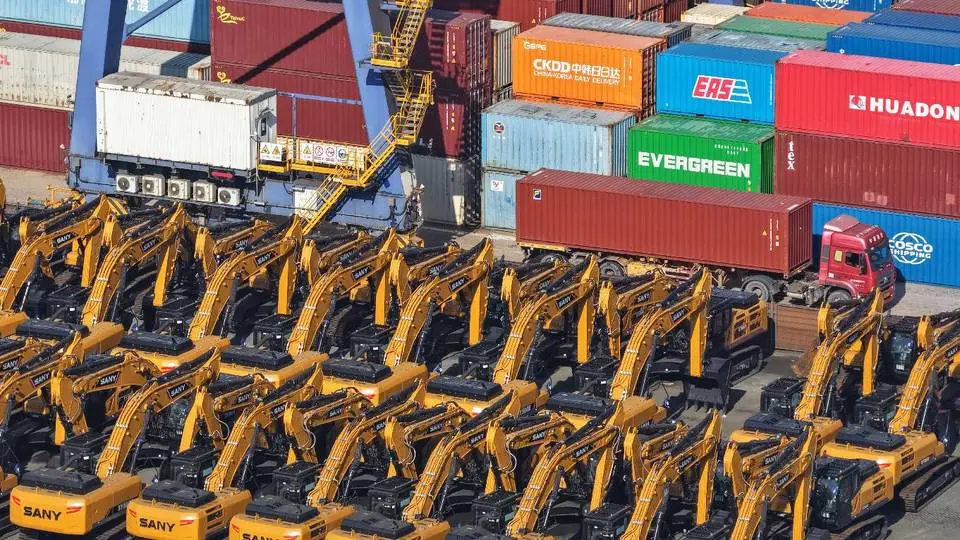
For years, the United States has strategically employed export controls to restrict China’s access to advanced technologies, a move Beijing has consistently condemned as an overt attempt to assert American "technological hegemony" and a violation of free-market principles. Yet, as Washington has leveraged its vast market and technological prowess for geopolitical objectives, China has been meticulously cultivating its own formidable leverage: dominance in critical minerals, essential industrial inputs, and specialized manufacturing machinery. This shift in power dynamics is ushering in a new era of economic coercion and geopolitical maneuvering, with potentially far-reaching consequences for global supply chains, international relations, and the future of technological innovation.
The current geopolitical landscape is increasingly characterized by the weaponization of economic dependencies. While the US has historically used its market size and technological leadership as instruments of foreign policy, China’s strategy represents a parallel, and arguably more potent, approach. By controlling key components of global industrial production, Beijing is positioning itself to exert significant influence over nations that rely on these essential resources and manufacturing capabilities. This strategy is not merely a reactive measure to US export controls; it is a proactive and sophisticated application of economic statecraft, designed to enhance China’s strategic autonomy and project its power on the global stage.
The Genesis of China’s Leverage: A Strategic Build-Up
China’s ascent to a dominant position in critical minerals and specialized manufacturing is the result of decades of strategic planning and investment. While the US and other Western nations focused on developing high-end consumer technologies and services, China prioritized building its industrial base from the ground up. This involved aggressive state-backed investment in mining, processing, and manufacturing, often with a long-term vision that prioritized resource security and industrial self-sufficiency.
A Timeline of China’s Growing Dominance:
- 1980s-1990s: China begins to significantly invest in its domestic mining sector, identifying and exploiting its vast reserves of rare earth elements and other critical minerals. This period also sees the initial stages of developing its heavy industry and manufacturing capabilities.
- 2000s: China’s entry into the World Trade Organization (WTO) in 2001 accelerates its integration into the global economy. This allows for unprecedented growth in manufacturing and provides access to advanced machinery and technologies from abroad, which are then often reverse-engineered or adapted. China’s share of global rare earth production begins to surge.
- 2010: In a clear demonstration of its growing leverage, China temporarily restricts exports of rare earth elements, impacting global supply chains and sparking widespread concern. This event serves as a stark warning to other nations about China’s control over these vital materials.
- 2010s-Present: China continues to consolidate its control over critical mineral supply chains, investing heavily in upstream mining and downstream processing. Simultaneously, it makes significant strides in developing and manufacturing advanced industrial machinery, including equipment for semiconductor fabrication, advanced robotics, and specialized chemical processing. This period also sees the implementation of policies like "Made in China 2025," aimed at upgrading the nation’s industrial capabilities.
- Late 2010s-Early 2020s: The intensification of US-China trade tensions and the imposition of export controls on advanced technologies by the US prompt China to accelerate its efforts to build resilience and develop alternative levers of influence. This includes further securing critical mineral supplies and fostering domestic innovation in advanced manufacturing.
Critical Minerals: The Foundation of Modern Technology
China’s dominance in critical minerals is not an accident but a deliberate outcome of its industrial policy. These minerals, including rare earth elements (REEs), cobalt, lithium, and graphite, are indispensable for a vast array of modern technologies, from smartphones and electric vehicles to wind turbines and advanced defense systems.
Supporting Data on China’s Critical Mineral Dominance:
- Rare Earth Elements (REEs): China currently accounts for approximately 60% of global REE mine production and an overwhelming 85-90% of global REE processing capacity. These elements are crucial for magnets used in electric vehicle motors, wind turbines, and advanced electronics.
- Cobalt: While the Democratic Republic of Congo (DRC) is the largest producer of cobalt, China controls a significant portion of its processing capacity, making it a critical choke point in the supply chain for batteries used in electric vehicles and portable electronics.
- Lithium: China is a major player in lithium refining and battery manufacturing, holding a substantial share of global processing capacity for this essential component of rechargeable batteries.
- Graphite: China is the world’s largest producer and exporter of natural graphite, a key material for battery anodes.
This concentration of control means that any disruption to China’s supply or a deliberate restriction of exports could have immediate and severe repercussions for industries worldwide. Companies and governments that have become dependent on these Chinese-sourced materials are now vulnerable to geopolitical pressure.
Specialized Manufacturing Machinery: The Engine of Industrial Power
Beyond raw materials, China’s strategic advantage extends to the sophisticated machinery required for advanced manufacturing. This includes equipment for semiconductor fabrication (though still reliant on some Western components), precision robotics, advanced chemical processing, and specialized tooling. As China has upgraded its own industrial capabilities, it has also become a significant producer and exporter of this high-value machinery.
Implications of China’s Machinery Dominance:
- Reduced Reliance on Western Suppliers: For many developing and even some developed nations, Chinese-made industrial machinery offers a more cost-effective alternative to equipment from the US, Europe, or Japan. This creates a growing dependency on Chinese technology and expertise.
- Potential for Export Controls on Machinery: Just as the US has controlled exports of advanced technology, China could potentially restrict the export of its specialized manufacturing machinery. This could hinder the industrial development of countries that rely on this equipment, effectively limiting their economic growth and technological advancement.
- Standards and Interoperability: As Chinese machinery becomes more prevalent, its technical standards and interoperability requirements could become de facto global norms, further entrenching China’s influence in industrial ecosystems.
The Geopolitical Calculus: Coercion and Retaliation
The article highlights that China’s development of these economic levers is occurring while the US is actively engaged in limiting China’s access to advanced technologies. This creates a dynamic of reciprocal coercion. While the US has used export controls to hamstring China’s technological ambitions, Beijing is now poised to use its control over critical minerals and manufacturing machinery to retaliate or exert influence.
Potential Scenarios for Chinese Coercion:
- Targeted Export Restrictions: China could selectively restrict the export of critical minerals or specialized machinery to countries that adopt policies deemed hostile to its interests, such as imposing sanctions, restricting Chinese investment, or aligning too closely with US technological containment efforts.
- Price Manipulation: Beijing could manipulate the prices of critical minerals or machinery, making it prohibitively expensive for certain nations to acquire the essential inputs for their industries.
- Conditional Access: China could offer preferential access to critical minerals or machinery in exchange for political concessions, favorable trade agreements, or increased geopolitical alignment.
- Disruption of Supply Chains: In a more extreme scenario, China could leverage its control over processing facilities to disrupt global supply chains, causing significant economic fallout for targeted nations.
Reactions and Responses from Global Stakeholders
The growing realization of China’s economic leverage has prompted a range of reactions from international actors.
Official Responses and Concerns:
- United States: Washington has long expressed concerns about China’s dominance in critical minerals and has been actively seeking to diversify supply chains and bolster domestic production. The US has also been encouraging allies to do the same. However, the sheer scale of China’s processing capacity and its control over mining operations make this a monumental challenge.
- European Union: The EU has identified critical raw materials as a strategic priority and is working to reduce its external dependencies. Initiatives like the European Raw Materials Alliance aim to boost domestic extraction, processing, and recycling of critical materials. However, the EU faces significant hurdles in replicating China’s scale and cost-effectiveness.
- Other Nations: Countries heavily reliant on Chinese imports for critical minerals or industrial machinery are increasingly apprehensive. They are caught between the desire to maintain stable economic relations with China and the geopolitical pressures from the US and its allies. Many are exploring "friend-shoring" or "near-shoring" strategies to diversify their supply chains, but the economic and logistical complexities are substantial.
- Industry Leaders: CEOs of major technology and manufacturing firms have voiced concerns about supply chain vulnerabilities and the potential for geopolitical disruptions. Many are actively investing in diversifying their sourcing and exploring alternative production locations, but the cost and time involved are significant.
Broader Impact and Implications
The implications of China’s evolving geopolitical toolkit are profound and multifaceted:
- Reshaping Global Supply Chains: The current globalized supply chain model, optimized for efficiency and cost, is being challenged. Nations are now forced to consider resilience and security alongside economic factors. This could lead to a more fragmented and regionalized global economy.
- Technological Decoupling and Competition: The ongoing technological rivalry between the US and China, coupled with China’s economic leverage, could accelerate a trend towards technological decoupling. This might result in the development of parallel technological ecosystems, with differing standards and capabilities, potentially hindering global innovation and collaboration.
- Increased Geopolitical Tensions: The use of economic coercion as a foreign policy tool is likely to escalate geopolitical tensions. Countries will face difficult choices in navigating their economic relationships with China amidst growing international pressure.
- Impact on Developing Nations: Developing countries, often more reliant on affordable Chinese machinery and critical mineral imports, could be particularly vulnerable to Chinese economic pressure. This could impede their industrialization efforts and economic development.
- The Future of Global Governance: The weaponization of economic interdependencies raises questions about the future of international trade agreements and global governance institutions like the WTO, which were designed for a less politicized global economy.
In conclusion, as the United States has long wielded its market and technological leadership as geopolitical tools, China’s strategic mastery of critical minerals and specialized manufacturing machinery represents a formidable counter-strategy. This shift is not merely an economic phenomenon; it is a fundamental recalibration of global power dynamics, with the potential to reshape international relations, industrial landscapes, and the very nature of economic interdependence in the 21st century. The world is entering an era where control over the building blocks of industry and technology has become a potent weapon, and the consequences are only beginning to unfold.
