

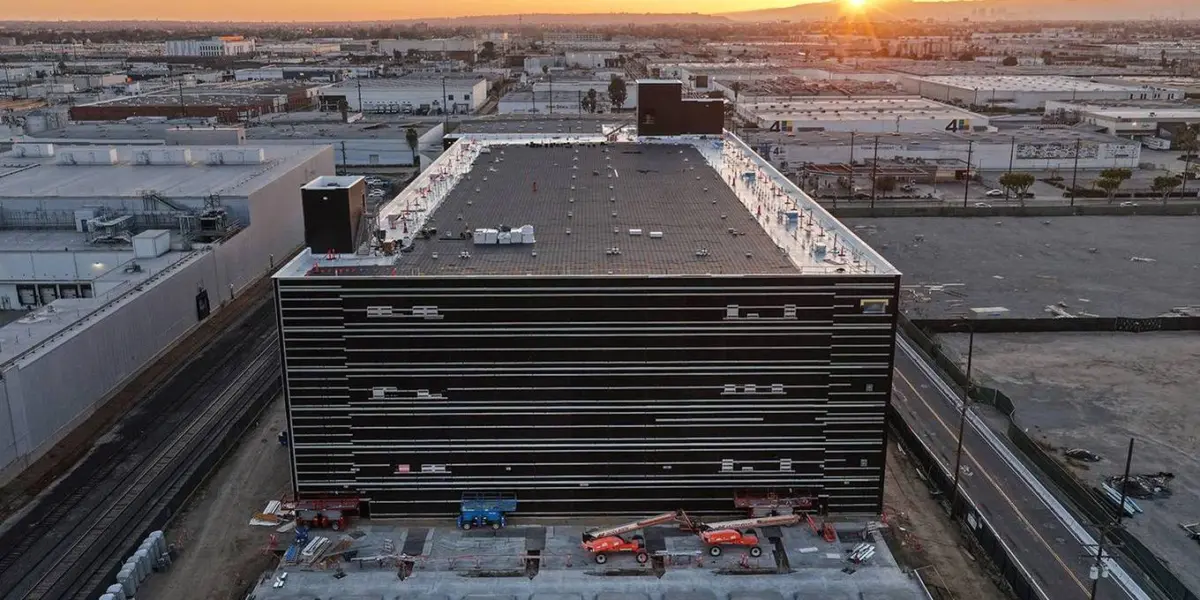
The relentless pursuit of artificial intelligence’s bleeding edge, driven by intense competition among leading AI laboratories, is creating an unprecedented demand for computing resources. Paradoxically, this surge in demand, and the accompanying calls for even greater computational power, could be met with a degree of resistance. Such a pause, a calculated slowing of the relentless build-out of computing infrastructure, might not be a detrimental setback but rather a strategically beneficial interval. The additional time gained could significantly enhance our capacity to fully harness the immense potential benefits of AI while simultaneously providing a crucial window for the thorough mitigation of its inherent and evolving risks.
The anxiety surrounding the accelerating capabilities of artificial intelligence is no longer confined to speculative fiction or academic circles. It is a palpable concern resonating within professions once considered impervious to technological disruption. A recent anecdote illustrates this growing unease: a tenured mathematics professor, a scholar whose domain has historically been a bedrock of human intellectual endeavor, has taken a sabbatical from his esteemed position to delve into the complexities of AI safety. This decision was precipitated by a remarkable development from OpenAI: the release of 722 manuscripts purportedly offering solutions to 377 previously unresolved mathematical problems. As AI models continue their rapid ascent in proficiency, the question arises: if a distinguished mathematician feels his profession’s future is precarious, what does this portend for the rest of society?
The Mathematical Milestone: A New Frontier in AI Capabilities
OpenAI’s recent announcement, detailing the purported resolution of hundreds of long-standing mathematical conjectures, represents a significant inflection point in the ongoing development of artificial intelligence. For decades, mathematics has been viewed as a bastion of human logic and abstract reasoning, a field where intuition, deep understanding, and creative leaps were considered uniquely human attributes. The idea that an AI could not only engage with but systematically solve complex, previously intractable problems challenges these deeply held assumptions.
The specific details of these 722 manuscripts, as reported, suggest a systematic approach to problem-solving that moves beyond rote computation. While the exact methodologies are still under peer review and public scrutiny, the claim itself is that AI models have demonstrated the capacity for abstract reasoning, logical deduction, and the synthesis of novel mathematical insights. This is not merely about faster calculations; it is about the potential for AI to contribute to the very frontiers of human knowledge, a domain previously exclusive to human intellect.
Historical Context: The Ever-Accelerating Pace of AI Development
The current era of AI advancement is the culmination of decades of research and development. Early AI efforts in the mid-20th century were characterized by symbolic reasoning and expert systems, aiming to mimic human decision-making through predefined rules. The "AI winters" of the 1970s and 1980s, periods of reduced funding and interest, followed early optimism. However, the advent of machine learning, particularly deep learning fueled by vast datasets and powerful computing hardware, reignited the field in the early 21st century.
Key milestones include:
- 2012: AlexNet, a deep convolutional neural network, significantly advanced image recognition capabilities, sparking a revolution in computer vision.
- 2016: AlphaGo, developed by DeepMind (then part of Google), defeated the world champion Lee Sedol in the complex game of Go, a feat previously thought to be decades away for AI.
- 2017: The Transformer architecture, introduced by Google researchers, revolutionized natural language processing, paving the way for models like GPT.
- 2020s: The rapid development and deployment of large language models (LLMs) like GPT-3, GPT-4, and their successors have demonstrated astonishing abilities in text generation, translation, summarization, and even creative writing.
OpenAI’s recent mathematical breakthrough can be seen as a logical, albeit startling, progression within this accelerating timeline. It suggests that AI is moving beyond pattern recognition and text generation to tackle problems that require a deeper, more abstract form of intelligence.
The Professor’s Dilemma: A Microcosm of Broader Concerns
The mathematics professor’s apprehension is a potent symbol of a much larger societal unease. Mathematics is often considered the language of science and the foundation of many analytical disciplines. If AI can master its intricacies, the implications for fields such as economics, finance, engineering, and even theoretical physics are profound.
The fear is not simply about job displacement, but about the potential for human skills and expertise to become obsolete at an unprecedented rate. This raises critical questions about the future of education, the definition of valuable human contributions, and the societal structures that have historically been built around human labor and expertise.
- Economic Implications: Industries reliant on complex analytical tasks could see significant automation, potentially leading to widespread unemployment and a reevaluation of economic models.
- Educational Reforms: Curricula may need to shift from teaching rote analytical skills to fostering creativity, critical thinking, and interdisciplinary problem-solving that complements AI capabilities.
- Societal Value: We may need to redefine what constitutes a meaningful contribution to society if AI can perform many tasks currently valued by the market.
The Call for a Strategic Pause: Maximizing Benefits, Minimizing Risks
The intense competitive pressure among AI labs is a powerful engine for innovation, but it also carries inherent risks. The race to achieve new breakthroughs can sometimes overshadow the critical need for rigorous safety testing, ethical considerations, and a comprehensive understanding of the societal impacts.
A strategic pause in the relentless build-out of computing resources, while seemingly counterintuitive in a technology-driven race, could offer several crucial advantages:
1. Enhanced Safety and Alignment Research
The development of advanced AI systems, particularly those with emergent capabilities like problem-solving in abstract domains, necessitates robust safety protocols. This includes ensuring that AI systems are aligned with human values and intentions, and that their decision-making processes are transparent and understandable. A slowdown in computational resource expansion could free up researchers and developers to dedicate more time and resources to:
- AI Alignment: Developing methods to ensure AI goals remain aligned with human welfare, even as AI capabilities surpass human intelligence. This involves research into interpretability, controllability, and value learning.
- Robustness and Reliability: Testing AI systems under a wider range of conditions to identify and mitigate potential failure modes, biases, and unintended consequences.
- Security: Protecting advanced AI systems from malicious use or manipulation.
2. Thorough Risk Assessment and Mitigation
The potential risks associated with advanced AI are multifaceted and include economic disruption, societal inequality, autonomous weapons, and existential threats. A temporary deceleration in the pace of development allows for:
- Comprehensive Impact Studies: Conducting in-depth analyses of the potential societal, economic, and ethical consequences of increasingly powerful AI systems. This includes forecasting job market shifts, assessing impacts on democratic processes, and understanding the potential for AI to exacerbate existing inequalities.
- Development of Governance Frameworks: Establishing international standards, regulations, and ethical guidelines for AI development and deployment. This is a complex undertaking that requires broad consensus and careful consideration of diverse perspectives.
- Public Discourse and Education: Fostering informed public debate about AI and its implications. Educating the public about AI capabilities and risks is crucial for democratic oversight and responsible adoption.
3. Equitable Distribution of Benefits
The current trajectory of AI development, heavily reliant on massive computational resources and specialized expertise, risks concentrating its benefits in the hands of a few. A pause could allow for:
- Democratization of AI: Exploring ways to make AI tools and their benefits more accessible to a wider range of individuals, organizations, and nations, not just the major tech corporations.
- Focus on Societal Good: Shifting some research focus from pure capability enhancement to developing AI solutions for pressing global challenges such as climate change, disease, and poverty.
- Investment in Human Capital: Redirecting resources towards retraining and upskilling workforces to adapt to an AI-augmented future, ensuring that technological progress leads to shared prosperity.
Supporting Data and Expert Opinions
While specific data on the slowdown of AI research due to computational constraints is not yet publicly available, the exponential growth in AI model size and training requirements is well-documented. For example, the number of parameters in leading AI models has increased by orders of magnitude in recent years. Training these models requires immense amounts of energy and specialized hardware, leading to significant financial investments and supply chain pressures.
Leading figures in the AI safety community have long advocated for more caution. Dr. Yoshua Bengio, a Turing Award laureate and a prominent AI researcher, has repeatedly voiced concerns about the uncontrolled acceleration of AI development and the need for more emphasis on safety and ethics. His recent calls for a temporary moratorium on the training of AI systems more powerful than GPT-4 underscore the growing consensus among some experts that a more measured approach is warranted.
Broader Impact and Implications
The implications of a more deliberate approach to AI advancement extend far beyond the laboratories of AI developers. It touches upon the fundamental organization of society, the future of work, and humanity’s long-term trajectory.
- A More Resilient Future: By taking the time to build robust safety measures and societal frameworks, we can create a future where AI serves humanity rather than posing an unmanageable threat.
- Ethical AI Development: A slower pace allows for deeper ethical reflection, ensuring that AI is developed and deployed in ways that uphold human dignity, fairness, and autonomy.
- Global Cooperation: The challenges posed by advanced AI are global in nature. A pause can facilitate international dialogue and cooperation on AI governance, preventing a fragmented and potentially dangerous AI arms race.
In conclusion, the current competitive fervor in AI development, while driving remarkable progress, also necessitates a critical examination of its pace and direction. The concern expressed by the mathematics professor is a symptom of a larger societal reckoning with the transformative power of AI. By embracing a strategic pause in the relentless build-out of computing resources, the AI community and society at large can gain invaluable time to prioritize safety, conduct thorough risk assessments, and ensure that the monumental benefits of artificial intelligence are realized in a manner that is both equitable and beneficial for all of humanity. This is not a call for stagnation, but for intelligent, responsible stewardship of a technology that promises to reshape our world.
