

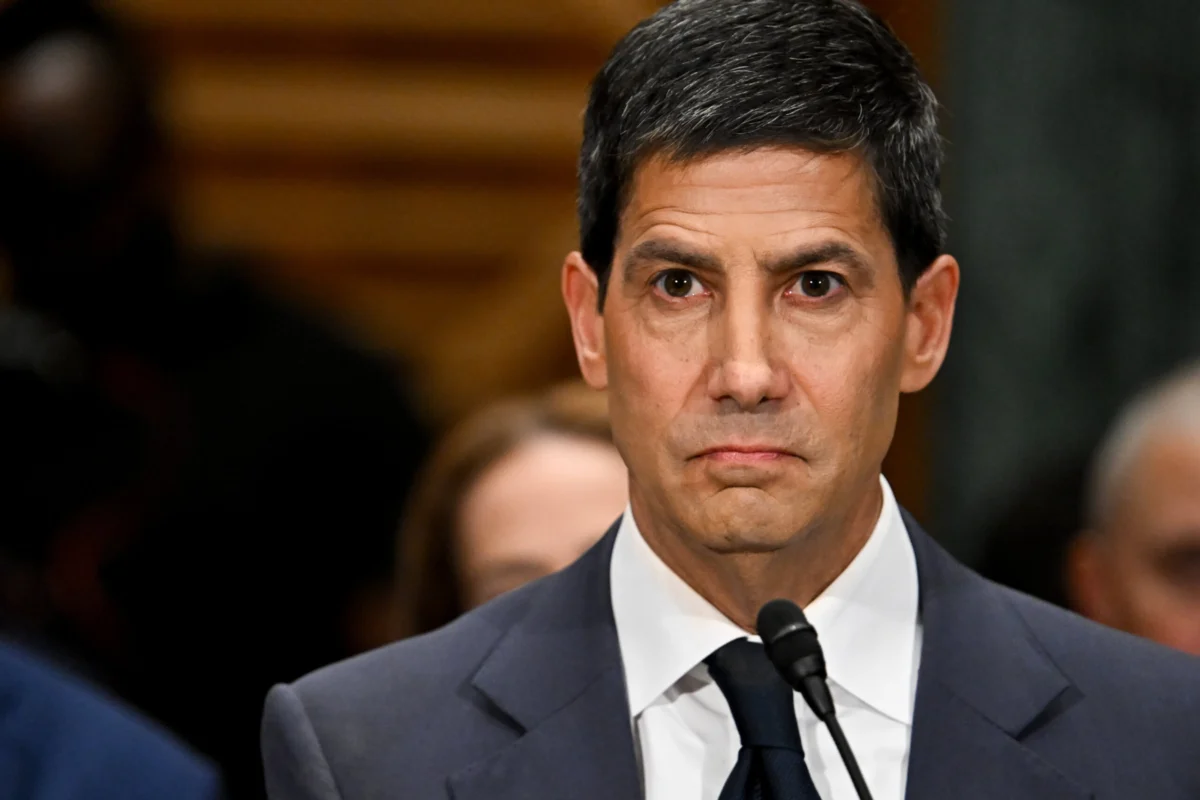
The nomination of Kevin Warsh to chair the Federal Reserve has ignited a fervent debate among economists, policymakers, and financial market participants regarding the delicate balance of the central bank’s independence, particularly concerning its balance sheet and international financial operations. At the heart of this discussion lies Warsh’s unique interpretation of Fed autonomy, which, while asserting strict independence in monetary policy, simultaneously suggests a willingness to collaborate with Congress and the executive branch on "non-monetary matters" – a distinction that has proven profoundly ambiguous and potentially transformative for the institution.
Defining the Ambiguity: Warsh’s Stance on Independence
During his April 21, 2026, confirmation hearing and subsequent responses to senators’ questions, Kevin Warsh articulated a vision for the Federal Reserve that seeks to delineate clearer boundaries between its monetary policy functions and other areas. He explicitly stated that "Fed officials are not entitled to the same special deference in areas affecting international finance, among other matters." This assertion, coupled with his frequent allusions to a new "Fed/Treasury accord" designed to govern the Fed’s balance sheet, has sown considerable uncertainty.
For many seasoned observers and former Fed officials, these comments are, at best, unclear and, at worst, deeply concerning. The core worry revolves around the potential for these proposed shifts to undermine the Fed’s ability to act decisively and independently, especially during times of financial crisis. The outcomes could range from minor adjustments to existing operational conventions to more significant limitations on the Fed’s critical tools for managing the economy. Due to the lack of granular detail in Warsh’s remarks, former officials interviewed by CNBC expressed reluctance to draw definitive conclusions but signaled significant apprehension.
The Role of Currency Swap Lines: A Case Study in the Gray Area
One of the most immediate and tangible examples of the "gray area" Warsh references is the currency swap line – a financial instrument largely unknown to the general public but critically important in international finance, especially during periods of global dollar scarcity. A currency swap line involves the Federal Reserve lending U.S. dollars to another country’s central bank in exchange for an equivalent amount of that foreign currency. These arrangements are typically activated during crises to provide dollar liquidity in foreign markets, thereby preventing or mitigating a scramble for dollars abroad that could destabilize global financial systems and, by extension, impact U.S. markets.
The relevance of swap lines has recently been underscored by Treasury Secretary Scott Bessent, who indicated that several Persian Gulf nations, including the United Arab Emirates (UAE), have requested such facilities. This request comes amid heightened geopolitical tensions, particularly in the context of the ongoing Iran war, which can place significant stress on regional economies and financial flows. While the U.S. Treasury has the capacity to provide swap lines using its own funds, as it did recently for Argentina, the ambiguity arises from whether Bessent expects the Federal Reserve to also extend these facilities. Warsh, when questioned by senators on whether the Fed would be obliged to accede to the Treasury’s wishes, offered no direct answer, leaving a critical policy question unresolved.
Historical Context and Impact of Swap Lines
Former Fed officials largely view swap lines as, at least in part, monetary policy tools. The rationale for this classification is twofold: first, their activation typically requires approval from the Federal Open Market Committee (FOMC), the body responsible for setting monetary policy. Second, drawing on these swap lines directly expands the Fed’s balance sheet, injecting dollars into the global financial system. The scale of these operations can be substantial; during the 2007-2008 Great Financial Crisis (GFC), swap lines temporarily added nearly $600 billion to the Fed’s balance sheet, representing approximately 25% of its total assets at the time. Similarly, during the initial phases of the COVID-19 pandemic in 2020, swap lines reached a peak of $450 billion, demonstrating their potency as crisis-management instruments.
These figures highlight the significant impact swap lines can have on the Fed’s balance sheet and its overall monetary posture. Historically, the decision to activate such lines has been the Fed’s, driven by a determination of systemic significance and a disruption in dollar liquidity. However, the current requests from Gulf nations present a different dynamic. Critics argue that these countries, particularly the UAE, are wealthy nations with considerable reserves and sovereign wealth funds, suggesting that the need for dollar liquidity may not be driven by a systemic crisis but rather by geopolitical considerations related to supporting an ally during the Iran war. Providing swap lines under such circumstances could be perceived as a political judgment rather than a purely market-driven one, potentially blurring the lines between monetary policy and foreign aid.
The Proposed Fed/Treasury Accord: Reshaping the Balance Sheet
Beyond swap lines, Warsh’s more sweeping proposal for a new "Fed/Treasury accord" carries even greater potential for reshaping the central bank’s operations. This accord, still unspecified in its details, is envisioned to govern the size and potentially the composition of the Fed’s balance sheet. This suggests that Warsh may view balance sheet policy as less integral to monetary policy than many other Fed officials, who often consider it an alternative means of implementing interest rate policy, especially when short-term rates are constrained near zero.
The Fed’s balance sheet has grown exponentially in recent decades, particularly in response to major financial crises. Prior to the GFC, the Fed’s balance sheet was relatively small, primarily comprising U.S. Treasury securities. However, post-2008, it swelled dramatically as the Fed embarked on quantitative easing (QE), purchasing vast quantities of Treasury bonds and mortgage-backed securities (MBS) to lower long-term interest rates and stimulate the economy. This expansion continued during the COVID-19 pandemic, pushing the balance sheet to unprecedented levels, well into the trillions of dollars.

Warsh has been a vocal critic of the Fed’s expanded balance sheet outside of crisis periods. His objection to the Fed’s reluctance to significantly reduce its balance sheet after the GFC was a contributing factor to his resignation as a Fed governor in 2011. Treasury Secretary Bessent shares this skepticism, having famously compared the Fed’s growing balance sheet to a "gain of function" experiment, arguing that it increases the Fed’s footprint in the economy and usurps powers that rightly belong to the Treasury and the administration. Bessent stated in April 2026, "I think that, especially during the GFC, a lot of things moved from Treasury to the Fed that are political decisions that should be at Treasury. So we’re in agreement on that." However, Bessent, too, admitted uncertainty about the precise contours of Warsh’s proposed accord.
The Spectrum of Outcomes: From Benign to Alarming
Former Richmond Fed President Jeffrey Lacker, a long-standing proponent of a narrower Fed focus on monetary policy, suggested that a new accord could be constructive if it led the Fed to concentrate solely on monetary policy, leaving "credit policy" to the Treasury. Under such an arrangement, the Fed might be restricted to purchasing only U.S. Treasuries, eschewing other assets like mortgages or corporate bonds, which it acquired during the GFC and the pandemic, respectively.
However, Lacker also warned of a "less constructive agreement that lets the Treasury use the Fed’s balance sheet to bypass Congress, perpetuating bad practices and compromising the Fed’s independence." This concern was echoed by an anonymous former high-level Fed official who cautioned that, if followed to its logical conclusion, such an accord could lead to the Fed losing control of its balance sheet entirely. This would fundamentally alter the institutional framework that has defined the Fed’s role since its inception.
Former Boston Fed President Eric Rosengren highlighted the practical dangers of such limitations, particularly during a severe crisis. "The flexibility that monetary policy provides is hamstrung," he stated, if the Fed agrees to limits on the size and composition of its balance sheet and requires external permission to act. He recalled that the Fed’s decision to buy mortgages during the GFC was partly motivated by the risk of becoming an excessively dominant player in the Treasury market if it only purchased government debt.
The Specter of Politicization and Market Reaction
A primary concern among former Fed officials is the potential for the Treasury to direct the central bank to purchase specific types or amounts of assets. Such a loss of operational independence could profoundly disturb bond markets. It could be interpreted as the Fed directly financing the deficit or allocating credit to politically favored sectors – actions that undermine the credibility of the central bank as an impartial guardian of price stability. JPMorgan’s chief U.S. economist, Michael Feroli, underscored the prevailing view among most Fed officials that "balance sheet policy is just interest rate policy by other means when the short rate is constrained by being close to zero," reinforcing the idea that it is intrinsically a monetary policy decision, requiring the independent judgment of the FOMC.
The historical relationship between the Fed and the Treasury has always involved a degree of cooperation, particularly during crises. Warsh himself was a Fed governor during the 2007-2008 crisis, a period characterized by intense collaboration between the two institutions. However, the critical distinction has always been that the ultimate decision-making authority on monetary policy and balance sheet operations rested with the Fed, based on its assessment of systemic risks and economic conditions.
Former St. Louis Fed President Jim Bullard acknowledged the long-standing discussions about the Fed and Treasury cooperating to limit the Fed’s asset purchases, agreeing with Bessent’s critique of the Fed’s failure to fully unwind its balance sheet after crises. However, Bullard cautioned that Bessent’s broader comments about "intimate cooperation" often correlate with "bad outcomes" when it comes to central bank independence.
Broader Implications and the Path Forward
Warsh’s proposals touch upon broader debates about the Fed’s regulatory role and its relationship with the executive branch. While the Fed typically concedes that dollar policy is the purview of the Treasury, its involvement in bank supervision and regulation has always involved a degree of political influence. For instance, under President Joe Biden, the Fed began to consider climate risk in its banking supervision, a policy that shifted under the subsequent Trump administration, which favored reducing regulatory burdens. These shifts illustrate how regulatory policy, often developed in conjunction with other politically appointed agencies, can be susceptible to political winds.
Despite the profound implications of Warsh’s ideas, any immediate, radical shift in policy would likely face institutional resistance. As Feroli noted, "The other 11 members of the FOMC will act as a brake on any quick shift in monetary policy under Warsh." The Federal Reserve’s collegial structure, where decisions are made by a committee rather than a single individual, provides an inherent check on abrupt changes.
Ultimately, Warsh may believe that by proactively shedding what he considers "non-monetary" responsibilities and delineating a clearer role for the Fed, he can safeguard the central bank’s core mandate of setting interest rates from political interference, even from the president who nominated him. As he articulated during his confirmation hearing, "Presidents want lower rates, but Fed independence up to the Fed." The challenge, however, lies in defining where monetary policy ends and other matters begin, especially when the very tools of crisis response – like swap lines and balance sheet expansion – inhabit this nebulous territory. The coming months will be critical as markets, policymakers, and the public seek greater clarity on how these proposals will redefine the operational landscape and the cherished independence of the world’s most powerful central bank.
