

The evolution of artificial intelligence has moved beyond the processing of text and static images, entering a new frontier defined by "world models"—systems designed to understand, predict, and navigate the physical world through spatial intelligence. During the 2026 All In conference, an industry-wide discussion emerged regarding the strategic direction of leading firms in this sector, most notably Yann LeCun’s AMI Labs and Dr. Fei-Fei Li’s World Labs. Despite securing significant venture capital and garnering immense technical interest, these organizations have maintained a notable degree of opacity concerning their commercialization timelines and specific product applications. This "dark forest" strategy, where companies remain silent to avoid attracting predators or competitors, has become a defining characteristic of the world-modeling landscape as of late 2026.
The Technical Foundation: From Large Language Models to World Models
To understand the current secrecy, one must first understand the technical shift that world models represent. For much of the early 2020s, the AI industry was dominated by Large Language Models (LLMs) and generative transformers. While these systems are adept at predicting the next word in a sequence, they lack a fundamental understanding of physical reality—gravity, object permanence, and spatial relationships. World models aim to rectify this by creating internal representations of the environment that allow an AI to "simulate" the outcomes of specific actions before they are taken.
Dr. Fei-Fei Li, a seminal figure in AI known for her work on ImageNet, has described this as the transition from "words to worlds." Spatial intelligence involves the ability of a machine to process 3D environments, understand how objects move through space, and interact with them in a way that mimics biological organisms. Yann LeCun, Chief AI Scientist at Meta and a founder of AMI Labs, has long advocated for "Joint Embedding Predictive Architecture" (JEPA), a framework that allows models to learn by observing the world rather than just being fed labeled data. By 2026, these theoretical frameworks have matured into well-funded corporate entities, yet the transition from lab-bench research to market-ready products remains obscured by strategic silence.
A Chronology of the World Model Movement
The rise of world-modeling labs can be traced through a series of pivotal industry shifts over the last three years:
- Late 2023 – Mid 2024: Yann LeCun introduces the V-JEPA model, signaling a move away from generative AI toward predictive world models. Academic interest in "physical AI" begins to surge.
- Early 2025: Dr. Fei-Fei Li launches World Labs with a focus on "spatial intelligence." The company quickly achieves "unicorn" status, raising hundreds of millions of dollars from top-tier venture capital firms.
- Late 2025: AMI Labs (Autonomous Machine Intelligence) is formally established, drawing heavily from the research culture of Meta’s AI division.
- Early 2026: Competition intensifies as traditional AI giants, including OpenAI and Anthropic, begin incorporating world-modeling components into their multimodal systems to improve the reasoning capabilities of their agents.
- September 2026: The All In conference serves as a focal point for the industry, revealing a stark contrast between the technical prowess of these labs and their reluctance to discuss monetization.
The Commercial Ambiguity: AMI Labs and the Culture of Silence
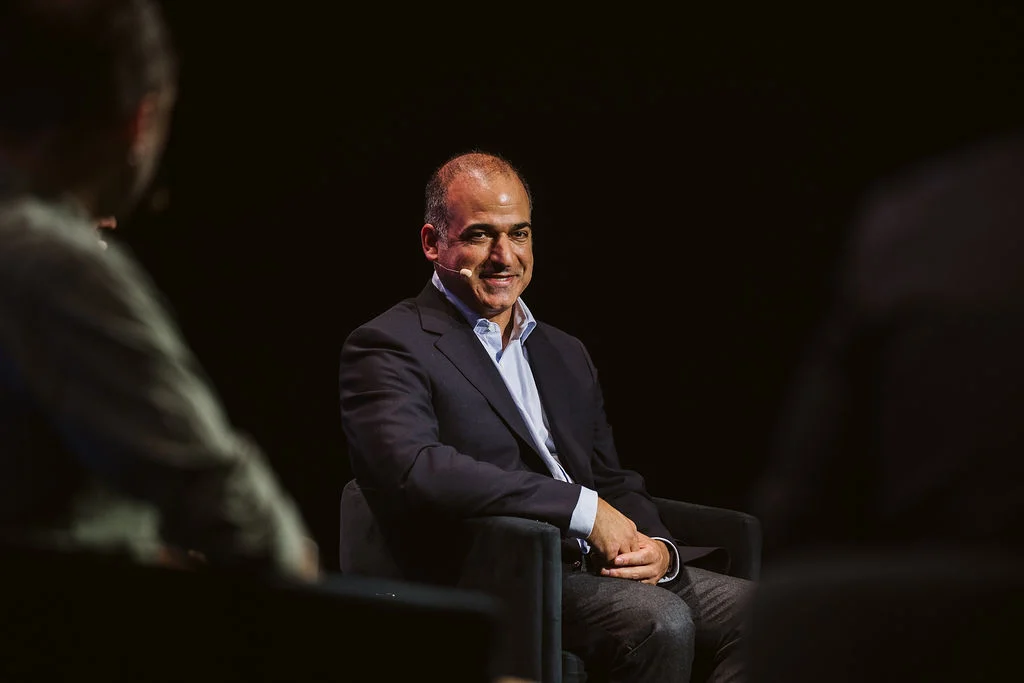
At the 2026 All In conference, the discourse surrounding AMI Labs highlighted the tension between research progress and commercial pressure. Michael Rabbat, a co-founder of AMI Labs and the company’s Vice President of World Models, participated in a high-profile panel where he was repeatedly questioned on the company’s product roadmap. Rabbat’s responses were consistently guarded, stating, "We’ll talk about it when we’re ready to talk about it."
In subsequent communications, Rabbat emphasized that AMI is still in a "research and building phase," suggesting that public disclosure of product plans or timelines would be premature. This stance is common among "neolabs"—deep-tech startups that prioritize solving fundamental scientific hurdles before identifying a specific market niche. However, with AMI Labs approaching its first anniversary, the lack of a public-facing beta or a defined vertical has led to speculation regarding whether the technology is being developed for a broad horizontal platform or a specialized industrial application.
World Labs and the "Marble" Platform
While AMI Labs remains in a state of pure research, Fei-Fei Li’s World Labs has offered more tangible glimpses into its capabilities through a platform known as "Marble." Initial demonstrations of Marble have shown its ability to generate explorable 3D environments from limited video data, creating potential use cases for the gaming and film industries.
Despite these demos, industry analysts note that Marble functions more as a "proof of capability" than a finalized product. The platform’s versatility is its primary selling point—and its primary source of commercial confusion. It could serve as a backend for next-generation robotics, a tool for architects to visualize urban planning, or a high-end CGI rendering engine for Hollywood. By not committing to one of these paths, World Labs retains maximum flexibility but leaves investors and partners wondering where the first significant revenue streams will emerge.
Disconnect in the Supply Chain: The Case of Physicl
The secrecy surrounding world models is not only affecting external analysts but also the very companies that supply the data necessary to train these systems. Alex de Vigan, CEO of Physicl—a leading provider of synthetic and real-world spatial data—noted the difficulties of working within this opaque environment. Speaking on the sidelines of the All In conference, de Vigan expressed frustration over the lack of transparency from his clients.
"I know our data is being used for whatever they are building, but I am still in the dark about the end goal," de Vigan stated. He argued that if labs were more forthcoming about their specific objectives—whether it be warehouse automation, surgical robotics, or autonomous drones—data suppliers could tailor their datasets to be more effective. The current "black box" approach to development creates inefficiencies in the supply chain, as suppliers are forced to provide generalized data for highly specialized, yet undisclosed, problems.
The "Dark Forest" Hypothesis: Strategic Rationale for Secrecy
The reluctance of world model companies to share their roadmaps can be explained through the "Dark Forest" hypothesis, a concept popularized by science fiction author Cixin Liu. In a competitive ecosystem, any entity that reveals its position or intentions becomes a target for rivals.
In the AI sector of 2026, the cost of entry for new competitors is high, but the speed of imitation is fast. If a company like AMI Labs were to announce a breakthrough in humanoid robot control, it would immediately signal to OpenAI, Google, and a host of well-funded startups that the path to market is clear. By remaining silent, these labs buy themselves time to secure intellectual property, refine their models, and capture the "first-mover advantage" in a specific vertical before the rest of the industry can pivot.
Furthermore, the current venture capital environment allows for this secrecy. As long as world models are viewed as the "next big thing" in AI, funding remains abundant. Labs are under less immediate pressure to generate revenue and can focus on long-term research goals. However, this period of "easy money" may not last indefinitely, and the transition from a research lab to a viable business remains a significant hurdle.
Potential Market Verticals and Broader Implications
Despite the current lack of clarity, the potential applications for world models are vast. Industry experts have identified several key sectors where spatial intelligence could provide a transformative impact:
- Advanced Robotics: Current robots often struggle with "edge cases" in unpredictable environments. A world model allows a robot to understand the physics of a new object or terrain without needing specific programming for that scenario.
- Autonomous Systems: Beyond self-driving cars, world models could power autonomous drones for delivery, search and rescue, and environmental monitoring.
- Digital Twins and Simulation: In manufacturing and biomedicine, world models can create highly accurate digital twins of complex systems, allowing for risk-free experimentation and optimization.
- Interactive Entertainment: The ability to turn a static video into a navigable 3D world could revolutionize gaming, moving away from pre-rendered assets toward dynamic, AI-generated environments.
Analysis of Economic Impact
The successful commercialization of world models would represent a shift in the AI economy from "information processing" to "physical interaction." While LLMs disrupted white-collar tasks like writing and coding, world models have the potential to disrupt blue-collar and specialized technical industries.
The economic implications are twofold. First, there is the potential for a massive increase in productivity within logistics and manufacturing. Second, there is the risk of significant labor displacement in sectors that were previously thought to be "AI-proof" due to their reliance on physical dexterity and spatial reasoning. The secrecy of these companies makes it difficult for policymakers to prepare for these shifts, as the exact capabilities and arrival times of the technology remain unknown.
Conclusion: The Path Forward
The 2026 All In conference underscored a pivotal moment in the history of artificial intelligence. While the technical promise of world models is undeniable, the path to market is currently obscured by a combination of research complexity and strategic caginess. AMI Labs and World Labs are leading the charge into the unknown, operating under a "dark forest" strategy that prioritizes long-term dominance over short-term transparency.
As these models continue to mature, the pressure to demonstrate commercial viability will inevitably grow. Whether the first breakthrough comes in the form of a humanoid robot, a revolutionary gaming engine, or an industrial automation platform, it will signal the end of the research phase and the beginning of a new, highly competitive era of spatial intelligence. For now, the industry remains in a state of expectant silence, waiting for the first major player to step out of the shadows and reveal the true power of the world model.
